





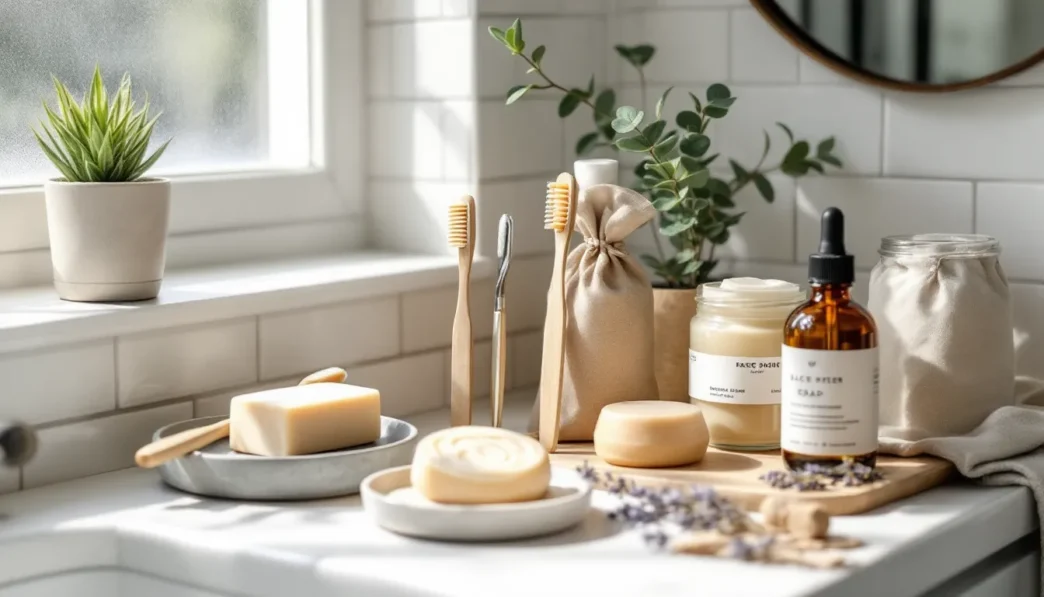
Why Your Bathroom Cabinet Deserves a Green Makeover
Let’s be honest, most of us put more thought into what we eat than what we rub on our skin. But your skin is your largest organ, and it absorbs a surprising amount of whatever you put on it. When those products are loaded with synthetic fragrances, parabens, sulfates, and microplastics, your body has to process all of that. And the planet has to deal with the runoff.
The personal care industry generates over 120 billion units of packaging globally each year, most of it plastic. A huge chunk of that isn’t recyclable in practice, even when the label says otherwise. Meanwhile, ingredients like triclosan, phthalates, and synthetic musks have been found in waterways, marine life, and even human tissue samples.
So when I talk about eco-friendly personal care, I’m really talking about two things at once: reducing what goes into your body and reducing what goes into the environment. They’re more connected than most people realize.
The Hidden Cost of Conventional Personal Care Products
The real cost of that $4 drugstore shampoo isn’t just what’s on the price tag. It’s the petroleum-derived ingredients extracted at an environmental cost. It’s the plastic bottle manufactured using fossil fuels. It’s the chemical preservatives that linger in waterways long after they’ve gone down your drain.
There’s also a personal health cost. The Environmental Working Group’s Skin Deep database has flagged thousands of personal care ingredients with links to hormone disruption, skin irritation, and long-term toxicity concerns. You don’t need to panic about every ingredient, but you deserve to know what you’re working with.
I’ve found that once I started paying attention, the swaps felt less like sacrifice and more like an upgrade. Better ingredients, less waste, and products that actually worked well. That’s the sweet spot.
How to Prioritize Your Swaps: The High-Impact-First Approach
When I first got serious about greening my routine, I made the mistake of trying to change everything at once. I threw out half my bathroom, spent too much money, and ended up overwhelmed. Don’t do that.
A smarter approach is what I call the “high-impact-first” method. You start with the products that either generate the most waste, contain the most problematic ingredients, or both. Then you work your way down the list as things run out naturally.
Think about it this way: a shampoo bottle you replace every month creates far more waste annually than a tube of mascara you buy twice a year. A deodorant you apply to your lymph-node-rich armpits every single day has more potential health impact than a hand cream you use occasionally.
The seven swaps I’ve outlined below are ranked roughly by combined impact, environmental footprint plus health relevance. But honestly, the best place to start is whatever product you’re about to run out of next. Meet yourself where you are.
Swap 1: Ditch Single-Use Plastic Bottles for Shampoo and Conditioner Bars
This was my first swap, and it’s still one of my favorites. The average household goes through about 11 plastic shampoo and conditioner bottles per year. Shampoo bars, on the other hand, typically come in minimal or compostable packaging and last as long as two to three bottles of liquid shampoo.
The transition can feel a little odd at first. Bars lather differently, and your hair might go through a brief adjustment period, especially if you’ve been using silicone-heavy products that coat the hair shaft. Give it two to three weeks. Most people find their hair actually feels healthier once that buildup is gone.
Look for bars made with plant-based oils, essential oils for fragrance, and minimal ingredient lists. Avoid anything that still sneaks in sodium lauryl sulfate (SLS) if you’re trying to avoid sulfates. Many small-batch and indie brands are doing incredible work here.
Try this: Next time your shampoo runs out, pick up one bar from a brand with transparent ingredients. Use it for a full month before you judge it. If you have hard water, a diluted apple cider vinegar rinse once a week can help with any residue.
Swap 2: Replace Chemical-Laden Deodorants With Natural Alternatives
I’ll be upfront, this swap took me a few tries to get right. Not every natural deodorant works for every person, and there’s usually a transition period where your body recalibrates.
Conventional antiperspirants often contain aluminum compounds that physically block your sweat glands, along with synthetic fragrances and propylene glycol. The research on aluminum and health is still debated, but the fact that you’re applying it daily to one of the most absorbent areas of your body is worth considering.
Natural deodorants work differently. They don’t stop you from sweating (which is actually a healthy function your body needs). Instead, they neutralize odor-causing bacteria using ingredients like baking soda, magnesium, arrowroot powder, or activated charcoal. Many come in compostable tubes, glass jars, or refillable containers.
A few things I’ve learned: if baking soda irritates your skin, look for magnesium-based formulas. If you’re very active, cream-style deodorants applied with your fingers tend to offer better coverage than stick formats. And give any new formula at least two weeks, your microbiome needs time to adjust.
Try this: Finish your current deodorant, then try a natural option with simple, recognizable ingredients. If the first brand doesn’t click, try a second before giving up. This one’s worth the experimentation.
Swap 3: Switch to a Bamboo Toothbrush and Plastic-Free Oral Care
Here’s a number that stopped me in my tracks: roughly 1 billion plastic toothbrushes are thrown away each year in the United States alone. They can’t be recycled, and they take over 400 years to decompose.
Bamboo toothbrushes are a near-effortless swap. They feel similar in your hand, clean just as well (especially if you choose one with medium-firm bristles), and the handle is compostable. The bristles are usually nylon, which isn’t perfect, but some brands are now offering plant-based bristle options, and even with nylon bristles, you’re eliminating about 95% of the plastic.
While you’re at it, consider your toothpaste. Many conventional toothpastes come in non-recyclable tubes and contain microplastics, artificial sweeteners, and triclosan. Toothpaste tablets, small, chewable tabs that foam up when you brush, come in glass jars or compostable packaging and work surprisingly well.
Try this: Order a bamboo toothbrush and swap it in the next time you’d normally replace your plastic one (every three months, ideally). That’s it, one of the simplest changes on this list.
Swap 4: Trade Disposable Razors for a Safety Razor
Disposable razors are one of those products that seem small but add up fast. The EPA has estimated that 2 billion disposable razors end up in U.S. landfills annually. The plastic handles, the cartridge packaging, the little moisture strips, none of it breaks down.
A stainless steel safety razor is a one-time purchase that can last a lifetime. The replacement blades are thin, recyclable metal, and they cost a fraction of cartridge refills. I was genuinely nervous the first time I used one, but the learning curve is shorter than you’d expect. Go slow, use light pressure, and let the weight of the razor do the work.
The shave is actually closer and smoother than what I was getting from multi-blade cartridges, and I noticed less skin irritation too. Pair it with a natural shaving soap or oil instead of aerosol shaving cream, and you’ve eliminated even more packaging.
Try this: Invest in a quality safety razor (you can find great ones for $25–$40). Watch a quick tutorial video before your first shave. Within a week, it’ll feel completely natural.
Swap 5: Choose Refillable or Zero-Waste Body Wash and Soap
Body wash is one of the highest-volume products in most people’s routines. We go through it quickly, and every bottle is another piece of plastic.
The simplest swap here is going back to bar soap. I know, I know, bar soap might feel old-fashioned. But modern artisanal soaps are nothing like the drying, crackly bars you might remember from childhood. Look for cold-process soaps made with nourishing oils like olive, coconut, or shea butter. They cleanse without stripping your skin, and they come wrapped in paper or nothing at all.
If you really prefer liquid wash, a growing number of brands now offer refill stations or concentrate-and-dilute systems. You buy one bottle, then refill it from a bulk dispenser or dissolve a concentrate tablet in water at home. It’s a satisfying little ritual, honestly.
Try this: Pick up a handmade bar soap from a local maker or a brand with transparent sourcing. Keep it on a draining soap dish so it lasts longer. You might be surprised how luxurious a good bar feels compared to mass-market body wash.
Swap 6: Upgrade to Clean, Sustainable Skincare
Skincare is where things get interesting, and where a lot of greenwashing hides. “Natural” on a label means almost nothing legally. “Clean” isn’t regulated either. So this swap requires a little more attention, but it’s absolutely worth it.
The goal is twofold: fewer synthetic chemicals on your skin, and less environmental waste in the packaging and supply chain. I’ve simplified my own skincare routine dramatically over the past few years, and my skin has honestly never looked better. Fewer products, higher quality ingredients, less waste.
What to Look for on Labels
Start by scanning for a few red flags: synthetic fragrance (often listed simply as “fragrance” or “parfum”), parabens, phthalates, and oxybenzone. These are among the most commonly flagged ingredients for both health and environmental concerns, oxybenzone, for instance, has been linked to coral reef damage.
On the flip side, look for certifications that carry actual weight: USDA Organic, COSMOS, EWG Verified, or Leaping Bunny (for cruelty-free). These aren’t perfect systems, but they’re meaningful third-party standards.
For packaging, glass and aluminum are generally more recyclable than plastic. Some brands offer return-and-refill programs. And simpler formulations, a good face oil instead of a seven-step routine, naturally mean less packaging overall.
Try this: Next time you need to replace a skincare product, research one clean alternative using the EWG Skin Deep database or a similar resource. Swap one product at a time so you can see how your skin responds.
Swap 7: Rethink Cotton Rounds, Wipes, and Other Single-Use Accessories
This is the swap people overlook, but it’s one of the easiest wins. Cotton rounds, makeup-remover wipes, cotton balls, they seem harmless, but they pile up. Disposable wipes are especially problematic because many contain plastic fibers that don’t biodegrade and contribute to sewer blockages (the dreaded “fatbergs”).
Reusable cotton rounds, usually made from organic cotton or bamboo velour, work beautifully. You use them, toss them in a small mesh laundry bag, wash them with your regular laundry, and they’re ready to go again. A set of 15–20 rounds can replace hundreds of disposable ones per year.
For makeup removal, consider using a cleansing balm or oil with a warm, damp washcloth instead of wipes. It’s actually gentler on your skin and more effective at dissolving makeup.
Try this: Grab a set of reusable rounds and a small mesh bag. Keep them next to your sink where your disposable rounds used to live. The habit shift takes about three days.
Making the Transition Without Overwhelm
I want to say something important here: don’t throw away perfectly good products just to start fresh. That’s wasteful in its own right. The most sustainable approach is to use up what you have, then replace it with a better option when it’s time.
Pick one or two swaps from this list, whichever feel most doable or most exciting to you, and start there. Once those new habits feel normal (and they will, faster than you think), add another.
It also helps to keep expectations realistic. Not every eco-friendly product will be your holy grail on the first try. Some natural deodorants won’t work for your body chemistry. Some shampoo bars won’t suit your hair type. That’s fine. It’s experimentation, not failure.
And remember, this isn’t about perfection. If every person made even three of these seven swaps, the collective impact on plastic waste and chemical exposure would be enormous. Your individual choices ripple outward in ways you can’t always see, but they matter.
This is general education, not medical advice. If you’re pregnant, managing a condition, or taking medication, check with a qualified professional before changing your personal care products, especially deodorants, skincare, or oral care.
Conclusion
What I love about eco-friendly personal care is that it’s one of those rare areas where doing right by yourself and doing right by the planet aren’t in tension, they’re the same thing. Fewer synthetic chemicals on your skin. Less plastic in landfills and oceans. Simpler routines that feel more intentional.
You don’t need to become a zero-waste influencer overnight. You just need to start somewhere. Maybe it’s a bamboo toothbrush this week. Maybe it’s a shampoo bar next month. Each swap is a small vote for the kind of world you want to live in.
I’d love to hear where you’re starting, or which swaps you’ve already made. Drop a comment below and share what’s worked (and what hasn’t). And if this guide helped you, pass it along to someone who might be ready for their own green bathroom makeover. What’s the one product in your routine you’d most like to find a better alternative for?