







Why So Many Everyday Products Still Contain Harmful Chemicals
This is the question that frustrated me the most when I first started learning about household toxins: How is this stuff still on shelves?
The answer is surprisingly simple, and disappointing. In the United States, the regulatory framework for chemicals in consumer products is thin. The Toxic Substances Control Act (TSCA), originally passed in 1976 and updated in 2016, still allows thousands of chemicals to remain in commerce without rigorous safety testing. The EPA has only managed to fully evaluate a handful of chemicals under the updated law. Thousands more sit in a kind of regulatory gray zone.
Manufacturers aren’t required to disclose every ingredient, either. Terms like “fragrance” on a label can legally hide dozens of synthetic compounds, some of which are known irritants or endocrine disruptors. The FDA doesn’t pre-approve cosmetics or personal care products before they hit the market. Let that sink in.
There’s also the economics of it. Synthetic chemicals are cheap to produce and extend shelf life. They make products foam better, smell stronger, and feel silkier. For companies optimizing for profit margins and sensory appeal, there’s little financial incentive to reformulate, unless consumers push back.
And we are pushing back. The clean-product movement has grown enormously over the past decade. But the sheer volume of greenwashing makes it hard to tell what’s genuinely safer and what’s just clever marketing with a leaf on the label.
The Most Common Toxins Hiding in Your Home Right Now
Once I started inventorying what was actually in my home, I was surprised how many categories were affected. Let me break down the three biggest zones of concern.
Cleaning Products and Disinfectants
This is where the concentration of harsh chemicals tends to be highest. Many conventional all-purpose cleaners, oven sprays, and bathroom disinfectants contain volatile organic compounds (VOCs) that off-gas into your indoor air. Some common offenders include:
Phthalates are frequently hidden inside synthetic fragrances in cleaning sprays and air fresheners. They’re linked to endocrine disruption and reproductive health concerns. You won’t see “phthalates” on the label, just the word “fragrance.”
Chlorine bleach (sodium hypochlorite) is a powerful disinfectant, but it releases chlorine gas, especially in poorly ventilated spaces. Mixed with ammonia-based products, which happens more often than you’d think, it creates chloramine vapor, which is genuinely dangerous.
2-Butoxyethanol, found in many window and multipurpose cleaners, can cause sore throats, narcosis, and liver and kidney damage at high exposures. It’s not required to be listed on labels under current regulations.
Personal Care and Beauty Items
Your bathroom cabinet might be the most surprising source of hidden toxins in household products. I know mine was.
Parabens (methylparaben, propylparaben, and others) are used as preservatives in lotions, shampoos, and makeup. They mimic estrogen in the body and have been detected in breast tissue samples, though the direct health implications are still being studied.
Sodium lauryl sulfate (SLS) and sodium laureth sulfate (SLES) create that satisfying lather in shampoos and body washes. They can irritate skin and eyes, and SLES may be contaminated with 1,4-dioxane, a probable carcinogen, as a byproduct of manufacturing.
Formaldehyde-releasing preservatives (like DMDM hydantoin and quaternium-15) slowly release small amounts of formaldehyde over time. They show up in hair straightening treatments, nail polish, and some body washes.
Cookware, Food Storage, and Packaging
This one caught me off guard. The pan you cook breakfast in and the container you store leftovers in can be sources of chemical exposure.
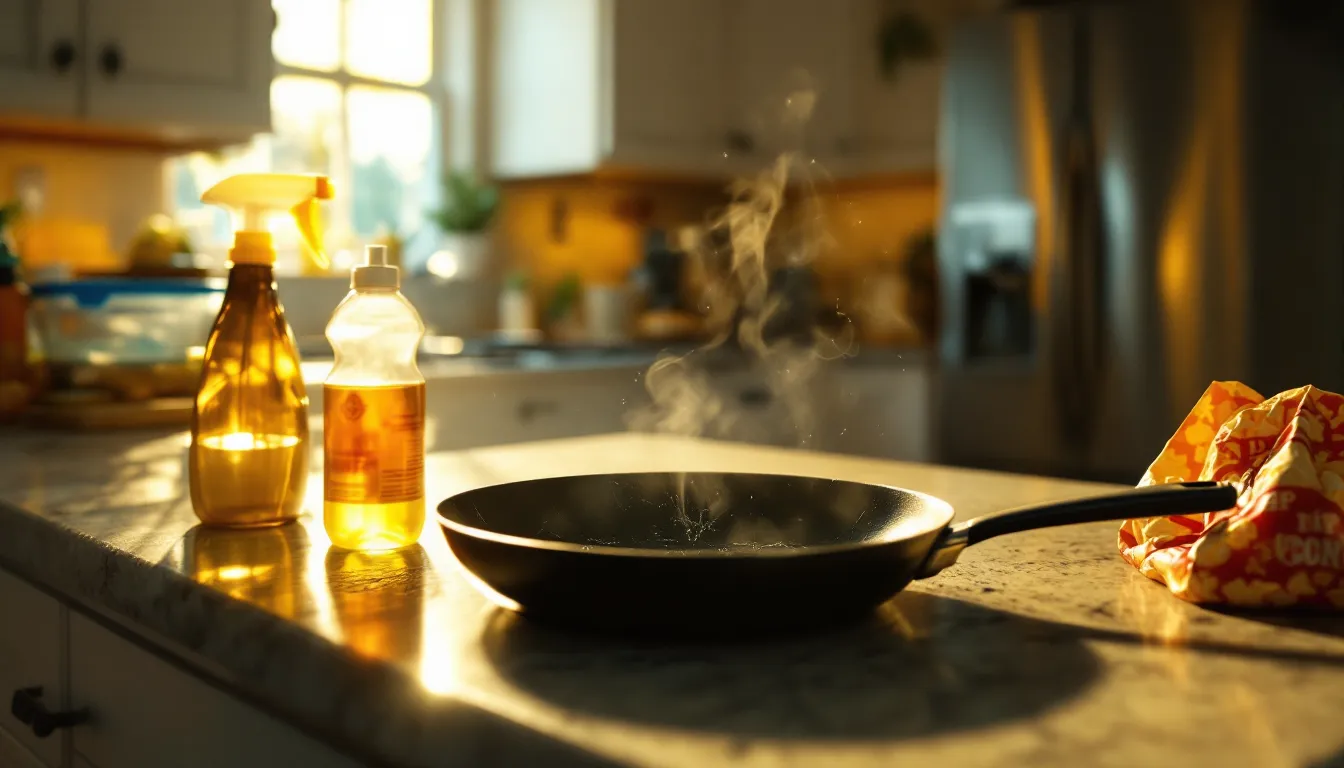
PFAS (per- and polyfluoroalkyl substances), sometimes called “forever chemicals,” are used in nonstick cookware coatings, grease-resistant food packaging, and even some microwave popcorn bags. They don’t break down in the environment, or in your body. PFAS exposure has been linked to thyroid disease, immune suppression, and certain cancers.
BPA and BPS are found in plastic food containers, the linings of canned foods, and thermal receipt paper. Both are endocrine disruptors. And yes, “BPA-free” products often substitute BPS, which appears to carry similar risks.
I remember the sinking feeling of realizing my trusty nonstick skillet, the one I used every single morning, was slowly degrading and releasing compounds into my food. That was the swap that happened fastest.
How These Toxins Affect Your Health Over Time
Here’s what makes household toxins so insidious: it’s rarely one big exposure that causes harm. It’s the accumulation. Day after day, small doses from multiple sources stack up in what researchers call your “body burden” or total toxic load.
Your body is remarkably good at detoxifying. Your liver, kidneys, lymphatic system, and skin all work constantly to process and eliminate what doesn’t belong. But these systems have limits. When the incoming load exceeds your body’s capacity to clear it, things start to back up.
Endocrine disruption is one of the most well-documented effects. Chemicals like phthalates, parabens, and BPA interfere with hormone signaling, even at very low doses. This can show up as irregular cycles, thyroid sluggishness, unexplained fatigue, or fertility challenges. The timing of exposure matters too: children and pregnant women are especially vulnerable.
Respiratory irritation from VOCs and cleaning product fumes is more immediate. A 2018 study published in the American Journal of Respiratory and Critical Care Medicine found that women who cleaned regularly with conventional spray products experienced a decline in lung function comparable to smoking 20 cigarettes a day over a 20-year period. That statistic still stops me cold.
Gut health and digestion are affected too, though this gets less attention. Some synthetic preservatives and additives can disrupt your gut microbiome, affecting everything from nutrient absorption to immune function. When your digestive fire, your body’s core metabolic engine, gets sluggish from constant low-grade chemical stress, the downstream effects ripple outward: brain fog, skin issues, low energy, poor sleep.
The tricky part is that these effects creep in slowly. You don’t wake up one day with a neon sign saying “toxic overload.” It’s more like a gradual dimming, your vitality fades, your clarity dulls, your resilience thins. And because it happens over months and years, it’s easy to chalk it up to aging or stress.
Reading Labels: What to Look For and What to Avoid
I’ll be honest, learning to read product labels felt overwhelming at first. But once you know a few red flags, it becomes second nature. You don’t need a chemistry degree. You just need a short mental checklist.
“Fragrance” or “parfum” is the biggest umbrella term to watch for. Under current law, companies can use these words to conceal proprietary blends of dozens of synthetic chemicals. If a product lists fragrance without specifying its source, I put it back on the shelf.
“Antibacterial” on hand soaps and cleaning products often signals the presence of triclosan or triclocarban. The FDA banned triclosan from consumer hand soaps in 2016, but it still appears in some toothpastes, cutting boards, and other products.
Look for “PEG” compounds (polyethylene glycols) in personal care products. They enhance absorption, which sounds nice until you realize they’re helping other questionable ingredients penetrate your skin more effectively. They can also be contaminated with ethylene oxide and 1,4-dioxane.
“Preservative-free” doesn’t always mean safer. Some products substitute with ingredients that are just as concerning but less well-known. The key is looking for brands that are transparent about what they use instead.
A few trustworthy resources I rely on: the EWG’s Skin Deep database for personal care products, the EPA’s Safer Choice label for cleaning products, and the Think Dirty app for quick barcode scanning at the store.
My rule of thumb: if I can’t pronounce it and can’t find a clear explanation of what it does, I look for an alternative. That filter alone has eliminated about 70% of the questionable products from my home.
Safer Swaps That Deliver Real Results
Now for the part I actually enjoy, the solutions. I’ve tested a lot of these over the past couple of years, and I can tell you that going cleaner doesn’t mean going less effective. Some of these swaps have worked better than what I was using before.
In the Kitchen
Swap nonstick cookware for cast iron or stainless steel. I resisted this one because I loved how easy nonstick was to clean. But a well-seasoned cast iron skillet is nearly as nonstick, lasts a lifetime, and actually adds trace iron to your food. Stainless steel is great for sauces and anything acidic.
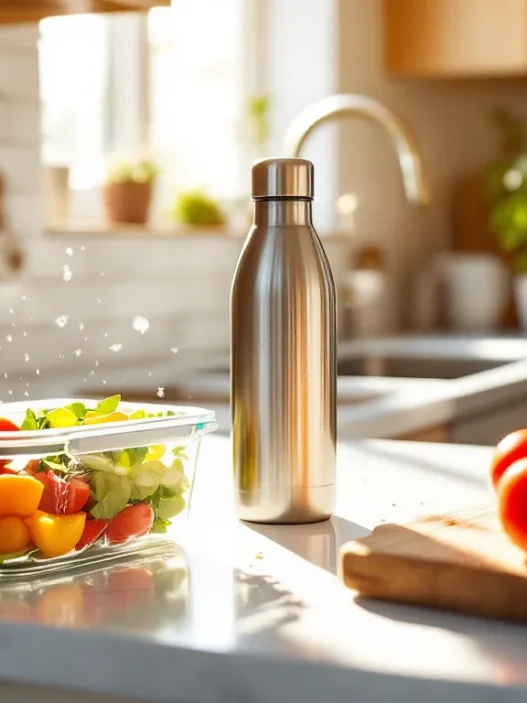
Replace plastic food storage with glass or stainless steel containers. Pyrex-style glass containers with silicone-sealed lids have become my go-to. They don’t leach chemicals when heated, they don’t stain, and they go from fridge to oven without drama. For on-the-go, stainless steel lunch containers work beautifully.
Ditch conventional dish soap for plant-based alternatives. Brands like ECOS, Seventh Generation, and Branch Basics offer dish soaps free of synthetic fragrances, SLS, and dyes. They cut grease just fine, I promise.
In the Bathroom
Switch to fragrance-free or naturally scented personal care products. I started with shampoo and body wash, which felt like the easiest entry point. Look for products scented with essential oils rather than synthetic fragrance blends. My skin calmed down noticeably within a few weeks.
Try a mineral-based sunscreen instead of chemical sunscreen. Zinc oxide and titanium dioxide sit on top of your skin and physically block UV rays rather than being absorbed into your bloodstream. Newer formulations have solved the old “white cast” problem, mostly.
Swap conventional deodorant for aluminum-free options. This one took me a couple of tries to find the right fit. Not every natural deodorant works for every body. But brands like Native, Primally Pure, and Each & Every have formulas that genuinely hold up.
Around the House
Make your own all-purpose cleaner. This sounds granola, but it’s legitimately effective. I use a simple mix of white vinegar, water, and a few drops of tea tree oil. It handles countertops, glass, and bathroom surfaces without leaving chemical residue. For tougher jobs, a baking soda paste does the work.
Replace synthetic air fresheners with natural alternatives. Plug-in air fresheners and scented candles made with paraffin wax are major sources of indoor VOCs. I’ve switched to beeswax candles, essential oil diffusers, and simply opening windows more often. Fresh air is underrated.
Choose natural fiber textiles when replacing bedding or furniture. Conventional fabrics are often treated with flame retardants and stain-resistant coatings (PFAS again). Organic cotton, linen, and untreated wool are safer choices. This is a longer-term swap, replace items as they wear out rather than all at once.
How to Transition Your Home Without Overwhelm
If you’re reading this and feeling a wave of anxiety about everything in your cabinets, I get it. I’ve been there. The worst thing you can do is try to purge everything at once, it’s expensive, exhausting, and unnecessary.
Here’s how I approached it, and what I’d recommend.
Start with what touches your skin and what you breathe. These are your highest-exposure categories. Swap out your hand soap, body wash, and any spray cleaners you use frequently. That alone makes a meaningful dent in your daily chemical exposure.
Use the “run out and replace” method. When a product runs out, replace it with a cleaner alternative instead of buying the same thing on autopilot. This spreads the cost over months and keeps it manageable. I kept a running list on my phone of the next swap I wanted to make.
Don’t aim for perfection. There’s a kind of purity culture around clean living that can become its own source of stress. One conventional product in your home isn’t going to undo all the good choices you’re making everywhere else. Progress over perfection, always.
Get the household on board gradually. If you live with a partner or family, sudden changes can create friction. I found it helped to start with swaps that were invisible, same function, different formulation. Nobody in my house noticed when I switched dish soap. They definitely noticed (and appreciated) when the kitchen stopped smelling like chemicals after cleaning.
Keep a “safer swaps” list for reference. Whether it’s a note on your phone or a bookmarked page, having your go-to replacements ready means you won’t default to old habits when you’re shopping in a hurry. Decision fatigue is real, especially at the store.
The transition isn’t a sprint. It took me about eight months to feel like my home was meaningfully different, and I’m still fine-tuning. But the cumulative effect has been noticeable, fewer headaches, better sleep, clearer skin, and a general sense that my home is working with my health instead of quietly against it.
Conclusion
Your home is supposed to be a place of rest, nourishment, and safety. When the products you use every day are silently adding to your body’s burden, something’s off, and recognizing that is the first step toward changing it.
You don’t need to become a chemist or spend a fortune to reduce your exposure to hidden toxins in household products. Start with awareness. Read a few labels. Make one swap this week. Then another next month. Small, steady changes compound into something genuinely powerful over time.
What gives me hope is that the market is shifting. More companies are formulating cleaner products because consumers like you and me are demanding them. Every purchase is a vote for the kind of products you want to see on shelves.
I’d love to hear where you’re starting. What’s the first swap you’re planning to make? Drop a comment below or share this with someone who’s been curious about cleaning up their home, sometimes all it takes is a nudge to get moving.