








Why Fiber Matters More Than You Think
Most people think of fiber as “the thing that keeps you regular.” And yes, it does that. But from an Ayurvedic perspective, fiber plays a much deeper role, it directly supports your agni, your digestive and metabolic intelligence.
When your agni is balanced, food breaks down cleanly. Nutrients reach your tissues. Waste moves out on time. You feel light, clear, and energized. That lightness and clarity? Ayurveda calls that the work of tejas (your inner metabolic spark) and prana (your life force and nervous system steadiness). Both depend on clean, complete digestion.
Fiber helps by giving your digestive tract the right kind of bulk and texture to keep things moving, preventing the stagnation that leads to what Ayurveda calls ama, a sticky residue of undigested material that dulls your energy, clouds your thinking, and weighs you down.
But here’s the catch. Fiber that’s too rough, too dry, or too heavy for your particular constitution can actually weaken agni instead of supporting it. That’s why a one-size-fits-all approach backfires for so many people.
The role of fiber isn’t just about quantity, it’s about quality, timing, and compatibility with your body.
Do this today: Notice how you feel 30 to 60 minutes after your most fiber-rich meal. Lightness and ease suggest your agni is handling it well. Bloating or heaviness suggest you need a gentler approach. Takes about one minute of honest self-observation. This is for anyone, regardless of constitution.
Soluble vs. Insoluble Fiber: What Each Type Does for Your Body
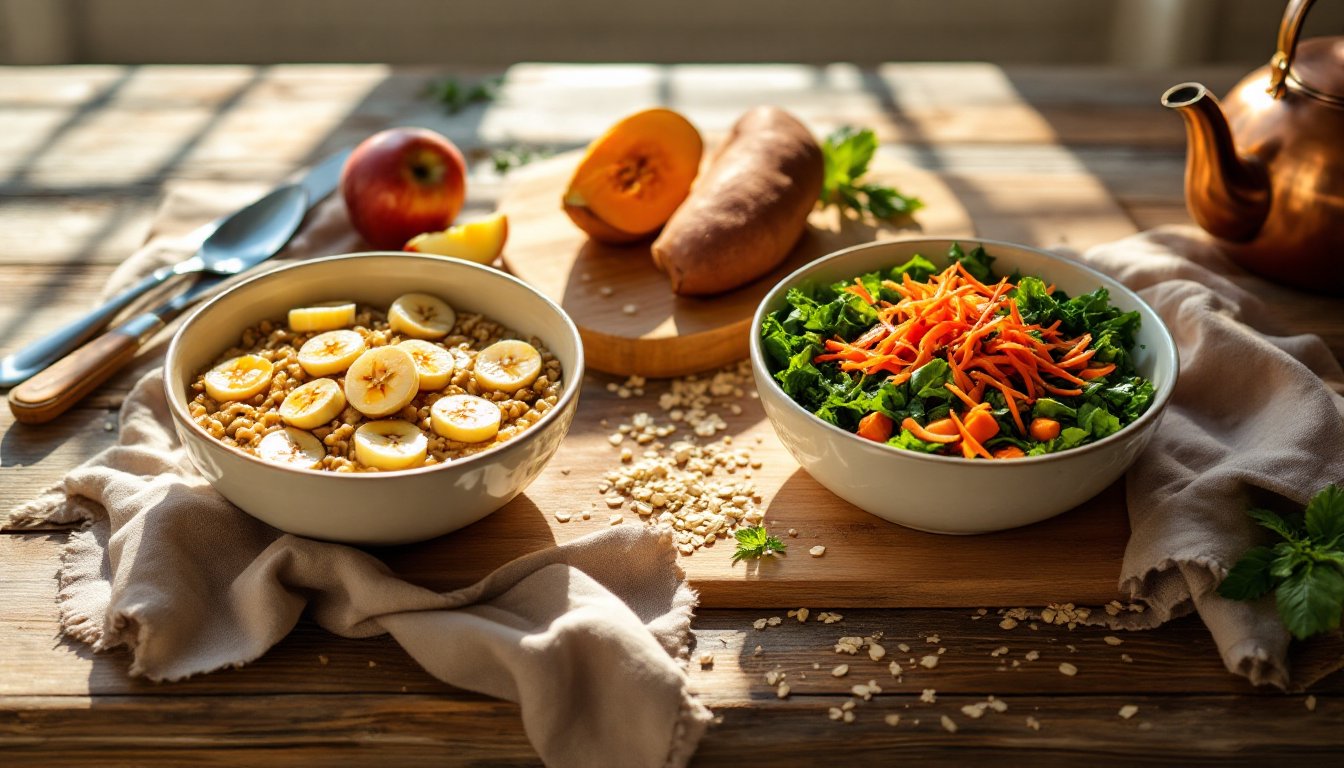
Not all fiber behaves the same way inside you, and understanding the difference can save you a lot of discomfort.
Soluble fiber dissolves in water and forms a soft, gel-like substance. Think oats, ripe bananas, cooked apples, sweet potatoes, and flaxseeds. In Ayurvedic terms, soluble fiber carries smooth, oily, and heavy qualities, it soothes the digestive lining, slows absorption gently, and helps calm excess Vata (the dry, mobile, irregular energy that often drives gas and bloating).
Insoluble fiber doesn’t dissolve. It adds bulk and roughness, think raw vegetables, wheat bran, the skins of fruits, and many whole grains. Its qualities are rough, dry, and light. It’s excellent for stimulating sluggish Kapha-type digestion but can seriously aggravate Vata if your gut is already sensitive or dry.
Here’s something I wish someone had told me years ago: if you’re prone to bloating and gas, start with more soluble fiber and less insoluble. The smooth, moist quality of soluble fiber is far gentler on a tender digestive system.
As your agni strengthens and your gut lining becomes more resilient, you can gradually introduce more of the rougher, bulkier insoluble fibers.
Do this today: Swap one raw, rough-fiber food (like a big raw salad) for a cooked, soluble-fiber-rich option (like stewed apples or a warm bowl of oats). Takes five minutes. Especially helpful if you tend toward dryness, gas, or irregular digestion.
How Much Fiber Do You Actually Need Per Day?

The standard recommendation floats around 25 to 35 grams of fiber per day for most adults. That’s a reasonable general target, and most people fall well short of it, averaging closer to 15 grams.
But I want to offer you a different lens. In Ayurveda, the right amount of fiber is the amount your agni can process without creating ama. That number is personal.
Someone with strong, sharp Pitta-type digestion might handle 30-plus grams easily. A person with delicate Vata digestion, especially during cold, dry months, might do better with 20 grams of well-cooked, gentle fiber than 35 grams of raw roughage.
And Kapha types, who tend toward slow, heavy digestion, often benefit from lighter, drier fibers that stimulate movement, but even they can overdo it if agni is weak.
The signs your body gives you are more useful than any chart. After a fiber-rich meal, you want to feel satisfied but not stuffed, with no excessive gas, no heaviness sitting in your belly, and a clear mind.
Do this today: Track your fiber intake loosely for three days using a simple app or journal, and note your energy and digestion after meals. This takes about two minutes per meal. It’s for anyone curious about their personal sweet spot, not a replacement for professional guidance if you have a diagnosed condition.
Common Reasons Fiber Causes Bloating, Gas, and Cramping
Let’s talk about why fiber backfires for so many well-intentioned people. From the Ayurvedic view, there’s almost always a clear pattern.
Too much, too fast. Jumping from 12 grams to 35 grams in a week overwhelms agni. When digestion can’t keep up, food ferments instead of transforming. That fermentation creates ama, and the gas, bloating, and cramping that come with it.
Too dry, too rough. Raw salads, dry crackers, raw broccoli, these foods carry intensely dry, rough, and light qualities. For Vata-dominant people (or anyone in a Vata-aggravated state), this is like throwing sand into an already irritated system. The mobile, erratic quality of excess Vata turns into bloating and irregular elimination.
Weak agni. If your digestive fire is low, maybe from stress, irregular eating, cold foods, or late-night meals, even moderate fiber can sit undigested. You’ll notice a coated tongue in the morning, sluggishness after eating, or a dull, heavy feeling. These are classic ama signs.
Poor timing. Eating heavy, fiber-dense meals late at night when agni naturally dims is a recipe for discomfort. Ayurveda ties digestive strength to the sun’s rhythm, your agni peaks around midday and quiets after sunset.
Do this today: If you’re experiencing bloating, try reducing raw foods for three days and eating your largest, most fiber-rich meal at lunch when agni is strongest. Takes no extra time, just a shift in timing. This is for anyone dealing with digestive discomfort, though if symptoms are persistent, please consult a practitioner.
The Gradual Approach: How to Increase Fiber Without the Discomfort
Ayurveda has a beautiful principle: like increases like, and opposites bring balance. If your gut is already aggravated, dry, mobile, inflamed, or sluggish, piling on more of those same qualities will make things worse. The correction comes from introducing the opposite qualities, slowly.
So if dryness and roughness are causing your trouble (a Vata pattern), you balance with smooth, oily, warm foods. Cooked lentils with a little ghee. Stewed fruits with cinnamon. Warm oatmeal with soaked flaxseeds.
If sharp, hot irritation is the issue (a Pitta pattern), you balance with cool, slightly heavy, soothing fiber sources. Think ripe pears, cooked leafy greens, coconut, or soaked chia seeds.
If heavy, dull stagnation is the pattern (Kapha), you bring in light, dry, mildly stimulating fibers, think millet, barley, steamed bitter greens, along with warming spices like ginger.
The pace matters just as much as the food. Add about 3 to 5 grams of fiber per week. Give your gut, and your agni, time to adapt. Rushing this process is the single biggest mistake I see.
This gradual approach protects ojas, your deep reservoir of vitality and immune resilience. When digestion stays clean and ama-free, ojas builds naturally. When you force your system, ojas depletes, and you feel it as fatigue, low immunity, and anxiety.
Do this today: Add just one new fiber-rich food to your meals this week, cooked, warm, and lightly spiced. Give it five to seven days before adding another. Takes no extra planning once you pick the food. This approach is for everyone, especially if you’ve failed at increasing fiber before.
Best High-Fiber Foods That Are Easy on Your Stomach
Fruits, Vegetables, and Legumes
Cooked fruits are some of the gentlest ways to get fiber. Stewed apples, ripe pears, and baked sweet potatoes carry smooth, moist, and mildly heavy qualities that soothe rather than scrape. I keep a pot of stewed apples with cardamom in my fridge most weeks, it’s become a non-negotiable.
For vegetables, go cooked over raw whenever your digestion feels tender. Zucchini, carrots, beets, and asparagus all become softer and easier to process with gentle heat. That heat pre-digests the rough quality, making it kinder to your agni.
Legumes are fiber powerhouses, but they need preparation. Soaking overnight, rinsing well, and cooking with digestive spices like cumin, fennel, and fresh ginger transforms them. Split mung beans are the star of Ayurvedic cooking, light, easy to digest, and deeply nourishing to all three doshas when cooked well.
Do this today: Cook a small pot of split mung dal with cumin, turmeric, and a pinch of ginger. Takes about 25 minutes. Suitable for all constitutions: especially supportive if you’re new to legumes or have a sensitive stomach.
Whole Grains, Nuts, and Seeds
Oats, barley, quinoa, and rice are all good fiber sources when prepared with care. Barley is particularly helpful for Kapha, it’s light, dry, and gently scraping. Oats suit Vata beautifully when cooked until soft and creamy.
Nuts and seeds can be tricky. Raw, they’re heavy and hard to digest. But soaked almonds (skins removed), ground flaxseeds stirred into warm porridge, or toasted pumpkin seeds become much friendlier to your system.
The key is always preparation. Cooking, soaking, grinding, and adding warmth and spice are Ayurveda’s ways of transforming a potentially aggravating food into something nourishing.
Do this today: Soak a tablespoon of flaxseeds in warm water for ten minutes, then stir them into your morning porridge. Takes barely any effort. Good for all types, especially Vata and Pitta.
The Critical Role of Hydration When Eating More Fiber
This one trips people up constantly. You increase fiber without increasing water, and everything grinds to a halt, literally.
Fiber absorbs water. Without enough fluid, that bulk becomes dry, rough, and compacted in your digestive tract. For Vata types especially, this can worsen constipation rather than relieve it.
But Ayurveda is specific about how you hydrate. Ice-cold water dampens agni. It’s like pouring cold water on a small campfire. Room-temperature or warm water supports your digestive fire while keeping things moving smoothly.
I recommend sipping warm water throughout the day, not chugging large amounts with meals, which can dilute digestive juices. A cup of warm water with a squeeze of lemon first thing in the morning is a simple dinacharya (daily routine) practice that gently stokes agni and supports elimination.
Herbal teas also count, cumin-coriander-fennel tea (CCF tea) is a classic Ayurvedic blend that hydrates, reduces gas, and supports absorption. It’s one of my go-to recommendations.
For Pitta types, room-temperature water with a few mint leaves or a splash of coconut water works beautifully. Kapha types benefit from warm ginger water to keep that sluggish, heavy quality moving.
Do this today: Begin your morning with a cup of warm water before eating anything. Takes two minutes. This is for everyone, a foundational daily routine habit that pairs perfectly with any fiber increase. Not a substitute for medical advice if you have kidney concerns or fluid restrictions.
Sample High-Fiber Meal Plan for Sensitive Stomachs
Here’s a gentle, one-day meal plan I often share with people who want to increase fiber without the backlash. It follows Ayurvedic timing, lighter in the morning and evening, heartiest at midday when agni peaks.
Morning (7–8 AM): Warm oatmeal cooked with a teaspoon of ghee, ground flaxseeds, stewed apples, and a pinch of cinnamon. This is smooth, warm, and oily, calming for Vata, gentle for everyone. Roughly 8 grams of fiber.
Midday (12–1 PM): A bowl of split mung dal with steamed basmati rice, sautéed zucchini, carrots, and beets, seasoned with cumin, coriander, turmeric, and fresh ginger. A squeeze of lime on top. This is your fiber-dense anchor, roughly 12 grams, eaten when your agni can handle it best.
Afternoon snack (3–4 PM, optional): A ripe pear or a small handful of soaked and peeled almonds. Light and easy, about 3 grams of fiber.
Evening (6–7 PM): A simple vegetable soup, sweet potato, spinach, and a sprinkle of fennel seeds, blended or chunky, depending on how your digestion feels. Roughly 5 grams of fiber.
That’s about 28 grams for the day, achieved through cooked, warm, well-spiced foods. No raw salad marathons. No fiber supplements dumped into smoothies. Just real food, prepared with care.
This is also where your second daily routine habit comes in: eating your largest meal at midday. It’s one of the simplest shifts you can make, and it changes everything about how fiber feels in your body.
And for a seasonal adjustment, during cold, dry autumn and winter months (Vata season), lean more heavily on the oily, warm, cooked preparations. Add extra ghee. Use more soups and stews. In hot summer months (Pitta season), you can include slightly more cooling raw fruits like ripe melons and cucumbers, since your agni is naturally supported by external warmth, though cooked foods are still gentler overall.
Do this today: Try this meal plan for one day and notice how your digestion and energy feel by evening. Takes about 45 minutes of cooking total if you batch-prep the dal. This is for sensitive stomachs and anyone wanting a dosha-friendly fiber framework. If you have specific food allergies or medical dietary requirements, please adjust accordingly with guidance.
This is general education, not medical advice. If you’re pregnant, managing a condition, or taking medication, check with a qualified professional.
I find that people often overthink fiber. They chase numbers, buy supplements, and force-feed themselves foods they don’t enjoy, and their digestion protests loudly. But when you approach it the Ayurvedic way, gently, personally, seasonally, and with respect for your unique agni, something clicks. The bloating fades. Elimination becomes effortless. And that deep, quiet vitality, ojas, starts to build.
You don’t have to get this perfect overnight. Start with one change. Maybe it’s warm water in the morning. Maybe it’s moving your fiber-heaviest meal to lunch. Maybe it’s finally cooking those mung beans you’ve been avoiding.
Whatever it is, trust that your body knows how to do this. You’re just clearing the path.
I’d love to hear from you, what’s the one fiber-related change you’re going to try this week? Drop a comment or share this with someone who’s been struggling. And if this resonated, pass it along, we could all use a gentler approach to something as simple as eating well.
What’s the one food that always seems to give your belly trouble?