






How Your Diet Directly Affects Your Skin
In Ayurveda, skin health is never treated as a surface issue. Your skin, called twak, is considered a reflection of your rasa dhatu, the very first tissue layer nourished after digestion. So if digestion is weak or incomplete, rasa dhatu doesn’t get the nutrition it needs, and your skin is the first place that shows up.
This is where agni, your digestive and metabolic intelligence, becomes everything. When agni is strong and steady, food is broken down fully. Nutrients flow into your plasma, then your blood, then deeper tissues. Your complexion looks clear, hydrated, naturally warm. But when agni is sluggish or erratic, from eating too late, combining incompatible foods, or chronic stress, undigested residue called ama starts accumulating. Ama is heavy, sticky, and dull. It clogs the subtle channels that feed your skin and shows up as breakouts, puffiness, a greyish tone, or that frustrating “I sleep eight hours but still look exhausted” feeling.
Each dosha experiences this differently. Vata types tend toward dry, rough, flaky skin when imbalanced, their skin loses moisture fast. Pitta types run hot and sharp, so imbalance looks like redness, rashes, inflammation, and sensitivity. Kapha types hold onto heaviness and oiliness, which can mean congested pores and a sluggish, pale complexion.
The best foods for skin health work by strengthening agni, reducing ama, and feeding the qualities your particular constitution needs most.
Do this today: Before your next meal, notice whether you’re actually hungry, true hunger is agni calling. Give it 5 minutes of awareness. This is for everyone, regardless of dosha.
Fatty Fish and Omega-3s: Your Skin’s Best Friend
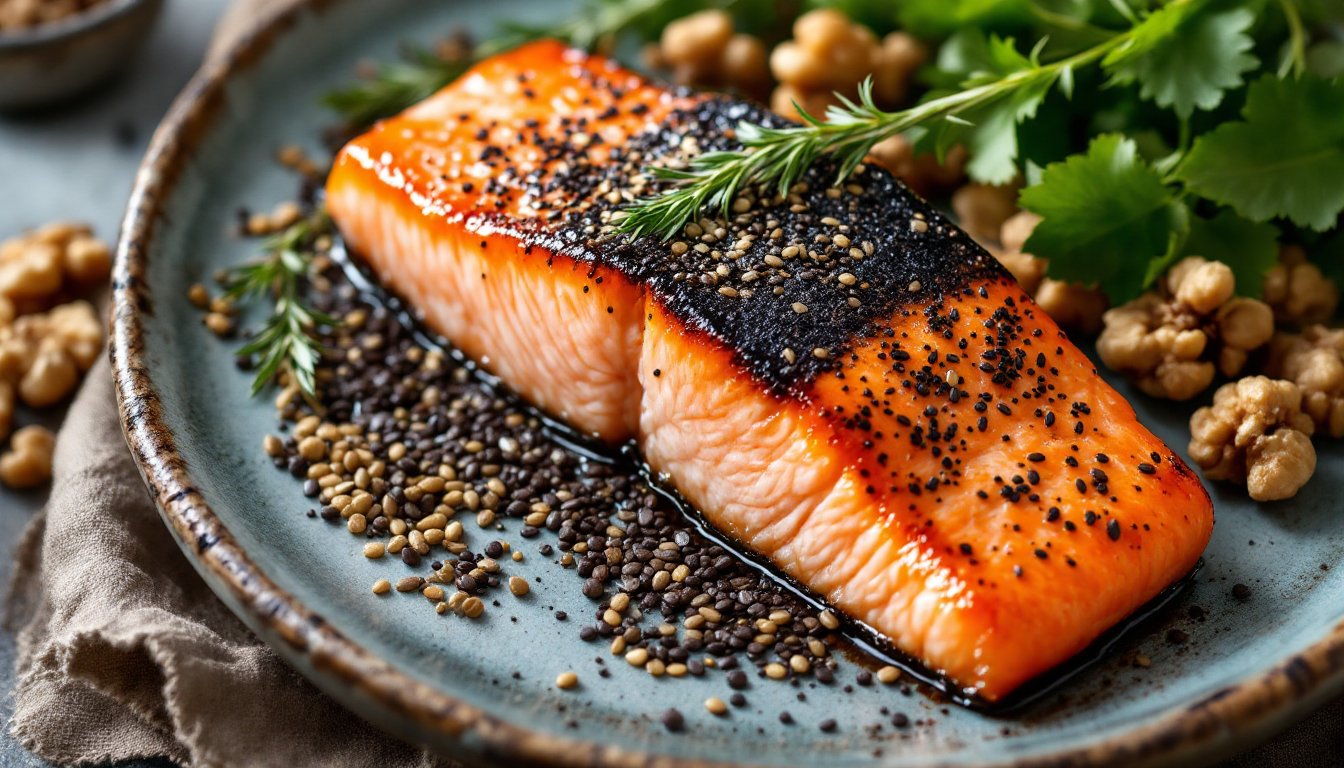
There’s a reason Ayurveda values oily, nourishing foods for skin, they directly counter the dry, rough, mobile qualities that deplete your skin’s moisture barrier. Fatty fish like wild salmon, sardines, and mackerel are rich in omega-3 fatty acids, and from an Ayurvedic lens, they carry the snigdha (oily) and guru (heavy, grounding) qualities that Vata-dominant skin desperately craves.
These healthy fats also support ojas, that deep reservoir of vitality, immunity, and glow that Ayurveda considers the finest product of good digestion. When ojas is strong, your skin has a natural luminosity that no highlighter can fake. Omega-3s reduce the sharp, hot inflammatory signals that trouble Pitta skin, too.
Now, if you don’t eat fish, that’s perfectly fine. Flaxseeds, chia seeds, hemp hearts, and walnuts carry similar oily, cooling qualities. The key is consistency, a little healthy fat at every meal, not a massive dose once a week.
Do this today: Add a thumb-sized portion of omega-3-rich food to your lunch, that’s your peak digestive window when agni burns brightest. Takes about 2 minutes of prep. Particularly supportive for Vata and Pitta types, though Kapha types can enjoy smaller portions.
Colorful Fruits and Vegetables Packed With Antioxidants

Color isn’t just visual appeal on your plate. In Ayurveda, the vibrant pigments in fruits and vegetables signal specific tastes and qualities that nourish different tissues. And modern science agrees, those pigments are antioxidants that protect skin cells from oxidative stress, supporting what Ayurveda calls tejas, your metabolic spark and inner radiance.
When tejas is balanced, your complexion has clarity, a brightness that comes from efficient cellular metabolism. When it’s depleted, skin looks flat and lifeless. When it’s excessive (common in Pitta imbalance), you get that hot, irritated, reactive look.
Berries and Citrus Fruits
Blueberries, strawberries, amla (Indian gooseberry), and citrus fruits are cooling and light, qualities that calm the sharp, hot intensity of Pitta without weighing down digestion. They carry a sweet-sour taste that gently stokes agni while delivering vitamin C, which your body needs to build collagen naturally.
Amla, in particular, is an Ayurvedic treasure. It’s one of the few foods considered balancing for all three doshas and is deeply rejuvenating for rasa dhatu, that first tissue layer connected to your skin.
Do this today: Have a small bowl of seasonal berries mid-morning, about 2 hours after breakfast. This takes 30 seconds. Wonderful for Pitta types, gentle enough for everyone.
Leafy Greens and Orange Vegetables
Kale, spinach, swiss chard, sweet potatoes, carrots, and butternut squash bring a beautiful balance of bitter, sweet, and astringent tastes. The bitter taste is especially valuable, it’s cooling, light, and dry, which helps clear excess heat and ama from the blood (rakta dhatu), the tissue layer directly linked to skin clarity.
Orange vegetables carry a sweet, grounding quality that nourishes without creating heaviness. Their beta-carotene content protects skin from sun damage at the cellular level, which Ayurveda would describe as shielding tejas from being burned out by excessive heat.
Do this today: Add one cooked leafy green to your evening meal, sautéed with a little ghee and cumin. About 10 minutes of cooking. Helpful for Pitta and Kapha types especially, though Vata types benefit when greens are cooked with warming spices and oil rather than eaten raw.
Nuts, Seeds, and Healthy Fats That Fight Inflammation
Inflammation is the modern buzzword, but Ayurveda has always understood it as excess pitta, sharp, hot, spreading qualities that irritate tissues. The antidote? Foods that are cool, smooth, and oily.
Almonds (soaked overnight and peeled), pumpkin seeds, sunflower seeds, and ghee are some of the best anti-inflammatory foods for skin in the Ayurvedic toolkit. Ghee, especially, holds a special place, it’s considered one of the finest ojas-building substances available. It lubricates from the inside, strengthens agni rather than suppressing it, and carries nutrients deep into tissues.
A teaspoon of ghee with your meals makes everything you eat a little more bioavailable. The smooth, stable qualities of ghee directly counter the rough, mobile, dry tendencies that age skin prematurely.
Walnuts and flax bring that omega-3 quality I mentioned earlier, while sesame seeds, warm and heavy, are a Vata person’s best friend, especially in cooler months.
Do this today: Stir half a teaspoon of ghee into your lunch grain or soup. One minute, zero effort. Excellent for Vata and Pitta types. Kapha types can use a smaller amount or substitute a drizzle of flaxseed oil.
Collagen-Boosting Foods for Firmness and Elasticity
Collagen is the structural protein that keeps skin firm and elastic. In Ayurvedic terms, collagen health relates to mamsa dhatu (muscle tissue) and asthi dhatu (bone tissue), deeper tissue layers that depend on excellent agni and well-nourished earlier tissues to receive their share of nutrition.
This is why you can’t just eat collagen and expect miracles. If your digestion is weak and ama is blocking the channels, even the best collagen-rich foods won’t reach where they’re needed.
That said, the building blocks matter. Vitamin C-rich foods like amla, bell peppers, guava, and kiwi support collagen synthesis. Bone broth, warm, heavy, oily, and deeply grounding, is a traditional food that nourishes multiple tissue layers simultaneously. Cooked leafy greens provide the minerals (zinc, copper) that act as co-factors.
For firmness, think about foods that carry stable, heavy, smooth qualities. These counter the mobile, light, dry forces of Vata that cause skin to lose its tone over time.
Do this today: Sip a small cup of warm bone broth (or a well-spiced vegetable broth with ghee) as an afternoon snack. About 5 minutes to prepare. Especially grounding for Vata types and anyone over 40. If you run hot and Pitta is high, let the broth cool slightly and skip heavy spicing.
Gut-Friendly Foods That Clear Up Your Complexion
I can’t overstate this connection: your gut is your skin’s command center. Ayurveda has always placed digestion at the root of skin health, long before the phrase “gut-skin axis” entered the modern vocabulary.
When agni is strong and the gut is balanced, prana, your vital life force, flows freely through the body’s channels. Skin receives oxygen, nutrients, and that subtle energetic glow. When the gut is sluggish or irritated, ama builds, prana stagnates, and skin reflects it.
Fermented foods like homemade yogurt (taken at lunch, not dinner), sauerkraut, and miso bring beneficial cultures that support gut lining integrity. But here’s a nuance Ayurveda adds: fermented foods are sour, hot, and heavy. That’s great for Vata in moderation, but Pitta types can easily overdo it and end up with more heat and reactivity.
Cooked, fiber-rich foods, like stewed apples, cooked oats, and mung dal, are gentler allies for gut health. They’re light enough to digest easily but substantial enough to feed beneficial bacteria.
Do this today: Try having a small bowl of stewed apple with cinnamon and a pinch of cardamom first thing in the morning, about 20 minutes before breakfast. Takes 10 minutes to make. Supportive for all dosha types, Kapha folks can add a little ginger: Pitta folks can skip the cinnamon and use fennel instead.
Foods and Habits That Sabotage Your Skin
Let’s be honest, sometimes what you take away matters as much as what you add. Certain habits directly weaken agni, increase ama, and deplete ojas. And your skin tells the story.
Excess sugar and refined carbs are light, sharp, and fast-acting. They spike and crash your metabolic fire, creating a cycle of incomplete digestion. Ama builds. Pitta flares. Skin gets reactive.
Cold, raw foods in excess, especially in cooler weather, dampen agni. If you’re Vata-dominant and living on salads and smoothies, that might explain the persistent dryness and rough texture you can’t seem to shake.
Late-night eating is a big one. Ayurvedic timing teaches that agni naturally wanes after sunset as the body shifts into its rest-and-repair cycle. Food eaten late sits heavy and undigested, turning into ama overnight. This shows up as morning puffiness, a coated tongue, and a dull complexion.
Incompatible food combinations, like fruit with dairy, or fish with milk, create confusion in the digestive tract, generating ama even when individual foods are healthy.
And honestly? Chronic stress and poor sleep sabotage skin as much as any food. They deplete prana and ojas simultaneously, leaving you running on empty.
Do this today: Finish your last meal at least 3 hours before bed tonight. That’s it, no other changes needed. Suitable for every dosha type: you’ll likely notice a clearer complexion within a few days.
A Simple 7-Day Meal Framework for Glowing Skin
I’m not going to give you a rigid meal plan, Ayurveda doesn’t work that way, because your needs shift with the seasons, your energy, and your constitution. Instead, here’s a flexible framework you can adapt.
Morning ritual (dinacharya anchor #1): Start your day with warm water and a squeeze of lemon or lime. This gently awakens agni after sleep. Follow it with that stewed apple I mentioned, or a small bowl of cooked oats with ghee and warming spices.
Lunch, your biggest meal: This is when agni peaks (the pitta time of day, roughly 10 a.m. to 2 p.m.). Build your plate around a cooked grain, a well-spiced vegetable, a healthy fat, and a protein source. Think kitchari with sautéed greens. Or wild salmon with roasted sweet potato and a drizzle of tahini. Keep it warm, cooked, and colorful.
Dinner, lighter and earlier: A simple soup, a small serving of dal with rice, or stewed vegetables. Finish eating by 7 p.m. if you can.
Daily habit anchor #2 (dinacharya): Before bed, try a brief self-massage with warm sesame oil (Vata), coconut oil (Pitta), or a light dry-brush (Kapha). This supports skin from the outside while your food nourishes it from within. Even five minutes makes a difference.
Seasonal adjustment (ritucharya): In the hot months of summer, lean toward cooling foods, cucumber, coconut, cilantro, mint, sweet fruits. Reduce sharp spices and heavy oils. In winter, favor warm, oily, grounding foods, root vegetables, ghee, sesame, ginger, and well-cooked grains. Spring calls for lighter, slightly bitter and astringent foods to clear the natural Kapha accumulation, think steamed greens, mung sprouts, and spices like turmeric and black pepper.
If you’re more Vata, emphasize warm, oily, grounding foods at every meal. Favor sweet, sour, and salty tastes. Avoid skipping meals, your skin dries out fast when you do. Regularity and rhythm are your greatest beauty tools. Do this today: Eat your meals at the same time for three consecutive days. Takes zero extra time, just consistency. Not ideal for those who tend toward heavy, sluggish digestion (that’s more of a Kapha pattern).
If you’re more Pitta, favor cooling, slightly bitter, and sweet foods. Go easy on fermented foods, tomatoes, and chili. Your skin calms down remarkably fast when you reduce internal heat. Rose water, cucumber, and coconut are your friends. Do this today: Swap your afternoon coffee for a cup of cool mint tea. Takes 3 minutes. Skip this if you tend to feel cold or sluggish, that’s more Vata or Kapha territory.
If you’re more Kapha, choose lighter, warming, slightly spicy foods. Favor bitter and astringent tastes, leafy greens, legumes, green tea, turmeric. Your skin thrives on movement and stimulation, so pair your food changes with regular exercise and dry-brushing. Do this today: Add a pinch of turmeric and black pepper to your morning warm water. Takes 30 seconds. Not the best choice if you’re already running hot with Pitta inflammation.
Do this today (for the framework overall): Pick one meal, just lunch, and build it using the template above for three days straight. About 20 minutes of cooking. Suitable for all dosha types with the personalization notes above.
I want to add one brief modern note here: the research on the gut-skin axis, on how chronic low-grade inflammation drives premature aging, and on how circadian eating patterns influence skin repair, it all points in the same direction Ayurveda has been pointing for centuries. Strong digestion, the right foods at the right time, rest, rhythm. Nothing revolutionary. Just deeply, quietly effective.
Your skin is already working to renew itself, every single day. What you eat is the raw material it has to work with. By choosing warm, nourishing, seasonal foods and honoring your unique constitution, you’re not fighting your body. You’re partnering with it.
I’d love to hear how it goes for you. Which of these shifts are you going to try first? Drop a comment below or share this with someone who’s been struggling with their skin, sometimes the simplest changes are the ones that finally click.