







Understanding the Root Causes of Dryness
In Ayurveda, dryness isn’t random. It traces back to an increase in what’s called Vata dosha, the principle in your body governed by air and space. When Vata rises, it brings a cluster of qualities with it: dry, light, cold, mobile, rough, and subtle. Think of wind blowing across a field in late autumn. That’s what’s happening inside you, too.
These qualities don’t just affect your skin. They pull moisture from your gut lining, your joints, your nasal passages, even your mental state. You might notice scattered thinking or anxiety alongside the flaky patches on your face. That’s not coincidence, it’s the same root imbalance expressing itself in different tissues.
Pitta types can experience dryness too, especially when their inner heat burns through the body’s natural moisture reserves. And Kapha types, though naturally oilier, can develop a different kind of dryness when their metabolism slows and circulation stagnates, moisture exists but can’t reach the surface tissues where it’s needed.
How Seasonal Changes and Lifestyle Habits Contribute
Late autumn and winter are Vata season. The environment itself becomes cold, dry, and windy, mirroring exactly the qualities that aggravate dryness inside the body. If you’re already someone with a Vata-leaning constitution, this season can feel like sandpaper.
But season isn’t the only driver. Lifestyle habits matter enormously. Skipping meals, eating on the run, staying up late, overexercising, spending hours in air-conditioned or heated rooms, drinking too much coffee, all of these increase the dry, light, mobile qualities in your system. Even emotional stress fans Vata higher, because worry and overthinking have those same restless, airy qualities.
The Ayurvedic term for root cause is nidana. When I trace back my own worst episodes of dryness, the nidana was almost always a combination: cold weather plus irregular meals plus not enough rest. Identifying your personal nidana is the first real step toward lasting relief.
Do this today: Spend five quiet minutes noticing where dryness shows up for you, skin, digestion, mood, sleep. That awareness alone starts to shift things. Takes about 5 minutes. Helpful for all body types, though Vata-dominant folks will likely notice the most patterns.
Nourishing Oils for Dry Skin Relief
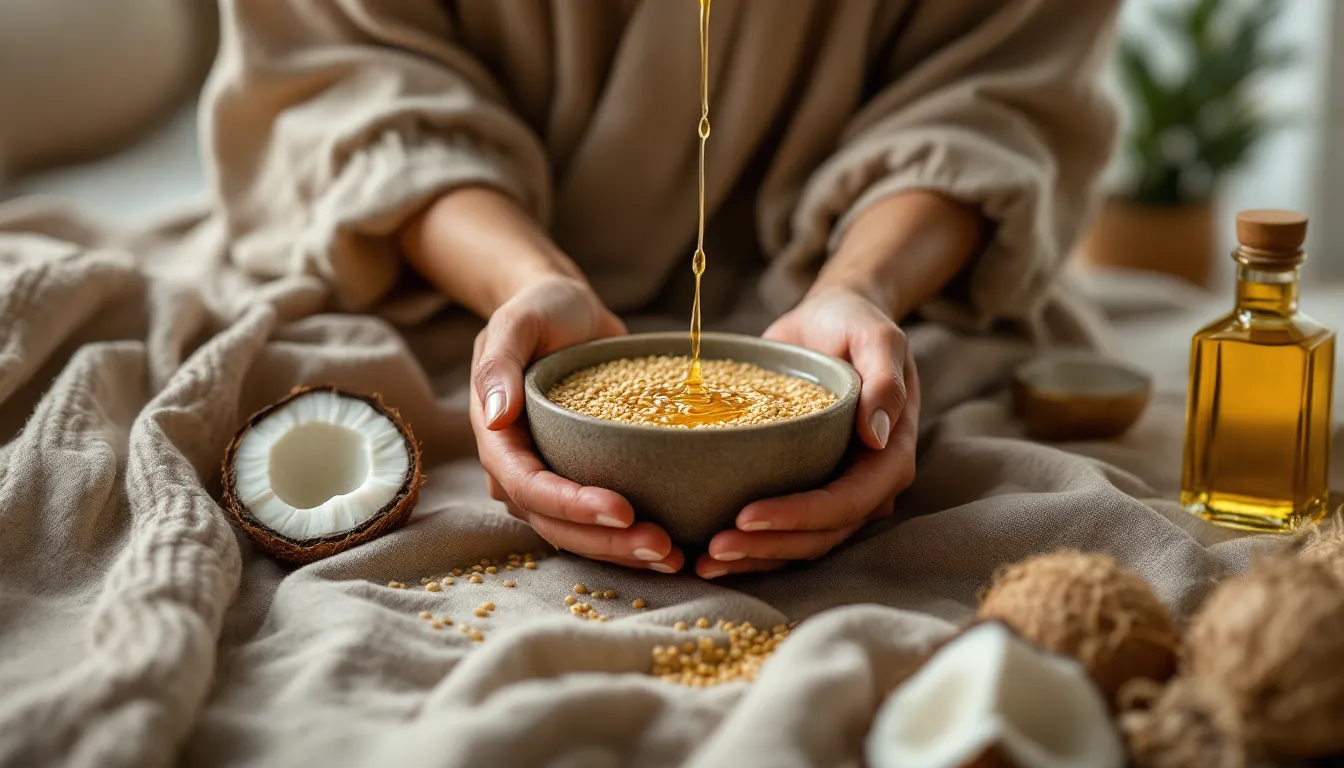
Here’s something I love about Ayurveda’s approach: it doesn’t treat dryness with water alone. It treats dryness with oil. That might sound counterintuitive if you’ve been taught that hydration equals drinking more fluids, but think about it, oil is heavy, smooth, stable, and warm. Those are the exact opposite qualities to Vata’s dry, rough, mobile, and cold nature. This is Ayurveda’s core balancing principle at work: like increases like, and opposites restore balance.
Oil doesn’t just coat the surface. Applied to the skin, it nourishes the outermost tissue layer (called rasa dhatu in Ayurveda) and supports what’s known as ojas, your deep reserves of vitality, immunity, and resilience. When ojas is well-fed, your skin glows, your joints move easily, and your whole system feels cushioned against stress.
Best Oils for Topical Application
For most people dealing with dryness, sesame oil is the gold standard in Ayurveda. It’s warming, heavy, and penetrating, perfect for counteracting cold, dry qualities. I like to warm it gently (not hot, just comfortably warm) and massage it into my skin before a shower. This practice is called abhyanga, and it’s one of the most grounding things you can do for yourself.
If you tend to run hot, maybe you’re more Pitta-dominant, with skin that’s dry but also easily irritated or flushed, coconut oil or sunflower oil might feel better. These are cooler in quality and won’t aggravate that inner heat.
For Kapha types who feel sluggish alongside their dryness, a lighter oil like safflower or even a small amount of mustard oil (which is warming and stimulating) can help get circulation moving so moisture actually reaches the skin.
Do this today: Warm two tablespoons of sesame oil in your palms and massage your feet and lower legs before bed tonight. Takes about 5 minutes. Great for Vata types especially. If you’re Pitta-dominant, swap in coconut oil. Kapha types, try it on days when you feel cold and stiff rather than every night.
Incorporating Healthy Oils Into Your Diet
Topical oil is wonderful, but the dryness often starts deeper, in your digestive tract. When your inner fire (called agni) is irregular or weakened, it can’t properly transform food into the nourishing juice that feeds every tissue in your body. The result? Dry, undernourished tissues from the inside out, and sometimes a buildup of ama, sticky, undigested residue that clogs the channels and blocks nutrients from reaching where they’re needed.
Adding healthy fats to your meals helps on both fronts. Ghee (clarified butter) is Ayurveda’s most revered internal oil. It’s considered sattvic, pure, clarifying, and deeply nourishing. Even a teaspoon stirred into warm rice or drizzled over cooked vegetables supports agni without overwhelming it, and it directly builds ojas.
Olive oil, coconut oil in cooking, and flaxseed oil as a finishing drizzle are also valuable depending on your constitution. The key is that the oil is part of a cooked, warm meal, not consumed raw in huge quantities, which can dampen agni rather than support it.
Do this today: Add one teaspoon of ghee to your lunch or dinner. Takes about 10 seconds. Suitable for all body types in small amounts, though Kapha-dominant folks can keep it to half a teaspoon and favor lighter oils overall.
Hydration Strategies That Go Beyond Drinking Water
I’ll be honest, for years, my approach to dryness was just “drink more water.” And while staying hydrated matters, gulping cold water throughout the day can actually make things worse from an Ayurvedic perspective. Cold, plain water has light and cold qualities. If Vata is already high, you’re adding lightness to an already light situation. The water moves through you quickly without deeply moisturizing your tissues.
Real hydration, in Ayurveda’s view, is about quality, warm, slightly unctuous, and timed well so your agni can actually absorb it.
Internal Hydration Tips for Lasting Moisture
Warm water is your simplest friend. Sipping warm or room-temperature water throughout the day, especially between meals rather than flooding your stomach during meals, supports agni and allows moisture to be absorbed gradually into your tissues.
Adding a pinch of mineral salt and a squeeze of lemon to warm water in the morning gently stokes your digestive fire and replaces minerals lost overnight. This supports tejas, the subtle metabolic spark that governs how well you transform what you consume into actual tissue nourishment.
Herbal teas are another beautiful tool. Ginger tea warms and kindles agni. Licorice root tea is naturally sweet and moistening, one of the best internal remedies for dry skin and dryness everywhere. Fennel tea is cooling enough for Pitta types while still being hydrating.
And here’s one people often overlook: soupy, well-cooked foods count as hydration. A bowl of warm dal or kitchari delivers water, minerals, protein, and fat in a form your body can absorb far more easily than a glass of ice water ever could.
Do this today: Replace one glass of cold water with a cup of warm ginger tea or warm water with lemon. Takes 3 minutes to prepare. Wonderful for Vata and Kapha types. Pitta types might prefer fennel or plain warm water.
External Hydration and Moisture-Locking Techniques
On the outside, moisture needs to be sealed in, not just applied. After your abhyanga massage or shower, pat your skin gently (don’t rub) and let a thin layer of oil remain. This creates a smooth, stable barrier that locks moisture in and protects against the rough, dry qualities of wind and indoor heating.
Avoid very hot showers, which strip natural oils and increase the sharp, mobile qualities that destabilize your skin’s moisture layer. Lukewarm is kinder.
For your face, a simple mist of rose water followed by a drop of facial oil (almond or jojoba work beautifully) gives that dewy quality without heaviness. Rose water is cooling and soothing, a gem for Pitta-type dryness where there’s redness alongside the flaking.
Do this today: After your next shower, while skin is still slightly damp, apply a thin layer of sesame or almond oil. Takes 2 minutes. Ideal for Vata types. Pitta types, use coconut oil. Kapha types, try this only on visibly dry patches.
Warming Foods That Combat Dryness From Within
Food is medicine in Ayurveda, not in a metaphorical way, but literally. What you eat either increases or decreases the qualities circulating in your body. And when you’re dealing with dryness, the food strategy is clear: favor what is warm, moist, slightly oily, and grounding. These qualities directly oppose Vata’s cold, dry, light, rough nature.
This is also about supporting prana, your life force, the subtle energy that governs your nervous system’s steadiness and your body’s ability to circulate nourishment. Cold, dry, raw foods scatter prana. Warm, cooked, well-spiced foods concentrate it.
Soups, Stews, and Broths for Deep Nourishment
I can’t overstate how powerful a simple bowl of soup is for dryness. Bone broth, vegetable broth, mung bean soup, kitchari, these are heavy, warm, moist, and smooth. They deliver hydration, minerals, and easily digestible nourishment in exactly the form that weakened agni can handle.
When agni is irregular (a classic Vata pattern), undigested food becomes ama. You might notice a coated tongue in the morning, sluggish bowels, or a heavy foggy feeling even though you’re eating. Soupy, well-cooked meals are gentle enough that agni can process them fully, reducing ama buildup while deeply nourishing rasa dhatu, the first tissue layer that feeds your skin.
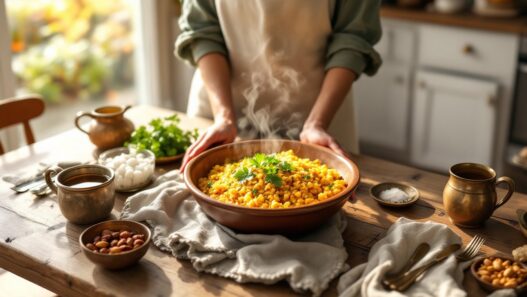
A bowl of kitchari for lunch, rice, split mung beans, ghee, and warming spices, is probably the single most balancing meal in Ayurveda. It’s easy to digest, deeply moisturizing, and it builds ojas over time.
Do this today: Make a simple soup or kitchari for dinner tonight. Takes 30–40 minutes. Excellent for all body types. Kapha types can use less ghee and add extra black pepper for warmth.
Spices and Herbs That Support Skin Hydration
Spices aren’t just flavor, they’re agni’s best allies. Ginger is warming and sharp, which helps kindle sluggish digestion. Cumin and coriander are gentle digestive supporters that don’t overheat Pitta. Turmeric is warm, dry, and light, but in small amounts mixed with ghee, it becomes a powerful anti-ama agent without aggravating dryness.
Cinnamon brings a sweet warmth that’s particularly lovely for Vata, it’s grounding and comforting. Ashwagandha, while technically an herb rather than a culinary spice, is one of the best Vata-pacifying rejuvenatives. It’s heavy, oily, and warming in quality, directly building ojas and calming the nervous system.
A pinch of these spices in your cooking each day makes a real difference over weeks. Ayurveda isn’t about dramatic overnight fixes, it’s about consistent, gentle correction that allows your body to rebalance at its own pace.
Do this today: Add a half-teaspoon each of cumin and ginger to your next cooked meal. Takes 10 seconds. Good for Vata and Kapha types. Pitta types, favor coriander and fennel instead of ginger.
Building a Daily Routine to Prevent Chronic Dryness
In Ayurveda, dinacharya, your daily routine, is arguably more powerful than any single remedy. Vata thrives on irregularity. It loves chaos, skipped meals, late nights, and constant stimulation. So the antidote is rhythm. Gentle, predictable, nourishing rhythm.
Here are two daily habits I’ve personally found transformative for dryness.
Morning abhyanga before your shower. I mentioned this earlier, but I want to emphasize it as a non-negotiable anchor. Warming oil massaged into the whole body, even just a quick 5-minute version on busy days, calms the nervous system, nourishes the skin, and creates a stable, grounded quality that lasts for hours. It directly supports prana by settling the mobile, scattered energy that Vata brings.
Eating your largest meal at midday. Agni is strongest between roughly 10 a.m. and 2 p.m., mirroring the sun’s peak. When you eat your most substantial, nourishing meal during this window, your body can fully digest and absorb the fats, proteins, and moisture it needs. Eating heavy foods late at night, when agni is naturally low, creates ama, and ama blocks the very nourishment your dry tissues are craving.
A third habit worth weaving in: winding down by 9:30 or 10 p.m. Sleep is when your body does its deepest repair and tissue-building work. Staying up late increases Vata’s mobile, light qualities and directly depletes ojas. Even shifting your bedtime 20 minutes earlier can make a noticeable difference in how your skin looks and feels.
If You’re More Vata
You’re the most likely to experience dryness, and it probably shows up everywhere, skin, joints, digestion, mood. Favor warm, oily, heavy, grounding foods. Think cooked root vegetables, ghee-rich grains, warm milk with nutmeg before bed. Keep your environment warm and avoid drafts. Move gently, slow yoga, walking, nothing jarring. Avoid fasting, raw foods, and excessive travel.
Do this today: Eat a warm, cooked breakfast with ghee by 8 a.m. Takes 15 minutes. This is especially for you, Vata. Avoid skipping breakfast entirely.
If You’re More Pitta
Your dryness often comes with redness, sensitivity, or a burning quality underneath. Your inner heat has dried out your moisture reserves. Favor cooling, sweet, slightly oily foods, coconut, avocado, sweet fruits, cucumber, dairy if you tolerate it. Use cooling oils externally (coconut, sunflower). Avoid excess spicy food, alcohol, and midday sun exposure.
Do this today: Apply coconut oil to any irritated, dry patches after your evening shower. Takes 3 minutes. Specifically for Pitta-dominant types. Avoid sesame oil if your skin feels hot or inflamed.
If You’re More Kapha
Your dryness may be puzzling because you’re naturally moist and heavy. What’s likely happening is that sluggish circulation and slow metabolism are preventing nourishment from reaching your outer tissues. Favor warm, light, and mildly spiced foods to kindle agni. Dry brushing before your shower stimulates circulation. Use lighter oils like safflower or a tiny amount of mustard oil on dry areas only.
Do this today: Do a 2-minute dry brush of your legs and arms before your morning shower to get circulation moving. Great for Kapha types. Avoid heavy oil massage on days when you feel congested or sluggish.
Do this today (routine overall): Pick one of the two daily habits above, morning oil massage or midday main meal, and commit to it for one week. Takes 5–30 minutes depending on which you choose. Suitable for all body types with the personalization notes above.
When to Seek Professional Help for Persistent Dryness
Most dryness responds beautifully to the consistent, gentle approach I’ve described. But sometimes dryness persists even though your best efforts, or it comes with other signs that suggest something deeper is going on.
If you’re experiencing cracking skin that bleeds, persistent digestive issues alongside the dryness, joint pain, significant hair loss, or dryness that doesn’t improve after 4–6 weeks of dedicated dietary and lifestyle changes, it’s worth consulting a qualified Ayurvedic practitioner. They can assess your constitution and current imbalance more precisely, and may recommend specific herbal formulations or treatments like basti (Ayurvedic herbalized enemas, which are actually one of the most powerful Vata-pacifying therapies in classical Ayurveda).
Also, certain medical conditions, thyroid imbalances, autoimmune issues, nutrient deficiencies, can mimic or compound Vata-type dryness. A good practitioner will know when to refer you for conventional testing alongside Ayurvedic care.
Seasonal Adjustment
As seasons shift, your approach to dryness needs to shift too, this is ritucharya, Ayurveda’s seasonal wisdom. In cold, dry winter months, lean heavily into warming oils, heavier foods, and more ghee. As spring arrives with its cool, damp, heavy qualities, you can gradually lighten up, reduce oil intake slightly, favor more pungent and bitter tastes to clear any ama that accumulated over winter, and switch from heavy sesame oil massage to lighter oils or dry brushing.
In summer’s heat, Pitta-type dryness becomes more common. Shift toward cooling hydration, coconut water, cucumber, mint tea, coconut oil externally. Then as autumn returns with its dry, windy, cool qualities, circle back to the full Vata-pacifying approach.
The body isn’t static. Your remedies for dry skin and dryness everywhere work best when they breathe with the seasons.
Do this today: Look at what season you’re in right now and ask yourself whether your current food and self-care match its qualities. If it’s cold and dry outside and you’re eating salads and drinking iced water, there’s your starting point. Takes 2 minutes of honest reflection. Relevant for all body types.
Conclusion
Dryness, in Ayurveda’s view, is your body speaking clearly. It’s telling you that the qualities of air and space have risen, in your environment, your habits, or your digestion, and that what you need is warmth, moisture, stability, and nourishment. Not just on the surface, but all the way through.
The beautiful thing is that the remedies are simple. Warm oil on your skin. A bowl of soup for dinner. Ghee in your rice. A predictable bedtime. These aren’t dramatic interventions, they’re quiet acts of care that, over time, rebuild your reserves of ojas and restore that soft, supple feeling from the inside out.
I’ve seen this approach work in my own life and in the lives of so many people I’ve spoken with over the years. It doesn’t require perfection. It just requires a little consistency and a willingness to listen to what your body is actually asking for.
So, where does dryness show up most for you right now? And which one small change feels like the right place to start? I’d genuinely love to hear. Drop a thought in the comments or share this with someone who’s been battling dryness this season. Sometimes the simplest shift makes all the difference.