







How the Fashion Industry Became One of the World’s Biggest Polluters
Fashion wasn’t always this way. For most of human history, clothing was local, seasonal, and made to last. Your grandmother probably owned a fraction of what’s in your closet right now, and she wore those pieces until they genuinely wore out.
The shift started in the mid-20th century when synthetic fibers like polyester and nylon made mass production cheaper and faster. By the 1990s, global trade agreements opened the door to offshore manufacturing at rock-bottom labor costs. Suddenly, brands could produce enormous volumes of clothing and sell them at prices that felt almost too good to be true. Because they were.
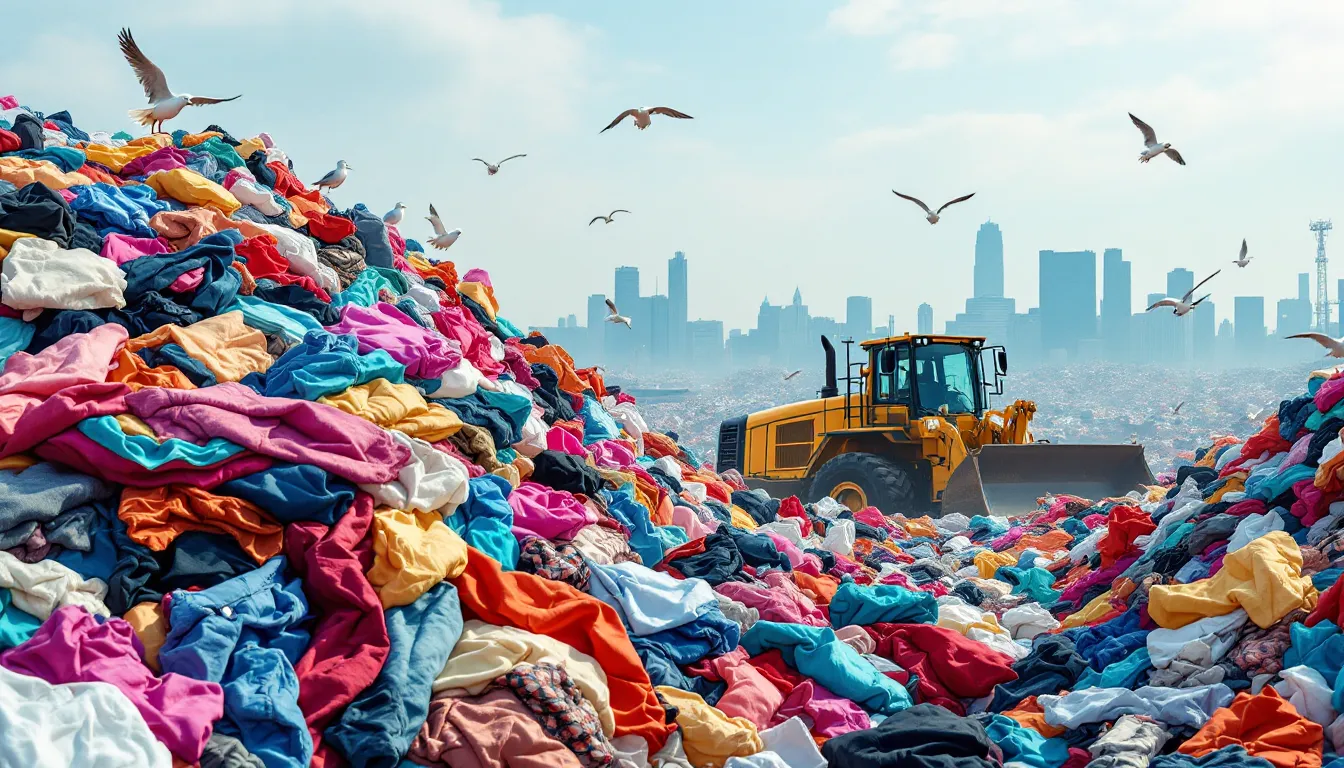
Today, the fashion industry accounts for roughly 8–10% of global carbon emissions, more than international flights and maritime shipping combined. It’s the second-largest consumer of the world’s water supply. And every year, an estimated 92 million tons of textile waste ends up in landfills. These aren’t abstract numbers. They represent rivers polluted with dye runoff, microplastics washing into oceans with every load of laundry, and mountains of discarded garments piling up in places like Ghana’s Kantamanto market and Chile’s Atacama Desert.
The speed of production is a big part of the story. Where fashion brands once released two to four collections a year, some fast fashion companies now push out new styles weekly, even daily. That pace creates a constant churn of desire and disposal. And it’s not accidental. It’s designed.
What Is Fast Fashion and Why Is It So Popular?
Fast fashion is exactly what it sounds like: clothing produced rapidly, in large quantities, at low prices, to match the latest trends. Brands like Shein, Zara, H&M, and dozens of ultra-fast online retailers have built empires on this model. The appeal is obvious, trendy looks for next to nothing, delivered to your doorstep in days.
And I get it. I’ve been there. There’s a dopamine hit to clicking “add to cart” on a cute top that costs less than lunch. The accessibility of fast fashion is real, especially for people on tight budgets or those just figuring out their personal style. It democratized fashion in ways that felt genuinely exciting for a while.
But speed has consequences. The fast fashion model depends on overproduction, overconsumption, and a cycle of disposability that treats clothing like single-use items. The average garment is now worn just seven to ten times before being tossed. That’s not a wardrobe, it’s a revolving door.
The Hidden Environmental and Human Costs
Let’s talk about what that $5 dress actually costs.
Environmentally, fast fashion relies heavily on synthetic fabrics derived from petroleum. Polyester production alone generates roughly 700 million tons of CO₂ annually. Cotton, the other dominant fabric, isn’t off the hook either, conventional cotton farming uses enormous amounts of water and pesticides. It takes about 2,700 liters of water to produce a single cotton t-shirt. That’s roughly what one person drinks over two and a half years.
Then there’s the human side. Garment workers, predominantly women in countries like Bangladesh, Cambodia, and Myanmar, often earn poverty wages, sometimes as low as $2–3 a day. Working conditions in many factories remain dangerous, with inadequate ventilation, long hours, and exposure to toxic chemicals. The 2013 Rana Plaza collapse in Bangladesh, which killed over 1,100 workers, became a turning point in public awareness. But more than a decade later, systemic change has been painfully slow.
The waste problem is staggering too. Less than 1% of clothing is recycled into new garments. Much of what gets donated ends up shipped overseas, where it overwhelms local markets and eventually lands in landfills anyway. In 2025, the EU began implementing extended producer responsibility laws for textiles, but enforcement remains uneven, and global coverage is still patchwork.
What Is Slow Fashion and How Does It Differ?
Slow fashion is the counter-movement, a deliberate step back from speed, volume, and disposability. It’s about making and buying clothing with intention, quality, and awareness of impact. Think of it as the difference between grabbing fast food every night and cooking a nourishing meal from scratch. Both feed you, but they leave you feeling very different.
The term was coined by design activist Kate Fletcher in 2007, drawing a parallel to the slow food movement. At its core, slow fashion asks us to reconnect with our clothing, to know where it comes from, who made it, what it’s made of, and how long it’s meant to last.
Slow fashion isn’t one specific aesthetic or price point. It includes handmade garments from local artisans, secondhand and vintage shopping, clothing swaps, repair culture, and brands that prioritize ethical labor and sustainable materials. It can look like a beautifully tailored linen shirt or a thrifted denim jacket you’ve had for a decade.
Core Principles Behind the Slow Fashion Movement
A few ideas anchor slow fashion, and they’re worth naming clearly.
Quality over quantity. Slow fashion favors durable materials, thoughtful construction, and timeless design over trend-driven pieces that fall apart after a few washes.
Transparency. Brands committed to slow fashion tend to be open about their supply chains, where they source materials, who makes their clothes, what workers are paid. It’s not perfect, but the bar for honesty is higher.
Mindful consumption. This is the big one. Slow fashion invites you to buy less, choose well, and care for what you own. It’s less about deprivation and more about shifting how you relate to your closet.
Circularity. The slow fashion vision includes clothing that can be repaired, repurposed, composted, or genuinely recycled at the end of its life, not just dumped. Some brands now offer take-back programs, and the resale market has exploded, with platforms like ThredUp, Depop, and Vestiaire Collective seeing record growth.
Fast Fashion vs Slow Fashion: A Side-by-Side Comparison
When you line them up, the differences between fast fashion and slow fashion become pretty stark.
Production speed: Fast fashion operates on a breakneck timeline, design to store shelf in as little as two weeks. Slow fashion takes its time. A single collection might take months to develop, with attention paid to sourcing, sampling, and ethical oversight.
Price: Fast fashion wins on sticker price, no question. But slow fashion advocates argue you’re paying for longevity. A $120 jacket you wear for five years costs less per wear than a $20 jacket that pills and tears after three months.
Materials: Fast fashion leans on cheap synthetics, polyester, acrylic, nylon, that shed microplastics and don’t biodegrade. Slow fashion gravitates toward organic cotton, linen, hemp, Tencel, and responsibly sourced wool. Some newer brands are experimenting with innovative fabrics made from algae, mushroom leather, and agricultural waste.
Labor practices: This is where the gap is widest. Fast fashion’s business model depends on low labor costs, often at the expense of worker safety and dignity. Slow fashion brands, at least the credible ones, pay fair wages and maintain safer working conditions. Many are certified through organizations like Fair Trade or the Global Organic Textile Standard (GOTS).
Environmental impact: Fast fashion generates massive waste, water pollution, and carbon emissions at every stage. Slow fashion, while not impact-free (no clothing production is), dramatically reduces harm through smaller batches, better materials, and longer garment lifespans.
Relationship with the consumer: Fast fashion wants you to keep buying. Slow fashion wants you to keep wearing. That’s a fundamental philosophical difference, and it shapes everything from marketing to design.
How to Tell If a Brand Is Truly Sustainable
Here’s where things get tricky. As sustainability has become a selling point, plenty of brands have learned to talk the talk without walking the walk. I’ve fallen for it myself, bought a “conscious collection” piece only to discover the rest of the brand’s practices hadn’t changed at all.
So how do you sort the genuine from the performative?
Start with transparency. Brands that are serious about sustainability will tell you where their factories are, what certifications they hold, and what their actual environmental targets look like, with data, not just slogans. Look for third-party certifications like GOTS, OEKO-TEX, B Corp, Fair Trade, and Cradle to Cradle.
Check if they publish an annual impact or sustainability report. It doesn’t need to be perfect, no brand is, but the willingness to disclose is meaningful.
Pay attention to the language they use. Vague terms like “eco-friendly,” “green,” or “made with love” mean almost nothing without specifics.
Red Flags and Greenwashing Tactics to Watch For
One “green” line alongside thousands of conventional products. This is the classic greenwashing playbook. A small capsule collection of organic cotton tees doesn’t offset millions of polyester garments produced under the same roof.
Heavy marketing, thin evidence. If a brand spends more on its sustainability campaign than on actually improving its supply chain, that’s a red flag. Be skeptical of flashy earth-toned packaging that masks business-as-usual practices.
Recycling programs that don’t actually recycle. Some brands offer in-store clothing drop-off bins that funnel garments into the same waste stream as everything else. Ask where the collected clothing actually goes.
Carbon offset claims without reduction targets. Offsets can be part of a strategy, but they shouldn’t be the whole strategy. A brand genuinely working toward sustainability will prioritize reducing emissions at the source.
Resources like Good On You and the Fashion Transparency Index can help you evaluate brands with more confidence. I’ve found them genuinely useful when I’m unsure about a purchase.
Practical Ways to Shift Your Wardrobe Toward Sustainability
Here’s where I want to be honest: transitioning to a fully sustainable wardrobe doesn’t happen overnight, and it doesn’t require you to throw out everything you currently own. In fact, the most sustainable thing you can do is wear what you already have.
Start there. Before buying anything new, take stock of what’s in your closet. You might be surprised by pieces you’d forgotten about. Repair what’s fixable, a loose button, a small tear, a hem that needs adjusting. YouTube is full of simple mending tutorials, and many local tailors charge very little for basic repairs.
When you do buy, try secondhand first. Thrift stores, consignment shops, and online resale platforms have gotten remarkably good. I’ve found some of my favorite pieces this way, better quality than what I could afford new, at a fraction of the price.
If you’re buying new, invest in versatile, well-made pieces in colors and cuts that work across multiple outfits. Natural fibers like cotton, linen, and wool tend to last longer and feel better against the skin than their synthetic counterparts.
And slow down. I know that sounds simplistic, but the single biggest lever most of us have is simply buying less. The average American purchases about 68 garments per year. Even cutting that by a third would make a real difference, both ecologically and financially.
Building a Capsule Wardrobe on Any Budget
A capsule wardrobe is a small, curated collection of versatile pieces that mix and match easily. The idea isn’t rigid minimalism, it’s about having a closet full of things you actually love and wear.
I’d suggest starting with around 30–40 pieces (including shoes and outerwear) built around a cohesive color palette. Neutrals as a foundation, with a few accent colors that make you feel like yourself.
This works on any budget. Your capsule can be entirely thrifted, entirely new, or a blend. The key is intentionality, buying pieces that serve multiple purposes rather than one-occasion wonders.
A few questions I ask myself before any purchase: Do I already own something similar? Can I style this at least three different ways? Will I still want to wear this a year from now? If the answer to any of those is no, I put it back.
Care matters too. Washing clothes less frequently (when possible), using cold water, air-drying, and storing garments properly all extend their life significantly. It sounds mundane, but it’s one of the most impactful things you can do.
The Future of Fashion: Where the Industry Is Heading
There’s cautious reason for optimism in 2026, even if progress feels uneven.
Regulatory pressure is building. The EU’s Strategy for Sustainable and Circular Textiles is pushing brands to take responsibility for the full lifecycle of their products. France has already banned the destruction of unsold clothing. New York’s proposed Fashion Sustainability and Social Accountability Act, if passed, would require major brands to map and disclose their supply chains and set binding environmental targets.
Technology is opening doors too. Innovations in textile recycling, like chemical recycling that can break polyester back down to its raw components, are moving from lab to commercial scale. Digital product passports, which embed a garment’s full supply chain history into a scannable code, are gaining traction. By 2030, the EU plans to make them mandatory for textiles.
Consumer behavior is shifting, especially among younger shoppers. Gen Z and younger millennials are driving the growth of resale, rental, and repair. The global secondhand apparel market is projected to reach $350 billion by 2028, according to ThredUp’s latest resale report.
But let’s be real, systemic change requires more than individual action. The brands producing billions of garments a year hold the most power, and many still prioritize growth over responsibility. Policy, accountability, and collective pressure matter at least as much as personal choice.
That said, personal choice isn’t nothing. Every purchase is a signal. Every time you mend instead of replace, or choose a transparent brand over a disposable one, you’re casting a vote for the kind of industry you want to exist.
Conclusion
The fast fashion vs slow fashion conversation isn’t really about clothes. It’s about values, what we prioritize, what we’re willing to look at honestly, and what kind of world we want to dress ourselves in.
I don’t think perfection is the goal here. I still own fast fashion pieces. I’m still figuring this out, like most people. But I’ve found that slowing down, even a little, has changed how I relate to my wardrobe and, weirdly, to myself. There’s something grounding about wearing clothes that were made with care.
If you take one thing from this, let it be this: you don’t have to overhaul everything at once. Start with one habit. Buy one less thing this month. Try a clothing swap. Learn to sew on a button. Small shifts, repeated over time, build a different kind of normal.
This article is for general educational purposes. For specific guidance on sustainable materials, labor certifications, or environmental regulations, consult qualified experts or industry resources.
I’d love to hear where you are in your own journey. Have you started shifting toward slower fashion? What’s been the hardest part, or the most surprising? Drop a thought in the comments or share this with someone who’s been thinking about their closet lately.