






What Makes Grocery Shopping Sustainable (And Why It Matters Now)
When I say “sustainable grocery shopping,” I’m talking about something broader than just buying organic or carrying a reusable bag. It’s about making choices that support the health of the soil, the people who grow our food, the communities we live in, and, yes, our own bodies and bank accounts.
Sustainability at the grocery store sits at the intersection of three things: what you buy, how much of it you actually use, and where it comes from. A perfectly organic tomato shipped 3,000 miles in a plastic clamshell and then forgotten in the back of your fridge isn’t exactly a win.
And the urgency is real. Global food systems account for roughly a third of greenhouse gas emissions, and household food waste in the U.S. still hovers around 30-40% of what we purchase. Meanwhile, grocery prices have climbed steadily since 2022, making budget-consciousness not just smart but necessary for most families.
The good news? The most impactful changes tend to be the simplest ones. Buying what’s in season. Using what you buy. Choosing local when it makes sense. These aren’t luxury moves, they’re common sense wrapped in a sustainability frame.
The Myth That Sustainable Food Always Costs More

I’ll be honest, this myth used to live in my head rent-free. I assumed that buying better meant buying pricier. And sometimes, sure, the sustainably raised chicken does cost more per pound than the conventional option. But the full picture is way more nuanced than that shelf-price comparison suggests.
The real cost of groceries isn’t just what you pay at checkout. It’s what you throw away, what you overbuy, and the health costs of consistently choosing ultra-processed foods because they seem cheaper upfront. When I started tracking my actual spending, including the wilted greens I tossed and the impulse snacks nobody finished, I realized I was wasting close to 20% of my grocery budget on food that never became a meal.
That’s where sustainable shopping gets interesting. It’s not about spending more. It’s about spending differently.
Where Hidden Savings Actually Come From
The savings hide in a few places most people overlook.
Seasonal produce is cheaper. When strawberries are in season locally, supply is high and prices drop. When you’re buying them in January, you’re paying for greenhouse energy or air freight.
Whole ingredients stretch further. A bag of dried lentils costs a fraction of a pre-made lentil soup and yields three times the servings. Buying whole foods and doing minimal prep yourself is almost always cheaper, and you skip the excess packaging, too.
Waste reduction is money found. The average American household throws away roughly $1,500 worth of food per year. Even cutting that in half puts real money back in your pocket. And less waste means less packaging, less methane from landfills, and less guilt when you open the fridge.
I think of it this way: sustainability isn’t a premium you pay. It’s a lens that helps you stop paying for things you never needed.
How to Choose Sustainable Products on a Real-World Budget
Let’s get practical, because philosophy doesn’t help much when you’re standing in aisle seven with a toddler on your hip and fifteen minutes before you need to be somewhere else.
My approach is simple: focus your energy on the categories that matter most, and give yourself grace on the rest.
Prioritize Seasonal and Local Produce
This is the single highest-impact, lowest-cost move in sustainable grocery shopping. Seasonal produce tastes better, costs less, and requires far fewer resources to get to your plate.
In spring and summer, that might mean loading up on berries, stone fruits, leafy greens, and zucchini. In fall and winter, think root vegetables, squash, apples, and sturdy greens like kale.
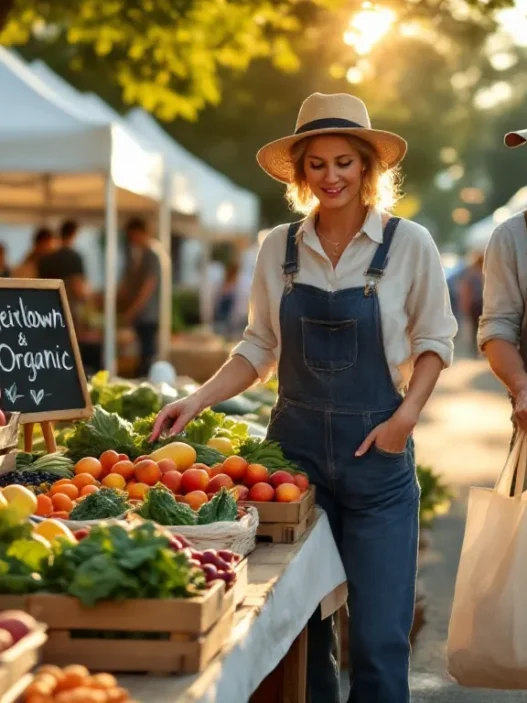
Farmers’ markets are great if you have access, but they’re not the only option. Many conventional grocery stores now label local items, and some run seasonal promotions specifically for regional produce. Even frozen fruits and vegetables, often picked and frozen at peak ripeness, are a solid sustainable choice with minimal waste and a friendly price tag.
Try this: Before your next shop, spend two minutes looking up what’s in season in your region right now. Build your meals around those items first.
Decode Eco-Labels Worth Trusting
The label landscape is, frankly, a mess. “Natural” means almost nothing legally. “Eco-friendly” is marketing. And some certifications are rigorous while others are basically pay-to-play.
A few labels I actually trust and look for: USDA Organic (regulated, meaningful standards), Fair Trade Certified (addresses labor practices and sustainability), Rainforest Alliance (especially for coffee, chocolate, tea), and Marine Stewardship Council for seafood.
You don’t need to memorize a dozen seals. Pick two or three that align with what you care about most, whether that’s pesticide reduction, worker welfare, or ocean health, and use those as your guide. Ignore the rest without guilt.
The honest truth is that no single label captures the full picture. A locally grown, spray-free apple from your neighbor’s farm won’t carry any certification at all, and it might be the most sustainable thing in your cart.
Smart Swaps That Cut Costs and Environmental Impact
I’m a big fan of swaps over sacrifice. Instead of removing things from your cart and feeling deprived, try trading them for alternatives that happen to be cheaper and lighter on the planet.
Swap bottled water for a good filter. This one’s almost embarrassingly simple, but the savings add up fast, both in dollars and plastic.
Swap pre-cut, pre-washed produce for whole versions. That bag of pre-cut butternut squash costs three times what a whole squash does. Yes, it takes a few extra minutes. But the price difference is dramatic, and you’re skipping an extra layer of plastic packaging.
Swap single-serving snacks for bulk bins. Granola, nuts, dried fruit, oats, rice, spices, buying from bulk sections (where available) typically costs 30-50% less than packaged equivalents. Bring your own containers if the store allows it, and you’ve just eliminated packaging entirely.
Swap meat-heavy meals for a few plant-forward ones each week. I’m not suggesting anyone go fully vegetarian, that’s a personal choice. But beans, lentils, tofu, and eggs are dramatically cheaper per serving than most meats, and their environmental footprint is a fraction of the size. Even two plant-based dinners a week makes a measurable difference in both your budget and your carbon output.
Swap brand loyalty for store brands. Most store-brand products are manufactured in the same facilities as name brands. The quality difference is often negligible, but the price difference can be 20-40%. This one’s easy money.
Reducing Food Waste as a Sustainability Strategy
If I could pick only one sustainable grocery shopping habit to champion, it would be this: use what you buy. It sounds obvious. But the data suggests most of us are pretty bad at it.
Food waste is the silent budget killer and one of the biggest contributors to household environmental impact. When food rots in a landfill, it produces methane, a greenhouse gas far more potent than CO2 in the short term. Every head of lettuce you toss is also the water, energy, labor, and transportation that went into growing and delivering it, all wasted.
The beautiful thing about tackling food waste is that it’s the rare sustainability move that’s purely positive. There’s no tradeoff. You save money, reduce emissions, and eat better, all at once.
Meal Planning and Storage Tips That Pay Off
I’ll be real: I’m not a meticulous meal planner. I don’t map out every breakfast, lunch, and dinner for the week in a color-coded spreadsheet. But I do follow a loose system that’s cut my waste dramatically.
Plan around what you already have. Before shopping, check your fridge, freezer, and pantry. Build your list around what needs using up first, then fill in the gaps.
Shop with meals in mind, not just ingredients. A cart full of random vegetables and proteins with no plan is a cart full of future compost. Even a rough sketch, “stir-fry Monday, soup Wednesday, pasta Friday”, gives your groceries purpose.
Store things properly. Herbs last a week longer in a damp paper towel inside a container. Berries stay fresh when you rinse them in a vinegar-water solution before refrigerating. Bread freezes beautifully. These tiny habits prevent so much waste.
Embrace the “use it up” meal. Once a week, I make a meal from whatever’s left, a frittata, a grain bowl, a stir-fry, a soup. It’s often one of the most creative (and cheapest) meals of the week.
Rethinking Packaging: Practical Low-Waste Shopping Habits
Packaging is one of those areas where perfection can become the enemy of progress. I’ve seen people get so stressed about zero-waste shopping that they abandon the effort entirely. That’s not helpful.
So here’s my take: aim for less waste, not zero. Every bit of packaging you avoid is a win.
Start with the easy stuff. Bring reusable bags, not just for the checkout, but the small produce bags too. A set of mesh produce bags costs a few dollars and lasts years. Skip the plastic bag for your bananas or avocados entirely: they have their own natural packaging.
Choose products in recyclable or compostable packaging when the price is comparable. Glass jars, cardboard boxes, and paper bags are all better bets than multi-layer plastic pouches that can’t be recycled in most municipal systems.
Buy concentrated versions of cleaning products and refill when possible. Several grocery chains now offer refill stations for dish soap, laundry detergent, and hand soap. The per-use cost is usually similar or lower, and the plastic savings are significant over time.
And here’s one that’s easy to overlook: buy bigger sizes. A single large container of yogurt generates far less packaging waste than six individual cups, and it’s almost always cheaper per ounce. Same goes for oats, rice, cooking oil, and most pantry staples.
The mindset shift that helped me most was realizing that packaging reduction is cumulative. You don’t need to bring mason jars to the store on day one. You just need to make slightly better choices, consistently.
Building a Sustainable Grocery Routine That Sticks
The reason most sustainability efforts fail isn’t lack of knowledge, it’s lack of routine. We know what we’re “supposed” to do. We just forget, or it feels like too much effort on a busy Tuesday.
So I’d encourage you to build your sustainable grocery shopping habits into a routine rather than relying on willpower each trip.
Pick a consistent shopping day. This sounds minor, but it helps enormously. When you shop at roughly the same time each week, you develop a rhythm. You know what needs restocking. You waste less because you’re not panic-buying random items on three different days.
Keep a running list. I use a shared note on my phone. When something runs low, it goes on the list immediately. This prevents both overbuying and those “I forgot the onions” emergency trips that always end with $40 of unplanned purchases.
Start with three changes, not ten. If you try to overhaul everything at once, seasonal produce, bulk shopping, meal planning, zero-waste packaging, plant-based proteins, you’ll burn out by week two. Pick the three habits from this article that feel most natural to you, and build from there.
Revisit and adjust quarterly. What works in summer (farmers’ market visits, lighter meals, abundant local produce) won’t look the same in January. Give yourself permission to evolve your approach with the seasons, your schedule, and your life.
The goal isn’t a perfect grocery trip. It’s a better grocery trip, most of the time. That’s how real change compounds.
Conclusion
Sustainable grocery shopping in 2026 doesn’t require a bigger paycheck or a complete lifestyle makeover. It requires a shift in attention, from convenience-first to intention-first, from price-per-item to value-per-meal, from buying more to wasting less.
Every small change you make, choosing seasonal produce, reducing food waste, swapping in a few plant-forward meals, carrying a reusable bag, ripples outward. It touches the soil, the water, the farmers, and eventually, the world your kids (or your neighbor’s kids) will inherit.
I won’t pretend I get it right every time. Just last week I forgot my reusable bags and bought way too many bananas that are currently turning brown on my counter (banana bread it is). But I’m better than I was a year ago, and a year from now I’ll be better still. That’s the only standard that matters.
This article is for general informational purposes and is not professional financial or environmental advice. Your circumstances are unique, adapt these ideas to fit your budget, location, and needs.
I’d love to hear what’s working for you. What’s the one sustainable swap that’s actually stuck in your grocery routine? Drop a thought in the comments, I read every one.