








Why Zero Waste Doesn’t Mean Zero Flexibility
The phrase “zero waste” can be its own worst enemy. It sounds absolute, like if you slip up and grab a plastic straw at a restaurant, the whole thing collapses. But that’s not how this works. Not even close.
Zero waste, in practice, is more of a direction than a destination. It’s about reducing what you send to the landfill as much as reasonably possible, while still living your life. Some weeks you’ll nail it. Other weeks, you’ll buy something wrapped in three layers of plastic because it was the only option at the store, and that’s fine.
I think of it less like a strict diet and more like learning to cook. You pick up a few techniques, try things out, mess up a recipe here and there, and gradually get better. The flexibility is the point. Without it, most people quit before they even build momentum.
What matters is that you’re thinking about waste differently, questioning the default instead of running on autopilot. That shift in awareness tends to compound over time in ways that surprise you.
The Real Impact of Household Waste in 2026
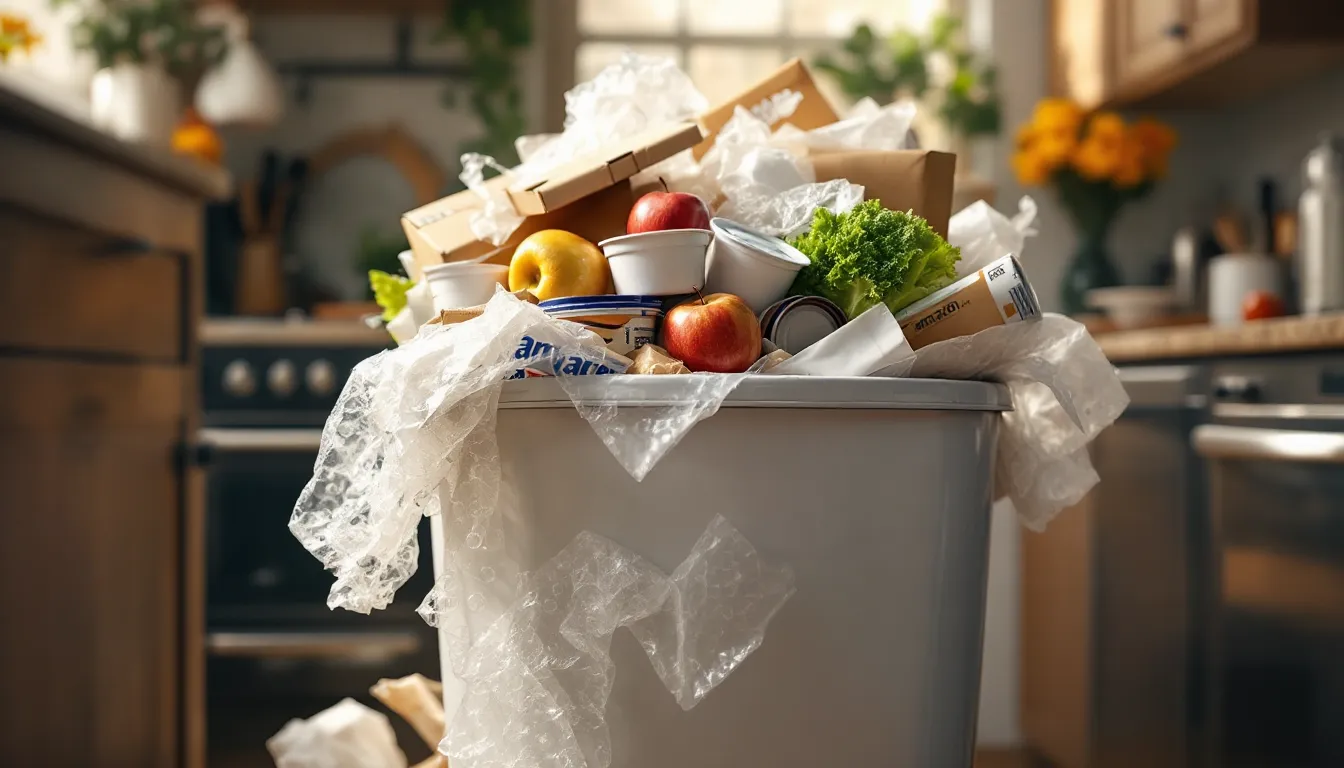
Let’s talk numbers for a moment, because they put things in perspective. The average American generates over 4.5 pounds of trash per day, according to EPA data. That’s roughly 1,600 pounds per person, per year. Multiply that across a household and you start to see the scale of the problem.
In 2026, the conversation around waste has evolved, but the trash itself hasn’t slowed down much. Single-use packaging still dominates grocery store shelves. E-commerce deliveries keep climbing, and with them, mountains of cardboard, plastic mailers, and bubble wrap. Municipal recycling programs, while well-intentioned, still struggle with contamination, and a significant portion of what we toss in the blue bin ends up in landfills anyway.
Food waste remains one of the biggest offenders. Roughly 30 to 40 percent of the U.S. food supply goes uneaten, according to the USDA. That’s not just wasted food, it’s wasted water, energy, and labor, all decomposing in a landfill and releasing methane.
The good news? Because so much household waste falls into just a few categories, food scraps, packaging, and single-use items, even small, targeted changes can take a real bite out of your trash output. You don’t have to fix the whole system. You just have to address your bin.
Start With a Trash Audit: Know What You’re Throwing Away
Before you swap a single product, I’d recommend doing something that sounds a little unglamorous but is genuinely eye-opening: look at your trash. Like, actually look at it.
A trash audit is exactly what it sounds like. You examine what you’re throwing away over the course of a week to understand your waste patterns. Most people assume they know what’s in their garbage, but the reality is usually different, and often surprising. I was stunned by how many produce bags and food containers piled up in mine.
The whole point isn’t to feel bad about it. It’s to get data. Once you know where your waste is actually coming from, you can make targeted changes instead of guessing.
How to Conduct a Simple Trash Audit
Set aside one week. That’s all you need for a decent snapshot.
At the end of each day, take a quick look at what went into your trash and recycling bins. You don’t need to sort every item with rubber gloves on (though you can if you’re feeling ambitious). Just jot down a few notes, what categories keep showing up? Food scraps? Plastic film? Takeout containers? Paper towels?
After seven days, look for the pattern. Most households find that two or three categories account for the bulk of their waste. Maybe it’s food packaging. Maybe it’s produce that went bad before you got to it. Whatever it is, that’s your starting line.
Try this: Keep a simple notepad near your kitchen trash can for one week. Spend 30 seconds each evening noting what you tossed. No judgment, just observation. This works for anyone, whether you’re just starting out or you’ve been working on reducing waste for a while.
Easy Swaps That Make the Biggest Difference
Once you know what’s filling your trash, you can start making swaps, and not the kind that require a trip to a specialty shop or a Pinterest-worthy overhaul. I’m talking about changes that slot into your existing routines without much friction.
The key is to focus on high-volume, low-effort swaps first. Tackle the stuff that shows up in your bin most often, because that’s where the impact lives.
In the Kitchen
The kitchen is ground zero for most household waste, so it’s the natural place to begin.
If your audit showed a lot of food scraps, composting is one of the single most impactful things you can do. And you don’t need a backyard. Countertop compost bins, community drop-off sites, and even some municipal curbside programs make it accessible for apartment dwellers too. I started with a small countertop bin and was amazed at how much lighter my regular trash got almost overnight.
For packaging, try bringing your own bags for produce and buying in bulk where it makes sense. Rice, oats, beans, pasta, these are all items that work well from bulk bins. Reusable mesh bags or cloth bags weigh almost nothing and tuck easily into a purse or backpack.
Switch from paper towels to washable cloth rags for everyday spills. I keep a small basket of cut-up old t-shirts under my kitchen sink. They work just as well, and I toss them in the laundry instead of the trash.
Try this: Pick one kitchen swap this week, just one. Composting, bulk bags, or cloth rags. Give it two weeks before evaluating. This is great for beginners, though if you already compost, maybe the bulk-buying route is your next move.
In the Bathroom and Beyond
The bathroom is sneakily wasteful. Think about all those plastic bottles, shampoo, conditioner, body wash, lotion, face wash. Most of them are hard to recycle effectively.
Bar alternatives have come a long way. Shampoo bars, conditioner bars, and even solid lotion bars are widely available now and they actually work well. One bar typically lasts as long as two or three bottles, and there’s zero packaging to toss.
Safety razors with replaceable metal blades are another solid swap. The upfront cost is a bit higher, but over time they’re cheaper than cartridge razors, and you’re replacing a tiny metal blade instead of a whole plastic cartridge.
Beyond the bathroom, consider what other single-use items cycle through your home. Dryer sheets can be replaced with wool dryer balls. Plastic wrap gives way to beeswax wraps or silicone lids. Ziplock bags have reusable silicone alternatives that last for years.
Try this: The next time you run out of a bathroom product, replace it with a low-waste alternative instead of buying the same plastic bottle. No need to throw out what you currently have, just swap as things run out. This approach works for everyone and keeps costs manageable.
Rethinking How You Shop and Consume
Swaps are a great start, but the deeper shift happens when you start rethinking consumption itself. Not in a dramatic, anti-capitalist manifesto kind of way, just in a practical, “do I actually need this?” kind of way.
I’ve found that a lot of my waste was the downstream result of impulse purchases and over-buying. Grabbing a snack I didn’t really want wrapped in plastic. Buying four avocados when I’d realistically eat two. Picking up a cheap kitchen gadget that broke in a month and went straight in the bin.
One shift that’s helped me enormously is planning meals before I shop. It sounds almost too simple, but a loose meal plan for the week cuts down on both food waste and packaging waste. You buy what you’ll use. You’re less tempted by random “deals” on things you don’t need.
Another thing worth considering: where you shop. Farmers markets and co-ops tend to have far less packaging than conventional grocery stores. And when you buy from local vendors, the supply chain is shorter, which usually means less material wrapping each item along the way.
For non-food purchases, I’ve started asking myself a version of the “one in, one out” question. Before something new comes in the door, I think about what it’s replacing and whether the old version really needs replacing at all. It’s not about deprivation, it’s about cutting through the noise of constant consumption.
Try this: Before your next grocery run, spend five minutes sketching out what you’ll eat this week and shop from that list. Give it a month and see how your food waste and packaging waste change. This works for anyone, families, singles, busy professionals, all of it.
Dealing With the Waste You Can’t Avoid
Here’s the reality: some waste is genuinely unavoidable right now. Medication packaging. Certain hygiene products. Electronics that break. The infrastructure for a fully circular economy doesn’t exist yet, and pretending otherwise isn’t helpful.
What you can do is handle unavoidable waste more thoughtfully.
For recyclables, make sure you’re actually recycling correctly. Contamination, food residue on containers, wrong materials in the bin, is one of the main reasons recyclable items end up in landfills. A quick rinse of jars and containers before they go in the bin makes a real difference.
For items that don’t fit standard recycling, look into specialized programs. TerraCycle, for example, accepts hard-to-recycle items like chip bags, toothbrushes, and cosmetics packaging. Some retailers have take-back programs for electronics, batteries, and textiles.
And for things that simply have to go in the trash? Let go of the guilt. The goal isn’t to produce literally zero waste. The goal is to be intentional, to reduce what you can, and to handle the rest responsibly.
Try this: Spend 10 minutes this week checking your municipality’s recycling guidelines, they vary widely, and many people are unknowingly “wish-cycling” items that can’t be processed locally. This is useful for everyone, and it’s a one-time effort with lasting benefits.
Building Habits That Actually Stick
I’ve seen a lot of people go all-in on zero waste for about three weeks and then quietly abandon the whole thing because it felt like too much. That cycle is totally avoidable if you build habits gradually.
The trick, and this isn’t unique to waste reduction, is to attach new behaviors to things you’re already doing. Heading to the grocery store? Your reusable bags go by the front door or in your car. Making coffee in the morning? That’s your cue to put food scraps in the compost bin.
Start with one change. Seriously, just one. Let it become automatic before you add another. I spent an entire month just getting consistent with bringing my own bags before I moved on to anything else. It felt slow at the time, but those habits stuck because I didn’t overwhelm myself.
It also helps to make the sustainable choice the easier choice. Put your reusable water bottle where you can see it. Keep cloth napkins in a more accessible spot than paper ones. Store your beeswax wraps at the front of the drawer, not buried behind plastic wrap.
And if you live with other people, bring them along gently. Nobody responds well to being lectured about their trash. But when you make the low-waste option more convenient, people tend to drift toward it on their own.
Try this: Choose your single easiest swap and commit to it for 30 days. Track it if that motivates you, even a checkmark on a calendar works. This is perfect for anyone who’s tried and stalled before, or anyone just getting started.
Common Zero-Waste Mistakes to Watch Out For
A few pitfalls are worth flagging because I’ve walked right into most of them myself.
Buying a bunch of zero-waste products you don’t need. This is the big one. It’s tempting to buy all the cute reusable gear at once, matching produce bags, a fancy compost system, bamboo everything. But buying new stuff to replace perfectly functional stuff is its own form of waste. Use what you have first. Replace things as they wear out.
Going too fast and burning out. I mentioned this above, but it bears repeating. Sustainable change is, well, sustainable. If you overhaul everything at once, the mental load alone can knock you out. Slow and steady genuinely wins here.
Letting perfect be the enemy of good. You will buy things in plastic. You will forget your reusable bag sometimes. You will throw something away that could’ve been composted. That’s part of being a real person living in a system that isn’t designed for zero waste yet. The worst response is to give up because you can’t be flawless.
Ignoring your own context. What works for a single person in Portland with a bulk store down the block might not work for a family of five in a rural area. Your zero-waste journey looks like yours, shaped by your budget, your location, your schedule, and your priorities. Comparison is a trap.
Try this: The next time you feel the urge to buy a zero-waste product, pause and ask whether something you already own could do the same job. This quick gut-check works for anyone and costs nothing.
Conclusion
If you take one thing away from all of this, I hope it’s that cutting your trash doesn’t require a radical life change. It requires attention, a few good swaps, and, most importantly, patience with yourself as you figure out what works in your day-to-day reality.
The zero-waste basics I’ve shared here aren’t meant to be a checklist you power through in a weekend. Pick one or two ideas that resonated. Try them for a month. Notice what shifts, not just in your trash can, but in how you think about what you bring into your home.
Every bag you reuse, every meal you plan, every product you replace with something more intentional, it adds up. Not in a dramatic, headline-making way, but in the quiet, compounding way that real change usually happens.
I’d love to hear where you’re starting. What’s the first swap you’re going to try? Drop a comment or share this with someone who’s been curious about reducing their waste but didn’t know where to begin.