





Why Environmental Change Starts at the Local Level
There’s a reason so many large-scale environmental campaigns stall. They’re abstract. “Save the planet” is a noble sentiment, but it doesn’t tell anyone what to do on a Tuesday afternoon. Local action works because it’s tangible. You can see the river you’re restoring. You know the park where the trees are being planted. You run into the people you’re working alongside at the grocery store.
When environmental efforts are rooted in a specific place, they tap into something deeper than ideology, they tap into belonging. People protect what they feel connected to. A watershed isn’t just a watershed when it’s where your kids learned to skip rocks. A vacant lot isn’t just a vacant lot when your neighbor’s grandmother remembers what it looked like before the factory moved in.
Local action also cuts through the paralysis that big, global problems tend to create. Instead of feeling helpless about carbon emissions worldwide, you’re focused on getting a bike lane approved on your block, or organizing a tool-sharing library, or pressuring your city council to fund composting infrastructure. The scale is human, and that makes all the difference.
The Psychology Behind Collective Local Action
Social scientists have been studying this for years, and the findings are consistent: people are far more likely to change behavior when they see their neighbors doing the same. It’s not about guilt or fear, it’s about social proof and shared identity.
When your community visibly commits to something, like reducing single-use plastics or supporting a local land trust, it creates a new norm. Suddenly, bringing reusable bags isn’t the quirky thing one family does. It’s just… what people do here.
There’s also a feedback loop that keeps local movements energized. You see results quickly. A cleanup produces visible change within hours. A community garden produces food within months. These small wins build confidence and momentum in a way that waiting for international treaties simply can’t.
I’ve noticed this in my own experience: when people feel effective, they stay engaged. And local action is one of the fastest paths to that feeling of effectiveness. It’s the difference between shouting into the void and having a conversation with someone who’s actually listening.
How Grassroots Movements Have Shaped Environmental Policy
It’s easy to assume that meaningful environmental policy comes from the top, from federal agencies, international accords, or corporate boardrooms. But if you trace the history of most major environmental wins, you’ll find grassroots fingerprints all over them.
The Clean Air Act, the creation of the EPA, bans on harmful pesticides, each of these had roots in local communities that organized, documented harm, and refused to be ignored. The residents of Love Canal didn’t wait for Washington to notice the toxic waste seeping into their basements. They organized, they made noise, and they changed federal law.
That pattern hasn’t changed. If anything, it’s accelerating.
From Neighborhood Cleanups to Legislative Wins
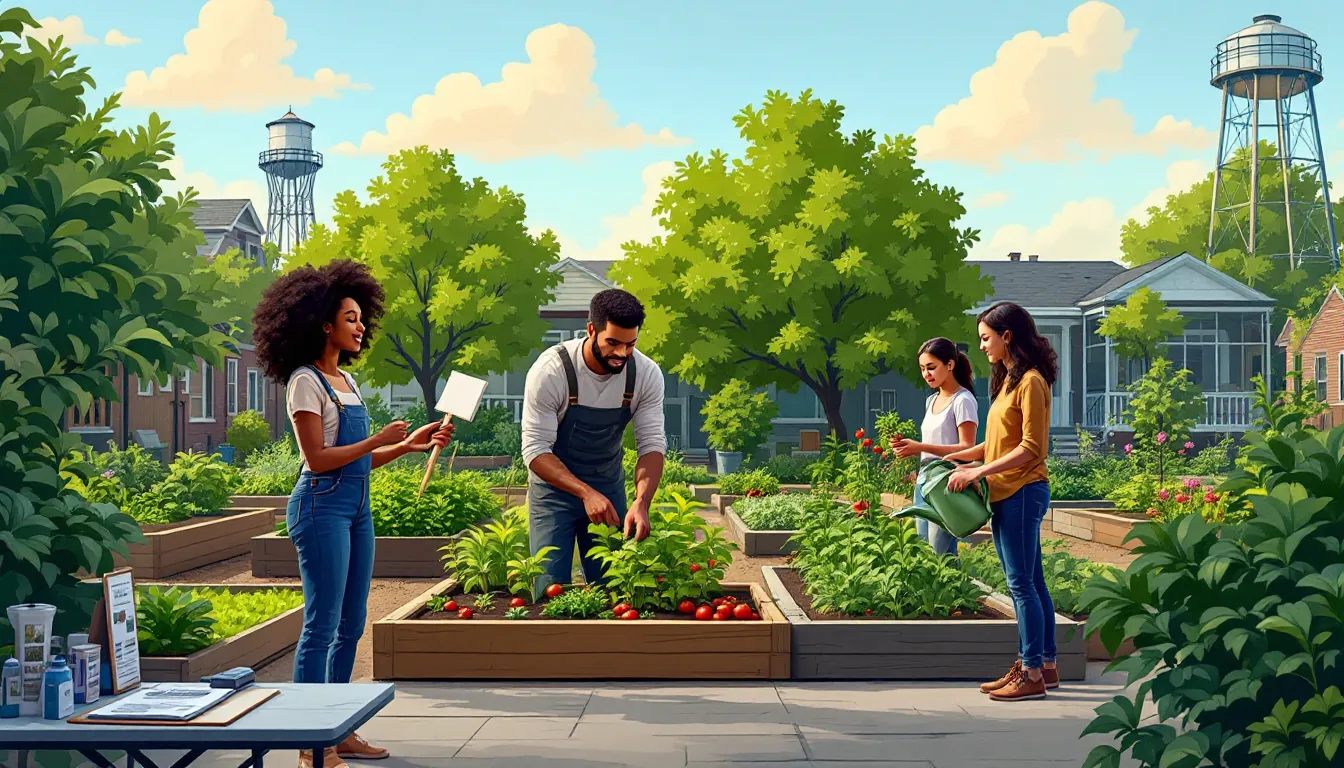
Consider what’s been happening in cities across the U.S. in recent years. Community groups in Portland pushed for and won one of the country’s most progressive urban tree canopy ordinances. Neighborhood coalitions in Austin helped establish community-managed composting programs that the city eventually adopted and scaled. In Detroit, residents transformed vacant lots into productive urban farms, which led to updated zoning policies that made urban agriculture a recognized land use.
These aren’t isolated success stories. They’re part of a pattern: local groups demonstrate what’s possible, prove it works, and then advocate for policy that makes it permanent.
What strikes me about these examples is how practical they are. Nobody started with the goal of changing legislation. They started with a problem they could see, a polluted creek, a food desert, a neighborhood with no green space, and they fixed it. The policy changes followed because the evidence was already there, growing in real time.
By 2026, we’re seeing this dynamic play out with renewable energy cooperatives, community-owned microgrids, and local plastic reduction ordinances that later inform state-level legislation. The path from neighborhood action to systemic change is well-worn at this point, and more communities are walking it than ever.
Community-Led Strategies That Create Lasting Impact
Not every community project sticks. I’ve seen plenty of well-intentioned efforts fizzle after the initial excitement fades. The ones that last tend to share a few characteristics: they’re built on existing relationships, they address a genuine local need, and they create systems rather than one-time events.
Building Green Infrastructure From the Ground Up
Green infrastructure is one of the most promising areas for community-led environmental work. I’m talking about rain gardens that manage stormwater, permeable surfaces that reduce flooding, urban tree canopies that cool neighborhoods, and community solar installations that lower energy costs.
What makes these projects powerful is that they solve multiple problems at once. A rain garden doesn’t just handle runoff, it beautifies a street corner, creates habitat for pollinators, and gives neighbors a shared project to maintain together. A community solar array doesn’t just generate clean energy, it reduces utility bills for families who couldn’t afford rooftop panels on their own.
The key is starting with what the community actually needs, not what looks good in a grant application. I’ve seen projects thrive when they begin with a listening session rather than a blueprint. When residents have genuine input into what gets built and how it’s maintained, the infrastructure lasts because people feel ownership over it.
Try this: Before proposing a green infrastructure project, spend a month talking to neighbors about what frustrates them most about the local environment. Flooding? Heat? Lack of shade? Air quality? Let their answers shape the project, and you’ll have built-in support from day one.
Leveraging Local Knowledge for Smarter Solutions
One of the biggest mistakes in environmental planning is ignoring the people who know a place best. Engineers and consultants bring technical expertise, but longtime residents carry institutional memory that no feasibility study can replicate.
They know which streets flood first. They know where the wind patterns shift. They know which empty lot used to be a dumping ground and which used to be a thriving garden. That kind of knowledge is irreplaceable, and the most effective community-led projects treat it as a genuine resource.
Indigenous and traditional ecological knowledge is especially relevant here. Communities that have stewarded land for generations often understand local ecosystems in ways that complement and sometimes challenge modern environmental science. Integrating these perspectives doesn’t just produce better outcomes, it produces more just outcomes.
I keep returning to this idea: the best environmental solutions aren’t imposed. They’re co-created. And local knowledge is the ingredient that makes co-creation possible.
Overcoming Common Barriers to Community Environmental Action
Let’s be honest, community organizing for environmental change isn’t easy. If it were, every neighborhood would already have a thriving green space, a composting program, and a community energy plan. There are real barriers, and pretending they don’t exist doesn’t help anyone.
Funding is the most obvious one. Community-led environmental projects often operate on shoestring budgets, relying on volunteer labor and small grants. But creative solutions exist. Some communities use crowdfunding. Others partner with local businesses that benefit from greener infrastructure (think restaurants sourcing from community gardens or shops that attract foot traffic near new green spaces). Municipal matching-fund programs, where cities match community-raised dollars, have been effective in several regions.
Time and energy are equally real constraints. Most people involved in local environmental work are doing it alongside jobs, caregiving, and everything else. This is why the most sustainable community projects are designed to distribute the load. Rotating leadership, clear role definitions, and realistic expectations about pace all help prevent burnout.
Then there’s the trust problem. In communities that have experienced environmental injustice, where polluting industries were sited in their neighborhoods, or where “revitalization” became a code word for displacement, skepticism toward environmental projects is completely rational. Building trust takes time, transparency, and a genuine commitment to centering the people most affected by environmental harm.
I don’t want to sugarcoat this. Some of these barriers are structural, and they won’t be resolved by good intentions alone. But I’ve seen communities navigate every one of them, and the common thread is persistence paired with genuine relationship-building. No shortcuts, but no dead ends either.
The Ripple Effect: How Local Wins Inspire Global Movements
Here’s something that continually amazes me about local environmental action: it doesn’t stay local.
When one community proves that a composting program can reduce municipal waste by 40%, neighboring towns take notice. When a city demonstrates that community-owned solar can cut energy costs and emissions simultaneously, state legislators start asking questions. When a rural county successfully restores a degraded watershed through volunteer effort, the model gets documented, shared, and adapted hundreds of miles away.
This is the ripple effect of community-driven environmental change, and it’s one of the most compelling arguments for investing in local action.
The international Transition Towns movement is a vivid example. What started in Totnes, England, as one community’s effort to prepare for peak oil and climate disruption has spread to over 1,000 communities in more than 40 countries. Each Transition Town adapts the model to its own context, but the core idea, that communities can lead their own resilient, low-carbon transitions, remains the same.
Social media and digital communication have accelerated this phenomenon dramatically. A successful project in a small town in Oregon can inspire a similar effort in Kenya or the Philippines within weeks. Open-source toolkits, shared templates for community organizing, and online networks connecting local environmental leaders have made it easier than ever for good ideas to travel.
But the ripple effect isn’t just about replication. It’s about legitimacy. Every local win adds evidence to the argument that communities can drive meaningful environmental change without waiting for permission from governments or corporations. That accumulating body of evidence shifts the conversation at every level, municipal, state, national, and international.
I’ve come to think of local environmental action as a kind of proof of concept. Each project demonstrates what’s possible, and collectively, they build a case that’s increasingly difficult to ignore.
Practical Steps to Mobilize Your Community for Environmental Change
So how do you actually get started? I’ve been involved in enough community projects to know that the gap between caring and doing is often just a matter of knowing the first few steps. Here’s what I’ve seen work.
Start with a conversation, not a plan. Invite five or ten neighbors over for coffee and ask a simple question: what do you wish was different about our neighborhood’s environment? You’ll be surprised how many people have been thinking about this but haven’t had a space to talk about it. Those early conversations are where projects take shape organically.
Identify a quick win. Before tackling big systemic projects, find something achievable. Organize a neighborhood cleanup, set up a seed swap, or map local food resources. Early victories build trust and draw in more participants.
Connect with existing organizations. Chances are, there are already groups doing environmental work in your area, land trusts, watershed councils, climate action committees, mutual aid networks. Linking up with them gives you access to resources, experience, and established relationships. You don’t have to build everything from scratch.
Make it welcoming, not exclusive. The environmental community sometimes has an accessibility problem. Jargon, gatekeeping, and an unspoken expectation that you need specific credentials can all be barriers. The most vibrant community environmental groups I’ve encountered are the ones that welcome people as they are, no expertise required, just willingness to show up.
Document and share what you do. Take photos. Write about it. Post on community boards and social media. Not for vanity, because visibility is what turns one project into a movement. When people see what’s happening, they want to join. And when other communities see what you’ve done, the ripple effect begins.
Be patient and persistent. Real environmental change takes time. Some projects will fail. Some city council meetings will be frustrating. But the communities that stick with it, the ones that keep showing up, adapting, and building relationships, are the ones that create lasting change.
This is general education, not medical advice. If you’re pregnant, managing a condition, or taking medication, check with a qualified professional.
I include that note because a few of the environmental topics I write about touch on health, urban air quality, water safety, food systems, and it matters to be thoughtful about where general guidance ends and professional consultation begins.
Conclusion
When I look at the state of environmental work in 2026, I’m not naive about the challenges. Climate disruption is accelerating. Biodiversity loss is alarming. The systems driving environmental harm are deeply entrenched.
But I’m also not hopeless, and the reason is local action.
Every community garden, every neighborhood composting program, every volunteer-led stream restoration, every community solar project, these are not just feel-good gestures. They’re building the infrastructure, the relationships, and the proof of concept for a genuinely different way of relating to the natural world.
The power of community isn’t a slogan. It’s a strategy. And it’s working.
If you’re reading this and feeling that pull, that sense that you want to do something but aren’t sure where to start, I’d encourage you to look around your own neighborhood first. The people and possibilities you need are probably closer than you think.
I’d love to hear from you. What’s happening in your community? What environmental projects have you been part of, or what do you wish existed where you live? Drop a comment or share this with someone who’s been looking for a reason to get started.