





How Your Digestive System Processes Food
In Ayurveda, digestion is governed by agni, your metabolic intelligence. Think of agni as a cooking fire sitting right in your belly. When it’s burning bright and steady, it transforms everything you eat into usable nutrition, clear energy, and something called ojas, which is your deep reserves of vitality and immune strength.
When agni is weak or erratic, food doesn’t get fully processed. Instead of nourishment, you get a sticky, heavy residue that Ayurveda calls ama. Ama is basically undigested gunk, it clogs your channels, dulls your thinking, and leaves you feeling foggy and tired. You might notice a coated tongue in the morning, sluggish bowels, or that heavy feeling after meals. Those are classic signs.
Here’s what makes this relevant to the cooked-versus-raw conversation: raw food is cold, rough, and light in its qualities. Cooked food is warm, soft, and often moist. Your agni has to work much harder to process something cold and fibrous than something that’s already been warmed and softened by heat. It’s the difference between asking your campfire to burn seasoned wood versus a pile of wet branches.
Do this today: Before your next meal, notice whether your appetite feels genuinely strong or just habitual. A clear, bright hunger is a sign your agni is ready. If you feel heavy or indifferent about food, try sipping warm water with a thin slice of fresh ginger about 15 minutes before eating. This takes about 2 minutes to prepare and works well for anyone, though it’s especially supportive if you tend toward sluggish digestion.
Why Cooking Makes Food Easier to Digest

Breaking Down Proteins and Starches Through Heat
Cooking is, in a very real sense, pre-digestion. When you apply heat to grains, legumes, or vegetables, you’re already beginning to unravel the complex structures that your agni would otherwise need to break apart on its own. Proteins start to denature. Starches begin to gelatinize. The food becomes softer, warmer, and more available.
From an Ayurvedic standpoint, this matters because cooking adds the hot, soft, and moist qualities to food, all of which support agni rather than burden it. Raw beans, for example, are extremely hard to digest. They’re dry, dense, and heavy. But a well-cooked dal with a little ghee and cumin? That’s been transformed into something your body can welcome easily.
This is the principle of opposites creating balance. When food already carries warmth and softness, your digestive fire doesn’t have to generate as much heat on its own. It can focus on extracting nutrients and building healthy tissue instead of just trying to break things down.
Do this today: If you eat legumes, try soaking them overnight and then cooking them with a pinch of turmeric and a small piece of kombu or a bay leaf. This takes about 5 minutes of prep the night before. It’s a good fit for everyone, but especially helpful if you notice gas or bloating after eating beans.
Reducing Anti-Nutrients and Tough Plant Fibers
Plants are smart. Many of them produce compounds, like phytic acid, oxalates, and lectins, that protect them from being eaten. These so-called anti-nutrients can interfere with mineral absorption and irritate your digestive lining when consumed raw in large quantities.
Cooking reduces many of these compounds significantly. Steaming spinach, for instance, lowers its oxalate content. Boiling grains breaks down phytic acid. From an Ayurvedic perspective, these raw compounds are sharp and rough in quality, they aggravate the gut lining and create conditions where ama can accumulate.
When you cook these foods gently, you’re smoothing out those rough, sharp edges. The food becomes more subtle and easier for your tissues to absorb. This is particularly important for anyone whose digestion already runs on the delicate side.
Do this today: Try lightly steaming your greens instead of eating them raw, even just for a week, and notice how your belly responds. This takes about 7 minutes. It’s great for most people, though if you have strong digestion and tolerate raw greens without any discomfort, you can certainly keep enjoying them fresh.
The Role of Warm Foods in Gut Comfort and Motility
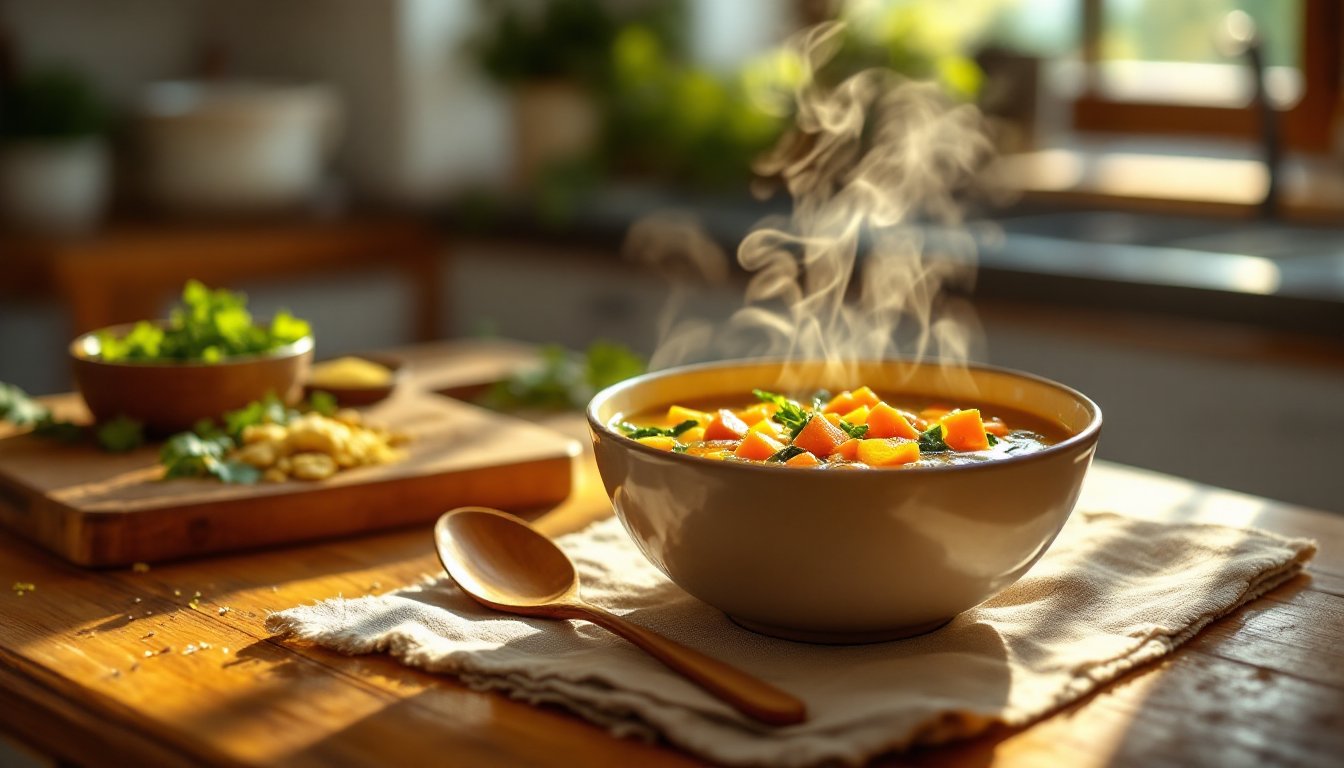
There’s a reason a warm bowl of soup feels like a hug from the inside. Warm, cooked meals carry the qualities of heat, moisture, and softness, and those qualities directly support the smooth, downward movement of digestion that Ayurveda calls apana vayu (the downward-moving aspect of Vata dosha).
When Vata gets disturbed, through cold food, irregular eating, or stress, you might notice bloating, gas, constipation, or that restless, unsettled feeling in your gut. Cold, dry, rough foods tend to increase these Vata qualities. Warm foods do the opposite: they calm the nervous system around your gut, encourage steady motility, and help everything move through at the right pace.
I think about it like this: warm oil flows easily through a pipe, but cold, thick oil gets stuck. Your digestive tract responds to temperature and texture in a surprisingly similar way.
Pitta types might wonder if warm food adds too much heat. Generally, warm (not scorching hot) food supports Pitta’s already strong agni without pushing it into overdrive. The key is keeping meals warm but not overly spicy or acidic.
For Kapha types, warmth is especially valuable. Kapha digestion tends to run cool, heavy, and slow. Warm, lightly spiced meals with a touch of pungency help stoke that sluggish digestive fire and prevent the heavy, dull feeling that comes with ama buildup.
Do this today: Try making your largest meal warm and freshly cooked, ideally around midday when your agni naturally peaks. Even reheating leftovers with a splash of water and a pinch of spice is better than eating something cold straight from the fridge. This takes no extra time if you’re already cooking. It’s supportive for everyone, though especially comforting for Vata and Kapha types. If you run very hot (strong Pitta imbalance with acid reflux), keep the temperature moderate and skip heating spices.
When Raw Foods Are the Better Choice
Now here’s where I want to balance the picture, because Ayurveda isn’t dogmatically anti-raw. There are times when uncooked food genuinely serves your body better.
The key factor? Your agni’s current strength and the season you’re in.
During warm or hot weather, late spring through summer, your body naturally produces less internal heat. Paradoxically, your ability to handle cooling, raw foods actually improves because the external warmth supports what your internal fire doesn’t need to generate. A ripe mango, fresh cucumber, or a handful of berries can feel wonderfully cooling and nourishing when the weather is hot.
Raw foods also carry the qualities of lightness and coolness, which can be genuinely therapeutic for someone experiencing a Pitta imbalance, think inflammation, acidity, skin irritation, or that overheated, irritable feeling. In these cases, raw isn’t a burden: it’s medicine.
Fruits, Fermented Foods, and Heat-Sensitive Nutrients
Ripe, seasonal fruits are one of the easiest raw foods to digest. They’re already soft, moist, and naturally sweet, qualities that support ojas without taxing agni. Ayurveda actually considers well-ripened fruit to be one of the most sattvic (clarity-promoting) foods you can eat.
Fermented foods like naturally cultured yogurt, sauerkraut, or kimchi occupy an interesting middle ground. They’re technically raw, but the fermentation process has already done much of the digestive work. The beneficial bacteria have pre-digested starches and sugars, making these foods easier on your gut while also supporting healthy intestinal flora.
Certain vitamins, like vitamin C and some B vitamins, are sensitive to heat and diminish with cooking. So there’s a genuine nutritional case for keeping some foods raw, particularly fruits and tender greens, when your digestion can handle them.
The thing I always come back to is tejas, your metabolic spark, your inner clarity. When you eat raw foods that your body can actually process well, they support tejas beautifully. But when you force raw foods on a weak agni, you end up with ama instead of clarity.
Do this today: Try eating one piece of ripe, room-temperature fruit on its own, not right after a heavy meal, as a mid-morning or mid-afternoon snack. This gives your agni a chance to process it fully. Takes no prep time at all. This works well for most people in warm weather and for Pitta types year-round. If you tend toward cold, bloated, or sluggish digestion (classic Vata or Kapha imbalance), go easy on raw foods and favor the cooked route instead.
How to Balance Cooked and Raw Foods in Your Diet
I find that the simplest guideline is this: make warm, cooked food your foundation, and let raw foods be your accent.
A practical ratio for most people is roughly 70–80% cooked and 20–30% raw, adjusting seasonally and based on how you feel. In winter, you might go almost entirely cooked. In the heat of summer, you can comfortably increase the raw portion.
Two daily routine habits anchor this beautifully.
Morning: Start your day with something warm. A simple bowl of cooked grain, oats, rice porridge, or even a savory soup, kindles agni after the overnight fast. This aligns with the Kapha time of morning (roughly 6–10 AM), when digestion is naturally slow and heavy. Warm food helps counter that heaviness and sets the tone for the whole day.
Midday: Eat your largest, most complex meal around noon, when agni peaks during the Pitta time of day (roughly 10 AM–2 PM). This is the best window for heavier or harder-to-digest foods. If you want to include a small raw salad, midday is the ideal time, your fire is strong enough to handle it.
Evening: Keep dinner warm, light, and easy to digest. Soups, stewed vegetables, simple grains with ghee. Eating heavy or raw food late in the evening when agni naturally winds down is one of the most common causes of morning sluggishness and that coated-tongue feeling.
Do this today: Try structuring just one day around this rhythm, warm breakfast, full cooked lunch with a small raw element, and light warm dinner. Notice how your energy and digestion feel by the next morning. It takes no extra time, just a shift in sequence. This framework benefits everyone, though you’ll want to adjust portion sizes and spice levels based on your constitution.
For a seasonal adjustment: as you move into cooler, drier months (fall and early winter), reduce raw foods significantly and favor oily, warm, grounding meals, think root vegetable stews, kitchari, and warm spiced milk. This counters the cold, dry, mobile qualities of the Vata season and protects your prana, your life force and nervous system steadiness, from getting scattered.
Who Should Prioritize Cooked Meals Over Raw
This is where personalization matters most. In Ayurveda, there’s no universal diet, what nourishes one person can create imbalance in another.
If you’re more Vata, meaning you tend toward a lighter frame, cold hands and feet, variable appetite, anxiety, dry skin, or irregular digestion, cooked food is your best friend, honestly. Raw foods carry the same cold, dry, light, rough, and mobile qualities that already dominate in your constitution. Eating a lot of raw food can push Vata further out of balance, leading to gas, bloating, constipation, and scattered energy. Favor warm soups, cooked grains with ghee, steamed vegetables, and gentle spices like ginger, cumin, and cinnamon. Avoid cold smoothies and iced drinks, especially in cooler weather.
Do this today (Vata): Have a bowl of warm, spiced oatmeal with a little ghee and stewed fruit for breakfast tomorrow. Takes about 10 minutes. This is ideal for Vata types and anyone feeling anxious, cold, or bloated. Not ideal if you’re experiencing a strong Pitta flare-up with acid reflux, in that case, skip heating spices.
If you’re more Pitta, meaning you tend toward a medium build, strong appetite, warm body temperature, and intensity in your emotions, you actually have the strongest agni of the three types. You can handle some raw food better than most, especially in summer. But don’t overdo heating spices or very hot foods, which can push your already-sharp, hot digestive fire into inflammation. Balance warm cooked meals with cooling raw additions like cucumber, cilantro, coconut, and sweet fruits. Avoid excessive chili, vinegar, and fried foods.
Do this today (Pitta): Add a small side of fresh cucumber and cilantro to your cooked lunch. This takes 3 minutes and offers a cooling, soothing counterbalance. Great for Pitta types, especially in warm weather. Not the best choice for Vata types who are already feeling cold.
If you’re more Kapha, meaning you tend toward a sturdier build, slower metabolism, tendency toward congestion, and a calm but sometimes heavy energy, warmth and lightness are your allies. Kapha agni runs cool and sluggish, so cold, heavy raw foods can create significant ama. Favor warm, lightly cooked foods with a touch of pungency, think steamed greens with black pepper, light grain dishes, and brothy soups. Avoid heavy, cold, or overly sweet foods.
Do this today (Kapha): Try a light vegetable soup with a generous pinch of black pepper and fresh ginger for dinner tonight. Takes about 20 minutes. This is perfect for Kapha types and anyone feeling heavy or congested. Not the best fit for someone with active acid reflux or sharp Pitta symptoms.
This is general education, not medical advice. If you’re pregnant, managing a condition, or taking medication, check with a qualified professional.
Conclusion
Here’s what I’ve come to appreciate most about the Ayurvedic approach to food: it doesn’t ask you to follow rigid rules. It asks you to pay attention. To notice how your body responds. To build a relationship with your digestion that’s based on awareness, not ideology.
Warm, cooked meals aren’t “better” in some absolute sense, they’re simply more supportive for most people, most of the time. And raw foods aren’t the villain: they’re a valuable tool when your fire is strong and the season is right.
Start where you are. Maybe that means swapping one cold meal for a warm one this week and seeing what shifts. Your body is remarkably honest when you start listening.
I’d love to hear how this lands for you, what’s your experience with cooked versus raw? Drop a thought in the comments or share this with someone who’s been wrestling with the same question.