








What “Fragrance” Really Means on a Product Label
Here’s something that caught me off guard when I first started reading ingredient lists: the word “fragrance” (or “parfum”) on a label can represent dozens, sometimes hundreds, of individual chemical compounds. Manufacturers aren’t required to disclose what’s inside that single word because fragrance formulas are considered trade secrets. So when you see “fragrance” listed, you’re essentially looking at a black box.
From an Ayurvedic lens, this matters deeply. Your skin is not a passive barrier. It’s a living organ connected to your rasa dhatu (the plasma and fluid layer of your body) and governed by the interplay of your doshas. When something sharp or hot in quality sneaks onto your skin through an undisclosed fragrance blend, it can push Pitta into overdrive, creating redness, heat, and inflammation. When something excessively dry or mobile enters, it can aggravate Vata, leading to itching, flaking, or that tight uncomfortable feeling.
The problem isn’t just what’s in the fragrance. It’s that you can’t trace the cause, the nidana, back to a specific ingredient. And in Ayurveda, understanding the cause is the first step toward any correction.
Kapha types might feel the effects differently: a heavy, congesting fragrance blend can dull the skin’s natural metabolism, leaving it feeling thick, sluggish, or prone to clogged pores. That heavy, dull quality accumulates quietly before you even notice something’s off.
Do this today: Flip over three products you use daily and look for the words “fragrance,” “parfum,” or “aroma” on the ingredient list. Takes about two minutes. This is a good starting point for anyone, regardless of skin type or sensitivity level. If you’re currently dealing with unexplained irritation, this step is especially worthwhile.
The Myth of Natural Fragrance Being Safer
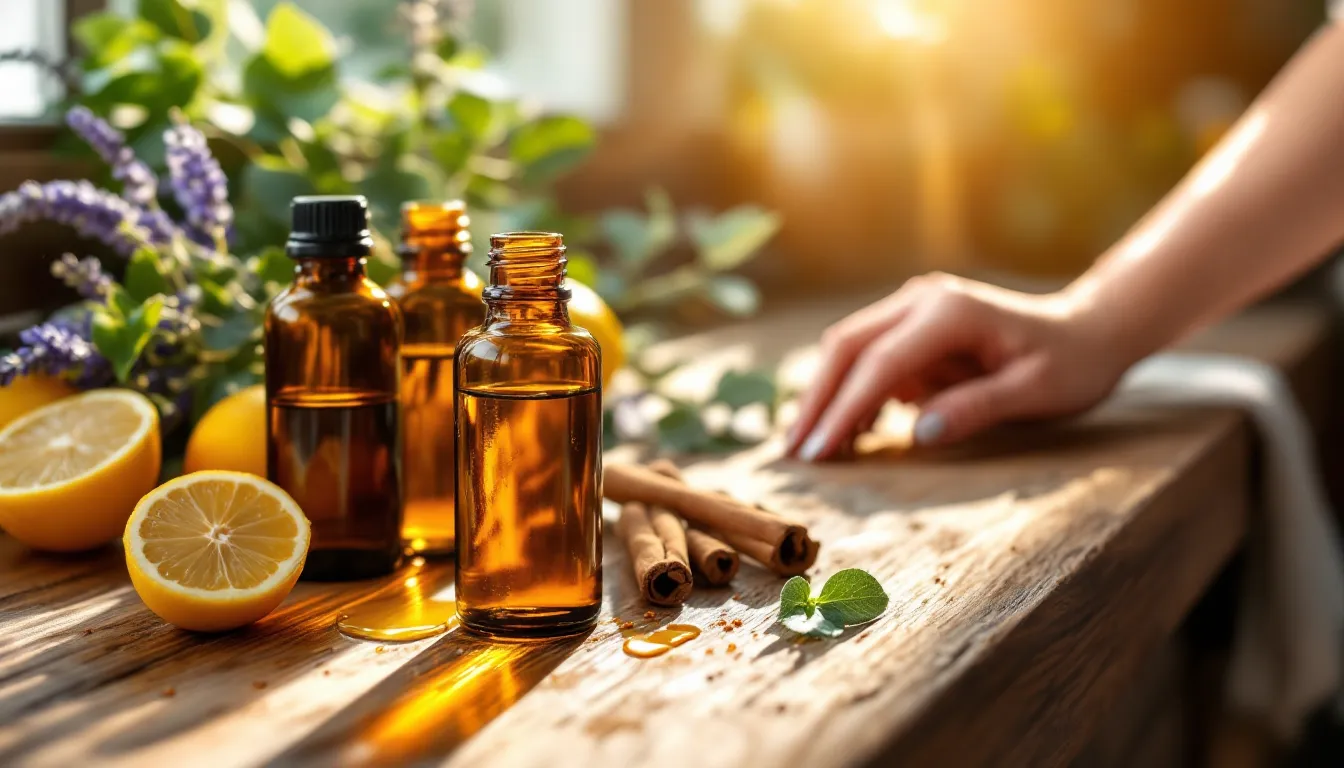
I’ll be honest, I held onto this belief for a long time. If a scent came from a plant, how could it possibly irritate me? Roses are gentle. Chamomile is soothing. It felt logical.
But Ayurveda taught me something more precise: it’s not about where an ingredient comes from. It’s about its qualities (gunas) and how those qualities interact with your current state of balance. A concentrated rose essential oil carries hot and sharp qualities that can absolutely provoke Pitta-dominant skin. Tea tree oil, beloved in natural skincare, is intensely light, dry, and penetrating, which can strip Vata skin of its protective oily layer in no time.
Natural doesn’t mean neutral. Every substance in nature has a defined set of qualities, and those qualities either balance or disturb what’s already happening in your body. That’s the Ayurvedic principle of “like increases like.” If your skin is already running hot and dry from stress or summer weather, layering on a “natural” essential oil that’s also hot and dry is adding fuel to the fire.
Common Natural Ingredients That Trigger Irritation
Let me walk through a few that surprise people.
Citrus oils, lemon, orange, bergamot, are extremely sharp and hot. They can cause photosensitivity and are a frequent trigger for contact reactions, especially on Pitta-type skin that’s already warm and reactive. Cinnamon bark oil is another one. It’s intensely heating and penetrating, and even small amounts can create a burning sensation on sensitive skin.
Eucalyptus and peppermint carry strong mobile and light qualities. For someone with aggravated Vata, think dry, thin, easily irritated skin, these oils can increase that scattered, depleted feeling in the tissues rather than nourishing them.
Even lavender, which most people consider universally calming, contains compounds like linalool and linalyl acetate that can oxidize over time and become sensitizing. The subtle quality of essential oils means they penetrate quickly and deeply, reaching layers of skin tissue that thicker, gross substances wouldn’t.
Do this today: If you use any essential oil-based products, check whether the oils listed match your current skin tendencies (dry? inflamed? congested?). Spend five minutes reviewing. This is especially relevant for Pitta and Vata types but helpful for anyone navigating irritation. Not ideal as a standalone step if you have a diagnosed skin condition, pair it with professional guidance.
How Fragrance Causes Skin Reactions
To really understand fragrance sensitivity, I think it helps to look at it through the Ayurvedic lens of agni and ama.
Your skin has its own metabolic intelligence, a local expression of agni, your digestive and transformative fire. When skin agni is strong, your skin can process what lands on it: it metabolizes, absorbs what’s useful, and sheds what isn’t. But when agni is weakened, by stress, poor sleep, seasonal shifts, or an overloaded routine, the skin can’t fully process complex fragrance compounds. What doesn’t get metabolized becomes ama: a sticky, undigested residue that clogs the channels of the skin.
Signs of ama on the skin look like a dull, coated complexion, persistent breakouts that don’t respond to topical treatment, or that foggy feeling where your skin just looks… off. You might also notice a whitish coating on your tongue in the morning, sluggish digestion, or a general heaviness, all of which suggest ama isn’t just local to your skin but systemic.
Fragrance compounds, whether synthetic or natural, are often subtle and mobile in quality, meaning they penetrate fast and spread quickly through the skin’s layers. When your skin’s agni can’t keep up, these compounds linger, irritate, and trigger immune responses.
This connects to your vitality triad. Accumulated ama depletes ojas, that deep reservoir of resilience and immunity that keeps your skin glowing and your system strong. It dims tejas, the metabolic spark that gives skin its clarity and luster. And it disturbs prana, the life-force flow that keeps your nervous system steady, which is why fragrance sensitivity often comes with feeling overstimulated, headachy, or just “off” in ways that go beyond the skin.
Contact Dermatitis and Sensitization Over Time
Here’s what I find most important to understand: fragrance sensitivity is often cumulative. You might use a product for months or even years with no visible reaction. But underneath the surface, your skin’s agni is gradually becoming overwhelmed. Each exposure adds a small amount of ama to the tissue channels, and one day the system tips.
This is what modern dermatology calls “sensitization”, and in Ayurvedic terms, it’s a slow accumulation (sanchaya) of dosha imbalance that eventually overflows. The skin becomes reactive not because of one product, but because the terrain has shifted. Pitta may have been quietly building heat. Vata may have been drying out the protective lipid barrier. Kapha may have been thickening and congesting the tissue.
Contact dermatitis, the red, itchy, sometimes blistering reaction, is the body’s loud announcement that the tipping point has arrived.
Do this today: Take a brief inventory of how many fragranced products touch your skin daily (soap, lotion, detergent, deodorant, hair products). Even just counting them, five minutes, tops, can be eye-opening. This is for everyone, but particularly urgent if you’re noticing new or worsening skin reactions. If you’re experiencing blistering or severe irritation, please see a healthcare provider rather than self-managing.
Who Is Most at Risk for Fragrance Sensitivity
In Ayurveda, we don’t separate the skin from the person. Your skin reflects your constitution, your current imbalances, and the environment you’re living in.
Pitta-dominant individuals tend to be the most visibly reactive. Their skin already carries more heat, more sharpness, more sensitivity. Fragrance compounds with hot or penetrating qualities can push Pitta skin into inflammation quickly, think redness, burning, rashes that flare after applying a new product. Pitta skin also tends to be thinner and more permeable, so those subtle, mobile fragrance molecules get in fast.
Vata-dominant individuals are vulnerable in a different way. Their skin tends to be naturally dry, rough, and light, which means the lipid barrier that protects against irritants is already compromised. When fragrance compounds enter through a weakened barrier, the reaction might show up as flaking, tightness, or erratic sensitivity that comes and goes. Vata types might not get a dramatic rash, but they’ll feel a chronic, low-grade discomfort.
Kapha-dominant individuals often seem fine on the surface, but their risk is in accumulation. Kapha skin is heavy, oily, and smooth, which offers some initial protection. But over time, fragrance compounds can build up in the denser tissue layers, contributing to congestion, cystic breakouts, and a dull complexion that doesn’t improve no matter how many products are applied.
Beyond constitution, certain life stages increase vulnerability: hormonal transitions, periods of high stress (which disturbs all three doshas), and seasonal changes, particularly the shift into hot, dry summers (Pitta aggravation) or cold, windy winters (Vata aggravation).
Do this today: Reflect honestly on your skin type and your current state. Are you running hot, dry, or congested right now? Spend a few quiet minutes with that question. This is for anyone exploring fragrance sensitivity, though it’s most immediately useful for Pitta and Vata types currently experiencing irritation. Not a replacement for dosha assessment with a trained practitioner if you’re unsure of your constitution.
How to Identify Hidden Fragrances in Your Products
This part used to frustrate me endlessly. I’d buy something labeled “gentle” or “sensitive skin” and still find fragrance buried in the ingredient list under a different name.
Watch for terms like “parfum,” “aroma,” “essential oil blend,” or even “botanical extract” when the extract is there primarily for scent rather than function. Some products use masking fragrances, chemicals added to cover the smell of other ingredients, without disclosing them prominently.
From an Ayurvedic perspective, the goal is simple: reduce the number of unknown, unprocessable substances your skin’s agni has to deal with. Every mysterious compound is a potential source of ama. The fewer unknowns on your skin, the more efficiently your body can maintain its natural balance.
I’d also pay attention to your laundry detergent, fabric softener, and dryer sheets. These sit against your skin for hours, sometimes all night while you sleep. That prolonged contact during your rest period (the body’s natural repair window) means fragranced laundry products can be quietly disturbing your skin’s nighttime restoration.
Fragrance-Free vs. Unscented: Understanding the Difference
This distinction trips up a lot of people, and it tripped me up too.
“Unscented” means the product doesn’t have a noticeable smell, but it may still contain fragrance chemicals used to neutralize or mask the scent of other ingredients. So you’re still getting fragrance exposure: you just can’t smell it.
“Fragrance-free” means no fragrance compounds were added at all. This is what you want if you’re trying to reduce your skin’s burden.
Think of it in terms of qualities: an unscented product still introduces subtle, potentially sharp compounds into the skin’s ecosystem. A fragrance-free product removes that layer entirely, giving your skin’s agni less to process and reducing the conditions for ama formation.
Do this today: Check your most-used body products for the “fragrance-free” designation (not just “unscented”). This takes about five minutes and applies to everyone. It’s especially important for those with reactive or sensitive skin, and a smart move if you’re dealing with any unexplained skin changes. If ingredient lists overwhelm you, start with just one product, your daily moisturizer or body wash.
What to Use Instead of Fragranced Skincare
Letting go of beautifully scented products can feel like a loss, I get it. There’s real pleasure in a gorgeous-smelling lotion. But what I’ve found is that simplifying my routine actually brought my skin back to a place where it glowed on its own, without needing to mask anything.
The Ayurvedic approach to skincare prioritizes nourishment through qualities that balance your constitution. Instead of fragrance, you’re choosing based on what your skin actually needs.
For a Vata-leaning skin that’s dry, rough, and thin, the correction is oily, heavy, warm, and smooth qualities. Think unrefined sesame oil, gentle almond oil, or ghee-based balms. These nourish rasa dhatu (the fluid tissue layer), strengthen the skin barrier, and build ojas over time.
For Pitta-leaning skin that’s reactive, warm, and easily inflamed, you want cool, soft, and smooth qualities. Coconut oil (in warmer months), aloe vera gel, and gentle rose water (true hydrosol, not fragrance-spiked versions) can calm heat without adding irritation. These support tejas without letting it burn too bright.
For Kapha-leaning skin that’s oily, thick, and prone to congestion, the balancing qualities are light, warm, and dry. A light application of sunflower oil, gentle dry brushing before bathing, and warm water cleansing can keep channels clear without stripping. This supports healthy prana flow through the skin.
In all cases, the principle is the same: opposites bring balance. If you can identify the qualities your skin is expressing right now, you can choose products that offer the complementary qualities, no fragrance needed.
Making the Switch Without Sacrificing Your Routine
I know what you might be thinking: “But I like my routine. I don’t want to throw everything out.”
You don’t have to. The Ayurvedic approach is gradual. Try replacing one product at a time, starting with whatever touches the most skin for the longest time (usually your body moisturizer or night cream).
Give your skin two to three weeks with each switch. This gives your skin’s agni time to adjust and allows you to observe real changes rather than reacting to every small fluctuation.
A beautiful daily practice, rooted in the Ayurvedic routine of dinacharya, is abhyanga, or warm oil self-massage. Done in the morning before your shower, it nourishes the skin deeply, calms Vata, and strengthens ojas without any fragrance at all. The oil itself becomes your moisturizer, your skin barrier support, and your sensory experience all at once. Even ten minutes can shift how your skin feels and functions.
Another dinacharya habit that supports skin health: tongue scraping each morning. It sounds unrelated, but removing ama from the tongue first thing signals your digestive agni to wake up properly. When systemic agni is stronger, your skin’s local agni benefits too. Two minutes, every morning.
For a seasonal adjustment, consider this: during late winter and early spring, Kapha season, the air is heavy, cool, and damp. Skin tends toward congestion and sluggishness. This is a good time to use lighter oils (like sunflower or safflower) and add gentle dry brushing before your bath to keep the skin’s channels open. The light and warm qualities of dry brushing counterbalance the heavy, cool, damp qualities of the season. As summer arrives and Pitta rises, switch to cooling oils like coconut and keep products minimal. Let your skin breathe.
Do this today: Choose one fragranced product to replace with a simple, fragrance-free alternative this week. Spend ten minutes finding a replacement. This works for anyone at any stage, but if you’re dealing with active irritation, start with whatever product contacts inflamed areas. If you have known allergies to specific oils, consult with a practitioner before introducing new ones.
And here’s something I find grounding about this whole process: when you strip away the artificial fragrance, you start to notice what your skin actually smells like when it’s healthy. There’s a subtle, clean quality to balanced skin that no perfume can replicate. Ayurveda calls this the natural expression of healthy rasa and ojas, and it’s honestly lovelier than anything in a bottle.
Conclusion
The journey away from fragrance in skincare isn’t about deprivation. It’s about listening, to your skin, to the qualities your body is expressing, and to the ancient intelligence that says balance comes from understanding, not from adding more.
I’ve watched my own skin transform by simplifying. Less irritation, more resilience, a steadiness that I didn’t know was possible when I was layering on product after product. And the Ayurvedic framework gave me something no ingredient list ever could: a way to understand why my skin was reacting and what it was asking for.
Your skin is remarkably intelligent. When you reduce the burden of unknown fragrance compounds, support your agni, and choose products based on balancing qualities rather than marketing claims, you give that intelligence room to do what it does best.
Start small. One product swap. One morning of abhyanga. One honest look at your ingredient labels. That’s enough.
I’d love to hear from you, what’s been your experience with fragrance and skin sensitivity? Have you noticed certain “natural” products that surprised you with a reaction? Drop a comment below or share this with someone who’s been battling unexplained skin issues. Sometimes just knowing you’re not alone in this makes all the difference.
This is general education, not medical advice. If you’re pregnant, managing a condition, or taking medication, check with a qualified professional.