





Why Beauty Label Confusion Is So Widespread
Here’s the uncomfortable truth: the beauty industry has a language problem. Words like “clean” and “natural” feel meaningful when you read them on a bottle, but they often function more as marketing signals than as guarantees of safety or quality.
Part of this comes down to how quickly the clean beauty movement grew. Consumer demand for safer products surged, and brands scrambled to meet it, sometimes with genuine reformulations, sometimes with little more than a packaging refresh. The result is a marketplace where two products can use the exact same label and contain wildly different ingredients.
And it’s not just small indie brands doing this. Major corporations have launched “clean” sub-lines that still contain synthetic fragrances, preservatives, or other ingredients that many consumers are specifically trying to avoid. The label becomes a story the brand tells, not necessarily a reflection of what’s inside.
The Lack of Federal Regulation in the Beauty Industry
This is the part that surprises most people. In the United States, the FDA does not pre-approve cosmetics before they hit store shelves. Unlike food or pharmaceuticals, beauty products don’t need to prove safety before being sold. The FDA can act after the fact, if a product causes harm, but there’s no gatekeeping on the front end.
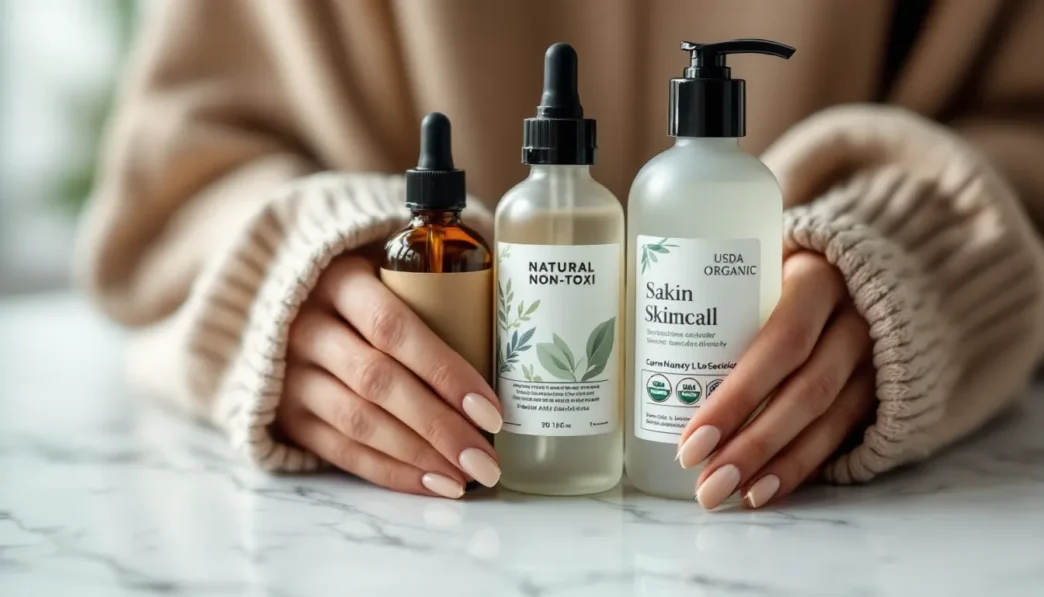
The term “natural” has no legal definition in the cosmetics space. Neither does “clean” or “non-toxic.” A brand can slap any of these on a label without meeting a single standard. The word “organic” does carry some regulatory weight, but only when it’s tied to a specific certification like USDA Organic, and even then, the rules are more nuanced than most shoppers realize.
The European Union, by contrast, has banned or restricted over 1,600 ingredients in cosmetics. The U.S. has restricted roughly 11. That gap tells you a lot about why label literacy matters so much here.
So where does that leave you? Basically, it means the responsibility falls on you as a consumer to look past the front of the bottle. That’s frustrating, I know. But once you understand a few key distinctions, it actually gets a lot easier.
What “Natural” Really Means on Beauty Products
Let’s start with the most common, and most misunderstood, label of them all.
When a product says “natural,” most of us picture ingredients plucked straight from a garden. Plant extracts, essential oils, botanical infusions. And sometimes that’s accurate. But “natural” on a beauty product has no standardized meaning in the U.S. A moisturizer could contain 2% plant-derived ingredients and 98% synthetic compounds and still legally call itself natural.
Some brands use the word to mean “derived from natural sources,” which is a subtle but important distinction. Coconut oil is natural. A surfactant chemically derived from coconut oil? That’s nature-derived, which is a different thing. It may still be perfectly fine for your skin, but the label isn’t telling you what you think it’s telling you.
There are third-party organizations that try to bring some consistency here. The Natural Products Association (NPA) has a certification that requires at least 95% naturally derived ingredients, excluding certain synthetics. COSMOS-standard, widely used in Europe, has its own criteria. But these certifications are voluntary, and plenty of brands skip them entirely while still using the word “natural” prominently.
What I’d encourage you to do: flip the bottle over. If the ingredient list is short and recognizable, shea butter, jojoba oil, aloe vera, beeswax, you’re likely looking at something genuinely natural. If it’s a wall of polysyllabic chemical names with “natural” on the front, that’s worth a raised eyebrow.
The word “natural” also doesn’t automatically mean “safe.” Poison ivy is natural. So is arsenic. Natural ingredients can still cause allergic reactions, skin irritation, or sensitivity, especially if you have reactive skin. Context always matters more than a label.
What “Non-Toxic” Really Means on Beauty Products
“Non-toxic” is another label that sounds incredibly reassuring, and is, unfortunately, just as unregulated as “natural.”
In everyday language, “non-toxic” suggests a product won’t harm you. But from a regulatory standpoint, it doesn’t mean much. There’s no federal definition, no required testing threshold, and no certification body that universally governs its use on beauty products. A brand can call a product non-toxic based on its own internal criteria, which may or may not align with what you’d consider safe.
What most brands mean when they say “non-toxic” is that the product is free from a list of commonly flagged ingredients, things like parabens, phthalates, formaldehyde-releasing preservatives, and certain sulfates. Many clean beauty retailers, like Credo Beauty or The Detox Market, maintain their own restricted ingredient lists that brands need to meet to be stocked. Those lists can be genuinely rigorous. But the label on its own? It’s a claim, not a certification.
Common Ingredients Marketed as Non-Toxic
You’ll often see “non-toxic” products highlighting what they leave out rather than what they contain. The usual suspects include parabens (used as preservatives), synthetic fragrances (which can contain dozens of undisclosed chemicals), sodium lauryl sulfate (a foaming agent), and formaldehyde donors like DMDM hydantoin.
Are these ingredients actually dangerous? It depends on who you ask. Some have been linked to endocrine disruption or skin sensitization in studies, though the concentrations used in cosmetics are typically very low. The debate between toxicologists and clean beauty advocates is ongoing, and I don’t think it’s my place to settle it for you.
What I will say is this: “non-toxic” is a spectrum, not a binary. Every substance has a dose at which it becomes harmful, even water. The more useful question isn’t “Is this product toxic or non-toxic?” but “What’s in it, in what amounts, and how does my body respond?”
If a brand uses the “non-toxic” label, check whether they publish a full ingredient list and whether they reference any third-party testing or certifications. That’s a better signal of transparency than the label itself.
What “Organic” Really Means on Beauty Products
Now we’re getting into slightly more regulated territory, though “slightly” is doing a lot of work in that sentence.
Unlike “natural” and “non-toxic,” the word “organic” does have legal meaning in the U.S., but primarily in the context of food. The USDA’s National Organic Program (NOP) sets standards for agricultural products, and those standards can be applied to beauty products that contain agricultural ingredients. The catch is that cosmetics aren’t required to be certified organic, and the rules can get confusing fast.
USDA Organic vs. “Made With Organic Ingredients”
Here’s where it gets interesting. If a beauty product carries the USDA Organic seal, it means that at least 95% of its ingredients are certified organic, excluding water and salt. That’s a high bar, and relatively few products meet it.
A product labeled “Made with Organic Ingredients” needs to contain at least 70% organic content. It can list those ingredients on the front panel but can’t use the USDA seal.
Then there are products that simply contain some organic ingredients. These can mention organic components in the ingredient list but can’t make organic claims on the label or use the seal.
And finally, there are products that use the word “organic” loosely, sometimes in the brand name itself, without any certification at all. This is technically a gray area, and it’s one of the trickier traps for consumers.
Organic certification primarily addresses how ingredients were grown, without synthetic pesticides, GMOs, or irradiation. It doesn’t necessarily speak to the final product’s safety, efficacy, or purity. An organic shea butter is grown without synthetic chemicals, which is wonderful. But the moisturizer it’s in might still contain synthetic preservatives or fragrances that aren’t organic at all.
So when you see “organic” on a beauty product, the first thing to look for is whether it carries the actual USDA Organic seal. If it does, you can trust that claim is verified. If it doesn’t, dig a little deeper into what’s actually organic, and what isn’t.
Other Clean Beauty Labels Worth Knowing
Beyond the big three, you’ll encounter a handful of other labels and certifications in the clean beauty space. Some carry real meaning. Others are mostly decorative.
Cruelty-Free typically means the product wasn’t tested on animals. But the definition varies. Leaping Bunny certification is considered the gold standard here, requiring a supplier monitoring system and independent audits. The PETA “Beauty Without Bunnies” logo is another common marker, though its standards differ slightly.
Vegan means the product contains no animal-derived ingredients, no beeswax, lanolin, carmine, or collagen sourced from animals. It doesn’t say anything about whether the product is natural, organic, or non-toxic. A product can be fully vegan and still loaded with synthetic ingredients.
EWG Verified is a certification from the Environmental Working Group. Products carrying this mark have been screened against EWG’s database of ingredient safety ratings and meet their criteria for health, transparency, and good manufacturing practices. It’s one of the more rigorous third-party verifications available in the U.S.
Clean at Sephora and similar retailer-specific labels mean the product meets that store’s restricted ingredient list. These can be helpful starting points, but they’re not independent certifications, they’re set by the retailer’s own standards, which can shift over time.
B Corp Certified speaks more to a company’s overall business practices, environmental impact, labor standards, governance, than to any individual product’s ingredients. But it can signal a brand that takes ethics seriously across the board.
The takeaway? No single label tells the whole story. But certain third-party certifications, Leaping Bunny, USDA Organic, EWG Verified, carry more weight than brand-created claims. When in doubt, look for the certifications with independent auditing behind them.
How to Evaluate Beauty Labels Before You Buy
Alright, so the labels are a mess. The regulations are thin. What can you actually do about it?
More than you might think. I’ve developed a few habits over the years that have made a real difference in how I shop for beauty products, and none of them require special expertise.
Read the back before the front. The ingredient list is where the truth lives. Ingredients are listed in descending order of concentration, so the first five or six entries tell you what the product is mostly made of. If “natural” is on the front but the first ingredients are synthetic, that’s a mismatch worth noting.
Look up ingredients you don’t recognize. The EWG’s Skin Deep database is a free tool that rates cosmetic ingredients on a safety scale. It’s not perfect, and some toxicologists disagree with their methodology, but it’s a useful starting point when you encounter an ingredient you can’t pronounce.
Favor transparency over claims. Brands that publish full ingredient lists on their website, share sourcing information, and explain their formulation choices tend to be more trustworthy than brands that hide behind vague marketing language. Transparency is a practice, not a buzzword.
Pay attention to your skin. This sounds obvious, but it’s the most underrated tool in your kit. If a product irritates you, breaks you out, or just doesn’t feel right, your body is giving you information that no label can override. Trust that feedback.
Red Flags and Greenwashing Tactics to Watch For
Greenwashing is when a brand uses the aesthetics of clean beauty, earthy packaging, botanical imagery, feel-good language, without the substance to back it up. It’s increasingly common, and it can be surprisingly convincing.
Watch for vague claims like “dermatologist-tested” (tested by how many? with what outcome?), “hypoallergenic” (no regulated standard), or “chemical-free” (everything is a chemical, water is a chemical). These phrases sound good but convey almost nothing.
Another red flag: a product that proudly declares it’s “free from” a long list of ingredients that were never relevant to that product category in the first place. A shampoo that says “formaldehyde-free” isn’t doing you a favor, it’s creating the illusion of safety by excluding something that was never likely to be there.
Also be cautious of brands that display certification logos that look official but turn out to be self-created. If you see a seal you don’t recognize, take 30 seconds to search it. Legitimate certifications have public databases where you can verify products.
The more you practice these habits, the faster they become. After a while, evaluating a product’s claims takes less than a minute.
Conclusion
The clean beauty space isn’t going to regulate itself overnight. And honestly, I don’t think we need to wait for regulation to make better choices. The tools are already out there, third-party databases, credible certifications, ingredient lists, and your own intuition about what works for your body.
What I hope you take away from this is that labels are a starting point, not an endpoint. “Natural,” “non-toxic,” and “organic” can all point in a good direction, but they don’t tell the whole story on their own. The brands that deserve your trust are the ones willing to be transparent, not just the ones with the prettiest packaging or the most reassuring buzzwords.
You don’t need to become an ingredient scientist. You just need to ask better questions, stay curious, and remember that your skin, and your health, are worth the extra minute of reading.
This article is for general educational purposes and doesn’t constitute medical or dermatological advice. If you have specific skin conditions, allergies, or health concerns, please consult a qualified professional.
I’d love to hear from you, what’s the most confusing beauty label you’ve come across? Drop a thought in the comments or share this with someone who’s been overwhelmed in the skincare aisle. We’re all figuring this out together.