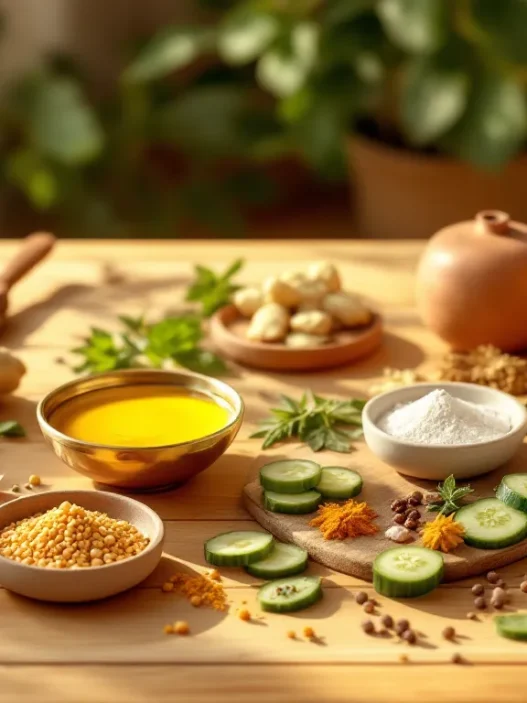








Why Sensitive Skin Reacts and What Actually Triggers Redness
Here’s something most skincare articles won’t tell you: sensitive skin isn’t just a “skin type” you’re stuck with. In Ayurveda, reactivity and redness point to an underlying imbalance, specifically, excess heat and sharpness accumulating in the body and expressing through the skin.
The skin, from an Ayurvedic perspective, is governed primarily by Pitta dosha, the principle of transformation, heat, and metabolism. When Pitta becomes aggravated, through spicy food, emotional intensity, sun exposure, harsh products, or even unresolved frustration, that excess heat rises to the surface. Redness, inflammation, burning sensations, and heightened reactivity are all classic signs of Pitta pushing outward through your largest organ.
But it’s not only a Pitta story. Vata dosha, with its dry, rough, and mobile qualities, plays a role too. When Vata is elevated, think cold weather, irregular routines, anxiety, dehydration, the skin barrier becomes compromised. Dry, rough, thin skin lets irritants in more easily, which then triggers a Pitta-like inflammatory response even in people who aren’t naturally Pitta-dominant.
Kapha types tend to have thicker, oilier skin that’s naturally more resilient. But when Kapha is out of balance, sluggish circulation and congestion can make the skin dull and prone to a different kind of sensitivity, one that shows up as puffiness, water retention, or slow-healing blemishes rather than classic redness.
The qualities at play here matter. Hot, sharp, and light qualities aggravate sensitive skin. Cool, smooth, and stable qualities calm it down. That’s the fundamental Ayurvedic lens, and it changes the way you approach every product, every habit, every choice.
What’s actually triggering your redness? Often, it’s a combination: the sharp, penetrating quality of too many chemical actives, the drying quality of over-cleansing, the heat of stress and inflammation, and the mobile, erratic quality of constantly switching products. Your skin never gets a chance to settle.
Do this today: Take five minutes tonight to notice your skin without touching it. Is it hot? Tight? Rough? Oily but irritated? That simple observation starts to tell you which qualities are out of balance. This works for anyone with reactive skin, regardless of dosha, though Pitta and Vata types will likely notice the most.
The Problem With Product Overload
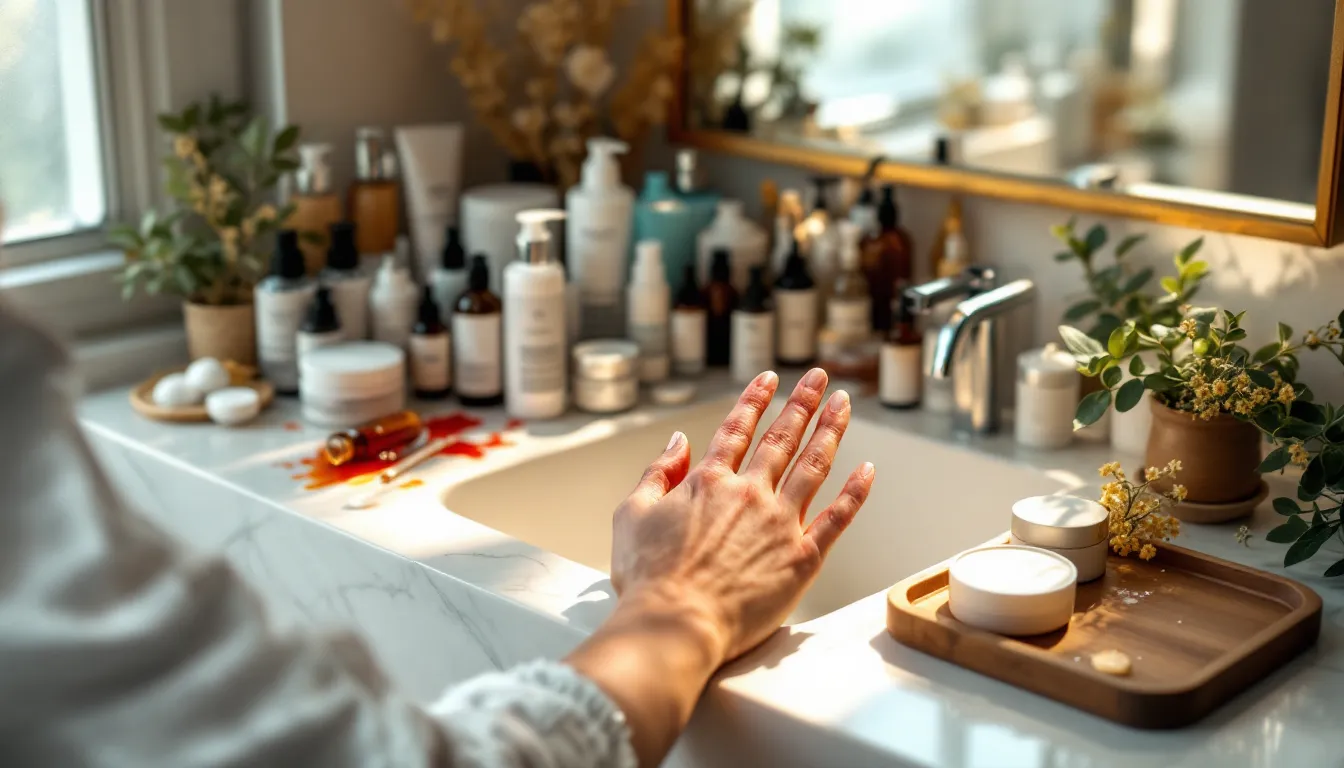
I’ll be honest, I used to think the answer to every skin concern was a new serum. Redness? Niacinamide serum. Dryness? Hyaluronic acid. Texture? Retinol. Before I knew it, my routine had become a chemistry experiment, and my skin was paying the price.
In Ayurveda, there’s a concept called ama, undigested residue that accumulates when your system can’t process what you’re taking in. We usually talk about ama in relation to food and digestion, but the principle applies beautifully to skincare. When you layer product after product onto your skin, you’re essentially overwhelming its ability to absorb, process, and benefit from any of them. The result? A kind of topical ama, buildup, congestion, irritation.
Your skin has its own metabolic intelligence, its own version of agni (digestive fire). When agni is strong and clear, your skin can take in nourishment, shed dead cells efficiently, and maintain its natural protective barrier. When you smother it with too many products, especially ones with sharp, penetrating, or chemically hot qualities, that metabolic intelligence gets dulled.
How Too Many Actives Compromise Your Skin Barrier
The skin barrier is a thin lipid layer that keeps moisture in and irritants out. In Ayurvedic terms, this barrier is closely related to ojas, that deep, underlying vitality and resilience that protects you from the inside out. When ojas in the skin is healthy, your complexion looks calm, hydrated, and naturally luminous.
But here’s what happens with product overload: acids, retinoids, and strong exfoliants, all possessing sharp, hot, and penetrating qualities, strip away that protective layer bit by bit. The skin becomes thin, reactive, and unable to hold moisture. That’s Vata and Pitta aggravation happening simultaneously. Dryness (Vata) plus inflammation (Pitta) equals a skin barrier that’s essentially waving a white flag.
And because the barrier is compromised, even gentle products can start to sting. It’s not that you’re “allergic to everything.” It’s that your skin’s natural intelligence has been overridden.
Signs You’re Using Too Many Products
Your skin will tell you if you pay attention. Stinging when you apply something that used to feel fine, that’s excess heat and sharpness. Tightness after cleansing, that’s dryness and roughness taking over. Redness that shows up after your routine rather than before, that’s a clear sign the products themselves are the problem, not the solution. Flakiness alongside oiliness is another clue: your skin is trying to compensate for what’s being stripped away.
In Ayurvedic language, these are signs that tejas, the subtle metabolic spark that governs healthy transformation in the skin, has turned aggressive. Instead of gently renewing, it’s burning. Instead of clarity, there’s irritation.
Do this today: Count your current skincare products. If you’re using more than three or four items in a single routine, consider paring back to just a gentle cleanser, a simple moisturizer, and sunscreen for the next two weeks. This reset works especially well for Pitta and combination-skin types, though virtually anyone dealing with reactivity can benefit. Give yourself about 10 minutes to audit your shelf, and be honest about what’s actually helping versus what’s just habit.
Building a Minimalist Routine for Sensitive Skin
Simplicity is a hard sell in the skincare world. We’re conditioned to believe that more steps equal better results. But in Ayurveda, the principle of “like increases like, opposites balance” gives us a much clearer compass. If your skin is hot, sharp, and reactive, it needs cool, smooth, and stable influences. Three thoughtful steps can do more than ten chaotic ones.
Step One: A No-Fuss Cleanser That Won’t Strip Your Skin
Over-cleansing is one of the fastest ways to push sensitive skin over the edge. Most foaming cleansers have a light, dry, stripping quality, great for oily skin that can handle it, but a disaster for skin that’s already compromised.
Look for a cream or milk-based cleanser. These have heavier, oilier, smoother qualities that support rather than deplete the skin barrier. In Ayurvedic tradition, cleansing the face with gentle, nourishing substances (think chickpea flour pastes or raw milk) was always about removing impurities without removing the skin’s natural protective oils.
A modern equivalent? A fragrance-free, soap-free cream cleanser. Use lukewarm water, not hot, which aggravates Pitta, and not ice-cold, which can shock Vata-type skin.
Do this today: Swap your foaming or gel cleanser for a cream-based one tonight. Spend about 30 seconds gently massaging it onto damp skin, then rinse with lukewarm water. This is especially helpful for Vata and Pitta types. If you have oily, Kapha-dominant skin that truly needs a deeper cleanse, try this only at night and use a lighter cleanser in the morning.
Step Two: Hydration and Barrier Repair
Once you’ve cleansed gently, the next step is replenishing moisture and reinforcing your skin’s protective layer. This is where the Ayurvedic concept of snehana, oleation, or nourishing with oils and fats, becomes incredibly relevant.
For sensitive skin, you want ingredients with cool, smooth, and heavy qualities. Think ceramides, which mimic the skin’s natural lipid barrier. Think squalane or jojoba oil, which have an oily, grounding quality that calms Vata dryness. A simple, fragrance-free moisturizer with these ingredients can do wonders.
Avoid anything with a strong scent, essential oils, even “natural” ones, can carry sharp, hot qualities that irritate reactive skin.
Do this today: Apply your moisturizer to slightly damp skin right after cleansing, this locks in hydration more effectively. It takes about 60 seconds. This approach is great for all dosha types, but Vata types may want to add a thin layer of a gentle face oil underneath for extra nourishment. Pitta types might prefer a lighter gel-cream. Kapha types can use a lighter moisturizer and focus it on drier areas.
Step Three: Sun Protection Without Irritation
UV exposure is one of the most potent aggravators of Pitta in the skin. The hot, sharp, penetrating quality of sunlight directly increases redness, inflammation, and sensitivity. Sunscreen isn’t optional for sensitive skin, it’s protective care.
But here’s the catch: many chemical sunscreens contain ingredients that are, themselves, heating and irritating. Mineral sunscreens, those using zinc oxide or titanium dioxide, work by sitting on top of the skin and reflecting UV rays rather than absorbing them. They tend to be far better tolerated by reactive skin because their quality is more stable, cool, and protective rather than penetrating.
Yes, mineral sunscreens can leave a slight white cast. Tinted versions help with that. The trade-off is worth it for skin that finally stops flaring up.
Do this today: If your current sunscreen stings or makes your skin feel warm, switch to a mineral-based, fragrance-free SPF 30 or higher. Apply it as the last step of your morning routine, about 30 seconds of effort that pays off all day. This is non-negotiable for Pitta types and strongly recommended for everyone, especially during warmer months.
Ingredients to Seek Out and Ingredients to Avoid
Not all ingredients are created equal, and the Ayurvedic lens of qualities makes it much easier to navigate labels without needing a chemistry degree.
Calming Ingredients That Reduce Redness Over Time
The principle is straightforward: your skin is hot, sharp, and reactive, so you want ingredients that are cool, smooth, and stabilizing.
Aloe vera is a classic, cool, smooth, and light, it’s been used in Ayurvedic practice for centuries to pacify Pitta and soothe inflamed tissue. Centella asiatica (gotu kola) is another gem with deep Ayurvedic roots. It supports tissue repair and has a cool, stable quality that calms both Pitta heat and Vata dryness.
Ceramides aren’t traditionally Ayurvedic, but their quality profile, oily, smooth, heavy, stable, aligns perfectly with what sensitive skin craves. They rebuild the lipid barrier, which is essentially restoring ojas at the skin level.
Niacinamide (vitamin B3) has a cool, gentle quality and works well for most reactive skin types when used at lower concentrations (around 5% or less). It supports the skin’s barrier function and helps calm redness without the sharp, penetrating action of stronger actives.
Chamomile and calendula extracts carry cool, smooth qualities and have a long history in both Ayurvedic and Western herbalism for calming irritation.
Common Irritants Hiding in Everyday Products
On the flip side, ingredients with hot, sharp, dry, or highly mobile qualities tend to make sensitive skin worse.
Synthetic fragrances top the list. They’re chemically complex, often irritating, and serve no functional purpose for the skin itself. Alcohol denat (denatured alcohol) is extremely drying and has a light, sharp, volatile quality that strips the barrier. High-concentration AHAs and BHAs, glycolic acid, salicylic acid, are helpful for some skin types but carry a sharp, penetrating quality that overwhelmed, sensitive skin can’t handle.
Retinoids, while effective long-term, are hot, sharp, and mobile. For skin that’s already inflamed, they can feel like pouring fuel on a fire. Sodium lauryl sulfate (SLS) in cleansers is a harsh surfactant with stripping, drying qualities.
Even “natural” doesn’t always mean gentle. Citrus essential oils (lemon, orange, grapefruit) are heating and photosensitizing. Tea tree oil, while antimicrobial, can be sharp and drying for reactive skin.
Do this today: Flip over your three most-used products and scan for fragrance, alcohol denat, and SLS. If any of them contain these, that’s your starting point for making a swap. This 5-minute label check is relevant for all dosha types but especially important for Pitta-dominant individuals whose skin is naturally more prone to heat-driven reactions.
How to Safely Test and Add New Products
Here’s where patience becomes your best friend. I know the temptation, you find something promising and want to slather it on immediately. But for sensitive skin, slow introduction is everything.
In Ayurveda, there’s wisdom in the idea that any change, even a positive one, needs to be introduced gradually so your system can adapt without being overwhelmed. Sudden changes carry a mobile, erratic Vata quality that destabilizes.
When you want to try a new product, patch-test it first. Apply a small amount to the inside of your wrist or behind your ear and wait 24 to 48 hours. No redness, no stinging, no itching? Good. Then try it on a small area of your face for another few days before incorporating it fully.
Introduce only one new product at a time. If you add two things simultaneously and your skin flares, you won’t know which one caused it. Space new additions at least two weeks apart, this gives your skin’s metabolic intelligence time to adjust and respond.
And here’s a tip I wish someone had told me years ago: your skin’s reactivity isn’t static. It shifts with the seasons, your stress levels, your sleep quality, and your menstrual cycle. A product that worked beautifully in cool, humid weather might irritate you in dry winter air when Vata qualities are higher. Pay attention to context, not just the product itself.
Do this today: If you’re eyeing a new product, commit to the patch-test-first approach. Set a reminder on your phone for 48 hours later to check the test site. This takes about 2 minutes to set up and can save you weeks of flare-ups. This practice benefits everyone, but it’s particularly important for Pitta types (prone to immediate inflammatory reactions) and Vata types (whose thin, dry skin is more permeable to potential irritants).
Lifestyle Habits That Support Calmer Skin
I can’t talk about sensitive skin without talking about what’s happening beyond the bathroom shelf. In Ayurveda, the skin reflects your inner state, your digestion, your nervous system, your emotional life. You can have the most perfectly curated routine in the world, and if your agni is weak, your stress is high, and your sleep is erratic, your skin will keep telling you something’s off.
Let’s start with agni and digestion. When your digestive fire is functioning well, strong but not excessive, nutrients are properly absorbed and waste is efficiently eliminated. When agni is impaired (by irregular meals, cold foods, emotional eating, or simply eating too much too fast), undigested residue, ama, accumulates. Ama has a heavy, sticky, dull quality, and when it circulates through the body, it can manifest in the skin as congestion, dullness, or chronic low-grade inflammation that makes redness worse.
Supporting your digestion is, in a very real sense, a skincare strategy. Eating warm, cooked, well-spiced (but not overly spicy) meals at regular times helps your body extract nourishment and reduces the ama that contributes to skin sensitivity. Favor cooling foods if Pitta is your primary concern, cucumber, coconut, cilantro, sweet fruits, leafy greens.
Prana, the vital life force connected to your breath and nervous system, also plays a direct role. When you’re stressed, prana becomes scattered and erratic (Vata aggravation), which tightens muscles, constricts blood flow, and triggers the kind of nervous system activation that shows up as flushing and reactivity in the skin. Even five minutes of slow, deep breathing before bed can help settle prana and reduce that reactive tendency.
Two daily routine habits I’d encourage you to consider:
First, gentle self-massage with a cooling oil before your shower. In Ayurveda, this practice (called abhyanga) has an oily, warm, grounding quality that directly pacifies Vata dryness and calms the nervous system. For sensitive, Pitta-aggravated skin, use coconut oil, it’s cooling and smooth. Even spending 5 minutes on your arms and legs (you don’t need to do the face if your skin is very reactive) makes a noticeable difference over time in overall skin calm and resilience. This brings ojas, that deep tissue vitality, closer to the surface.
Second, eating your largest meal between 10 a.m. and 2 p.m., when agni is naturally strongest. This aligns with the Pitta time of day, when your metabolic fire peaks. Eating heavy meals late at night impairs digestion, creates ama, and often shows up the next morning as puffiness, dullness, or heightened sensitivity.
For a seasonal adjustment: as we move into warmer months, Pitta accumulates in the environment and in your body. This is when sensitive skin tends to flare most. During late spring and summer, favor cooling foods (sweet fruits, salads, coconut water), reduce your sun exposure during peak hours, and consider switching to a lighter moisturizer. The hot, sharp quality of the season is already doing its work, your routine needs to counterbalance with cool, smooth, stable choices. In colder, drier months, Vata rises, and your skin may need richer, more oily nourishment to prevent the dryness that leads to barrier breakdown.
Do this today: Try the slow breathing practice tonight, just 5 minutes of inhaling for a count of 4, holding for 2, and exhaling for 6. Notice how your face feels afterward. This is gentle enough for everyone, though Vata and Pitta types will likely feel the most immediate calming effect.
When to See a Dermatologist Instead of DIY-ing It
I’m a big advocate for understanding your own skin and making informed choices. But I also believe in knowing your limits.
If your redness is persistent, spreading, or accompanied by pain, peeling, or pustules, it’s time to consult a dermatologist. Conditions like rosacea, eczema, psoriasis, and contact dermatitis have specific clinical profiles that benefit from professional diagnosis and sometimes medical treatment. Ayurvedic principles and a gentle routine can beautifully complement medical care, but they’re not a substitute when something more serious is going on.
Also, if you’ve simplified your routine, adjusted your habits, given it a genuine 4 to 6 weeks, and you’re still seeing significant reactivity, that’s information. It means there may be an underlying factor (hormonal, autoimmune, environmental) that needs professional investigation.
There’s no failure in seeking help. In Ayurveda, consulting a knowledgeable practitioner, whether an Ayurvedic vaidya or a modern dermatologist, is considered wisdom, not weakness.
Do this today: If you’ve been dealing with persistent, unexplained skin reactivity for more than six weeks, schedule an appointment. Even a single consultation can provide clarity. This applies to all dosha types, your skin’s comfort is worth the time.
Conclusion
Sensitive skin can feel like a puzzle you’ll never solve, trust me, I’ve been there. But the Ayurvedic perspective offers something the beauty industry often doesn’t: a framework that actually makes sense. Instead of chasing the next miracle product, you learn to read your skin’s signals, understand which qualities are out of balance, and respond with simplicity and intention.
Cool what’s hot. Smooth what’s rough. Stabilize what’s erratic. Nourish what’s depleted. It’s not complicated. It just asks for a bit of patience and a willingness to do less rather than more.
Your skin already knows how to heal. Your job is to stop getting in its way, and then gently support it with the right foods, the right habits, and a routine that respects its intelligence rather than overwhelming it.
I’d love to hear where you are on this journey. Have you noticed certain products making your sensitivity worse? Have you tried simplifying your routine, and did it help? Drop a thought in the comments or share this with someone whose bathroom counter looks like a skincare store.
What’s the one product you’re most afraid to give up, and what would happen if you did?