






Why Grocery Shopping Feels So Overwhelming
Modern grocery stores are designed to overstimulate. Bright lights, hundreds of competing packages, music, free samples, it’s a sensory flood. From an Ayurvedic perspective, all that stimulation aggravates the mobile, light, and subtle qualities that already tend to push Vata out of balance. Your mind starts jumping from option to option, and decision fatigue sets in fast.
But it isn’t just Vata types who struggle. Pitta-dominant folks often feel a sharp frustration, a heated urgency to find the “optimal” product. That hot, sharp quality drives them to over-analyze every label. And Kapha types? They may feel heavy and sluggish in the store, defaulting to familiar comfort foods because change feels like too much effort. That heavy, dull quality pulls them toward the path of least resistance.
The real issue underneath all of this is what Ayurveda calls weakened agni, not just your digestive fire, but your discernment. When agni is strong, you instinctively sense what your body needs. When it’s clouded by stress or information overload, everything feels equally appealing or equally confusing.
So the overwhelm you feel at the grocery store isn’t a personal failing. It’s a reflection of scattered prana (your vital energy) meeting a deliberately overstimulating environment.
Do this today: Before your next shopping trip, take three slow breaths in the parking lot. Just three. It takes about thirty seconds and helps settle the nervous system so your natural discernment can come online. This works for everyone, but it’s especially grounding if you tend toward anxiety or decision paralysis.
Start With a Simple Game Plan Before You Go

Ayurveda places enormous value on preparation, the idea that how you begin an activity shapes the entire experience. Walking into a store without a plan is like cooking without knowing what meal you’re making. It creates confusion, which breeds more of those mobile, scattered qualities we’re trying to calm.
I keep my game plan ridiculously simple. Before I leave the house, I think about the six tastes Ayurveda recognizes, sweet, sour, salty, pungent, bitter, and astringent, and I loosely aim to cover most of them across my weekly meals. This isn’t rigid meal planning. It’s more like a compass heading.
For instance, if I notice I’ve been eating a lot of heavy, sweet foods (hello, late winter), I’ll jot down a few bitter greens or pungent spices to bring balance. If the weather’s been hot and dry, I’ll lean toward cooling, slightly oily foods, think cucumbers, coconut, ripe fruits.
This loose framework protects your tejas, that inner spark of clarity. When you arrive at the store already knowing your general direction, you don’t burn mental energy on every single decision.
Do this today: Spend two minutes writing a rough list organized by taste categories rather than specific recipes. It takes the pressure off and keeps your shopping aligned with what your body actually needs this week. Great for beginners: seasoned cooks can adapt it to meal planning.
How to Read Nutrition Labels in Under 10 Seconds

I’m going to be honest, I don’t spend much time on nutrition labels anymore. Not because they’re useless, but because I’ve narrowed my focus to three things that tell me almost everything I need to know.
First, I check the ingredient list length. Ayurveda values simplicity in food. The shorter the list, the closer the food is to its natural state, and the easier it is for your agni to process. When your digestive fire encounters a long chain of unfamiliar additives, it struggles, like trying to burn wet wood. That undigested residue is what Ayurveda calls ama, and it accumulates as sluggishness, brain fog, or that vague “off” feeling after eating.
Second, I glance at added sugars. Excess sweet taste in processed form increases the heavy, dull, cool qualities that bog down Kapha and smother agni.
Third, I scan for oils and fats. Highly processed seed oils carry a sharp, hot quality that can aggravate Pitta over time, while the right fats, like ghee or olive oil, are smooth, nourishing, and support ojas, your deep reservoir of vitality and immune resilience.
Ten seconds. Ingredient length, added sugars, type of fat. That’s it.
Do this today: On your next trip, practice the three-point scan on five products. It takes under a minute total and trains your eye quickly. Ideal for anyone who feels paralyzed by nutrition panels.
Spotting Misleading Health Claims on Packaging
This is where things get tricky. “Natural,” “wholesome,” “made with real fruit”, these phrases are marketing, not medicine. A box of crackers labeled “natural” can still contain a dozen processed ingredients that your body struggles to recognize and digest.
Ayurveda has a beautiful concept here: pratyaksha, or direct perception. Trust what you can actually see and understand over what a label tells you. If the ingredient list reads like a chemistry textbook, the front-of-package claim is doing heavy lifting to distract you.
I’ve also noticed that “low-fat” products often compensate with extra sugar or artificial thickeners, swapping one imbalance for another. The rough, dry quality of stripped-down food gets masked by heavy, sticky additives. Your tongue is fooled, but your agni isn’t.
Do this today: Pick one product you buy regularly and flip it over. Read the actual ingredients, ignoring the front label entirely. Takes thirty seconds. This is for everyone, but especially helpful if you’ve been trusting marketing claims without checking.
Shop the Perimeter First, Then Navigate the Aisles
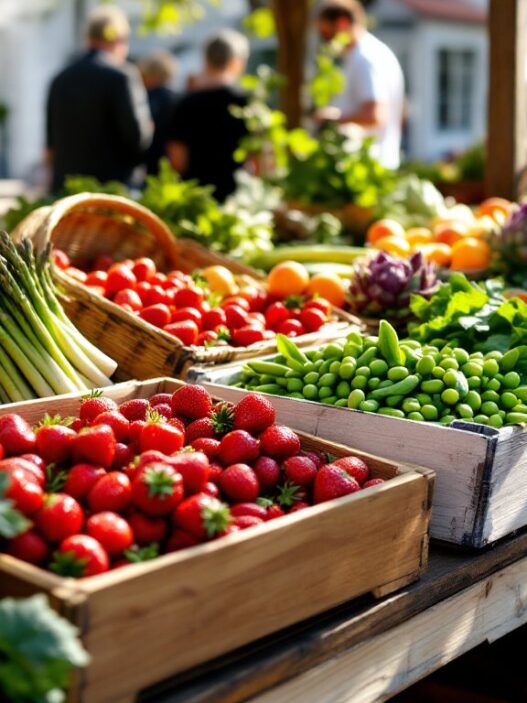
Most grocery stores are laid out the same way: fresh produce, dairy, meat, and bakery items line the outer walls, while the center aisles house packaged and processed goods. Shopping the perimeter first is a practical strategy that also happens to align beautifully with Ayurvedic principles.
Fresh, whole foods carry more prana, life force. A ripe tomato, a bunch of cilantro, a bag of fresh lentils, these foods still hold vitality. Packaged foods, by contrast, have been sitting on shelves for weeks or months. Their prana has diminished. They’re not “bad,” but they offer less of the living energy that supports your nervous system and mental clarity.
When you fill your cart with perimeter foods first, you’re building a foundation of light, fresh, and sattvic (clarity-promoting) nourishment. Then when you venture into the aisles for staples like spices, grains, or oils, you’re supplementing, not building your entire diet from shelf-stable boxes.
I also find that starting with the colorful produce section lifts my mood. There’s something grounding about handling actual food, cool cucumbers, smooth avocados, rough-skinned root vegetables. It reconnects you to the physical reality of eating, which is a form of mindfulness in itself.
Do this today: Try the perimeter-first approach on your next trip and notice whether your cart looks different by the end. Takes no extra time, it’s just a route change. Works for everyone, though Kapha types especially benefit from prioritizing lighter, fresher foods.
The One-Ingredient Rule for Picking Whole Foods
Here’s the simplest filter I’ve found: if a food is its own ingredient, it’s probably a good choice. An apple is an apple. Rice is rice. A sweet potato is a sweet potato. One ingredient.
Why does this matter from an Ayurvedic standpoint? Your digestive fire, agni, is remarkably intelligent, but it works best with recognizable inputs. Each whole food has a specific combination of tastes, qualities, and post-digestive effects that your body knows how to handle. A carrot is cool, sweet, and slightly astringent. Your agni recognizes it, breaks it down efficiently, and extracts nourishment without leaving much residue.
Now compare that to a carrot-flavored chip with fifteen ingredients. Your agni has to sort through a jumble of conflicting qualities, some hot, some cool, some oily, some dry, and the result is often incomplete digestion. That’s ama forming, and over time it dulls your tejas (metabolic clarity) and depletes ojas (your deep vitality).
This doesn’t mean every multi-ingredient food is off-limits. A jar of tahini (sesame seeds, maybe a pinch of salt) is fine. A good sourdough bread with four ingredients is fine. The one-ingredient rule is a compass, not a cage.
Do this today: Challenge yourself to make at least half your cart single-ingredient foods this week. Takes no extra time, just awareness. Suitable for all dosha types and especially helpful for anyone trying to reduce ama.
Building a Balanced Cart Without Counting Every Calorie
Calorie counting is exhausting, and frankly, Ayurveda doesn’t think in those terms. Instead, it asks: does this cart carry a range of tastes and qualities that will keep my agni steady and my doshas in check?
I aim for variety across the six tastes. Sweet (grains, root vegetables, fruits) forms the base, it’s grounding and nourishing. Sour (citrus, fermented foods) and salty (mineral salt, sea vegetables) support digestion in small amounts. Pungent (ginger, garlic, peppers), bitter (leafy greens, turmeric), and astringent (beans, pomegranate) round things out and help prevent stagnation.
When your cart covers this spectrum, you naturally get a balanced mix of nutrients without needing a spreadsheet. Your body receives the signals it needs to feel satisfied, which means fewer cravings and less overeating.
The qualities matter too. If everything in your cart is dry and light (crackers, popcorn, raw salads), you’ll aggravate Vata. If it’s all heavy and oily (cheese, fried items, cream-based sauces), Kapha builds up. A balanced cart has some warm and some cool, some dense and some light, some smooth and some rough.
Do this today: Before checkout, glance at your cart and mentally scan for missing tastes. If you notice you’re heavy on sweet and salty but missing bitter and astringent, grab a bunch of kale or a bag of lentils. Takes one minute. Works for everyone.
Smart Swaps That Make a Real Difference Over Time
Small, consistent swaps beat dramatic overhauls every time. Here are a few I’ve adopted that genuinely shifted how I feel.
I swapped refined white sugar for jaggery or raw honey (never heated, Ayurveda considers heated honey difficult to digest and ama-producing). The sweetness is still there, but the heavy, dull quality softens.
I traded shelf-stable vegetable oils for ghee and cold-pressed sesame or coconut oil. Ghee is considered one of the finest substances in Ayurveda, it’s smooth, slightly cool, and deeply ojas-building without being overly heavy when used in moderation.
I started buying whole spices instead of pre-ground. Freshly ground cumin, coriander, and fennel carry more prana and do a better job kindling agni.
None of these swaps cost more time. Some cost a bit more money, but not dramatically, especially if you’re buying them in bulk.
Do this today: Pick one swap from above and try it for two weeks. Notice how your digestion and energy respond. Takes no extra shopping time. Suitable for everyone: Pitta types may want to favor cooling oils like coconut.
Budget-Friendly Tips for Eating Healthier Every Week
Eating well doesn’t have to be expensive. In fact, some of the most nourishing foods in Ayurveda, lentils, rice, seasonal vegetables, basic spices, are among the cheapest items in the store.
Buying seasonally is the single biggest money-saver I know, and it aligns with Ayurveda’s principle of ritucharya (seasonal living). Foods in season are more abundant, cheaper, and carry the exact qualities your body needs at that time of year. Summer brings cooling cucumbers and watermelons. Autumn delivers grounding root vegetables and squash. Nature does the thinking for you, and charges less for it.
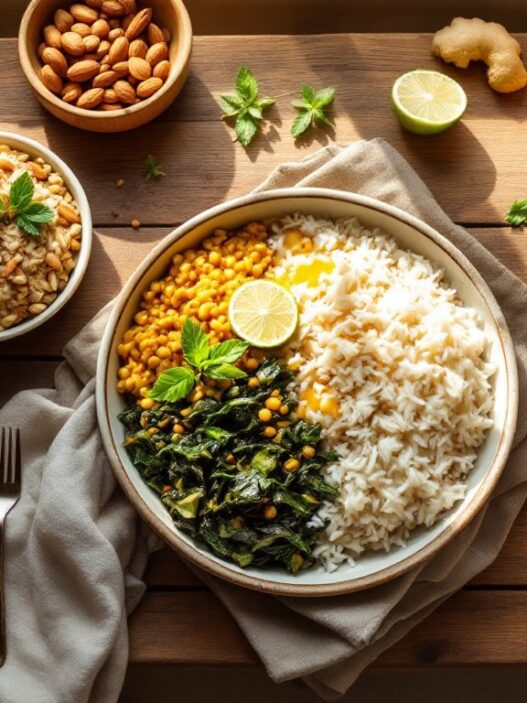
Buying dried beans and grains in bulk is another way to keep costs low while maintaining high prana. A bag of mung dal, one of Ayurveda’s most celebrated foods for its light, easy-to-digest, and agni-kindling qualities, costs a couple of dollars and feeds you for days.
I’d also encourage looking at your spice rack as an investment rather than an expense. A small jar of turmeric, cumin, and coriander lasts months and does more for your digestion and overall vitality than most expensive supplements.
Do this today: Check what’s in season locally and build your next shopping list around three to four seasonal vegetables. Takes five minutes of research. Great for everyone, and especially beneficial for those on a tight budget who still want to eat in harmony with their body and the season.
How to Stay Consistent Without Being Perfect
Here’s where I want to get personal for a moment. I don’t shop perfectly every week. Sometimes I grab the convenient option. Sometimes I buy the snack I know isn’t ideal. And that’s completely fine.
Ayurveda isn’t about rigidity, it’s about cultivating awareness over time. The goal isn’t a flawless cart. It’s a gradual shift toward foods that support your agni, build your ojas, and keep your prana flowing steadily.
Two daily habits have helped me more than anything else. First, I eat my largest meal at midday, when digestive fire peaks, this is a core Ayurvedic timing principle tied to the sun’s position. When agni is strong at lunch, even slightly heavier foods get processed well. Second, I start mornings with warm water and a small piece of fresh ginger. It wakes up agni gently and clears light ama from overnight. These habits make my food choices downstream feel easier and more intuitive.
For seasonal adjustment: in the cool, dry months of late autumn and winter, I shift my cart toward warmer, oilier, slightly heavier foods, more soups, stews, ghee, and cooked grains. In the hot months, I lean into lighter, cooler fare, fresh fruits, salads with a drizzle of lime, coconut-based dishes. This prevents seasonal dosha aggravation before it starts.
Now, the personalized piece. If you tend toward Vata (you run cold, feel anxious, have variable digestion), prioritize warm, oily, and grounding foods. Think cooked root vegetables, warming spices, and healthy fats. Try to avoid too many raw, cold, or dry foods, they’ll scatter your energy further. Do this today: Add one cooked, warm meal to your day. Takes no extra shopping, just a shift in preparation. Best for Vata types or anyone feeling ungrounded.
If you tend toward Pitta (you run warm, feel driven, have strong but sometimes sharp digestion), prioritize cooling, slightly sweet, and bitter foods. Think leafy greens, cucumber, coconut, and sweet fruits. Try to limit very spicy, fermented, or acidic items, they’ll fan the heat. Do this today: Swap one spicy condiment for fresh cilantro or mint. Takes ten seconds at the store. Best for Pitta types or anyone experiencing inflammation or irritability.
If you tend toward Kapha (you run cool, feel sluggish, have slow but steady digestion), prioritize light, warm, and pungent foods. Think steamed vegetables, beans, spicy teas, and bitter greens. Try to reduce heavy, oily, or excessively sweet purchases, they’ll deepen the stagnation. Do this today: Replace one heavy snack with a light, spiced option like roasted chickpeas. Takes no extra effort. Best for Kapha types or anyone feeling heavy after meals.
And here’s the modern bridge: science increasingly supports what Ayurveda has observed for thousands of years, that meal timing affects metabolism, that whole foods reduce systemic inflammation, that seasonal eating supports the microbiome. You don’t have to choose between ancient wisdom and modern understanding. They’re pointing in the same direction.
Do this today: Pick one principle from this article, just one, and apply it on your next grocery run. Notice how it feels. Not how it looks on paper, but how it actually feels in your body over the following days. That’s your agni talking.
The path to healthier grocery shopping isn’t about willpower or perfection. It’s about reconnecting with a kind of intelligence that already lives in you, your body’s own knowing about what it needs. Ayurveda just helps you listen.
I’d love to hear what resonates with you. What’s one small shift you’re willing to try this week? Drop a comment below or share this with someone who finds the grocery store as overwhelming as I once did.
What would your cart look like if you trusted your body a little more?