

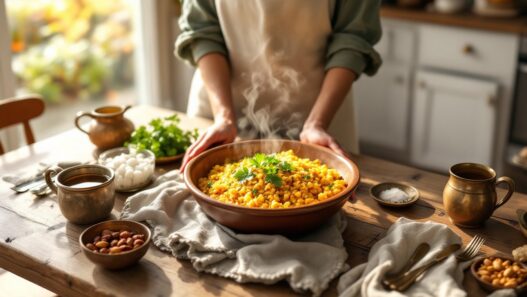






The Connection Between What You Eat and How You Look
In Ayurveda, your skin, hair, nails, and eyes are read like a daily report card of what’s happening inside. The tissues you can see (rasa and rakta, in plain English: your plasma and blood) carry the imprint of every meal, every late night, every rushed lunch eaten while answering emails.
When your digestion (your agni, the inner spark that turns food into you) is steady, food becomes nourishment all the way down to your deepest tissues. When agni stumbles, food half-cooks inside you and leaves a sticky residue called ama. Ama is what shows up on your face as a dull, heavy, slightly puffy look, that I-don’t-quite-feel-like-myself face.
Each dosha shows it differently. Vata skin can turn dry, rough, and a little tired-looking. Pitta skin flushes, breaks out, or feels hot and reactive. Kapha skin can feel oily, heavy, or congested. So beauty support isn’t one-size-fits-all, it’s about reading your own signals.
Try this today: Look in the mirror in natural light and notice three qualities, dry or oily, hot or cool, heavy or light. Two minutes. Good for everyone. Skip if you’re in a self-critical headspace today: come back when you can look kindly.
Essential Nutrients That Fuel Natural Beauty
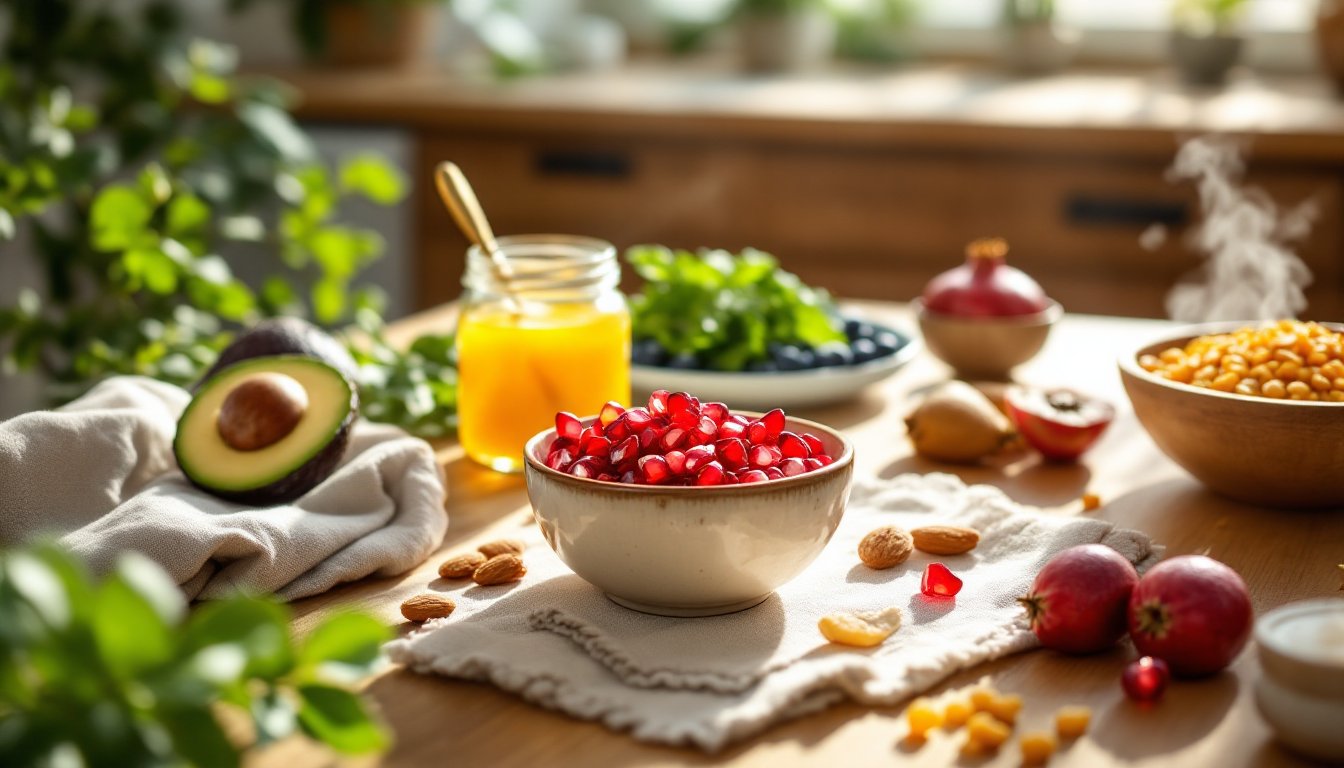
Classical Ayurveda doesn’t talk in milligrams, but it does talk in qualities and effects. The foods that build beautiful tissue tend to be fresh, lightly oily, gently sweet (think whole grains, ripe fruit, soaked nuts, not sugar), and easy on agni. They feel grounding without feeling heavy.
When you eat in line with your digestion, food becomes ojas, the deep, dewy vitality that gives skin its glow, hair its shine, and your whole presence that quietly lit-up quality. Ojas is what people are really noticing when they say you look well.
Antioxidants for Cellular Protection
Ayurveda was talking about oxidative-style damage long before we had the word for it. The framing is simple: too much heat and sharpness inside (aggravated Pitta) burns through tissues. Cooling, slightly astringent foods, pomegranate, amla (Indian gooseberry), leafy greens, blueberries, soaked raisins, calm that internal heat and protect your tejas, the metabolic clarity that keeps your skin tone even.
I like a small bowl of pomegranate seeds with breakfast in warmer months. It’s bright, juicy, and feels like a tiny act of self-care.
Healthy Fats and Collagen-Building Proteins
Dry, brittle, flaky, those are Vata words, and they’re often a signal your tissues are running low on smooth, oily nourishment. Good fats like ghee, sesame oil, soaked almonds, and avocado give your skin that supple, smooth quality. Well-cooked lentils, mung dal, paneer, and gentle animal proteins (if you eat them) build the deeper tissues that hold your face up.
Try this: Add a teaspoon of ghee to your warm grains or veggies at lunch. Thirty seconds. Lovely for Vata and most Pitta types. Go easy if you’re Kapha-heavy or feeling congested.
Beauty-Boosting Foods to Add to Your Plate
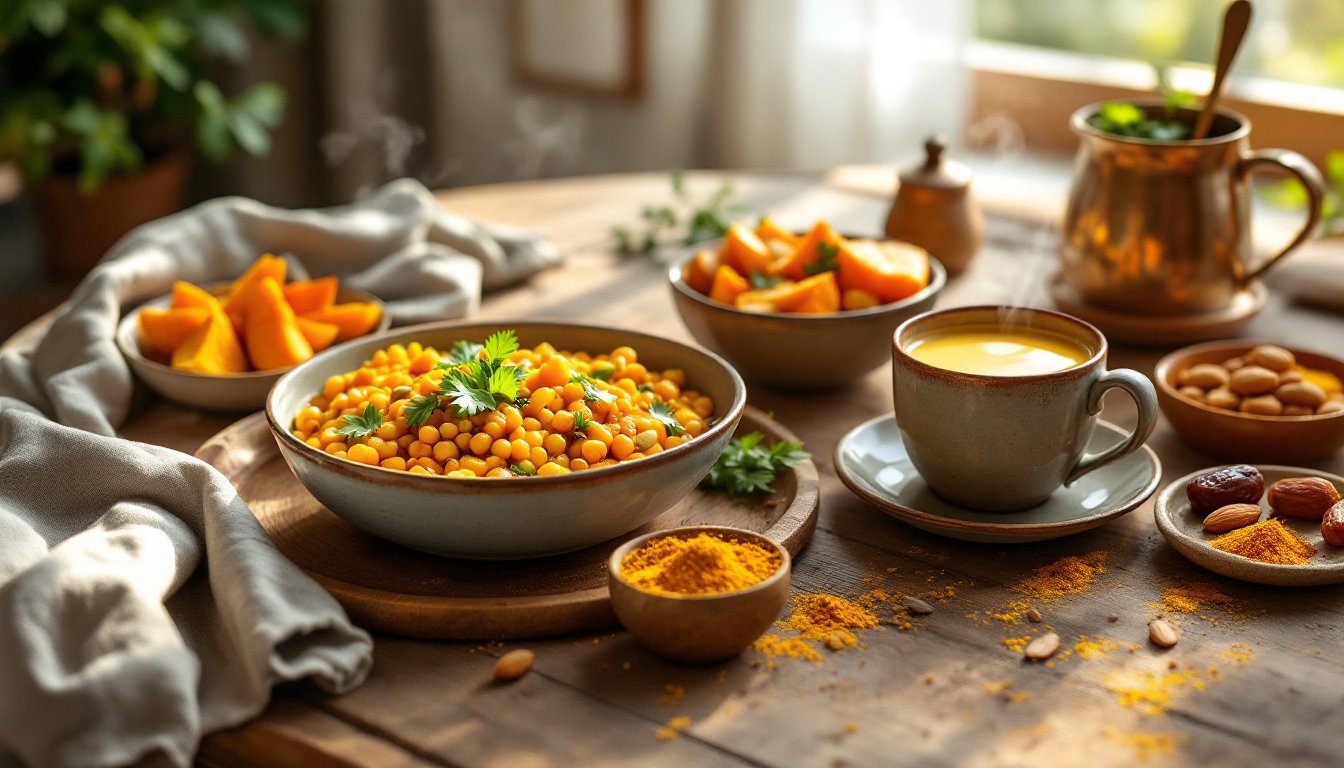
If I had to build a beauty plate from the Ayurvedic pantry, it would look like this: warm, freshly cooked, slightly oily, mildly spiced. Cooked beats raw most of the year because cooking pre-digests food for you, which means agni doesn’t have to fight to extract the goodness.
Think mung dal kichari with cilantro and a squeeze of lime. Stewed apples with cardamom in the morning. Sweet potatoes roasted with cumin and ghee. Soaked almonds (peeled) as a midday snack. Coconut water on a hot afternoon. A warm cup of milk simmered with a pinch of turmeric and a date before bed, an old beauty trick that nourishes ojas while you sleep.
Spices matter too. Turmeric calms inflammation, fennel cools and aids digestion, cumin lights agni gently, coriander brings down excess heat. They’re subtle but they accumulate.
Notice what isn’t on the list: cold drinks straight from the fridge, leftovers more than a day old, deep-fried snacks, and food eaten while standing or scrolling. Those quietly feed ama.
Try this: Build one warm, freshly cooked meal a day this week. Fifteen to twenty minutes. Good for all doshas. If you have a medical eating plan, follow that first.
Hydration: The Foundation of Glowing Skin and Strong Hair
Hydration in Ayurveda is more nuanced than “drink eight glasses.” It’s about absorbed water, not just water you pour in. Ice-cold water actually dulls agni, which can leave you feeling oddly puffy and parched at the same time, water in, but not water in your tissues.
Warm or room-temperature water, sipped slowly through the day, is the gold standard. I keep a thermos of hot water near me and take small sips every twenty minutes or so. It sounds ordinary, but the difference in my skin after a couple of weeks is the kind of subtle, dewy change you only notice in photos.
Herbal waters help too. CCF tea (cumin, coriander, fennel) is a classic gentle beauty tonic, it supports digestion and quietly clears ama. In hot weather, cool (not iced) coconut water or a slice of cucumber in your water is wonderfully cooling for Pitta.
Try this: Sip warm water every half hour from waking until lunch. Zero prep. Good for Vata and Kapha especially. Pitta types can use room-temperature water in summer instead of hot.
Sleep, Stress, and Their Impact on Your Appearance
If there’s one Ayurvedic beauty secret I wish I’d known sooner, it’s this: ojas is built largely while you sleep, and specifically in the hours before midnight. Late-night scrolling isn’t just tiring, it actively drains the reserve that makes your face look rested.
The ideal window is in bed by around 10 p.m. The 10 p.m. to 2 a.m. stretch is Pitta time in the daily rhythm, when your body does its deep repair work. Stay up through it and you borrow energy you can’t easily pay back. You’ll see it in your eyes the next morning.
Stress is the other quiet thief. Chronic stress aggravates Vata, that fast, mobile, dry quality, which dehydrates skin and rattles your prana, the steady life-force that runs through your nervous system. When prana is jumpy, your face looks tight and your sleep gets shallow.
Try this: Tonight, dim the lights an hour before bed and rub a little warm sesame or coconut oil into your feet. Five minutes. Good for nearly everyone. Skip the oil if you have open skin or a fungal issue.
Movement and Circulation for a Healthy Glow
Movement is how you keep the channels (srotas, in Ayurveda) open so nutrients reach your tissues and waste leaves cleanly. Without movement, things get stagnant and heavy, and that heaviness shows up on your face before anywhere else.
But the type of movement matters. Vata bodies do best with grounding, rhythmic movement: walking, gentle yoga, swimming. Pitta types love intensity, but too much hot, sharp exercise at noon can inflame the skin, better to move in cooler hours. Kapha types genuinely need to break a sweat to clear that stable, slightly damp quality: brisk walking, dancing, or a strong vinyasa works beautifully.
The sweet spot, traditionally, is using about half your capacity, enough to flush the cheeks and warm the body, not enough to leave you wrecked. Overtraining burns through ojas, and you can see it: hollow eyes, dry skin, a tired set to the jaw.
Try this: A twenty-minute morning walk before breakfast, ideally between 6 and 10 a.m. Good for all types. Lower the intensity if you’re recovering, pregnant, or running on little sleep.
Lifestyle Habits That Quietly Sabotage Your Beauty
Some things drain your glow so gradually you barely notice. Eating while distracted is a big one, when your attention is elsewhere, agni gets only half the signal, and food turns to ama instead of ojas.
Snacking constantly is another. Your digestion needs three to four hours of quiet between meals to finish its work. Grazing keeps a layer of half-digested food sitting around, and over weeks it shows up as dullness, puffiness, or stubborn breakouts.
Then there’s the modern combo platter: late dinners, screens in bed, harsh skincare, very cold drinks, and skipping meals only to overeat at night. Each one nudges your doshas off balance. Together, they can undo a lot of the good work you’re doing on your plate.
I’m not saying any of this to scold. I do these things too. The point is to notice which one nibbles at your glow the most.
Try this: Pick the single habit that costs you the most and gently swap it this week. Five minutes of honest reflection. For everyone. If shame creeps in, stop, Ayurveda works through kindness, not pressure.
Building a Sustainable Beauty-From-Within Routine
Here’s where it gets personal. A beauty routine that lasts is one that fits your constitution, not someone else’s.
If you’re more Vata
Your skin tends toward dry, thin, and cool. Your nemesis is irregularity. Anchor your days: warm breakfast at the same time, lunch by 1 p.m., dinner by 7. Favor cooked grains, root vegetables, soaked nuts, warm milk with dates. Self-massage with warm sesame oil three times a week. Move gently. Avoid cold raw salads as your main meal, especially in winter.
Try this: A five-minute oil massage before your shower. Daily if you can. Skip during heavy menstruation or if you’re unwell.
If you’re more Pitta
Your skin is warm, sensitive, and prone to flushing or breakouts. Heat is your trouble. Eat cooling foods, cucumber, cilantro, coconut, sweet fruits, leafy greens. Don’t skip lunch: Pitta gets snappy and inflamed when hungry. Move in the cooler parts of the day. Avoid spicy, fried, fermented, and very salty foods when your skin is reactive.
Try this: A cooling rosewater spritz on your face midafternoon. One minute. Skip if you’re sensitive to fragrances.
If you’re more Kapha
Your skin is smooth, oily, and lovely, but can turn congested or heavy. Stagnation is your issue. Favor light, warm, lightly spiced foods. Use ginger, black pepper, turmeric generously. Get vigorous movement most days. Wake up before 6 a.m. when you can. Avoid heavy dairy, fried foods, and daytime napping, which thicken Kapha.
Try this: A brisk twenty-minute walk before breakfast. Daily. Ease off if you’re truly exhausted or unwell.
Daily and seasonal rhythm
Within all three types, two daily habits anchor everything: tongue scraping and warm water first thing in the morning (clears overnight ama and wakes agni), and a calm, slightly oily evening routine, warm meal, dim lights, a little oil on the feet or scalp before bed.
Seasonally, shift with the qualities around you. In hot, sharp summer, lean cooling and sweet, coconut, cucumber, mint, less spice. In cold, dry, mobile winter, lean warm and oily, stews, ghee, root vegetables, longer oil massages. In damp spring, lighten up, more bitter greens, less dairy, more movement to counter Kapha’s heaviness.
And on the modern side: this all works with your nervous system, not against it. Regular meals, earlier sleep, and gentler movement quietly downshift the stress response, which is half the battle for skin in 2026 when most of us are quietly wired all day.
A gentle note: This is general education, not medical advice. If you’re pregnant, managing a condition, or taking medication, please check with a qualified professional before changing your routine.
Try this: Pick two of the habits above, just two, and run them for two weeks. Ten minutes a day. Good for everyone. Pause anything that doesn’t feel right in your body.
Beauty, in this view, isn’t a project. It’s a byproduct of living in a way that suits you. When digestion is calm, sleep is honest, and you move and eat in rhythm with the day, your face simply starts to show it. The glow you’re chasing is already inside you, waiting for a little less interference and a little more care.
If something here resonated, I’d love to hear about it. Which habit are you going to try first, and what does your version of feeling radiant actually look like?