








Why Your Skin Repairs Itself While You Sleep
Your skin isn’t just resting at night, it’s working. Cell turnover speeds up, blood flow to the face increases, and the barrier quietly rebuilds itself. In Ayurveda, this lines up beautifully with the Pitta time of night (roughly 10 p.m. to 2 a.m.), when the body’s metabolic spark, or tejas, handles repair and digestion of the day’s leftovers.
If you’re awake during that window, scrolling or snacking, you essentially redirect that repair energy. The result? A heavier, duller, slightly congested face by morning. That heaviness is a Kapha-leaning quality showing up where you don’t want it.
When you sleep in sync with this rhythm, your ojas (deep vitality) gets restored, and your prana (life force, nervous system steadiness) settles. Skin looks brighter because you are brighter underneath it.
Try this today: Aim for lights-out by 10:30 p.m. for one week. Takes zero extra effort, just earlier timing. Good for almost everyone: skip the strict timing if you work night shifts, work with your own rhythm instead.
Double Cleanse to Remove Sunscreen, Makeup, and Pollution

By evening, your face is carrying a full day, sunscreen, sweat, city air, maybe makeup. Ayurveda would call this accumulated ama, a sticky, dull residue sitting on the surface. Left on overnight, it blocks the skin’s natural breathing and feeds congestion (very Kapha, heavy, oily, dull).
A double cleanse handles this gently. I start with an oil-based cleanser, sesame or a light almond oil works if you don’t own a fancy one, to dissolve the oily layer. Oil meets oil, that’s the principle. Then I follow with a mild, creamy water-based cleanser to lift everything off.
What I love about this is the rhythm of it. The first cleanse is grounding and slightly warming (think soft Vata-pacifying touch). The second is cooling and clarifying, which calms any Pitta heat from sun exposure.
Try this tonight: Two minutes, oil first, then a gentle cleanser. Good for every skin type. Not ideal if your skin is actively raw or broken, keep it to one mild wash on those days.
Layer Active Ingredients in the Right Order
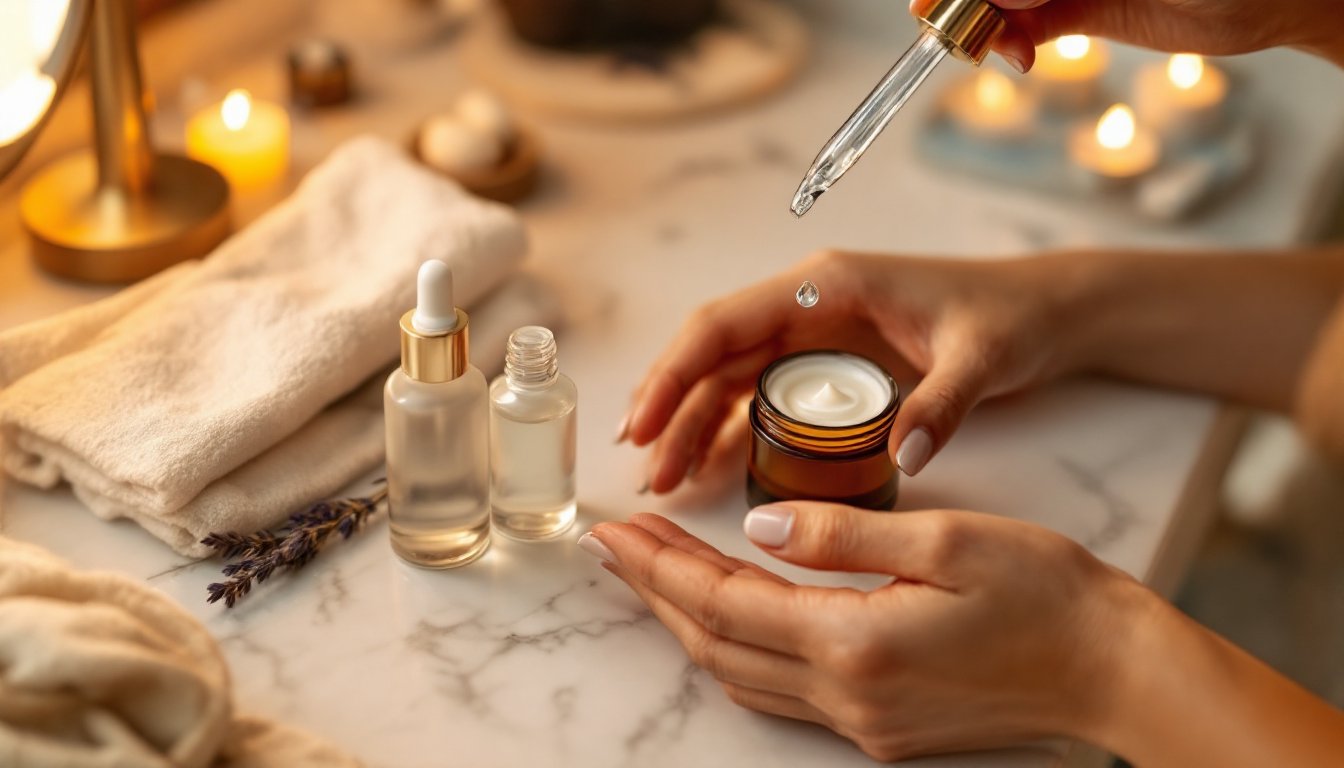
Once your skin is clean, the order you apply things actually matters. Thinnest to thickest is the rule I follow, water-based serums first, then treatment actives, then heavier creams. This lets each layer absorb without smothering the next.
Why does Ayurveda care about this? Because layering correctly respects the subtle and gross nature of substances. Light, mobile, watery formulas penetrate deeper: heavier, oilier ones seal. Reverse the order and you’re basically asking the subtle to push through the dense. It just doesn’t land.
Retinoids, Peptides, and Niacinamide: What to Use When
Retinoids are sharp and transformative, wonderful, but they can be drying and a bit heating, so I use them two or three nights a week, not daily. Peptides are smooth and supportive, great any night for rebuilding. Niacinamide is calming and balancing, especially helpful if your skin runs warm and reactive (hello, Pitta types).
A simple rotation: retinoid on Monday and Thursday, peptides or niacinamide other nights. Your barrier stays happy.
Try this: Pick one active to commit to for two weeks. Three minutes of layering, max. Good for intermediate skincare folks. New to actives? Start with niacinamide alone.
Lock In Hydration With an Overnight Moisture Barrier
Here’s where the magic seals in. After your serums, you want a moisturizer that feels nourishing but not suffocating, and on dry nights, I add a few drops of facial oil over the top. This is classic Ayurveda: when skin runs dry, rough, and slightly cool (Vata qualities), you balance with the opposite, warm, smooth, oily, stable.
For most people, an oil with sesame, almond, or jojoba works beautifully. If your skin is on the warmer, more reactive side, coconut or sunflower oil is gentler and cooling.
I also do a one-minute face massage with the oil, moving upward and outward. This boosts circulation, calms the nervous system, and supports lymph drainage, which is honestly half the reason my face looks less puffy in the morning.
Try this tonight: Three drops of oil pressed in after moisturizer, plus a slow one-minute massage. Four minutes total. Good for dry, normal, and combination skin. If you’re very acne-prone, skip the oil and use a lightweight gel-cream instead.
Optimize Your Sleep Environment for Clearer Skin
Your skincare can only do so much if your bedroom is working against you. Dry air, dusty bedding, a too-warm room, all of it shows up on your face. Ayurveda is big on environment as medicine, because the qualities around you become the qualities inside you.
A cool, slightly humid, dim room signals the body that repair time is here. I keep mine around 65°F with a small humidifier in winter. If the air is dry and rough, your skin will go dry and rough too. Opposites, again.
Swap to a Silk Pillowcase and Wash Bedding Weekly
Cotton pillowcases tug at skin and absorb the oils you just layered on. Silk is smoother and lets your products stay where they belong, on your face. I also wash pillowcases weekly and sheets every one to two weeks, because the buildup of sweat, oil, and dead cells is a quiet form of ama you don’t want pressed against your cheek for eight hours.
Try this: One silk pillowcase, washed weekly. Five minutes of setup. Good for everyone. Skip silk if you prefer cooling cotton in peak summer, just wash it more often.
Hydrate, Eat, and Wind Down Smart Before Bed
What you do in the two hours before sleep matters as much as what you put on your face. Ayurveda suggests finishing dinner by around 7 to 7:30 p.m., giving your digestive fire (agni) enough time to process food before repair mode kicks in. A heavy late meal sits there fermenting, and that residue, ama, eventually surfaces as dullness, breakouts, or under-eye darkness.
I like a light, warm dinner: soup, kitchari, sautéed greens with rice. Something cooked, easy, and slightly oily so it’s not drying.
Around an hour before bed, I sip warm water with a pinch of cardamom or fennel. Not gulping liters, that just leads to puffy eyes. Just enough to support overnight hydration without overloading the kidneys.
Winding down counts too. Dim lights, slower music, a few minutes of slow breathing. This shifts your nervous system from mobile and sharp to stable and smooth, which is exactly the state skin wants for repair.
Try this tonight: Dinner by 7:30, warm sip by 9, lights low by 9:30. Good for everyone. Not ideal if you’re on a strict feeding schedule for a medical reason, follow your provider’s plan.
Habits to Avoid in the Hours Before You Sleep
Now for the gentle subtractions. A few common evening habits work against your skin more than they help.
Late screens. Bright, sharp blue light keeps your nervous system in alert mode, very Pitta, very wired. Even thirty minutes of dim screens before bed makes a difference. I keep mine off after 9:30 when I can.
Hot, long showers right before bed. Lovely in theory, drying in practice. Hot water strips the skin’s natural oils, leaving it rough and dehydrated. If you love an evening shower, keep it warm (not scalding) and moisturize within three minutes of stepping out.
Late caffeine and alcohol. Both are heating, mobile, and dehydrating. They disrupt deep sleep, and deep sleep is when ojas builds. Skin notices the difference within days.
Going to bed with hair products or oils touching your face. That residue migrates onto your pillow and back onto your skin. Tie your hair back, or use a clean headband.
If You’re More Vata, Pitta, or Kapha
This is where it gets personal. Your skin doesn’t respond like your friend’s skin, and that’s the point.
If you’re more Vata (dry, thin, easily flaky skin: cold hands: restless mind), lean warm and oily. A richer cream, sesame oil massage, herbal tea, and an earlier bedtime around 10 p.m. Keep your room warm, your routine consistent, and your screens off early. Avoid going to bed cold or hungry.
If you’re more Pitta (warm, reactive, breakout-prone, flushes easily), lean cool and calm. Niacinamide, aloe-based gels, sunflower or coconut oil, a slightly cooler bedroom, and a calming wind-down. Avoid spicy late dinners and intense workouts after 8 p.m., they keep your tejas running hot when it should be settling.
If you’re more Kapha (oily, congested, slow to wake, fuller skin), lean light and stimulating. A thorough double cleanse, lighter gel moisturizer, dry brushing before showering, and an earlier wake-up around 6 a.m. Keep dinners small and warm. Avoid heavy dairy desserts at night and late napping on the couch.
Try this: Pick the type that sounds most like you and commit to one tweak for a week. Two to five minutes of adjustment. Good for everyone, since most of us are a blend.
Ideal Daily Routine to Support Your Evening Habits
A glowing evening starts in the morning. I scrape my tongue first thing (a thirty-second habit that clears overnight ama and supports digestion all day), then drink warm water. In the late afternoon, I take a short walk, even ten minutes, to keep prana moving and prevent that heavy, stuck feeling that sabotages sleep later.
These two small habits genuinely change how my skin looks at night.
Try this: Tongue scrape + warm water in the morning, ten-minute walk before sunset. Five minutes total. Good for everyone. Skip the walk if you’re ill or recovering, gentle stretching works too.
Seasonal Adjustment
In cold, dry winter months, skin runs rougher and more Vata. Switch to heavier oils, run a humidifier, and add a warm bath with a few drops of sesame oil twice a week. In hot, humid summer, lean cooler, lighter lotions, rose water mists, and rinses with cool (not cold) water. The principle is always the same: balance the season’s dominant qualities with their opposite.
Try this: One seasonal swap each quarter. Five minutes to set up. Good for everyone. If you live somewhere with extreme weather shifts, adjust more often.
Modern Relevance
Here’s the bridge to modern life: nearly every habit above also calms your nervous system. Lower cortisol at night equals better skin repair, better sleep, less inflammation. Ayurveda figured this out thousands of years ago without the lab data, but the data now agrees. Your evening routine isn’t vanity, it’s nervous system care that happens to show on your face.
Try this: Treat your nightly routine as a fifteen-minute nervous system reset, not a chore. Good for everyone, especially if you’re running on stress.
Conclusion
Better skin overnight isn’t about ten products or a perfect shelf. It’s about working with your body’s natural repair window, soothing the qualities that have built up during the day, and protecting your sleep like it matters, because it really does.
Start with one habit this week. Maybe it’s the double cleanse, maybe it’s lights-out by 10:30, maybe it’s the silk pillowcase. Small, consistent shifts compound into a face that looks rested and a person who feels it.
I’d love to hear which habit you’re trying first, drop a comment, share this with a friend who needs better sleep, and tell me: what does your dream evening routine look like?