





Why Saving Water at Home Matters More Than Ever
It’s easy to take water for granted when it flows every time you turn a handle. But freshwater scarcity is no longer a far-off problem. As of 2025, nearly half of all U.S. states have experienced drought conditions at some point in the past five years, and aging infrastructure means that billions of gallons are lost to leaky municipal pipes before they ever reach our homes.
Then there’s the cost. Water rates have been climbing steadily, up roughly 40% over the past decade in many metro areas. For families already stretched thin, that’s real money draining away. Literally.
But beyond the dollars, there’s something deeper. Water connects everything: the food we grow, the ecosystems around us, the energy it takes to treat and pump every gallon to our taps. When I started thinking of water not as an infinite utility but as a shared resource, my whole relationship with the faucet changed.
The good news? Residential water use is one of the areas where individual action genuinely moves the needle. The EPA estimates that simple efficiency improvements in the average home can save about 20% of indoor water use, roughly 13,000 gallons per year for a typical family. That’s meaningful. And as I’ll walk you through below, most of these changes take minutes, not weekends.
Low-Effort Changes in the Kitchen
The kitchen is where I started, mostly because it’s where my worst habits lived. Running the faucet while scrubbing vegetables. Rinsing every dish under a stream before loading the dishwasher. Using a full pot of water to boil three eggs. Sound familiar?
The kitchen accounts for roughly 10–15% of household water use, and a surprising amount of it is pure habit rather than necessity.
Smarter Dishwashing and Cooking Habits
First, the dishwasher revelation: a fully loaded, modern dishwasher typically uses around 3–5 gallons per cycle. Hand-washing the same load? That can run 20 gallons or more, depending on how generous you are with the tap. So if you’ve got a dishwasher, use it, but run it full. Half-loads waste water, energy, and detergent all at once.
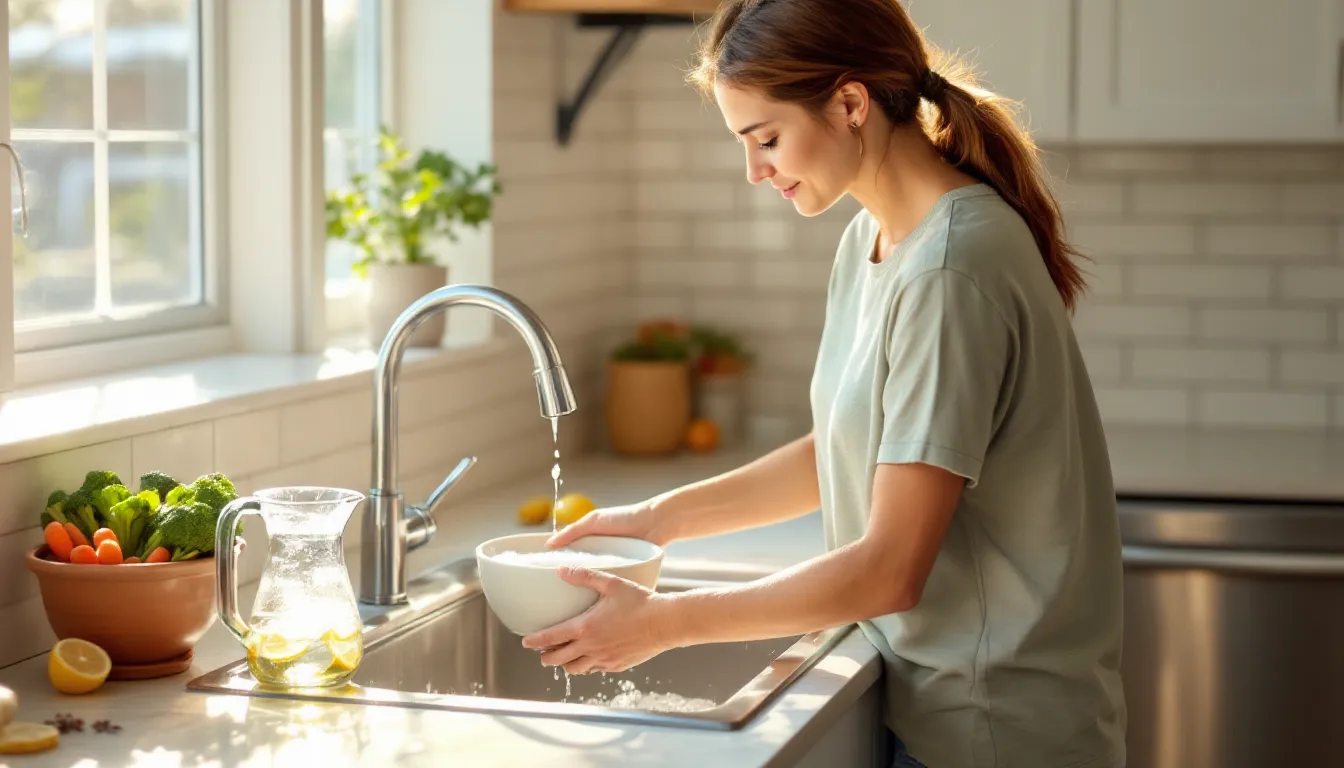
When I do hand-wash, I’ve switched to the basin method. Fill one side of the sink (or a large bowl) with warm soapy water, wash everything in there, then do a quick rinse. It sounds old-fashioned because it is. It also cuts my kitchen water use roughly in half.
For cooking, I’ve gotten into the habit of using just enough water. Steaming vegetables instead of boiling them saves water and keeps more nutrients intact. When I do boil pasta or potatoes, I let the cooking water cool and use it on my houseplants, they actually love the starchy stuff.
One more small win: I keep a pitcher in the fridge for drinking water instead of running the tap until it gets cold. That alone probably saves a gallon or two a day in my house.
None of this feels like deprivation. It just feels like paying attention.
Reducing Water Waste in the Bathroom
If the kitchen is where my bad habits started, the bathroom is where the real volume hides. Toilets, showers, and faucets together account for more than 60% of indoor water use in the typical American home. That’s a staggering number when you sit with it.
I used to think my showers were “pretty quick.” Then I actually timed one. Seven minutes. Not terrible, but at 2.5 gallons per minute with my old showerhead, that’s nearly 18 gallons for a single shower. Multiply that by two people, 365 days a year, and we’re talking over 13,000 gallons annually just from showering.
Shower, Faucet, and Toilet Upgrades That Pay for Themselves
Swapping to a WaterSense-labeled showerhead was the single best investment I’ve made for water savings. These use no more than 2.0 gallons per minute, and honestly, the pressure feels fine, some models feel better than my old one because of improved spray engineering. The showerhead cost me about $25 and paid for itself in under three months.
For faucets, aerators are the unsung hero. A standard bathroom faucet runs at 2.2 gallons per minute. A WaterSense aerator drops that to 1.5 or even 1.0 GPM, and you genuinely don’t notice the difference when you’re washing your hands or brushing your teeth. They cost a few dollars and screw on in seconds.
Toilets are the big one. Older toilets can use 3.5 to 7 gallons per flush. If yours is from before 1994, it’s almost certainly a water hog. Modern low-flow models use 1.28 gallons or less. I get that replacing a toilet isn’t a casual weekend decision, but many water utilities offer rebates that soften the cost considerably. In the meantime, the old “brick in the tank” trick, or better yet, a displacement bag designed for the purpose, can reduce each flush by half a gallon or so.
And the simplest change of all? Turn off the faucet while you brush your teeth. It sounds almost too basic to mention, but leaving the water running for two minutes of brushing wastes about 4 gallons. Twice a day, two people, that’s nearly 6,000 gallons a year for literally no reason.
Water-Smart Laundry and Cleaning Routines
Laundry is another area where small shifts add up fast. The average family does about 300 loads of laundry per year. With a standard top-loader, each cycle can use 30–45 gallons. That’s potentially 13,500 gallons a year, just on clothes.
Front-loading washers are dramatically more efficient, typically using 15–20 gallons per load. If you’re in the market for a new machine, look for the ENERGY STAR label, which certifies both water and energy efficiency. But even with your current washer, there are quick wins.
Run full loads. This is the laundry equivalent of running a full dishwasher, it’s the most water-efficient approach per garment. If you can’t wait for a full load, use the appropriate water-level setting if your machine has one. Many newer models sense the load size automatically, which helps.
I’ve also gotten more relaxed about what actually needs washing. Jeans, sweaters, and many outer layers don’t need a wash after every wear. Hanging them up to air out between wears keeps them fresh and extends their life. My jeans probably get washed every four or five wears now, and they look better for it.
For household cleaning, I’ve moved away from running the mop under the faucet repeatedly. A bucket with a measured amount of cleaning solution goes further than you’d think. Microfiber cloths are great here too, they clean effectively with less water and fewer chemicals.
One thing I no longer do: pre-rinsing heavily soiled clothes under running water. A soak in a basin works better for stains anyway, and uses a fraction of the water.
Outdoor Water Conservation for Lawns and Gardens
Outdoor water use is where conservation gets really interesting, and where the biggest savings often hide. In summer months, outdoor watering can account for 50–70% of total household water use. That’s not a typo.
I live in an area with warm summers, and I used to water my lawn almost daily. It looked green. It also drank money. When I started learning about water-smart gardening, I realized I’d been doing almost everything the hard way.
Landscaping and Irrigation Tips That Cut Usage Dramatically
The first shift was watering deeply but less often. Most lawns need about an inch of water per week, and it’s better delivered in one or two deep sessions than in daily light sprinklings. Deep watering encourages roots to grow down, which makes grass more drought-resistant over time. Shallow watering does the opposite, it keeps roots near the surface where they dry out fast.
Timing matters a lot. I water early in the morning now, before 8 a.m. when it’s cooler and less windy. Watering in the afternoon heat means a significant percentage evaporates before it ever reaches the roots. The difference is measurable: studies suggest early-morning watering can be 20–25% more efficient than midday watering.
Drip irrigation changed the game for my garden beds. Instead of overhead sprinklers that spray water everywhere (including the sidewalk and the side of my house), drip systems deliver water directly to the root zone of each plant. They use 30–50% less water than conventional sprinklers and result in healthier plants because the foliage stays dry, which reduces fungal problems.
I’ve also embraced mulch, 2 to 3 inches of organic mulch around plants and garden beds dramatically reduces evaporation, keeps soil temperature stable, and suppresses weeds that compete for moisture. It’s one of those changes that saves water, saves time, and makes the garden look better. Triple win.
For anyone willing to think longer-term, replacing sections of water-hungry turf with native or drought-adapted plants is transformative. Native plants are adapted to your local rainfall patterns and typically need little to no supplemental watering once established. My front yard is now about half native perennials and ornamental grasses, and I’ve cut my outdoor watering by roughly 40%.
Rain barrels are another smart addition. Collecting roof runoff gives you free, unchlorinated water for garden use. A single rain barrel can capture about 600 gallons during a moderate rainy season. Check your local regulations first, most areas allow them, but a few have restrictions.
Detecting and Fixing Hidden Leaks Before They Add Up
Here’s a number that surprised me: the average household loses about 10,000 gallons of water per year to leaks. That’s roughly the amount needed to fill a backyard swimming pool. Most of these leaks are small, a dripping faucet here, a running toilet there, and they’re easy to ignore because individually they seem trivial.
But they’re not trivial in aggregate. A faucet dripping at one drip per second wastes about 3,000 gallons a year. A toilet that runs intermittently can waste 200 gallons a day or more.
The easiest way to check for hidden leaks is the meter test. Turn off every water-using appliance and fixture in your home, then check your water meter. Wait two hours without using any water, and check again. If the meter has moved, you’ve got a leak somewhere.
For toilets specifically, the food coloring test is simple and effective. Drop a few drops of food coloring into the tank (not the bowl). Wait 15 minutes without flushing. If color appears in the bowl, your flapper valve is leaking. Replacing a flapper costs about $5 and takes ten minutes.
I also make it a point to check outdoor spigots, garden hose connections, and irrigation fittings at least twice a year, once in spring before I start watering, and once in fall before winterizing. These are high-leak-risk areas that are easy to overlook.
If you suspect a larger or harder-to-find leak, unexplained water bill spikes, damp spots on walls or floors, the sound of running water when nothing is on, call a plumber. Some leaks happen in supply lines underground or behind walls, and finding them early saves both water and serious repair costs.
Building Long-Term Water-Saving Habits for the Whole Household
This is the part that makes conservation stick, or not. I can install every efficient fixture in the world, but if the habits don’t change, the savings plateau.
What’s worked for me is making it visible. I started tracking our monthly water use on a simple chart stuck to the fridge. Nothing fancy, just the number from the bill, written down. Something about seeing the trend line makes the whole family more conscious. When we hit a new low, it feels like a small victory.
Getting kids involved makes a huge difference too. My neighbor turned it into a kind of household challenge, whoever spotted the most water waste in a week got to pick the weekend movie. Silly? Maybe. But her family’s water bill dropped 15% in the first month and stayed there.
I’ve also found that batching habits helps. Instead of running water reactively throughout the day, I try to batch tasks: all the hand-washing dishes at once, one dedicated watering session for the garden, full loads of laundry rather than frequent small ones. It reduces the total number of times I’m turning on a tap, which reduces those little bursts of waste that are invisible individually but enormous collectively.
Talk to your household about it. Not in a lecture-y way, more like sharing what you’ve noticed. “Hey, I realized we’re using X gallons a month on watering. What if we tried…” People are more likely to adopt changes they helped shape than ones handed down as rules.
And be patient with yourself. I still catch myself running water out of habit sometimes. The goal isn’t perfection: it’s a gradual, sustainable shift. A household that saves 20% of its water use consistently is doing far more good than one that hits 50% savings for a week and then snaps back to old patterns.
Conclusion
Saving water at home isn’t about grand gestures or uncomfortable sacrifice. It’s about dozens of small, almost invisible adjustments that add up to something genuinely meaningful, for your wallet, for your community, and for the shared resource we all depend on.
I started with one pitcher in the fridge and a timed shower. Two years later, my household water use is down about 30%, and honestly, nothing about our daily life feels harder or less comfortable. If anything, there’s a certain satisfaction in using resources thoughtfully. It feels like growing up, in the best sense.
Pick one thing from this article and try it this week. Just one. The kitchen pitcher, the meter test, the early-morning watering shift, whatever catches your attention. You might be surprised how quickly one change leads to another.
This article is for general informational purposes and is not professional environmental or plumbing advice. For specific concerns about your home’s water systems, consult a licensed plumber or your local water utility.
I’d love to hear what’s worked for you. What’s the one water-saving change that’s stuck in your household? Drop a comment or share this with someone who’s been thinking about cutting their water bill, sometimes the best motivation is knowing someone else is doing it too.