







Why a Smaller Wardrobe Is a More Ethical Wardrobe
There’s a certain freedom in owning less. When I finally pared down my closet, I noticed something unexpected: I started dressing better. Fewer choices meant less decision fatigue, and each piece I kept was one I actually liked wearing.
But the benefits go way beyond personal convenience. A smaller wardrobe means fewer resources consumed, less water, less energy, fewer chemicals, less textile waste clogging up landfills. When you buy less, you participate less in a system that’s been built on speed, disposability, and hidden costs.
And those hidden costs are enormous.
The Environmental and Social Cost of Fast Fashion
The fashion industry accounts for roughly 10% of global carbon emissions, more than international flights and maritime shipping combined. Every year, an estimated 92 million tons of textile waste ends up in landfills, and it can take a synthetic garment 200 years or more to decompose.
Then there’s the human side. Most fast fashion depends on garment workers in countries like Bangladesh, Cambodia, and Vietnam, where wages often hover well below a living wage. The 2013 Rana Plaza collapse in Bangladesh killed over 1,100 workers and injured thousands more. It became a turning point for many people, but the underlying conditions haven’t changed as much as we’d hope.
I don’t share these numbers to make anyone feel guilty. I share them because once I understood the real scope, I couldn’t unsee it. And that awareness became motivation, not to be perfect, but to be more intentional.
A smaller wardrobe is one of the most direct things you can do. You’re not trying to fix the whole system overnight. You’re just choosing to step back from the cycle a bit.
How to Audit Your Current Closet
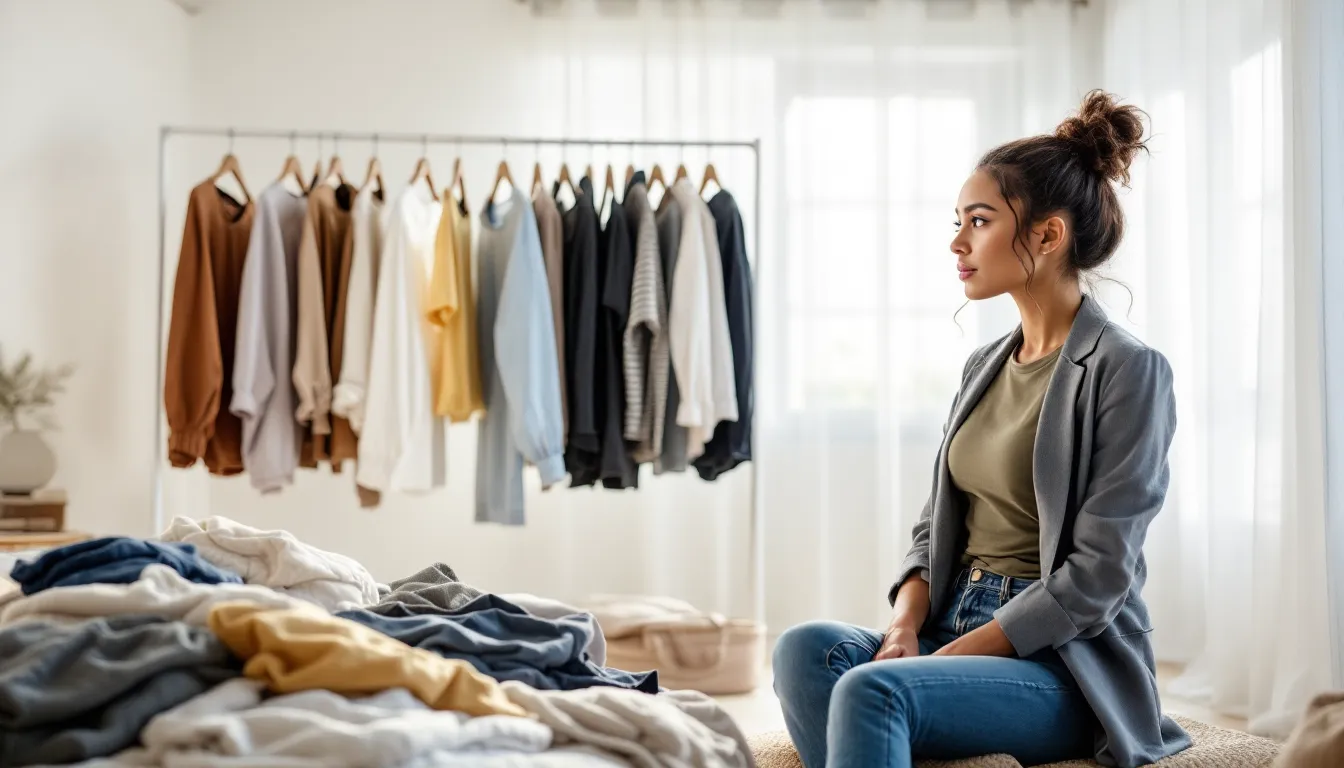
Before you buy a single new thing, start with what you already have. I know, it’s not the exciting part. But it’s the foundation everything else builds on.
Here’s how I did my first closet audit. I pulled everything out, every last sock and forgotten blazer, and laid it on the bed. Then I sorted it into three loose groups: pieces I wear regularly and love, pieces I haven’t touched in six months or more, and everything in between.
The “in between” pile was the most revealing. It was full of clothes I kept out of guilt (“I paid good money for that”) or vague optimism (“I might wear it someday”). Spoiler: I never did.
For things you’re letting go, consider donating to local shelters, selling on platforms like Poshmark or ThredUp, or organizing a clothing swap with friends. Recycling is a last resort, many municipal textile recycling programs are limited, but brands like Patagonia and H&M do take back used garments.
What stays in your closet becomes your working wardrobe. Pay attention to what you actually reach for. That tells you more about your real style than any Pinterest board ever could.
Try this: Set aside one afternoon this weekend. Put on some music, make it feel less like a chore. Take stock of what you own, it’s the first real step toward building a wardrobe that aligns with your values.
Choosing Quality Over Quantity: What to Look For
Once you know what gaps exist in your closet, you can start filling them, slowly and deliberately. The shift from “more stuff” to “better stuff” is where ethical clothing basics really click into place.
Quality isn’t just about how something looks on the hanger. It’s about construction, materials, and how a garment holds up over time. I’ve learned to check seams (are they tight and even?), look at hems (are they finished properly?), and feel the weight of the fabric. A well-made shirt has a different hand-feel than a cheap one, even before you read the label.
Fabrics and Materials That Matter
Not all fabrics are created equal, and this is one area where a little knowledge goes a long way.
Organic cotton uses significantly less water than conventional cotton and avoids toxic pesticides. Linen, made from flax, is naturally durable and biodegradable, it softens beautifully with every wash. Tencel (lyocell) is produced from sustainably harvested wood pulp in a closed-loop process that recycles water and solvents.
On the other hand, polyester and nylon are petroleum-based synthetics that shed microplastics every time you wash them. They’re cheap to produce, which is exactly why fast fashion relies on them so heavily.
Hemp is another favorite of mine, it’s incredibly sturdy, requires minimal water to grow, and gets more comfortable over time. And recycled wool or deadstock fabrics (leftover materials from other production runs) are great options that keep existing resources in circulation.
I’m not saying you need to throw out everything synthetic you own. That would defeat the purpose. But when you’re buying new, choosing natural or responsibly produced fabrics makes a real difference.
Certifications and Transparency Standards
Labels can be confusing, and “greenwashing” is a real problem. Some certifications I’ve come to trust include:
GOTS (Global Organic Textile Standard) covers the entire supply chain for organic fibers. OEKO-TEX Standard 100 tests for harmful substances in textiles. Fair Trade Certified ensures workers receive fair wages and work in safe conditions. B Corp certification evaluates a company’s overall social and environmental performance.
Transparency matters as much as certification. Brands that openly share their supply chain information, where materials are sourced, where garments are sewn, what workers are paid, tend to be the ones actually doing the work. If a brand’s “sustainability” page is vague and full of buzzwords but light on specifics, that’s a red flag.
Try this: Next time you’re considering a purchase, spend five minutes on the brand’s website looking for supply chain details. You’ll be surprised how quickly you can tell who’s genuine and who’s just marketing.
Building a Capsule Wardrobe With Ethical Pieces
A capsule wardrobe is a small, curated collection of versatile pieces that mix and match easily. It’s the practical backbone of an ethical closet, because when everything works together, you need far less.
I started with about 30 pieces total, including shoes. That felt tight at first, but I was amazed at how many outfits I could create once every item was compatible.
Essential Categories to Cover
Think in terms of function rather than trend. You want a few solid basics in each of these zones: tops (a mix of casual tees and slightly dressier options), bottoms (one great pair of jeans, one pair of trousers or a skirt, depending on your life), layers (a versatile jacket, a cozy sweater, maybe a cardigan), dresses or jumpsuits if that’s your thing, and shoes (two or three pairs that cover casual, work, and weather).
The key is sticking to a cohesive color palette. I gravitate toward neutrals, navy, olive, cream, charcoal, with one or two accent colors. That way, almost everything pairs with everything else.
How to Mix, Match, and Maximize Versatility
Versatility comes down to choosing pieces that pull double or triple duty. A well-fitting blazer works over a t-shirt on the weekend and with a button-down for meetings. A simple linen dress can be worn alone in summer or layered over a turtleneck in cooler months.
Accessories help too. A good scarf, a quality belt, or a statement pair of earrings can transform the same outfit into something that feels completely different.
I won’t pretend I got it right on the first try. Building a capsule wardrobe is iterative, you learn what works for your actual life over the course of a few seasons. Give yourself that grace.
Try this: Pick five items from your current closet and challenge yourself to create at least three distinct outfits from them. It’s a low-stakes way to start thinking in capsule-wardrobe terms.
Shopping Secondhand and Supporting Circular Fashion
The most sustainable garment is the one that already exists. Secondhand shopping is one of the most impactful ethical clothing basics, and it’s gotten remarkably easier in the past few years.
Online platforms like ThredUp, Poshmark, Depop, and The RealReal have made it possible to find specific items in your size without spending hours rummaging through bins (though I still love a good thrift store run when I have the time). Many local consignment shops carry carefully curated selections too.
Circular fashion goes a step further. It’s the idea that clothing should be designed, produced, and distributed in a way that keeps it in use as long as possible, and then recycled or composted at the end of its life. Brands like Eileen Fisher, with their Renew program, and Patagonia’s Worn Wear initiative are leading examples.
Swapping is another avenue I really enjoy. Clothing swaps, whether organized through community groups, apps like Swap Society, or just among friends, let you refresh your wardrobe without spending a cent or consuming any new resources.
There’s a mindset shift here that matters. Secondhand isn’t “settling.” Some of the best pieces in my closet, a perfectly broken-in leather jacket, a vintage silk blouse, came from secondhand shops. They have character you simply can’t get from something brand new.
Try this: Before your next purchase, search for the same item secondhand first. Give yourself a week to look. You might be surprised at what turns up.
Maintaining and Caring for Clothes to Extend Their Life
Buying better is only half the equation. How you care for your clothes determines how long they actually last, and this is something I had to learn the hard way after ruining a really nice merino wool sweater in a hot wash.
A few habits have made the biggest difference for me. I wash clothes less frequently than I used to. Unless something is visibly dirty or smells, it often just needs to air out between wears. Jeans can go weeks without washing. Sweaters, too. Overwashing is one of the main reasons clothes break down prematurely, it weakens fibers, fades colors, and wears down fabric.
When I do wash, I use cold water almost exclusively. Cold water is gentler on fibers and uses less energy. I skip the dryer for anything I care about and air dry instead. This alone has dramatically extended the life of my wardrobe.
Learning basic repairs has been surprisingly satisfying. Sewing a button back on, fixing a small seam tear, or patching a pair of jeans takes minutes and saves garments from the donation pile or worse. YouTube is full of beginner-friendly tutorials if you’ve never picked up a needle.
Proper storage matters too. Fold knitwear instead of hanging it (hangers stretch out the shoulders). Store off-season clothes in breathable garment bags. Keep shoes in a cool, dry place.
Try this: Commit to air-drying your clothes for the next two weeks and see what you notice. It’s one of the simplest changes with the most visible payoff.
Budgeting for Ethical Fashion Without Overspending
Let’s be honest about the elephant in the room: ethical fashion can feel expensive. A single ethically made t-shirt might cost $40 to $60 compared to $8 at a fast fashion retailer. That price gap is real, and I don’t think it helps anyone to pretend otherwise.
But here’s the reframe that changed things for me. When I was buying cheap clothes, I was spending more overall. I’d grab five $15 tops in a single shopping trip, most of which would fall apart or get donated within a year. That’s $75 gone. One well-made top at $50, worn for three or four years, turns out to be the cheaper option per wear.
Cost-per-wear is a concept worth getting comfortable with. If you spend $120 on a pair of boots and wear them 200 times over several years, that’s 60 cents per wear. Compare that to $40 boots that last one season, you’re paying over a dollar each time.
That said, budgeting for ethical fashion takes some planning. I’ve found it helpful to set a seasonal clothing budget rather than buying impulsively. I keep a running list of what I actually need (not want, need), and I wait for sales from ethical brands I trust. Many offer end-of-season discounts, Pact, Everlane, and Kotn are good examples.
Mixing secondhand with new ethical pieces is another practical strategy. My wardrobe is roughly half thrifted, half purchased new from responsible brands. That balance keeps the budget manageable without compromising on values.
And remember, buying less is the point. Ethical fashion isn’t about replacing your entire wardrobe overnight. It’s about making better choices, one piece at a time, as your current clothes wear out.
Try this: Calculate the cost-per-wear for three items in your closet, one you wear all the time, one you barely touch, and one you just bought. It’s a revealing exercise.
Conclusion
Building a smaller, better wardrobe isn’t a weekend project, it’s an ongoing practice. And like most meaningful practices, it gets easier and more natural over time.
I’m still learning. I still occasionally make impulse purchases I regret. But the overall trajectory of my relationship with clothing has shifted in ways that feel genuinely good. Less clutter, less waste, more intention. Clothes I actually enjoy wearing instead of a closet full of compromises.
The ethical clothing basics I’ve outlined here, auditing what you own, choosing quality over quantity, embracing secondhand, caring for what you have, and budgeting thoughtfully, aren’t about being perfect. They’re about being a little more conscious with each decision.
If you take one thing from this article, let it be this: you don’t have to overhaul everything at once. Start where you are. The next time a shirt wears out or you need something for a new season, make that one purchase count.
This article is for general educational purposes and reflects my personal experience. It is not professional financial or environmental consulting advice.
I’d love to hear where you are on your own ethical clothing journey. What’s been the hardest part for you? What’s been easier than expected? Drop a thought in the comments, I read every one.