





Why a Calm Home Has Nothing to Do With What You Own
In Ayurveda, everything in your environment carries qualities, called gunas, that either settle or agitate your system. A room full of sharp angles, bright overhead lights, and piles of random objects isn’t just “messy.” It’s actively increasing the mobile, sharp, and rough qualities in your space. And those qualities land in your nervous system whether you’re aware of it or not.
When your surroundings carry too much stimulation, Vata dosha, the principle of movement and air, gets pushed into overdrive. You feel scattered, anxious, ungrounded. If the space is also hot and intense (think glaring screens, harsh lighting), Pitta can flare, bringing irritability and a short fuse. And when things feel heavy and stagnant, dark rooms, damp corners, piles you haven’t touched in months, Kapha accumulates, and you feel sluggish, foggy, unmotivated.
The Ayurvedic insight here is beautifully simple: your home’s qualities become your body’s qualities. You don’t need to buy calm. You need to remove what’s creating agitation and rearrange what remains so it supports steadiness, warmth, and clarity.
This matters for your ojas, that deep reservoir of vitality and immune resilience, because a chronically overstimulating environment slowly depletes it. It also affects your prana, the life-force energy that keeps your mind clear and your nervous system steady. When prana moves erratically because your environment is chaotic, sleep suffers, digestion falters, and you feel drained even after resting.
Do this today: Stand in your most-used room for sixty seconds with your eyes closed. Notice what you feel, temperature, sound, air quality, emotional tone. That sensation is your body reading the gunas of the space. Takes one minute. Good for everyone, especially if you’ve been feeling restless or tired at home without knowing why.
Declutter With Intention, Not Perfection

Ayurveda doesn’t ask you to live in a white box with three possessions. But it does recognize that physical clutter creates a kind of metabolic clutter, a heaviness that dulls your agni, your digestive and metabolic intelligence. When agni is strong and clear, you process not just food but experiences, emotions, and sensory input efficiently. When it’s weighed down, residue builds up. In Ayurveda, that residue is called ama, and it can be physical (sluggish digestion, coated tongue, foggy thinking) or environmental.
Think of visual clutter as ama for your senses. Your eyes take in information constantly, and when every surface is loaded with objects, your brain is metabolizing all of it. That’s exhausting. It’s the environmental equivalent of eating a heavy meal right before bed, your system never gets a chance to rest and reset.
Letting Go of Items That Create Visual Noise
Visual noise carries the qualities of excess, heavy, gross, stable in the stuck sense rather than the grounded sense. I’m not talking about beloved books or a family photo. I’m talking about the junk drawer that’s become a junk counter, the pile of bags inside bags, the decorations you don’t even see anymore.
Start with one surface. Your kitchen counter, your nightstand, your desk. Remove everything, wipe the surface clean, and put back only what you use daily or what genuinely brings you a sense of ease. The rest can go into a box, you don’t have to throw it away today. Just move it out of your sensory field.
This alone can shift the quality of a room from dull and heavy to light and clear. And that lightness supports tejas, the subtle metabolic spark that gives you mental clarity and discernment.
Organizing What You Already Have
Once you’ve cleared surfaces, look at what’s left with fresh eyes. Can you group similar items together? Can you give things a consistent home so they’re not migrating around the house?
Ayurveda loves rhythm and predictability, it settles Vata and supports agni. When your belongings have a place, your daily routine flows more smoothly. You’re not searching for keys, digging through drawers, or starting your morning already frazzled.
Do this today: Choose one surface and clear it completely. Reintroduce only daily-use items. Fifteen minutes, tops. Ideal for Kapha types who feel stuck and heavy at home, and Vata types overwhelmed by visual chaos. If you’re in the middle of a move or major life transition, be gentle with yourself, this can wait a week.
Use Light and Airflow to Transform Any Room
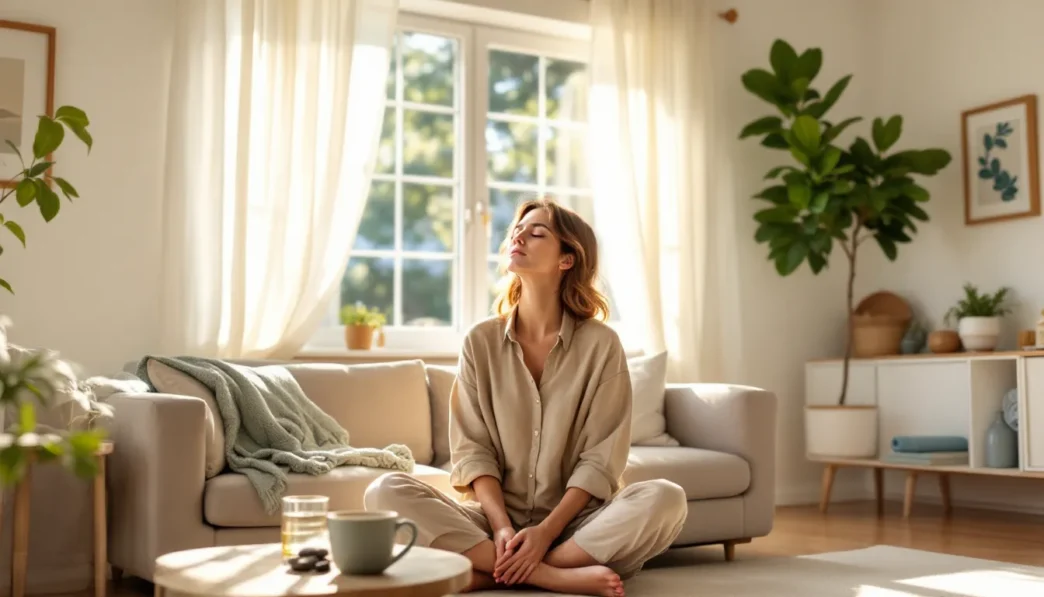
Light and air are two of the most powerful, and free, tools you have. In Ayurvedic terms, natural light carries the qualities of warmth, subtlety, and clarity. It supports tejas and prana directly. Stale, still air, on the other hand, increases the heavy, dull, and stable-in-a-stuck-way qualities that aggravate Kapha and dampen agni.
I notice this in my own home every single time I forget to open the windows for a few days. The rooms start to feel thick. My thinking slows down. My appetite gets weird. Then I crack a window, pull back the curtains, and within twenty minutes the whole atmosphere shifts.
That shift isn’t imaginary. Fresh air is mobile and light, it moves stagnation. Morning sunlight is warm and subtle, it gently stimulates digestion and wakefulness without the harsh, sharp quality of overhead fluorescent lighting.
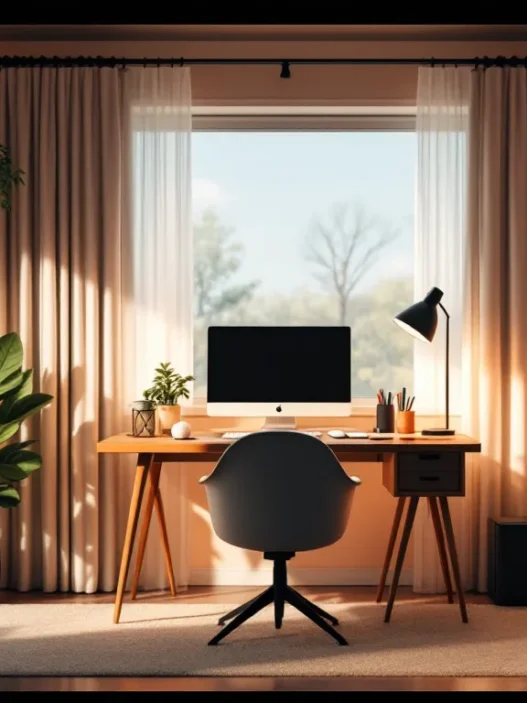
If your home doesn’t get much natural light, work with what you have. Pull curtains fully open during daylight hours. Move your desk or reading chair closer to a window. In the evening, switch from overhead lights to lower, warmer light sources, a table lamp, a dimmed fixture. This mirrors the Ayurvedic daily rhythm: bright and active energy during the Pitta time of day (roughly 10 a.m. to 2 p.m.), softer and more settled energy as evening approaches and Kapha qualities naturally rise.
Do this today: Open at least two windows on opposite sides of your home for fifteen minutes to create a cross-breeze. Pull back every curtain. Notice how the room feels afterward. Takes five minutes of setup. Great for everyone, especially Kapha-dominant individuals who tend toward stagnation. Skip the cross-breeze in very cold or very windy weather, a brief window opening is fine instead.
Rearrange Your Furniture for Better Flow and Function
Here’s something I love about the Ayurvedic approach to space: it cares about movement. Not in a feng shui sense necessarily, but in terms of how prana, life-force energy, circulates through a room.
When furniture blocks natural pathways, when you have to squeeze between a couch and a table, when a room feels cramped even though it’s not small, prana gets obstructed. And where prana stagnates, you feel stuck. It’s the same principle as how blocked circulation in the body creates discomfort and disease.
Try this: walk through your main living areas and notice where you physically tighten up, turn sideways, or feel resistance. Those are your blockages. Can you shift a chair? Angle the couch differently? Move a side table that’s not really serving anyone?
The goal isn’t some magazine layout. It’s creating smooth, open pathways that let you move freely. This supports the mobile quality in a healthy way, Vata energy flowing rather than ricocheting, and reduces the gross, heavy feeling of a cramped space.
I rearranged my living room last spring just by rotating my couch ninety degrees and pulling it away from the wall. The room suddenly felt twice as big. My evening wind-down routine got easier because the space invited me to sit, breathe, and settle rather than just collapse.
Do this today: Identify one piece of furniture that blocks a natural walking path and move it. Even six inches can change the feel of a room. Thirty minutes max. This is wonderful for anyone who feels restless at home, especially Vata types. If you have mobility limitations, ask someone to help, don’t strain yourself.
Bring Nature Indoors With What’s Already Around You
Ayurveda doesn’t separate us from the natural world, it considers us an extension of it. When your home has no connection to nature, it tends to accumulate dry, artificial, and sharp qualities. Screens glow. Synthetic textures dominate. The air smells like nothing or like cleaning products.
You don’t need to buy a houseplant collection. Look around outside your front door. A branch with interesting shapes. A few stones from the garden. Wildflowers or herbs from the yard. A bowl of water on a windowsill catching light. These simple elements carry the oily, smooth, cool, and subtle qualities that counterbalance the dryness and intensity of modern indoor life.
Natural elements also support ojas, that deep vitality, because they remind your system on a very fundamental level that you’re part of something alive and cyclical. There’s a reason hospital studies show patients heal faster with a view of trees. Ayurveda understood this connection thousands of years ago.
Even the act of stepping outside for a moment, barefoot on grass if you can, and then bringing that sensory experience back indoors with you resets prana. Your breath deepens. Your shoulders drop.
Do this today: Collect one natural element from outside, a branch, a stone, a handful of herbs, and place it somewhere you’ll see it daily. Five minutes. Good for all dosha types. If you have severe pollen allergies, stick with stones or a small bowl of water instead.
Create Calming Rituals Tied to Your Space
This is where the Ayurvedic concept of dinacharya, ideal daily routine, directly meets your home. A calming home isn’t just about how it looks. It’s about what you do there consistently.
Rituals create rhythm, and rhythm is one of the most powerful medicines for Vata imbalance. When you do the same settling activity in the same spot at roughly the same time, your nervous system starts to anticipate calm. It’s like training a reflex.
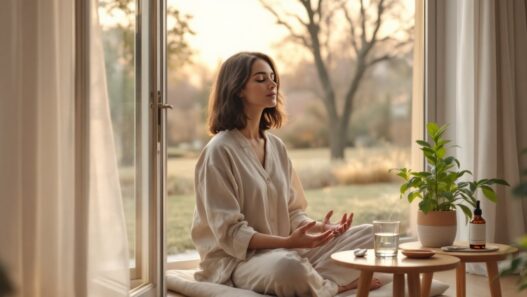
I have two daily rituals tied to specific spots in my home that have changed everything for me. First, I sit in the same chair every morning before sunrise with a cup of warm water and just breathe for five minutes. No phone. No plan. Just warmth, stillness, and quiet. This settles the mobile, light, cool qualities of early morning Vata time and gives my agni a gentle wake-up.
Second, I do a simple self-massage with warm sesame oil, called abhyanga, on my feet and legs before bed. I sit on the same towel, in the same spot, with the same small bottle of oil. The oily, warm, smooth qualities of the oil directly counterbalance the dry, rough, mobile qualities that accumulate during a busy day. It takes maybe seven minutes. My sleep improved noticeably within a week of starting this.
These aren’t elaborate. They don’t cost anything beyond a bottle of cooking-grade sesame oil. But because they’re tied to specific spaces and times, they anchor my whole day.
Do this today: Pick one spot in your home and assign it a calming ritual, morning breathing, evening oil on your feet, a quiet cup of tea at the same time each day. Try it for five days. Five to ten minutes daily. Wonderful for Vata and Pitta types especially. If you’re a Kapha type, make your ritual slightly more active, gentle stretching or a few minutes of humming rather than sitting still.
If You’re More Vata
Your home might feel too airy, too cold, too chaotic. You’re drawn to change, rearranging, redecorating, but what actually settles you is consistency. Focus on warmth: warm lighting, warm textures like cotton blankets draped over chairs, warm drinks in heavy mugs. Keep your bedroom especially simple and uncluttered. Try the evening foot oil ritual nightly with sesame oil, its heavy, warm, oily qualities are almost tailor-made for you. Avoid keeping your windows wide open on cold, windy days. Five minutes of warm oil on the feet before bed, every night. Not ideal if you tend to run very hot or have active skin inflammation.
If You’re More Pitta
Your home might feel too intense, too bright, too hot, too stimulating. You might gravitate toward sharp, efficient design, but what really cools your system is softness. Choose cool-toned light when possible (no harsh overhead bulbs). Favor smooth, cool textures. Keep your workspace and your rest space in completely separate zones if you can, Pitta has a hard time switching off. Your calming ritual might be splashing cool water on your face and wrists in the evening, then sitting quietly with the lights low. Try coconut oil instead of sesame for the foot massage, it’s cooler. Avoid very warm, enclosed rooms with poor ventilation. Ten minutes of cool-down ritual in the evening. Not ideal during cold winter months, adjust the oil to sesame if you’re genuinely chilled.
If You’re More Kapha
Your home might feel too still, too heavy, too dim. Ironically, the “cozy” aesthetic that dominates home décor can actually worsen Kapha, all those heavy blankets, dark colors, and soft cushions increase the very qualities you’re already carrying. You benefit from lightness, brightness, and a little stimulation. Open those windows wide. Let in as much natural light as possible. Choose one area for energizing movement, a yoga mat on the floor, a spot for dancing. Your morning ritual might be dry brushing (garshana) before a warm shower, it’s invigorating without being harsh, and the rough, light quality of the brush counterbalances Kapha’s smooth, heavy nature. Avoid over-padding your furniture with soft throws. Five minutes of dry brushing in the morning. Not ideal if you have very sensitive or broken skin.
Address the Sounds and Scents in Your Home
Sound and scent are subtle, they carry the qualities of the subtle element in Ayurveda, but they have an outsized effect on your nervous system and your prana.
A home with constant background noise (TV left on, traffic, appliance hum) keeps Vata elevated. The mobile, sharp quality of random sound prevents your system from truly settling. If you can, identify the biggest noise source in your home and reduce it. Turn off the TV when you’re not watching. Close a window that faces a busy street during your wind-down time. Even thirty minutes of genuine quiet in the evening can profoundly support your agni, because digestion works best when the nervous system isn’t on alert.
Scent works similarly. Harsh chemical smells (air fresheners, strong cleaning products) carry sharp, penetrating qualities that can aggravate Pitta and unsettle Vata. If you want scent in your home, try simmering a few cloves and a cinnamon stick in water on the stove. Or crush fresh mint between your fingers and leave it in a bowl near where you sit. These natural aromas carry warm, smooth, grounding qualities that support calm without overwhelming your senses.
Do this today: Identify your home’s loudest background noise source and eliminate it during the evening hours. Simmer one natural scent on the stove for ten minutes. Takes fifteen minutes total. Great for Vata and Pitta types. If you’re sensitive to any spice or herb, skip it, plain warm water with a lemon peel works too.
Establish Boundaries Between Active and Restful Zones
One of the most overlooked aspects of a calming home environment is zone separation. In Ayurveda, different activities carry different qualities, and mixing them in one space creates confusion, for your body and your doshas.
Working in bed, for example, brings the sharp, hot, mobile qualities of productivity into a space that’s meant to be cool, heavy, and stable. Over time, your body stops associating the bed with sleep. Agni gets confused too, not the digestive fire directly, but the broader metabolic intelligence that governs your sleep-wake rhythm and your ability to transition between states.
You don’t need a mansion to create zones. Even in a studio apartment, you can designate areas by activity. Your bed is for sleep and intimacy. Your desk (or kitchen table corner) is for work. Your couch or a floor cushion is for unwinding.
This also ties into the seasonal rhythm, ritucharya. In late autumn and winter, when Vata season brings cold, dry, and mobile qualities, your restful zone becomes especially important. Make it warmer, softer, more enclosed. Add an extra blanket. Close the curtains earlier. In spring and early summer, when Kapha gives way to Pitta, lighten up the restful zone, fewer blankets, more airflow, cooler tones.
Do this today: Remove one “wrong activity” from your bedroom, a laptop, a work notebook, exercise equipment that’s become a clothes rack. Commit to using that zone only for rest for one full week. Five minutes to relocate the item. Everyone benefits, especially those struggling with sleep. If you live in a very small space and truly can’t separate zones, try using a scarf or cloth draped over work items in the evening as a visual “closing” signal.
Conclusion
A calming home environment doesn’t come from a store. It comes from understanding how the qualities of your space, its light, its sounds, its textures, its rhythms, interact with your own constitution. When you approach your home through this Ayurvedic lens, every small shift carries real meaning. Clearing a surface supports your agni. Opening a window restores prana. A nightly ritual builds ojas over time.
None of this requires spending money. It asks you to pay attention, to what you feel when you walk through your door, to what your senses are processing, to whether your space is helping you rest or quietly keeping you wired.
Start with one change this week. Just one. And notice what shifts, in your sleep, your mood, your appetite, your energy.
I’d love to hear from you: what’s one quality in your home right now that you’d like to shift? Share in the comments, your experience might be exactly what someone else needs to hear.