




Why Your Lunch Plate Matters More Than You Think
Here’s something most people don’t realize: in Ayurveda, lunch is considered the most important meal of the day. Not breakfast. Lunch.
The reason comes down to agni, your digestive fire, the metabolic intelligence that transforms food into nourishment. Agni follows the sun. It’s gentle in the early morning, peaks around midday, and softens again in the evening. When you eat your largest, most complex meal between roughly 11 AM and 1 PM, you’re working with this natural rhythm instead of against it.
When lunch is skipped, rushed, or poorly composed, agni doesn’t get the fuel it’s designed to process at that hour. The result? Undigested residue, what Ayurveda calls ama. Ama is that sticky, heavy, dull quality that shows up as afternoon brain fog, bloating, sluggishness, or that familiar crash that sends you hunting for sugar at 3 PM.
A well-built lunch plate does the opposite. It feeds agni cleanly, generates real energy, and supports what Ayurveda calls ojas, deep resilience and vitality, along with tejas, your metabolic clarity, and prana, the subtle life force that keeps your mind sharp and your nervous system steady.
So your lunch plate isn’t just about calories or macros. It’s about giving your body exactly what it can use, exactly when it can use it best.
Do this today: Shift your main meal closer to midday, even by 30 minutes. Takes no extra prep time. This works for everyone, though if you’re managing blood sugar concerns, check with your healthcare provider first.
The Anatomy of a Perfectly Balanced Lunch Plate

In Ayurveda, a balanced meal isn’t about hitting exact gram counts. It’s about including a range of tastes (sweet, sour, salty, pungent, bitter, astringent) and qualities that keep all three doshas, Vata, Pitta, and Kapha, relatively happy. Let me break that down into practical terms.
Protein: The Anchor of a Satisfying Meal
Protein brings the heavy, stable, grounding qualities that calm Vata’s tendency toward lightness and restlessness. It also gives Pitta something substantial to work with, Pitta’s sharp, hot digestive fire actually thrives when there’s real substance to transform.
Think lentils, mung beans, chickpeas, paneer, eggs, or well-cooked fish. The key is digestibility. A dense, cold block of leftover chicken straight from the fridge is harder for agni to process than something warm and well-spiced. Warming your protein and pairing it with digestive spices like cumin, coriander, or a little fresh ginger makes a real difference.
Do this today: Include one warm, well-spiced protein source at lunch. Takes about 5 minutes of reheating and seasoning. Great for all body types, though Kapha types might keep portions a bit lighter.
Complex Carbohydrates and Whole Grains for Sustained Energy
Whole grains, rice, quinoa, millet, barley, bring the sweet taste that Ayurveda considers deeply nourishing and ojas-building. They provide stable, sustained fuel without the sharp spike and crash of refined carbs.
Barley is particularly interesting from an Ayurvedic perspective. It’s light and dry, which makes it wonderful for Kapha types who tend toward heaviness. Basmati rice, on the other hand, is slightly lighter than brown rice and easier on digestion, a good middle ground when your agni feels moderate rather than blazing.
The quality to watch here is heavy versus light. If you feel sluggish after meals, your grain portion might be too heavy for your current digestive capacity. Try reducing the quantity slightly and adding a squeeze of lemon, the sour taste kindles agni.
Do this today: Choose one whole grain you enjoy and pair it with a pinch of warming spice. Five minutes of cooking adjustment. Suitable for everyone, though Kapha types might favor lighter grains like millet or barley.
Vegetables and Fruits: Filling Half Your Plate With Color
Vegetables bring the bitter and astringent tastes that most modern plates completely lack. These tastes are cooling, light, and dry, they balance Pitta’s heat and Kapha’s tendency toward congestion. Cooked leafy greens, zucchini, asparagus, beets, and seasonal squash are all wonderful here.
I want to emphasize cooked. Raw salads have a rough, cold, dry quality that can aggravate Vata and dampen agni, especially in cooler months. Lightly sautéed or steamed vegetables are easier to digest and their nutrients become more available. A small amount of raw food is fine for strong Pitta digestion in summer, but for most people most of the time, cooked is kinder.
A small portion of seasonal fruit, ripe, room temperature, can round things out with natural sweetness. Avoid fruit immediately after a heavy meal, though: Ayurveda considers it best eaten separately or at the start of a meal.
Do this today: Add one cooked green vegetable to your lunch plate. Takes 7–10 minutes. Works for all types: Vata types might add a little ghee on top.
Healthy Fats That Tie Everything Together
Fat carries the oily, smooth, heavy qualities that counterbalance dryness and roughness, making it particularly important for Vata types, who tend toward dry skin, dry digestion, and that ungrounded, scattered feeling.
Ghee is the star here. In Ayurveda, ghee is considered one of the most ojas-building substances available. It lubricates digestion, carries nutrients into tissues, and has a cooling quality that pacifies Pitta’s heat without being so heavy that it overwhelms Kapha.
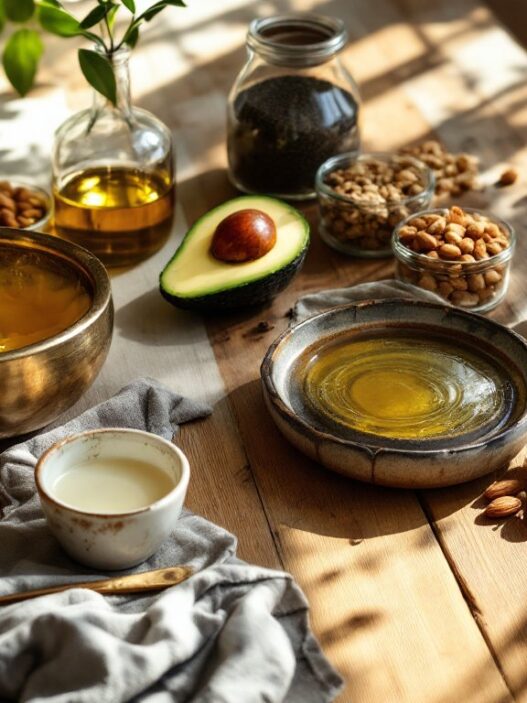
Other good options: olive oil, coconut oil (especially cooling for Pitta in warm weather), sesame oil (warming, great for Vata in cooler months), and avocado.
Do this today: Add a teaspoon of ghee or quality oil to your lunch. Takes seconds. Wonderful for Vata and Pitta types. Kapha types can use a lighter hand, a half teaspoon is plenty.
Portion Sizing Without Counting Calories

Ayurveda has a beautifully simple approach to portions: eat until you’re satisfied, not stuffed. The classic guideline is to fill your stomach one-third with food, one-third with liquid, and leave one-third empty, giving agni the space it needs to actually work.
In practice? Your two cupped hands together roughly equal the volume your stomach handles comfortably. That’s your meal.
But here’s where it gets personal. Each dosha has a different relationship with hunger and satiety.
Vata types tend to have variable appetite, ravenous one day, indifferent the next. The mobile, irregular quality of Vata makes portion consistency tricky. Smaller, warm, slightly oily meals eaten at consistent times help stabilize this pattern.
Pitta types usually have strong, sharp hunger. They can handle larger portions, and they genuinely need them, skipping meals or eating too little fans Pitta’s irritability and that acid, burning quality in the stomach.
Kapha types often have steady but slow appetite. The heavy, dense quality of Kapha means they can thrive on lighter lunches with more vegetables, pungent spices, and smaller grain portions. If lunch feels heavy two hours later, the portion was likely too much.
One subtle sign your portions are right: you feel energized and clear 30 minutes after eating, not sleepy, not still hungry, just… good.
Do this today: At your next lunch, pause halfway through and check in. Are you approaching satisfied? Takes 10 seconds of awareness. Helpful for everyone, especially Kapha types who tend to eat past fullness out of habit.
Quick Balanced Lunch Ideas for Busy Weekdays
I hear it all the time: “I don’t have time to cook an Ayurvedic lunch.” And honestly, I get it. But a balanced lunch plate doesn’t need to be elaborate.
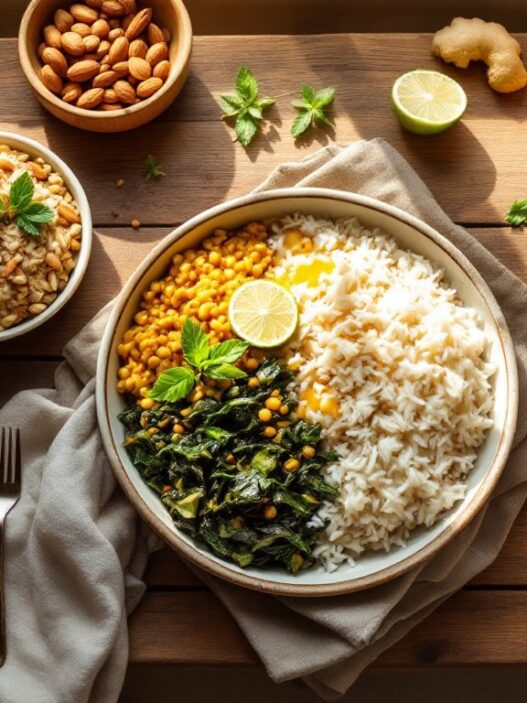
Here’s my go-to framework when time is tight. I call it the warm bowl method: one grain, one protein, one or two cooked vegetables, a drizzle of fat, and a simple spice blend. You can batch-cook grains and beans on Sunday and assemble in minutes.
A typical weekday lunch for me might be leftover basmati rice warmed with a little ghee, some mung dal I made the night before, sautéed greens with cumin and turmeric, and a wedge of lemon. Twenty minutes of prep on a weekend gives me three days of lunches.
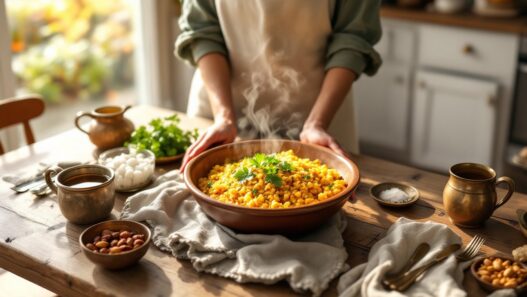
Another option: a thermos of kitchari, that classic Ayurvedic one-pot dish of rice and split mung beans with vegetables and spices. It’s warm, easy to digest, and covers all six tastes in one bowl. I’ve carried a thermos of kitchari to offices, airports, and road trips. It travels surprisingly well.
For those days when even reheating feels like too much, a whole-grain wrap with hummus, cooked vegetables, and a handful of greens, warmed in a pan for two minutes, is far better than a cold sandwich or a skipped meal.
The key principle: warm over cold, cooked over raw, fresh over packaged. These qualities support agni rather than dampening it.
Do this today: Pick one lunch this week to batch-prep using the warm bowl method. Budget about 30 minutes of cooking on a weekend. Works for all types, just adjust spices and fat levels to your constitution.
If You’re More Vata, Pitta, or Kapha
This is where Ayurveda really shines, it doesn’t give one-size-fits-all advice.
If you’re more Vata, your lunch plate wants to emphasize warm, oily, grounding, and slightly heavy qualities. Think stews, soupy dals, well-cooked root vegetables, and generous ghee. Favor sweet, sour, and salty tastes. You might find that eating in a calm, seated environment, rather than while walking or scrolling, makes almost as much difference as what’s on the plate. Vata’s mobile, light, dry qualities get aggravated by chaotic eating environments. Try to avoid raw salads, crackers, and dry, cold foods at lunch.
Do this today: Sit down for lunch without your phone for one meal. Takes zero extra time. Ideal for Vata types and anyone who eats on the go. Not recommended as a rigid rule if it creates stress, ease into it.
If you’re more Pitta, your plate can handle more variety and raw elements (especially in summer), but watch out for overly spicy, fermented, or acidic foods that increase heat and sharpness. Cooling grains like basmati rice, sweet vegetables like squash and sweet potato, and plenty of fresh cilantro and mint suit Pitta well. You might also try eating lunch a little earlier, around 11:30, since Pitta’s hunger tends to peak early and waiting too long creates that sharp-edged irritability.
Do this today: Add a cooling element to lunch, cucumber, coconut, or fresh herbs. Two minutes of effort. Best for Pitta types, especially in warm weather. Anyone with very weak digestion might want to skip raw cucumber.
If you’re more Kapha, your ideal lunch plate is lighter, drier, and more pungent than the other types. Favor vegetables over grains, use warming spices generously (black pepper, ginger, mustard seed), and go lighter on oils and sweets. A larger proportion of bitter and astringent tastes, leafy greens, beans, sprouts, helps counter Kapha’s natural heaviness. You might also find that a brisk 10-minute walk after lunch keeps that sluggish, dull quality from settling in.
Do this today: Take a short walk after lunch instead of sitting down immediately. Takes 10 minutes. Ideal for Kapha types and anyone prone to post-lunch drowsiness. Skip if you have joint issues that make walking uncomfortable.
Common Lunch Mistakes That Leave You Hungry by 3 PM
That mid-afternoon slump isn’t inevitable. It’s usually a sign that lunch didn’t quite do its job. Here are the patterns I see most often.
Eating too cold or too raw. A big cold salad with raw vegetables and chilled dressing has cold, rough, light qualities that can actually dampen agni rather than fuel it. You might feel virtuous eating it, but your digestive fire is working overtime to warm and break down all that raw material, and often losing the battle. The ama that results shows up as gas, bloating, or that fuzzy-headed feeling an hour later.
Skipping fat entirely. Fat-free lunches leave Vata completely unsatisfied. Without the oily, smooth quality that fat provides, food moves through too quickly, and genuine tissue-level nourishment, the kind that builds ojas, doesn’t happen. Even a teaspoon of ghee changes the equation.
Eating at your desk while multitasking. Your agni responds to attention. When your mind is scattered across emails and tasks, your body’s digestive response is literally weaker. Pitta’s sharp intelligence, which governs digestion, gets divided. I know sitting down mindfully isn’t always possible, but even two minutes of focused eating at the start of a meal makes a difference.
Drowning lunch in ice water. Cold water right before or during a meal douses agni the way cold water douses a campfire. Room temperature or warm water with a meal supports digestion. Sipping warm ginger tea alongside lunch is one of the simplest things you can do to support tejas, that metabolic spark that keeps transformation running cleanly.
Do this today: Swap cold water for room-temperature or warm water at lunch. Takes no extra time. Beneficial for all types, especially Vata and Kapha. Pitta types in hot weather can use cool (not iced) water.
Seasonal Adjustments for Your Lunch Plate
Ayurveda’s principle of ritucharya, living in rhythm with the seasons, applies directly to how you build your plate.
In summer’s heat, Pitta rises in the environment and in your body. Your lunch can include more cooling qualities: coconut, cucumber, mint, sweet fruits, and lighter cooking. Reduce pungent spices and heavy oils.
In fall and early winter, Vata’s cold, dry, mobile qualities dominate. This is the season for heartier, oilier, warmer lunches, stews, root vegetables, generous ghee, and grounding spices like cinnamon and cardamom.
In late winter and spring, Kapha accumulates. Lighter, drier, more pungent meals help counter that heavy, damp quality. More greens, more spice, less dairy, and smaller portions.
The plate itself doesn’t change dramatically, you’re still building with protein, grain, vegetables, and fat. But the proportions and qualities shift with the season, keeping your body in balance with the world around it.
Do this today: Notice what season you’re in and adjust one quality on your plate accordingly. Takes a moment of reflection. Relevant for everyone.
Morning and Evening Habits That Support a Better Lunch
Your lunch doesn’t exist in isolation. Two daily habits from Ayurveda’s dinacharya (ideal daily routine) directly support it.
Morning warm water. Drinking a cup of warm water first thing gently wakes agni and helps clear overnight ama from the digestive tract. Think of it as warming up the engine before you ask it to perform. This small habit primes your body to actually be hungry, genuinely, cleanly hungry, by lunchtime.
Evening eating rhythm. Dinner by 6 or 7 PM, lighter than lunch, gives agni time to fully process before sleep. When dinner is heavy or late, you wake with residual ama, that coated tongue, sluggish feeling, low appetite, and the whole next day’s eating rhythm gets thrown off. A lighter evening meal is actually one of the best things you can do for tomorrow’s lunch.
Do this today: Start tomorrow with a cup of warm water before anything else. Takes 2 minutes. Beneficial for all constitutions. If warm water feels unappealing, try adding a thin slice of fresh ginger.
This is general education, not medical advice. If you’re pregnant, managing a condition, or taking medication, check with a qualified professional.
Conclusion
Building a balanced lunch plate isn’t about perfection, it’s about paying a little more attention to what your body already knows. Warm food at midday. A mix of tastes and textures. Enough fat to feel satisfied. Enough space to actually digest.
These aren’t complicated rules. They’re invitations to reconnect with a rhythm that’s been working for a very long time.
Start with one change this week, maybe it’s warming your lunch, maybe it’s sitting down to eat without distractions, maybe it’s just adding a teaspoon of ghee. Notice what shifts. Your body will tell you what it needed.
I’d love to hear from you: what does your current lunch look like, and what’s one thing you’d like to change about it? Drop a thought in the comments, and if this resonated, share it with someone who could use a better afternoon.