




Why Eating Seasonally Matters More Than You Think
I used to think “eating seasonally” was just a lifestyle preference, something for people who had the time and budget for it. But once I understood the Ayurvedic reasoning behind it, I realized seasonal eating isn’t optional wellness. It’s how digestion actually works best.
In Ayurveda, your digestive capacity, called agni, fluctuates with the seasons. It’s stronger in winter, lighter in spring, and variable in the transitional months. When you eat produce that matches the season, you’re giving your agni fuel it can process efficiently. When you don’t, undigested residue (known as ama) can build up, leaving you foggy, sluggish, or bloated.
Seasonal produce carries the qualities your body craves at that time. Spring greens are light, bitter, and a little dry, perfect for clearing the heavy, damp quality that Kapha dosha accumulates over winter. Summer fruits are cool and hydrating, which tempers Pitta’s natural heat. Fall root vegetables are dense and grounding, steadying Vata’s mobile, airy tendency.
This isn’t abstract philosophy. It’s a practical framework that lines up beautifully with what modern nutrition confirms.
Nutritional Benefits of Choosing Seasonal Produce
Produce picked at peak ripeness contains more vitamins, minerals, and antioxidants than out-of-season alternatives that were harvested early and shipped across the globe. A tomato in July has significantly more lycopene than one in January. Spring peas picked fresh are sweeter and more nutrient-dense than frozen ones from eight months ago.
From the Ayurvedic perspective, this nutrient density feeds ojas, your deep vitality and immune resilience. Foods grown in harmony with their natural cycle carry more prana, or life force. You can literally taste the difference. A ripe summer peach has an aliveness that a mealy off-season one simply doesn’t.
When your food has more prana, your body extracts more nourishment with less digestive effort. That means less ama, more energy, and a clearer mind, what Ayurveda calls strong tejas, the metabolic spark behind mental clarity.
Environmental and Economic Advantages
Seasonal produce travels shorter distances and requires less refrigeration and artificial ripening. That translates to a smaller carbon footprint, something that matters if you care about sustainability alongside health.
Economically, it’s straightforward: when a crop is abundant locally, prices drop. I’ve noticed my grocery spending decrease noticeably during peak seasons, especially when I shop at farmers’ markets or join a CSA box.
Ayurveda has always framed health as inseparable from the environment. The concept of ritucharya, seasonal living, isn’t just about your plate. It’s about aligning your whole rhythm with the world around you. Eating local and seasonal is one of the simplest, most grounding ways to do that.
What’s in Season This Spring: April Through June Picks

Spring is transition time. The heavy, cool, oily qualities of winter start giving way to warmer, lighter energy. In Ayurvedic terms, Kapha dosha, which has been accumulating through the cold months, begins to “melt.” That’s why so many people feel congested, heavy, or low-energy in early spring. Your body is literally trying to clear out what it stored.
The produce that arrives in spring supports that process perfectly. It tends to be lighter, more bitter, and more astringent, qualities that help your system release excess moisture and density.
Top Spring Fruits to Add to Your Cart
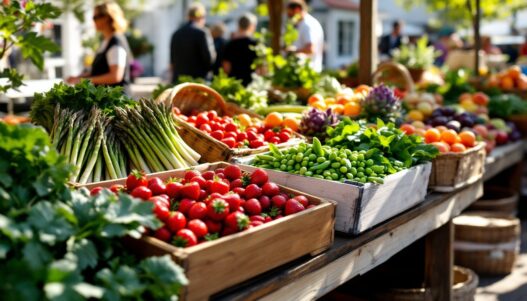
Strawberries start showing up in April and hit their stride by May. They’re light, slightly astringent, and cooling, a gentle way to begin the shift from heavier winter fare. Cherries follow in late May through June, offering a sweet-sour balance that supports Pitta without aggravating Kapha.
Apricots arrive in June, bringing warmth and sweetness that nourish your tissues without weighing you down. Their light, slightly dry quality makes them ideal for this transitional window.
I like to eat spring fruits mid-morning or as a light afternoon snack rather than after a big meal. This gives your agni space to process them properly, since fruit digests quickly and can ferment if it sits on top of heavier food.
Try this: Have a small bowl of fresh strawberries around 10 a.m. with a pinch of cardamom. Takes two minutes. Great for anyone feeling heavy or sluggish after winter, though if you’re already feeling cold and airy (more Vata-dominant), go easy and favor the warmer apricots instead.
Spring Vegetables That Deserve a Spot on Your Plate
Asparagus is the star of spring. It’s light, slightly bitter, and has a natural diuretic quality that helps clear retained fluid. Artichokes, peas, radishes, and spring greens like arugula and watercress all carry that bitter or pungent edge that Kapha season calls for.
Dandelion greens, often overlooked, are one of the best spring vegetables from an Ayurvedic standpoint. Their sharp, bitter quality supports liver function and helps kindle agni after months of heavier eating.
Try this: Lightly sauté asparagus and dandelion greens with a drizzle of olive oil, a squeeze of lemon, and a crack of black pepper. Five minutes to prepare. This works well for all body types in spring, though Vata-dominant folks might want to add a bit more oil and a pinch of warming spice like cumin.
A Quick Guide to Summer, Fall, and Winter Seasonal Produce

Summer (July–September) brings Pitta season, hot, sharp, and intense. Your body craves cooling, hydrating foods. This is the time for watermelon, cucumbers, zucchini, sweet corn, peaches, plums, berries, and bell peppers. These are naturally cool and sweet, which calms Pitta’s fire without dampening your agni. Think salads, fresh herbs like cilantro and mint, and lighter cooking methods. Your digestive fire is moderate in summer, so avoid overloading it with heavy, oily meals.
Fall (October–November) is Vata season, dry, light, mobile, cool, and rough. Root vegetables come into their own: sweet potatoes, beets, carrots, turnips, winter squash. Apples and pears are at their peak. These are denser, more grounding foods that counterbalance Vata’s airy, unstable quality. Cook them warm, roasted, stewed, or in soups, with healthy fats like ghee and warming spices like ginger and cinnamon. Raw salads aren’t your friend here.
Winter (December–March) amplifies Kapha’s cold, heavy, stable, oily qualities while your agni burns its strongest. Hearty greens like kale and collards, citrus fruits, pomegranates, cabbage, Brussels sprouts, and stored root vegetables are your staples. Winter is when your body can handle richer, more nourishing meals. Spice generously, black pepper, turmeric, mustard seed, to keep things moving.
The pattern is elegant: nature provides cooling food in hot months, warming food in cold months, and cleansing food in the damp transitional seasons. You don’t need a complicated chart. Just look at what’s actually growing near you.
Try this: At the start of each season, visit a local farmers’ market and buy three things you haven’t cooked with recently. Spend fifteen minutes exploring. This resets your palate and reconnects you with the seasonal rhythm. Works for everyone, though if you’re Pitta-dominant, favor the cooling summer picks: Vata types, lean into fall’s warmth: Kapha types, embrace spring’s lightness.
How to Shop for and Store Seasonal Fruits and Vegetables
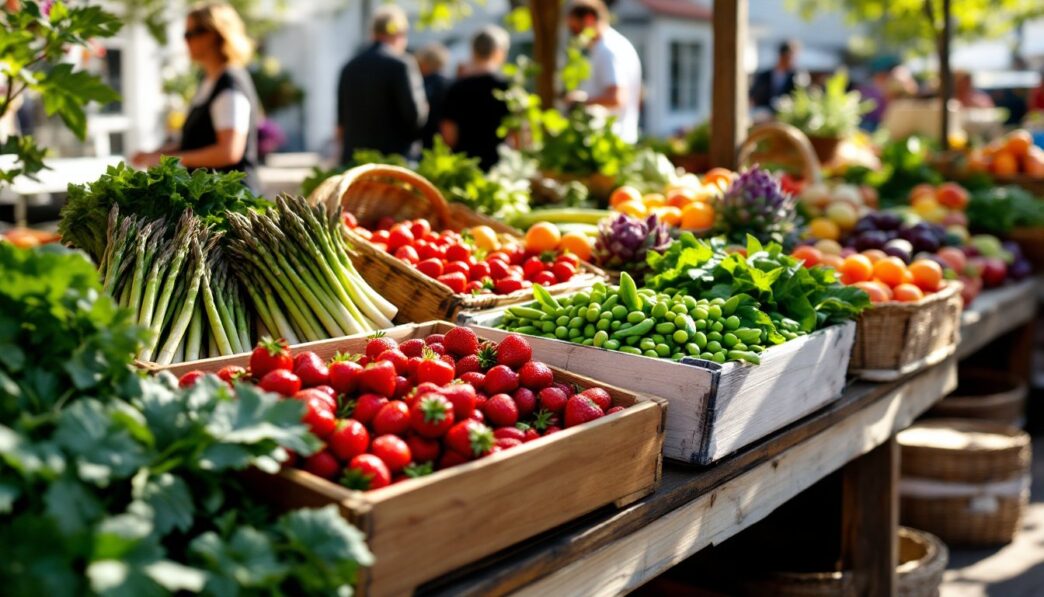
Shopping seasonally is simpler than it sounds. Start at your local farmers’ market, whatever’s piled high and priced low is probably in season. If you’re at a grocery store, check the origin labels. Produce from nearby regions is more likely to be seasonal than something flown in from another hemisphere.
I also recommend looking into CSA (Community Supported Agriculture) boxes in your area. You pay a local farm upfront, and they deliver whatever’s fresh that week. It takes the guesswork out entirely and forces you to get creative in the kitchen, which, honestly, is half the fun.
For storage, respect the qualities of what you’re working with. Delicate spring greens wilt fast: store them in a damp cloth in the fridge and use within a few days. Sturdy fall root vegetables keep for weeks in a cool, dark place. Summer berries are fragile and best eaten quickly, their prana fades fast once picked.
One Ayurvedic principle I come back to: fresh food carries more life force than stored food. This doesn’t mean you can’t freeze or preserve, but prioritize eating things close to when they were harvested. The closer to the source, the more nourishment your body receives.
Try this: Dedicate one shopping trip per week to buying only what’s in season locally. Even twenty minutes at a weekend market counts. This practice suits everyone, though if you tend toward Vata imbalance and feel scattered by too many choices, pick just two or three items and build meals around those.
Simple Ways to Build Meals Around What’s in Season
Here’s what changed my cooking: I stopped planning meals first and buying produce second. Instead, I buy what’s fresh and seasonal, then figure out what to make.
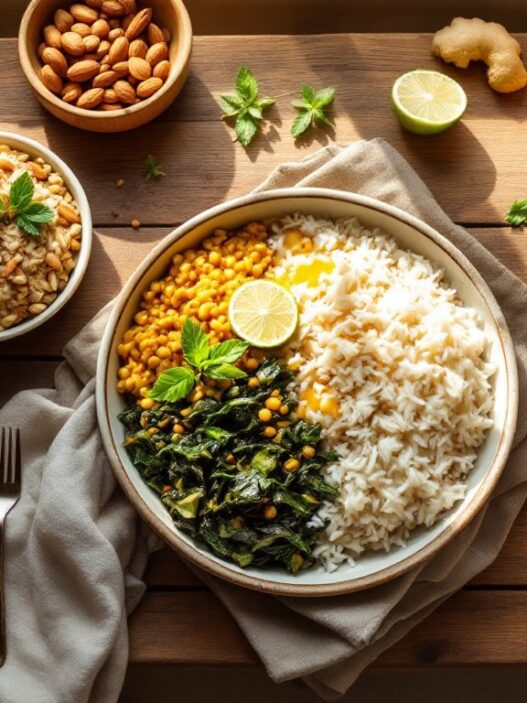
This might sound chaotic, but it’s actually freeing. A bunch of spring asparagus becomes a simple stir-fry with rice. Summer tomatoes turn into a no-cook sauce with basil and olive oil. Fall squash gets roasted with ghee, cinnamon, and a pinch of salt. Winter kale goes into a warming soup with lentils and turmeric.
The Ayurvedic approach to meal building is rooted in balancing six tastes, sweet, sour, salty, pungent, bitter, and astringent, at each meal. Seasonal produce naturally provides the tastes your body needs most in that season. Spring’s bitter greens, summer’s sweet fruits, fall’s naturally sweet root vegetables, winter’s pungent spices alongside hearty greens.
Two daily habits that have anchored my seasonal eating practice:
First, I eat my largest meal at midday when digestive fire is strongest, roughly between 11 a.m. and 1 p.m. This is when I load up on seasonal vegetables. Second, I start each morning with a warm glass of water with a squeeze of lemon, which gently wakes up agni before the first meal. Both of these come straight from the Ayurvedic daily routine, or dinacharya, and they pair beautifully with seasonal eating.
For a seasonal adjustment, consider this: in spring and early summer, favor lighter cooking methods, sautéing, steaming, quick stir-fries. As fall and winter arrive, shift toward slow-cooked stews, roasted dishes, and warming soups. This matches the quality of the season to the quality of your food preparation.
If you’re more Vata-dominant, tending toward dryness, anxiety, irregular digestion, and cold hands, favor cooked seasonal produce over raw, add plenty of healthy fats like ghee or sesame oil, and eat at consistent times. Avoid cold smoothies even in summer. Try this: A warm roasted root vegetable bowl with ghee at lunch, five minutes of prep. Skip this if raw food feels fine for you and your digestion is strong.
If you’re more Pitta-dominant, prone to heat, irritability, inflammation, or loose stools, lean into cooling seasonal produce like cucumbers, melons, and leafy greens. Favor sweet and bitter tastes over sour and pungent. Go easy on hot spices year-round, especially in summer. Try this: A cooling cucumber-mint side dish with lunch during warm months, three minutes to make. Not ideal if you’re feeling cold or sluggish.
If you’re more Kapha-dominant, experiencing heaviness, congestion, low motivation, or weight that sticks around, emphasize light, dry, and warming seasonal produce. Bitter spring greens, pungent radishes, and lighter fruits like berries over heavy bananas. Eat your lightest meal in the evening. Try this: A simple arugula and radish salad dressed with lemon and a pinch of black pepper for dinner in spring, two minutes to throw together. Not right for you if you’re underweight or feeling depleted.
This is general education, not medical advice. If you’re pregnant, managing a condition, or taking medication, check with a qualified professional.
Conclusion
Eating seasonal fruits and vegetables isn’t a complicated overhaul. It’s a return to something your body already knows how to do, align with the rhythm of the natural world. When you eat what’s ripe and local, you’re giving your digestion exactly what it can handle, nourishing your deeper vitality, and simplifying your kitchen in the process.
I’ve found that the more I trust the seasons, the less I overthink food. The produce itself tells me what to cook, how to prepare it, and when to eat it.
Start small. Pick one seasonal fruit or vegetable this week that you haven’t tried in a while. Cook it simply. Notice how it sits with you.
I’d love to hear, what’s growing near you right now, and what’s finding its way onto your plate this spring?