






Why Energy Crashes Happen and What Your Body Is Telling You
From an Ayurvedic perspective, an energy crash is really a collapse of prana, your life force and nervous system steadiness. When prana dips, everything feels harder: concentration, motivation, even standing up from your desk.
But here’s what most people miss: the crash didn’t start when you felt it. It started hours earlier, with a meal that was too heavy, too light, too dry, or eaten at the wrong time. In Ayurveda, we trace every symptom back to its root cause, the nidana. For energy crashes, the root almost always involves one of two things: your digestive fire (agni) was overwhelmed, or the qualities of your food didn’t match what your body actually needed.
When agni struggles, food doesn’t fully transform into usable energy. Instead, it leaves behind a sticky, dull residue called ama. Ama clogs the subtle channels that carry nutrients and vitality to your cells. The result? That heavy, foggy, dragging feeling we call a crash.
Each dosha experiences this differently. If you’re more Vata in constitution, your crashes tend to feel scattered and anxious, like you can’t focus and your mind is jumping everywhere. Pitta types get irritable and sharp-tempered when energy drops: you might snap at someone or feel an urgent need to eat right now. Kapha types experience the classic heavy, sleepy slump, you could nap on your keyboard and not feel bad about it.
The Role of Blood Sugar in Sustained Energy
Modern nutrition frames this as a blood sugar story, and that’s not wrong, it’s just incomplete. Rapid blood sugar spikes and drops do trigger crashes. But Ayurveda asks why that spike happened in the first place.
Usually, the answer involves eating foods with sharp, hot, and light qualities (like refined sugar and white bread) that ignite agni too fast, creating a flash of energy followed by a rapid burn-out. It’s like throwing newspaper on a fire instead of a slow-burning log. The flames leap up, then die.
The Ayurvedic correction? Feed your agni with foods that have stable, heavy, and slightly oily qualities, think whole grains, good fats, and well-cooked vegetables. These burn slowly and evenly, keeping your energy steady.
Do this today: Notice when your next crash hits and trace back to what you ate two to three hours before. Just observe, no judgment. Takes about thirty seconds of reflection. Good for all constitutions.
Macronutrient Balance: The Foundation of Crash-Proof Meals

I think of balanced meals like a well-built campfire. You need kindling (quick-burning fuel), medium logs (sustained fuel), and a few dense, slow-burning pieces that keep the heat going for hours. In food terms, that’s your carbohydrates, proteins, and fats, and each one brings different gunas (qualities) to your plate.
When any one piece is missing, agni either flares up too fast or smolders out. And when agni falters, ama builds. You can feel it: that coating on your tongue in the morning, sluggish digestion, or a general sense of dullness. These are signs your metabolic intelligence isn’t getting the balanced fuel it needs.
From an Ayurvedic standpoint, a crash-proof meal is one where the qualities balance each other. Something warm and slightly oily to kindle agni. Something grounding and heavy enough to sustain it. And something light and subtly spiced to keep it from going dormant.
Complex Carbs That Fuel Without the Spike
Whole grains like basmati rice, oats, quinoa, and millet carry heavy, stable, and smooth qualities. They don’t assault your agni the way refined carbs do. Instead, they offer a slow, even release of energy that supports ojas, that deep reservoir of vitality and immune resilience that keeps you feeling robust.
Sweet potatoes and root vegetables are another beautiful option. They’re grounding, slightly sweet in the Ayurvedic sense, and they nourish all seven tissue layers (dhatus) without creating excess ama.
Do this today: Swap one refined carb in your next meal for a whole grain or root vegetable. Takes zero extra prep time if you batch-cook grains on the weekend. Especially helpful for Vata and Pitta types who burn through fuel fast.
Why Protein and Healthy Fats Are Your Secret Weapons
Protein and healthy fats bring heavy, oily, and stable qualities to the table, literally. These are the slow-burning logs of your campfire. They anchor your energy so it doesn’t spike and crash.
Ghee is one of Ayurveda’s most treasured foods precisely because it feeds agni without aggravating any dosha when used in moderation. It carries nutrients deep into the tissues and supports tejas, that metabolic spark responsible for clarity and sharp thinking. Sesame oil, almonds, avocado, and coconut are all allies here too.
For protein, consider mung beans (one of the easiest-to-digest legumes in the Ayurvedic kitchen), lentils, eggs, or small portions of well-spiced meat if that fits your diet.
Do this today: Add a tablespoon of ghee or a small handful of soaked almonds to your next meal. Takes about ten seconds. Ideal for Vata types who run dry and light, and helpful for anyone feeling scattered after meals.
Meal Timing and Portion Sizes That Prevent Afternoon Slumps

This is where Ayurveda really shines, because timing isn’t just a preference, it’s built into the system.
Your digestive fire follows the sun. Agni is strongest between roughly 10 a.m. and 2 p.m., when the sun is highest. This is the Pitta time of day, and it’s when your body is best equipped to handle your largest, most complex meal. Eating your biggest meal at dinner, when agni is cooling down, is one of the most common causes of that next-morning sluggishness and mid-afternoon crash cycle.
I shifted my main meal to lunch about three years ago, and the difference in my afternoon energy was dramatic. Not subtle. Dramatic.
Portion size matters too. Ayurveda suggests eating until you’re about three-quarters full, leaving space in the stomach for agni to do its work. Overeating, even healthy food, smothers the digestive fire like piling too many logs on a flame. The food sits, partially digested, producing ama instead of energy.
The mobile quality of Vata means those with a Vata constitution often do better with smaller, more frequent warm meals. Pitta’s sharp, hot agni can handle three solid meals. Kapha’s slow, cool digestion thrives on two well-spaced meals with a lighter evening plate.
Do this today: Try making lunch your most substantial meal for three days and see how your afternoon feels. Takes no extra prep, just redistribute what you’re already eating. Works for all types, but Kapha constitutions may notice the biggest shift.
Balanced Breakfast Ideas to Start Your Day Strong
Morning is Kapha time, roughly 6 to 10 a.m., when the world carries heavy, cool, damp qualities. Your breakfast needs to counter that heaviness without overwhelming a still-waking agni.
I keep my mornings warm and simple. A bowl of spiced oatmeal cooked with a pinch of cinnamon, cardamom, and a drizzle of ghee has become my go-to. The warm, light, and slightly oily qualities wake up agni gently, while the oats provide stable fuel without spiking anything.
Another option I love: stewed apples with a squeeze of lemon and a sprinkle of ginger powder. It’s light enough to respect your morning digestion but sweet and grounding enough to build ojas and carry you to lunch without a crash.
What I’d gently steer you away from: cold smoothies, raw juices, or heavy pastries first thing. Cold and raw foods dampen agni when it’s still kindling. And sugary baked goods create that sharp-then-dull pattern we’re trying to avoid.
Do this today: Try a warm, spiced breakfast tomorrow morning, even just warm water with lemon and ginger fifteen minutes before eating. Takes five to ten minutes. Especially supportive for Kapha and Vata types. Pitta types can add cooling elements like coconut flakes if mornings already feel hot.
Steady-Energy Lunches and Dinners Worth Building Into Your Routine
Since lunch falls during peak agni time, this is your opportunity to eat the most nourishing, complex meal of the day. Think a grain, a protein, cooked vegetables, a healthy fat, and a spice or two. It doesn’t have to be fancy.
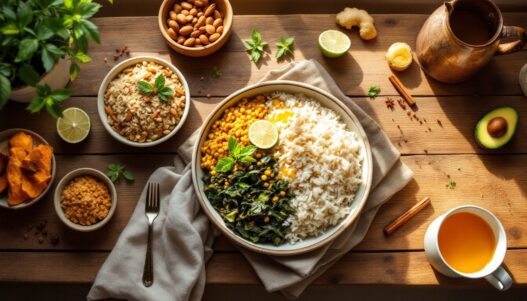
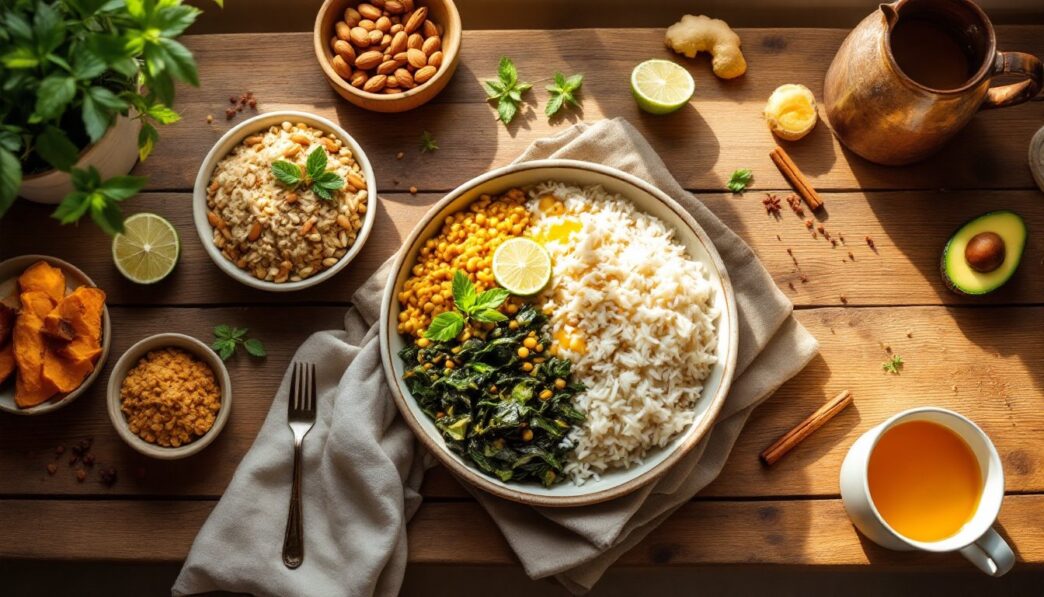
One of my favorite lunches: basmati rice with mung dal, sautéed greens in ghee, and a squeeze of lime. It covers all six Ayurvedic tastes, sweet, sour, salty, pungent, bitter, astringent, which tells your body and brain that the meal is complete. When all six tastes are present, cravings quiet down and prana stays steady through the afternoon.
For dinner, lighter is better. A simple vegetable soup, a small portion of kitchari, or some steamed vegetables with a drizzle of sesame oil. You want something warm and easy to digest so your body can focus on rest and repair overnight, not heavy digestion. Heavy dinners rob you of deep sleep, and poor sleep is one of the sneakiest causes of next-day energy crashes.
The quality principle here is straightforward: light and warm for evening, nourishing and substantial for midday.
Do this today: Cook one batch of kitchari or a simple dal this weekend and eat it for lunch on Monday. Takes about thirty minutes of cooking, lasts three to four days. Supportive for all constitutions, adjust spicing to your type.
Smart Snacking: What to Eat Between Meals to Stay Sharp
Here’s a nuance that surprised me when I first studied Ayurveda: constant snacking can actually weaken agni. Every time you eat, your digestive fire has to restart its cycle. If you’re eating before the previous meal has fully digested, you’re layering raw on top of cooked, and that’s a recipe for ama.
That said, going too long without food, especially if you’re Vata-predominant, can leave agni with nothing to work on, and it starts to consume your own tissues. You feel jittery, spacey, maybe a bit anxious. So the goal isn’t no snacking. It’s smart snacking.
The best between-meal options carry smooth, oily, and stable qualities. A few soaked and peeled almonds. A date stuffed with a bit of ghee. A small cup of warm spiced milk. These feed ojas without confusing agni.
What to avoid between meals: cold, dry, rough foods like raw celery sticks, rice cakes, or handfuls of dry cereal. They aggravate Vata’s already mobile and dry nature and don’t give agni meaningful fuel.
Do this today: If you’re a Vata type who crashes between meals, try three to four soaked almonds with a pinch of cardamom around 3 p.m. Takes one minute. Less ideal for Kapha types, if you’re Kapha, you likely don’t need a snack at all, and that’s perfectly fine.
Common Habits That Secretly Drain Your Energy
Sometimes the issue isn’t what you’re eating, it’s everything else.
Eating while distracted is a big one. When your attention is on a screen, your nervous system stays in a mobile, scattered state. Agni responds to presence. If your mind isn’t at the table, your digestion literally weakens. I’ve tested this on myself more times than I’d like to admit, and the difference between eating mindfully and eating while doom-scrolling is noticeable within an hour.
Skipping movement after meals is another hidden drain. A gentle five-to-ten-minute walk after lunch supports the downward-moving energy (apana vayu) that helps food move through your system. Without it, food can sit heavy and create that post-lunch fog.
Irregular sleep disrupts the entire daily rhythm. In Ayurveda, the body’s intelligence, its prana, tejas, and ojas, restores itself during sleep, particularly between 10 p.m. and 2 a.m. (another Pitta window, this time for internal cleansing and repair). If you’re consistently staying up past this window, your vitality erodes regardless of how well you eat.
And here’s a seasonal consideration worth mentioning: in late autumn and early winter, when the world turns cold, dry, and rough (classic Vata season), energy crashes become more common for everyone. The remedy is to lean into warm, oily, grounding foods and routines. Add more ghee, favor soups and stews, go to bed a bit earlier. In summer’s heat, Pitta types especially benefit from cooling foods, cucumber, coconut water, mint, to prevent that sharp, irritable crash that comes from overheating.
Two daily habits that genuinely help: eating your main meal at midday when agni peaks, and putting your phone away for the first and last thirty minutes of your day to protect prana from overstimulation. These two things alone have reshaped my energy more than any supplement ever did.
Now, let me give you some personalized guidance.
If you’re more Vata, your crashes tend to come on suddenly, you go from fine to foggy in minutes. Your agni is variable, like a candle flame in the wind. Favor warm, oily, slightly heavy meals eaten at regular times. A drizzle of ghee on everything helps. Avoid cold, raw, and dry foods, especially in the afternoon. Try this: set a gentle alarm to eat lunch by 12:30 daily. Takes one second to set up, and the regularity alone can transform your energy.
If you’re more Pitta, your crashes show up as irritability, impatience, or a burning hunger that makes you desperate. Your agni is strong but can overshoot. Favor cooling, slightly sweet, and grounding foods, think rice, sweet potatoes, coconut, and leafy greens. Avoid skipping meals (your sharp agni will eat you alive) and lay off the coffee. Try this: keep a small container of soaked sunflower seeds and raisins at your desk. Takes two minutes to prep the night before.
If you’re more Kapha, your crashes are the slow, heavy kind, more like a gravitational pull toward the couch. Your agni runs cool and slow. Favor light, warm, and gently spiced foods. Ginger tea before meals is your friend. Avoid heavy, cold, and oily foods, especially at dinner. Try this: sip warm water with a thin slice of fresh ginger throughout the morning. Takes thirty seconds to prepare. This alone can stoke a sluggish agni beautifully.
Do this today: Identify which crash pattern sounds most like yours, pick the one tip from your dosha section, and try it for a week. All three approaches take under five minutes daily and are safe for anyone not managing a specific health condition.