







How Skin Hydration Actually Works
Before we can compare body oil vs body lotion, we need to understand what’s actually happening at the surface of your skin, and just beneath it. Hydration isn’t simply about adding “wetness.” It’s about a delicate interplay between water content, lipid barriers, and the quality of nourishment reaching your tissues.
In Ayurveda, the skin (called twak) is considered one of the body’s most important interfaces. It reflects the state of your inner metabolism, your agni, or digestive-metabolic intelligence, and is deeply influenced by the balance of your doshas. When agni is functioning well, nutrients reach the deeper tissue layers, including the skin, and the result is a natural glow and suppleness. When agni is sluggish, undigested residue, called ama, can accumulate, leaving skin looking dull, congested, or chronically dry no matter what you apply topically.
The Role of the Skin Barrier
Your skin barrier is a thin lipid matrix that sits on the outermost layer of your skin. Think of it like a brick wall, skin cells are the bricks, and the lipids (fats) between them are the mortar. When that mortar is intact, water stays inside the skin and irritants stay out.
From an Ayurvedic lens, this barrier is governed largely by the oily, smooth, and stable qualities. When these qualities are present, the barrier holds strong. But when dry, rough, and mobile qualities dominate, which happens when Vata increases, the mortar starts to crack. Moisture escapes. The skin feels tight and papery.
Pitta-dominant imbalances bring hot and sharp qualities to the skin, which can thin the barrier and make it reactive. Kapha imbalances, meanwhile, might leave the barrier feeling heavy and congested, even waterlogged in some cases, without true nourishment reaching deeper layers.
Hydration vs Moisture: Understanding the Difference
Here’s a distinction most people miss: hydration refers to water content within the skin cells. Moisture (or moisturizing) refers to sealing that water in by reinforcing the lipid barrier.
You can hydrate without moisturizing, and vice versa. A humectant-rich lotion might pull water into cells but fail to lock it there. A rich oil might seal the surface beautifully but won’t add water if the skin is already parched underneath.
In Ayurvedic terms, hydration connects to the cool, liquid, and subtle qualities that nourish prana, your life-force energy. Moisturizing connects to the oily, heavy, and smooth qualities that build ojas, deep vitality and resilience. The best skin care addresses both.
Do this today: After your next shower, notice how your skin feels before you apply anything. Tight and papery? That’s a hydration issue. Rough and flaky but not necessarily tight? That’s a moisture-barrier issue. This takes about 30 seconds and works for anyone trying to understand their skin better.
What Body Lotion Does for Your Skin

Body lotions are emulsions, a blend of water and oil, held together by an emulsifier. Because they contain water, they can deliver hydration directly into the outer layers of the skin. That water base also makes them feel lighter, absorb more quickly, and spread easily over large areas.
From the Ayurvedic perspective, lotions carry more of the light, cool, and mobile qualities. They’re quick-moving. They absorb fast. They don’t linger on the surface the way oil does. This makes them appealing in warm weather or for people who don’t like a heavy feel on their skin.
Key Ingredients in Body Lotions
Most lotions rely on humectants (like glycerin, hyaluronic acid, or aloe vera) to draw water into the skin, combined with a smaller proportion of occlusives or emollients to help hold it there. Some contain ceramides, which mimic the natural lipids in your skin barrier.
The quality of ingredients matters enormously. A lotion loaded with synthetic fragrances and preservatives can actually aggravate Pitta’s sharp and hot qualities, leading to sensitivity over time. I always suggest reading the label with the same attention you’d give to food, because your skin digests what you put on it.
Best Skin Types and Scenarios for Lotion
Lotion tends to work well for skin that’s already moderately balanced but needs a light daily refresh. If you run warm, if your skin tends toward oiliness, or if you live in a humid climate where the heavy and damp qualities of Kapha are already present in the environment, a lotion can provide hydration without tipping the balance toward congestion.
It’s also a good entry point during Pitta season (late spring through summer), when the heat is already supplying some of that oily, spreading quality to the skin, and what you really need is cooling hydration rather than a heavy seal.
Do this today: If you currently use lotion and find it doesn’t last, try applying it to slightly damp skin right after a shower. The water on your skin gives the humectants something to grab onto. Takes one extra minute. Great for anyone who feels like their lotion “disappears” too quickly, though if your skin is very dry and Vata-dominant, lotion alone may not be enough.
What Body Oil Does for Your Skin
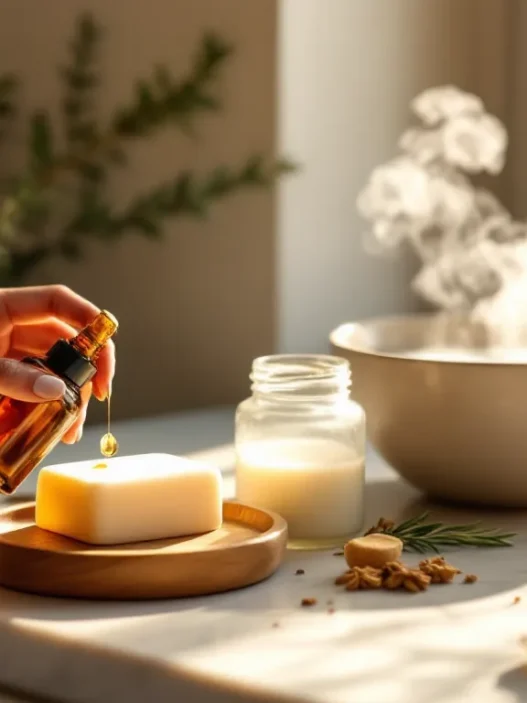
Body oil works differently than lotion. It doesn’t contain water. Instead, it’s pure lipid, and its primary job is to reinforce the skin’s barrier, lock in existing moisture, and nourish the deeper tissue layers over time.
In Ayurveda, oil application, called abhyanga, is one of the most revered daily practices. It’s not just cosmetic. Warm oil applied to the skin calms the nervous system, supports circulation, and builds ojas (that deep reservoir of vitality and immunity). The oily, warm, smooth, and heavy qualities of a good body oil directly counterbalance the dry, cool, rough, and light qualities that drive Vata imbalance.
There’s something almost immediately grounding about oil on the skin. I notice it every time, a kind of settling in my body, like my nervous system exhales. That’s the stable quality doing its work, anchoring the mobile quality of excess Vata.
Key Ingredients in Body Oils
Not all oils are the same. Sesame oil, the traditional Ayurvedic choice, is warming and deeply penetrating, ideal for Vata types and cold seasons. Coconut oil is cooling and lighter, better suited to Pitta types and hot weather. Sunflower oil sits somewhere in the middle, gentle and balancing for most constitutions.
The key is that these oils carry the subtle quality, meaning they can penetrate beyond the surface. Ayurveda considers sesame oil particularly special because it can nourish all seven tissue layers (dhatus) when used consistently. That’s a level of care that no surface-level lotion can match.
Best Skin Types and Scenarios for Oil
Oil is a standout for anyone with dry, rough, or depleted skin, classic signs of elevated Vata. It’s also wonderful during Vata season (late fall and winter), when the cold, dry, windy environment strips the skin of its natural lipid protection.
If you’re someone who runs cold, who tends toward anxiety or restlessness, or whose skin cracks and flakes in winter even though using lotion, oil is likely the missing piece. The tejas, metabolic clarity, that comes from well-nourished skin tissue also supports a brighter, more even complexion over time.
Do this today: Try warming a small amount of sesame oil in your palms and applying it to your feet and lower legs before bed. Start with just five minutes of gentle massage. This is a classic Vata-calming practice that also improves sleep quality. Ideal for anyone feeling depleted, restless, or dry-skinned. If you have very oily or acne-prone skin, try a lighter oil like sunflower, or skip this during hot, humid weather.
Comparing Hydration Performance: Oil vs Lotion
So, body oil vs body lotion, which one actually hydrates better? The honest answer: they do different things, and “better” depends entirely on what your skin is missing.
If your skin lacks water content (true dehydration), lotion has the advantage because it contains water and humectants that draw more water in. If your skin lacks barrier integrity, meaning it can’t hold moisture, oil wins, because it reinforces that lipid layer and slows transepidermal water loss.
Most people dealing with chronic dryness actually have both problems simultaneously. The water is leaving, and the barrier is cracked. That’s why neither product alone always does the trick.
Absorption, Longevity, and Effectiveness
Lotion absorbs faster because of its water content and lighter texture. It feels immediately comfortable, but the effects can fade within a few hours, especially in dry or air-conditioned environments where the dry and mobile qualities are pulling moisture right back out of the skin.
Oil takes longer to absorb, but its effects last significantly longer. The heavy, oily, and stable qualities cling to the skin in a protective way. I’ve noticed that on days I use oil in the morning, my skin still feels soft at the end of the day, something lotion rarely achieves for me during winter.
In terms of building long-term skin health, oil has a deeper reach. Because of its subtle quality, it supports nourishment at the tissue level, feeding what Ayurveda calls rasa dhatu (the plasma/fluid tissue) and eventually contributing to ojas. Lotion is more of a surface-level support, helpful, but not transformative on its own.
From an ama perspective, heavily processed lotions with synthetic ingredients can actually burden the skin’s own metabolic process. The skin has to “digest” what’s applied to it, and when the ingredients are difficult to process, residue can accumulate, leading to dullness or breakouts. Simple, high-quality oils tend to be easier for the skin to assimilate.
Do this today: Compare sides. After your next shower, apply lotion to one arm and oil to the other. Check both at the 4-hour and 8-hour mark. Notice which side still feels soft and which has returned to dryness. This simple experiment takes no extra time and works for anyone curious about what their skin actually responds to, though results may vary by season and constitution.
Can You Use Body Oil and Lotion Together?
Absolutely, and in many cases, layering them is the smartest approach. When you combine water-based hydration with lipid-based sealing, you’re addressing both sides of the equation.
This mirrors the Ayurvedic understanding that balance comes from bringing together complementary qualities. The cool and light nature of lotion paired with the warm and heavy nature of oil creates a kind of wholeness, hydration and protection. You’re giving the skin both the prana it needs (fresh, vital, water-based nourishment) and the ojas it craves (deep, stable, lipid-rich protection).
How To Layer Them for Maximum Hydration
Order matters. Start with lotion on damp skin, this delivers water and humectants into the outer layers. Let it absorb for a minute or two. Then apply a thin layer of oil on top to seal everything in.
Think of it like building a healthy meal: the lotion is the nourishing food, and the oil is the digestive warmth that helps your body actually use it. Without the seal, the hydration evaporates. Without the hydration underneath, the oil is just sitting on dry skin.
I find this combination especially powerful during seasonal transitions, those in-between weeks when the weather shifts from warm to cool, or dry to damp. Your skin is recalibrating, and giving it both layers helps smooth that transition.
Do this today: Try the lotion-then-oil method after your evening shower. Apply lotion first, wait about 60 seconds, then follow with a light layer of oil. The whole process adds maybe three minutes to your routine. This works well for most people, especially during transitional seasons. If you’re strongly Kapha and the weather is already warm and humid, you might find the double layer too heavy, in that case, stick with lotion alone or use a very light oil like sunflower.
Choosing the Right Option for Your Skin Type and Climate
This is where personalization becomes everything. In Ayurveda, there’s no single right answer, only the right answer for you, right now.
If you’re more Vata, meaning you tend toward dryness, thinness, coldness, and variability, oil is your best friend. Warm sesame oil, applied generously, counterbalances almost every quality that drives Vata skin imbalance. You might use lotion as a base layer for extra hydration, but oil is the anchor. Try a full-body self-massage with warm sesame oil on weekend mornings, spending about 15 minutes before your shower. Let the oil soak in for at least 10 minutes. Avoid anything with drying alcohols or astringent ingredients, they’ll aggravate your already light and dry tendencies. This practice is ideal for Vata-dominant folks, especially during fall and winter. Not the best fit if you’re currently running very warm or dealing with skin inflammation.
If you’re more Pitta, meaning you tend toward warmth, sensitivity, redness, and sharpness, cooling is your priority. Coconut oil or a gentle, fragrance-free lotion works beautifully. You want the cool, smooth, and soft qualities to soothe the inherent heat and sharpness in your skin. Try applying coconut oil to your skin after a lukewarm (not hot) shower, spending about 5-7 minutes. Avoid heavily fragranced products, essential oils like eucalyptus or cinnamon that add heat, and anything that makes your skin tingle or flush. Best for Pitta types, especially in summer and late spring. If you’re feeling cold and sluggish, this cooling approach might not be right for the moment.
If you’re more Kapha, meaning you tend toward thickness, oiliness, coolness, and heaviness, lightness and stimulation are what your skin craves. A well-formulated lotion is often enough, and if you do use oil, opt for something lighter and warming like mustard or safflower oil in small amounts. Try dry-brushing your skin before your shower for 3-5 minutes to stimulate circulation and move stagnation, then follow with a light lotion. Avoid heavy, greasy products that just sit on the surface and reinforce the heavy and dull qualities Kapha already has in excess. This approach suits Kapha types well, particularly in late winter and spring when Kapha naturally accumulates. Not ideal if your skin is genuinely parched and depleted, that’s a sign Vata might be involved, even in a Kapha person.
For daily routine habits, consider making your skin care a consistent part of two key moments: your post-shower ritual (when skin is warm and receptive) and your pre-bed wind-down (when the body is shifting into rest mode and the nervous system is more receptive to the grounding quality of oil). Even five minutes of mindful application, feeling the texture, noticing the warmth, breathing steadily, turns a cosmetic act into a genuinely nourishing practice.
As a seasonal adjustment, pay attention to the shift from summer into fall. As the environment moves from hot and slightly oily to cool, dry, and windy, your skin’s needs change dramatically. This is when many people transition from lotion-only to oil-heavy routines. If you’ve been coasting on a light lotion all summer, you’ll likely notice your skin starting to feel tight and rough by early October. That’s your cue to introduce warm oil, gradually, not all at once.
And here’s a small but meaningful bridge to modern life: much of the chronic skin dryness I see in people today isn’t just about product choice. It’s about overstimulation, too much screen time pulling prana upward, too little rest allowing the body to rebuild ojas, too many processed ingredients burdening the skin’s own metabolic intelligence. The right oil or lotion helps, but the deeper shift comes from slowing down enough for your body to actually absorb and use what you’re giving it.
Do this today: Identify your dominant tendency right now (not your permanent constitution, but your current state). Is your skin dry and rough? Lean into oil. Warm and reactive? Go cooling and light. Heavy and congested? Stimulate first, then moisturize lightly. This self-assessment takes just a minute and helps anyone make a more personalized choice, regardless of what products they currently own.
Conclusion
The body oil vs body lotion question doesn’t have to be an either/or. When you understand what each one actually does, and more importantly, what your skin is asking for right now, the answer becomes clear and personal.
What I love about the Ayurvedic approach to skin care is that it starts with listening. Not to marketing, not to trends, but to the actual qualities showing up in your body and your environment. Dry, rough, mobile? Bring in oily, smooth, stable. Hot, sharp, reactive? Bring in cool, soft, gentle. Heavy, dull, congested? Bring in light, warm, stimulating.
Your skin is remarkably intelligent. It’s not just a surface to decorate, it’s a living tissue that reflects your inner vitality, your ojas, your prana, your metabolic clarity. Treat it that way, and it responds.
Start simple. Pick one practice from this article that resonates with where you are today. Give it a week. Notice what shifts.
I’d love to hear what you try, drop a comment below and tell me: are you more of an oil person, a lotion person, or are you ready to experiment with both?