







Why Hair Oil Deserves a Spot in Your Routine
In Ayurveda, the head is considered one of the body’s most important energy centers. Oiling the scalp, called murdha taila in classical texts, isn’t a cosmetic luxury. It’s a practice that directly supports prana, your life force and nervous system steadiness, while nourishing the deeper tissue layers (called dhatus) that are responsible for hair growth and strength.
When you skip regular oiling, the scalp tends to accumulate dryness, roughness, and excess lightness, qualities Ayurveda links to aggravated Vata dosha. Over time, that dryness doesn’t just make hair look dull. It can weaken the roots, thin the strands, and leave your whole head feeling tense and depleted.
From an Ayurvedic perspective, healthy hair is actually a byproduct of healthy bones and deep nourishment. Hair is considered a secondary tissue of the bone layer (asthi dhatu), which means that when your digestion is strong and your body is well-fed at every level, your hair reflects that vitality. Oil is one of the simplest, most direct ways to support that chain from the outside in.
And here’s what I love about hair oiling: it’s not just about vanity. A good scalp massage with warm oil before bed can settle a racing mind, ease tension headaches, and help you sleep more deeply. That’s ojas, deep resilience and calm, building quietly in the background.
Do this today: Warm a teaspoon of oil between your palms and massage your scalp gently for 3–5 minutes before your next hair wash. This works for almost everyone, though if you have an active scalp infection or open irritation, hold off and consult a practitioner first.
How Hair Oil Actually Works
Not all oils behave the same way once they touch your hair. Understanding the difference between oils that sink in and oils that sit on top changed everything for me, and it’ll probably change how you shop, too.
Penetrating Oils vs. Coating Oils
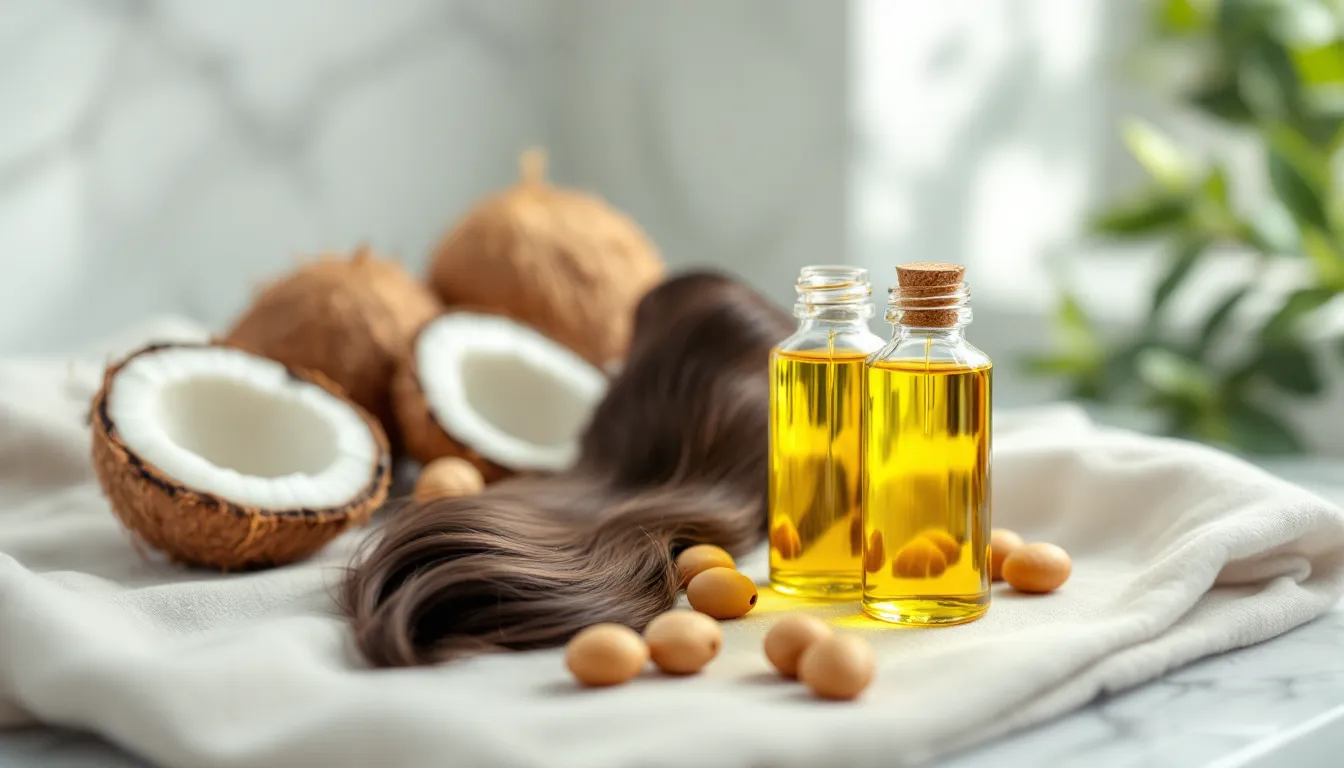
Some oils have a molecular structure small enough to actually slip past the hair’s outer cuticle and nourish from the inside. Coconut oil is the classic example. It’s cool, heavy, and deeply penetrating, qualities that make it fantastic for calming Pitta-related heat in the scalp or soothing dry Vata-type hair that’s rough and brittle. Sesame oil is another penetrator, though it’s warming rather than cooling, making it better suited for cold, dry conditions.
Coating oils, on the other hand, form a smooth protective layer on the outside of the strand. Argan oil and jojoba oil fall into this category. They’re lighter, less heavy, and wonderful for adding shine and reducing friction without weighing hair down. In Ayurvedic terms, these oils bring the smooth and slightly oily qualities that counterbalance roughness and dryness without adding excess heaviness.
The distinction matters because picking the wrong type is usually what creates that dreaded greasy look. Fine hair loaded up with a heavy penetrating oil? That’s too much of the heavy, dense quality for a strand that’s naturally light and subtle. Thick, coily hair treated with only a light coating oil? It might not get the deep, oily nourishment it’s actually craving.
Think of it like feeding your hair the right qualities it needs to come back into balance, the Ayurvedic principle of “opposites restore harmony” at work.
Do this today: Check the oils you currently own. Are they penetrating or coating? Match them to your hair’s actual texture. Takes about 2 minutes. This applies to everyone, regardless of hair type.
The Best Oils for Every Hair Type
Here’s where we get specific. Your hair type tells you a lot about which qualities are already dominant, and which ones you need to balance with the right oil.
Fine and Straight Hair
Fine hair tends to carry the light, subtle, and mobile qualities that Ayurveda associates with Vata. It can look flat or lifeless quickly, and heavy oils will weigh it down in a heartbeat.
The best oils for fine hair are light and absorb quickly. Jojoba oil is my top pick here, it closely mimics your scalp’s own sebum, so it doesn’t feel foreign or heavy. Argan oil is another beautiful choice. It’s smooth and slightly warm, which can add a bit of luster without the slick look. A tiny amount of sweet almond oil can also work well if your fine hair leans toward dryness.
Avoid slathering coconut oil all over fine strands. It’s too heavy and cool for hair that’s already light in nature. If you love coconut oil, use it only on the scalp as a pre-wash treatment.
Do this today: Try 2–3 drops of jojoba or argan oil on damp ends after washing. That’s it, just the ends. Takes 30 seconds. Ideal for Vata-dominant or fine-haired folks. Not the best approach if your scalp already runs oily.
Wavy and Medium-Textured Hair
Wavy hair often sits in a Pitta-Kapha zone. It has more body and density than fine hair, with a tendency toward either oiliness at the roots (Kapha) or heat-related frizz and breakage at the tips (Pitta).
Coconut oil is genuinely wonderful here, its cooling, moderately heavy nature helps tame frizz while calming any scalp heat. Sunflower oil is another one I recommend often. It’s lighter than coconut but still penetrating, and it brings a gentle, cool quality that works well for Pitta-type irritation.
For medium hair that tends toward oiliness at the crown, focus your oil application mid-shaft to ends and keep the roots light.
Do this today: Apply a dime-sized amount of coconut or sunflower oil from mid-length to ends on damp hair. About 1 minute. Great for Pitta-dominant or combination hair types. Skip this if your whole scalp is already producing excess oil, focus on ends only.
Curly and Coily Hair
Curly and coily textures are often drier, rougher, and more porous, qualities that align strongly with Vata. These hair types crave oils that are heavy, oily, smooth, and deeply penetrating.
Sesame oil is a powerhouse here. It’s warm, heavy, and deeply nourishing, perfect for counterbalancing the dry, rough, mobile qualities that make coily hair prone to breakage and shrinkage. Castor oil is another favorite. It’s thick, dense, and incredibly stabilizing, though it’s so heavy that I’d suggest mixing it with a lighter oil like coconut or sweet almond so it spreads more easily.
Bhringraj oil, a traditional Ayurvedic preparation, is also exceptional for curly and coily hair. It supports the hair root directly, feeds the scalp, and carries a cooling quality that balances any excess heat.
Do this today: Warm a tablespoon of sesame oil (or a sesame-castor blend) and work it section by section through dry hair, focusing on the ends and any particularly dry areas. Give it 20–30 minutes before washing, or leave it overnight with a silk wrap. Perfect for Vata-dominant or thick, coily hair types. If you run very hot or have Pitta-type scalp inflammation, swap sesame for coconut.
How to Apply Hair Oil Without the Greasy Look
The greasy look almost always comes down to three things: too much oil, wrong oil for your type, or wrong timing.
Let’s start with amount. For fine hair, you need far less than you think, literally 2 to 4 drops warmed between your fingertips. Medium hair can handle a nickel-sized amount. Thick, coily hair might use a full tablespoon, but even then, you’re distributing it across a lot of surface area.
Next, application technique matters. I always recommend starting at the ends and working upward, never starting at the roots (unless you’re doing a full scalp treatment you plan to wash out). This keeps the roots from getting heavy and limp. For a scalp massage, apply oil directly to the scalp with your fingertips in small circular motions, then wash it out after 20 minutes to an hour.
Finally, damp hair is your friend. Applying oil to slightly damp hair, not soaking wet, not bone dry, helps it absorb more evenly. The moisture acts as a carrier, and the oil distributes without concentrating in one spot. In Ayurvedic terms, the slight moisture balances the dry quality of the oil application itself, creating a smoother, more even result.
One trick I’ve come to rely on: if I’ve accidentally used too much, I blot my hair gently with a cotton cloth and then loosely braid it. By morning, the excess has absorbed and my hair has this soft, alive quality without any residue.
Do this today: Next time you oil, cut your usual amount in half and apply to damp ends first. See how it looks before adding more. Takes 2 minutes. Works for every hair type. If you have very oily roots naturally, keep oil away from the top two inches entirely.
Common Hair Oil Mistakes to Avoid
I’ve made most of these myself, so no judgment here.
Using the same oil year-round. Your hair’s needs shift with the seasons. Sesame oil that felt perfect in dry winter might be too warming in summer, when Pitta is naturally higher and your scalp may already feel hot or irritated. This is the Ayurvedic principle of ritucharya, seasonal adjustment, at work. In warmer months, lean toward cooling oils like coconut or sunflower. In cooler, drier months, warming oils like sesame or almond are your allies.
Oiling dirty hair and leaving it. If your scalp has buildup, what Ayurveda would connect to ama, or undigested residue, layering oil on top just traps that stagnation underneath. The oil can’t penetrate, and the scalp can’t breathe. Always oil on a relatively clean scalp, or use the oil as a pre-wash treatment that you’ll shampoo out.
Skipping the scalp entirely. I get it, oiling the scalp feels riskier for greasiness. But the scalp is where the magic happens. The roots, the follicles, the blood supply, that’s all scalp territory. A weekly scalp oil massage supports healthy circulation, keeps the tissue nourished, and over time actually helps regulate how much oil your scalp produces on its own. It calms that Vata-driven dryness or Kapha-driven sluggishness at the root level.
Applying oil right before heat styling. Hot, sharp qualities from a blow dryer or flat iron combined with oil can literally fry the strand. If you’re going to heat style, use a tiny amount of a light coating oil after styling, not before.
Do this today: Identify which of these mistakes you’ve been making (be honest.) and correct just one this week. Takes zero extra time. Relevant for everyone who uses hair oil.
When and How Often to Use Hair Oil
Timing is everything in Ayurveda, and hair oiling is no exception.
The traditional recommendation is to oil the scalp as part of your morning dinacharya (daily routine), ideally before bathing. Even 5 minutes of warm oil on the scalp before your shower can make a noticeable difference in how your hair feels throughout the day. This morning practice helps settle Vata, which is naturally elevated in the early hours, and it supports tejas, that inner clarity and metabolic spark, by calming the head before the day begins.
If mornings feel too rushed (and I understand that completely), an evening scalp massage before bed is equally valuable. This is actually my preferred approach. The oil has hours to absorb while you sleep, and the calming, heavy, stable qualities of a good warm oil massage support deep rest and ojas-building overnight.
As for frequency, it depends on your constitution and hair type.
If you’re more Vata, dry skin, thin or fine hair, tendency toward anxiety or restlessness, try oiling 3 to 4 times per week. Your tissues are hungry for that nourishment. Use warm sesame or almond oil, and give yourself a slow, grounding scalp massage with gentle pressure. Avoid rushing through it. Not ideal if you have an active fungal scalp condition.
If you’re more Pitta, medium hair, prone to early graying, sensitive or warm scalp, twice a week is a good rhythm. Use room-temperature coconut or sunflower oil, and keep your touch light and cooling. You might enjoy oiling on your days off when you can truly relax into it. Not ideal if your scalp is actively inflamed or sunburned, let it heal first.
If you’re more Kapha, thick, heavy hair, oily scalp, slower to get going in the morning, once a week is plenty. Choose a lighter, warming oil like mustard or a small amount of sesame, and focus on the scalp rather than the lengths. A vigorous (but not rough) massage helps move stagnation and stimulate sluggish circulation. Not ideal if you’re already dealing with excessive scalp oiliness, in that case, try dry brushing the scalp instead and oil just the dry ends.
One seasonal note that’s worth remembering: in late winter and early spring, when Kapha naturally accumulates, everyone can benefit from oiling a bit less frequently and using lighter, warmer oils. As the weather dries out in autumn, increase your oiling frequency and go heavier. This simple seasonal shift keeps your routine aligned with nature’s rhythm rather than fighting against it.
Do this today: Pick one time, morning or evening, and commit to a 5-minute scalp oil session before your next wash day. Notice how your hair and your mind feel afterward. Works for all types: just adjust the oil and frequency as described above.
Conclusion
Hair oiling doesn’t have to be complicated, and it definitely doesn’t have to leave you looking greasy. When you choose an oil that matches your hair type and constitution, use the right amount, and time it well, this ancient practice becomes one of the easiest, most grounding things you can do for yourself.
What I love most about approaching hair oil through an Ayurvedic lens is that it stops being about chasing a trend and starts being about listening, to your body, to the season, to what your hair is actually telling you it needs. That rough, brittle texture in winter? It’s asking for warmth and nourishment. That oily, heavy feeling in spring? It’s asking for lightness and movement.
Your hair is always communicating. Oil is one of the kindest ways to respond.
I’d love to hear how it goes for you. What oil are you reaching for first, and has your hair been trying to tell you something you’ve been ignoring?