







What Causes Skin to Lose Elasticity and Firmness
Skin loses its bounce for reasons that are part biology, part lifestyle, and, in the Ayurvedic view, part dosha. As we age, Vata naturally rises. Vata carries the qualities of dry, light, rough, mobile, and subtle, and those are the exact qualities that show up on aging skin: thinner texture, fine lines, a paper-like feel along the cheeks and hands.
But Vata isn’t the only player. When Pitta runs hot for too long, think stress, spicy food, sun, late nights, it burns through the deeper tissues and leaves skin looking inflamed and slack. And sluggish Kapha with poor circulation can make skin feel heavy, dull, and puffy rather than firm.
My own slackening, I realized, was a Vata-Pitta story: too much travel, too many deadlines, not enough oil.
The Role of Collagen, Elastin, and Hyaluronic Acid
In modern terms, three proteins do the heavy lifting. Collagen is the scaffolding. Elastin is the snap-back. Hyaluronic acid is the cushion that holds water between cells.
In Ayurveda, all three live inside what’s called mamsa and rasa dhatu, the muscle and plasma tissues that give skin its plumpness. When digestion (agni) is strong, these tissues are nourished beautifully. When agni is weak, partially digested residue called ama clogs the channels that feed your skin, and the scaffolding stops getting its raw materials.
Think of it like trying to build a house when the delivery trucks keep getting stuck in traffic.
Lifestyle and Environmental Factors That Accelerate Sagging
Sun exposure, air conditioning, sugar, alcohol, irregular meals, scrolling until midnight, each one nudges your doshas out of balance. Dry winter wind aggravates Vata. Summer sun aggravates Pitta. Late-night eating burdens agni and creates more ama.
None of this is about blame. It’s just information.
Try this today: Stand in front of the mirror and gently press your cheek. Does it spring back slowly? Feel dry? Feel hot? That tells you which dosha to soothe first. (2 minutes. Helpful for everyone. Skip if you find body-checking stressful.)
Nutrient-Rich Foods That Rebuild Skin Structure
Ayurveda has a beautiful idea: your skin is the last tissue to receive nutrition. Plasma feeds blood, blood feeds muscle, muscle feeds fat, and only after several more layers does the goodness reach your complexion. So what you eat today shows up on your face in a few weeks, not a few hours.
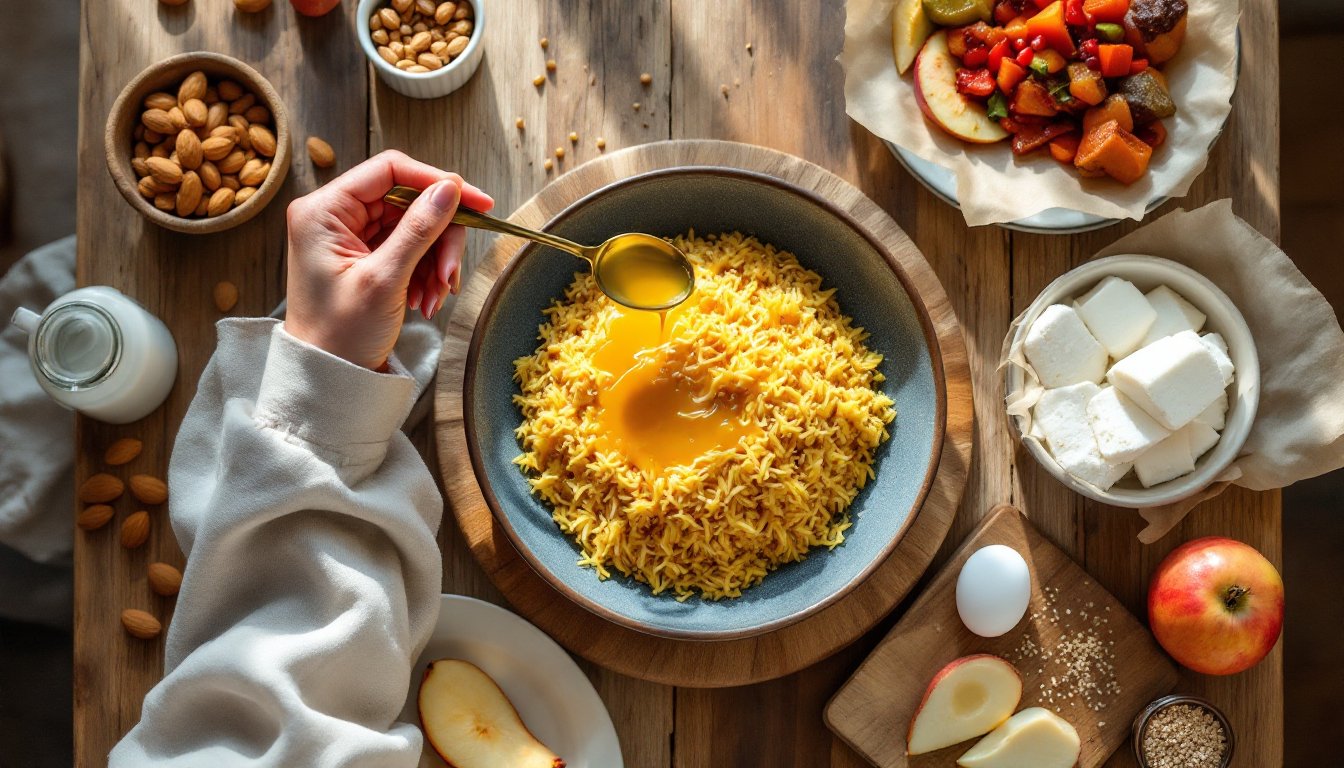
To rebuild structure, I lean into warm, slightly oily, easy-to-digest foods that kindle agni without aggravating Pitta. Cooked root vegetables, ghee, soaked almonds (peeled), stewed apples and pears, mung dal, basmati rice, sesame seeds, and ripe pomegranate are old favorites.
Protein matters too, lentils, paneer, soft-cooked eggs if you eat them, because mamsa dhatu (the firmness layer) literally needs amino acids to keep weaving collagen.
What I quietly minimize: leftovers older than a day, ultra-processed snacks, iced drinks during meals, and that 4 p.m. cookie that always seems to want company. Cold and heavy together is a fast track to ama.
Try this: Add one spoon of ghee to your warm lunch this week. It carries nutrients deeper into the tissues. (30 seconds. Lovely for Vata and Pitta. Go easy if you’re high Kapha or managing cholesterol concerns.)
Hydration Habits for Plumper, More Resilient Skin
Hydration in Ayurveda is less about chugging liters and more about the quality of the water you drink. Cold water dulls agni. Warm or room-temperature water keeps the digestive spark, tejas, bright, which means more nutrients actually make it to your skin.
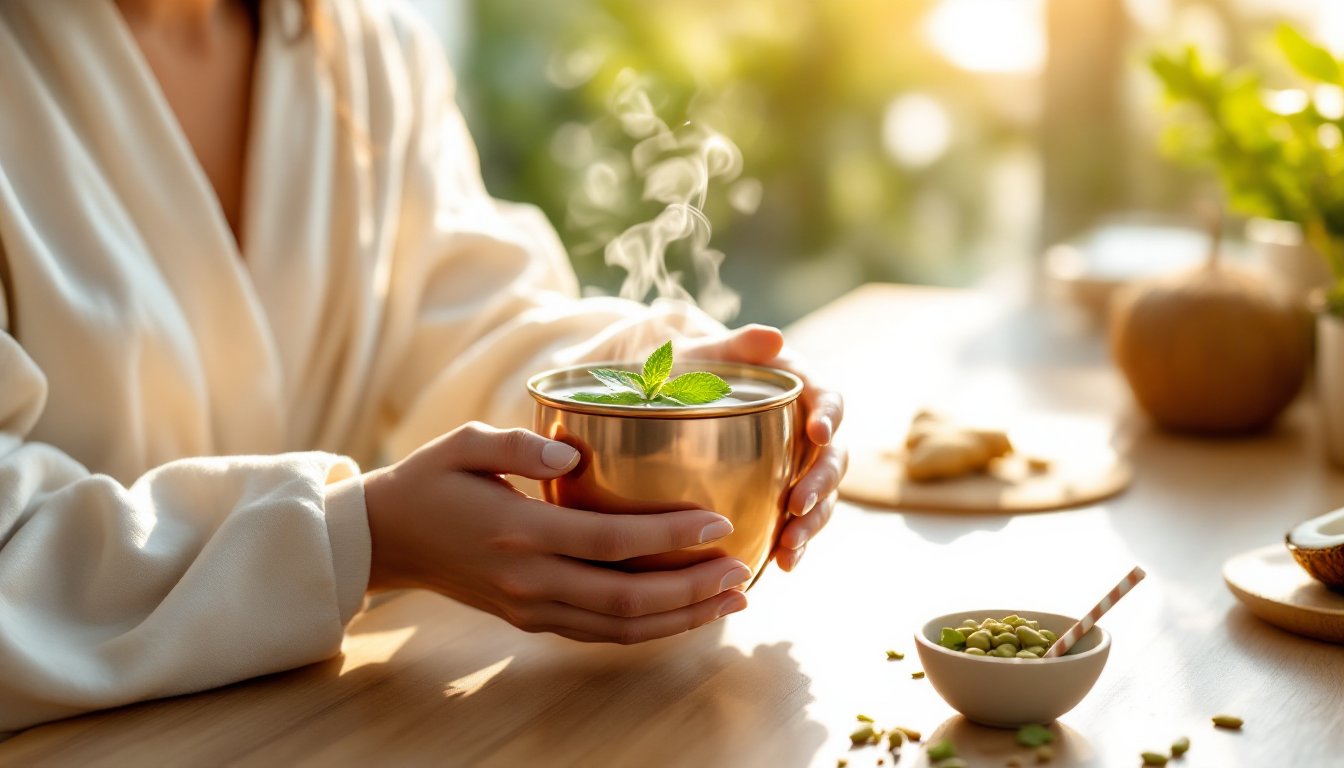
I start my mornings with a copper cup of warm water, sometimes with a few mint leaves in summer or a slice of fresh ginger in winter. Throughout the day, I sip rather than gulp. The smooth, oily quality of well-hydrated tissues is what gives skin that soft, slightly dewy feel, the opposite of Vata’s dry, rough tendency.
Coconut water in hot months, fennel-coriander tea in the afternoon, and a small mug of warm milk with cardamom before bed (if dairy agrees with you) all nourish rasa dhatu, the plasma layer that quite literally plumps the skin from underneath.
Try this: Keep a thermos of warm water at your desk and finish it before lunch. (Takes no extra time. Wonderful for all doshas. Skip very hot drinks if you’re feeling overheated or have acid reflux.)
Topical Botanicals and Oils That Boost Firmness Naturally
Ayurveda is famously fond of oil. The Sanskrit word for oil application, snehana, also means “to love.” And that’s really the spirit of it, you’re applying affection to a tissue that’s been working hard for you all day.
For Vata-dry, thinning skin, I love sesame oil infused with ashwagandha or bala. These warming, grounding oils counter the cold, dry, mobile qualities of Vata and give skin a smoother, more stable feel. For Pitta-flushed, sensitive skin, cooling coconut or sunflower oil with a hint of sandalwood or rose works beautifully, it offsets the sharp, hot quality of Pitta. For Kapha-heavy, puffy skin, lighter mustard or almond oil with a pinch of turmeric brings movement to what feels dull and stagnant.
Botanicals I keep returning to: kumkumadi taila for radiance, gotu kola (brahmi) for collagen support, amla for its quiet brilliance with skin tone, and aloe vera straight from a leaf when I can find one.
Try this: Tonight, warm a teaspoon of oil between your palms and massage your face for two minutes before bed. (2–3 minutes. Skip on actively breaking-out skin or if you’re prone to clogged pores, use a lighter oil instead.)
At-Home Techniques: Facial Massage, Gua Sha, and Dry Brushing
Skin loves gentle movement. In Ayurveda, the daily self-massage called abhyanga is one of the most cherished practices for keeping tissues supple, circulation lively, and Vata calm. The slow, rhythmic touch sends a signal to your nervous system, your prana, that you are safe, which alone softens the face.
For my morning routine, I dry brush my body with a soft natural bristle brush, moving toward the heart. This wakes up sluggish Kapha qualities, encourages lymph movement, and gives skin that subtly polished, smooth-not-rough feel. It takes maybe three minutes.
In the evening, I do a slow gua sha along my jaw and cheekbones with a little facial oil. Light, upward strokes. Nothing aggressive, Ayurveda warns against sharp, harsh handling of delicate tissues because it scatters prana and irritates Vata.
Try this: Three minutes of gua sha, three nights this week. Notice how your jaw feels by Sunday. (3 minutes. Skip over active acne, broken skin, or recent injectables.)
Exercise and Strength Training for Tighter Skin
Muscle is the architecture under your skin. When mamsa dhatu is well-built, skin has something to drape over, the way a beautifully made bed has structure under the linen. Ayurveda doesn’t use the word “strength training,” but it absolutely values strong, stable tissues, and warns against both extremes: total stagnation (Kapha-heavy) and over-exertion that depletes ojas (very Vata-Pitta).
My rule of thumb is to exercise to about half my capacity, until I feel a light sweat on the forehead and the chest. That’s the classical Ayurvedic measure. Beyond that, you start burning into the deep reserves that keep skin firm and faces looking rested.
A mix works best: two or three sessions of resistance work for structure, plus walking, yoga, or swimming for prana flow. Morning movement suits Kapha types. Midday is gentlest on Pitta. Evening yin yoga calms Vata.
Try this: Add two short strength sessions this week, even 20 minutes of body-weight squats and push-ups counts. (20 minutes. Skip or modify if you’re recovering, pregnant, or new to exercise, start with a professional.)
Sleep, Stress Management, and Hormonal Balance
If I had to name the single biggest skin-firming practice, it would be sleep. Specifically, sleep before 10:30 p.m. Ayurveda observed thousands of years ago that the hours between roughly 10 p.m. and 2 a.m. are Pitta-governed, when the body does its deep repair, including the rebuilding of tissues. Stay up past that window and Pitta turns inward, fueling restlessness instead of restoration.
Chronic stress is the quiet thief of ojas. When prana is scattered and the nervous system stays in a mobile, hot state, the body diverts resources away from skin and toward survival. You can feel this, stressed skin looks thinner, drier, and more reactive within days.
What helps me: a warm shower, a few minutes of slow nasal breathing, and putting my phone in another room. Ojas, that deep, dewy resilience, is rebuilt in the dark, in stillness, in the soft, stable quality of true rest.
Try this: Lights out by 10:30 tonight, even if you just lie there. (Free. For everyone. If you have a sleep disorder, please work with a clinician.)
Sun Protection and Daily Skin-Defense Practices
Sun is complicated. A little morning light is medicine, it steadies prana, lifts mood, and supports vitamin D. Midday summer sun on bare skin, but, is pure Pitta provocation: hot, sharp, penetrating. Over years, it breaks down the very fibers we’re trying to protect.
My daily defense is simple. Before stepping out, I apply a thin layer of facial oil (sesame or coconut, depending on the season), then a mineral sunscreen. A wide hat and sunglasses do more than any serum on a bright afternoon.
I also wash my face only with lukewarm water and a gentle cleanser, never hot. Hot water strips the natural oils and aggravates Pitta and Vata together, a quick way to dull that dewy, smooth quality you’re working to build.
In winter, I switch to heavier oils and humidify my bedroom, a small ritucharya (seasonal) adjustment that protects against the cold, dry wind that ages skin faster than almost anything else. In summer, I shift to cooling rose water mists and lighter coverage.
Try this: Build a 60-second pre-sun ritual: oil, sunscreen, hat. (1 minute. For everyone. Patch-test new products if you have sensitive skin.)
A gentle close
Firmer, more elastic skin isn’t really about one cream or one superfood. It’s the slow, kind result of a body whose digestion is bright, whose nervous system feels safe, whose tissues are oiled and rested, and whose days have rhythm. That’s the Ayurvedic promise, and it tends to deliver, quietly, over weeks.
If you try even two things from this guide, say, the warm-water habit and the 10:30 bedtime, I’d genuinely love to hear how your skin feels in a month. Which one feels most doable for you right now?