

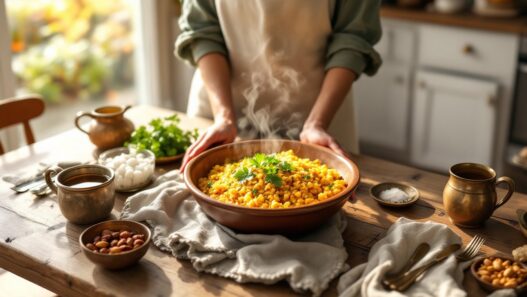






Why Your Pantry Choices Matter for the Environment
Here’s something that shifted my perspective: in Ayurveda, there’s no separation between the health of the individual and the health of the environment. The food you eat comes from the earth, passes through your digestive fire (what Ayurveda calls agni), and either becomes nourishment or burden, for you and for the ecosystem that produced it.
When we stock our pantries with heavily processed, over-packaged foods shipped from thousands of miles away, we’re not just creating environmental strain. We’re also introducing qualities into our bodies that tend to be dull, heavy, and hard to metabolize. Foods that have traveled long distances and sat in warehouses lose their vital energy, their prana, or life force. They become what Ayurveda would call tamasic: stagnant, lifeless, difficult for your system to transform into something useful.
On the flip side, foods that are close to the earth, whole, seasonal, minimally processed, carry a natural vitality. They’re lighter on the planet’s resources and lighter on your digestion. This isn’t coincidence. Ayurveda recognized thousands of years ago that when food is fresh and aligned with nature’s rhythms, your body can actually use it. Your agni doesn’t have to work overtime to break it down, and less metabolic residue (called ama) accumulates.
So your pantry choices ripple outward. Every jar of locally sourced grain, every bag of bulk legumes, every decision to skip the triple-wrapped convenience snack, it matters. For the soil, for the water, for your gut, and for that subtle vitality that keeps you feeling clear and steady.
Do this today: Pick one item in your pantry that feels lifeless or overly processed and consider what whole, local alternative could replace it. Takes about 5 minutes of reflection. This works for anyone, regardless of constitution, it’s a starting point.
How to Evaluate Sustainability When Shopping for Staples

Shopping with sustainability in mind can feel complicated. There are so many labels, so many claims, and frankly, a lot of greenwashing. I’ve found it helpful to bring a simple Ayurvedic lens to the process: Does this food still carry life in it? Is it close to its source? Will my body recognize it as food?
That’s not a scientific checklist, but it’s surprisingly effective. Let me break it down a bit more.
Understanding Labels and Certifications
Organic, fair trade, non-GMO, regeneratively grown, the labels can blur together. Here’s what I look for, through an Ayurvedic filter.
Organic certification tells me the food was grown without synthetic pesticides, which matters because those chemicals introduce sharp, hot, and subtle qualities into your food that can aggravate Pitta dosha over time and burden your liver’s metabolic intelligence. Fair trade speaks to the ethics of production, which Ayurveda would frame as sattva, the quality of harmony and goodness in how something came into being.
Regenerative agriculture labels are newer but exciting. They indicate farming practices that actually rebuild soil health, which means the food grown in that soil carries more minerals, more prana. Think of it this way: depleted soil produces depleted food, and depleted food produces depleted tissues in your body. Ayurveda maps this beautifully, food quality directly determines the quality of your dhatus (body tissues) and eventually your ojas, that deep reservoir of immunity and resilience.
Don’t get paralyzed by labels, though. If something is local, whole, and minimally processed, it’s already ahead of most things on the shelf, certification or not.
Prioritizing Local and Seasonal Sources
This is where Ayurveda really comes alive. The concept of ritucharya, seasonal living, tells us that nature provides exactly what we need, when we need it. Cool, hydrating foods in summer to balance Pitta’s heat. Warm, grounding foods in winter to steady Vata’s cold, dry, mobile qualities.
When you buy local and seasonal, you’re automatically aligning your pantry with these rhythms. Farmers’ markets and regional co-ops tend to carry what’s actually growing right now, which means the food is fresher, carries more prana, and requires less energy to transport.
I started shopping seasonally about three years ago, and the shift was noticeable, not just in my grocery bill, but in how my digestion responded. Foods that are in season tend to be easier on agni because your body is naturally primed for them. Winter squash in January feels warming and stabilizing. Berries in July feel cooling and light. Your body knows.
Do this today: Next time you shop, pick one staple and ask: Where did this come from, and is it in season here? Takes 2 minutes at the store. Great for beginners and anyone wanting to deepen their relationship with food.
Whole Grains and Legumes: The Foundation of a Sustainable Pantry
If I had to build a sustainable pantry from scratch, I’d start with whole grains and legumes. They’re affordable, they store well, they’re gentle on the earth (legumes actually fix nitrogen in the soil, improving it for future crops), and Ayurveda considers them foundational.
Whole grains like rice, barley, millet, and oats are heavy, sweet, and grounding in quality, they pacify Vata’s lightness and instability. Barley, specifically, is one of the few grains that Ayurveda considers beneficial for all three doshas when prepared properly. It’s slightly dry and cool, which helps balance Kapha’s tendency toward heaviness and Pitta’s internal heat.
Legumes, mung beans, lentils, chickpeas, are where things get interesting. Mung dal is Ayurveda’s darling: light enough to digest easily, nourishing enough to build tissues, and gentle on agni even when it’s running low. It’s the food I reach for when my digestion feels sluggish and I suspect ama might be building up, that foggy, coated-tongue, low-energy feeling that tells you undigested residue is accumulating.
Here’s the metabolic picture: when your agni is strong and you’re eating well-cooked whole grains and legumes, the food transforms cleanly into rasa (nutrient fluid), then into blood, muscle, fat, bone, and eventually into ojas. That’s the goal, clean, complete transformation. But when agni is weak and you’re eating processed grain products (think instant noodles, white flour), the transformation is incomplete. Ama forms. And ama is sticky, heavy, and dull, it clogs the channels and dims your tejas, that inner clarity and metabolic spark.
So stocking whole grains and legumes isn’t just sustainable for the planet. It’s sustainable for your metabolism.
Do this today: Cook a small pot of mung dal with cumin, ginger, and a pinch of turmeric. It takes about 30 minutes. Wonderful for all constitutions, especially if you’ve been eating heavy or processed foods lately. If you have very weak digestion, start with just a small bowl and see how you feel.
Plant-Based Oils, Nuts, and Seeds Worth Stocking
Fats are deeply important in Ayurveda, they’re not something to fear or minimize. The right oils nourish your tissues from the inside out, keep your skin smooth, your joints lubricated, and your nervous system steady. And from a sustainability standpoint, choosing well matters. A lot.
Ghee is Ayurveda’s gold standard. It’s oily, smooth, and subtly cooling once digested, qualities that balance Vata’s roughness and dryness and soothe Pitta’s sharpness without aggravating Kapha the way heavier fats might (when used in moderation). Ghee also enhances agni rather than suppressing it, which is rare for a fat. It’s one of the few substances Ayurveda says actually carries nutrients deeper into your tissues. If you can source ghee from grass-fed, pasture-raised cows, ideally local, that’s a meaningful sustainability choice.
For plant-based options, sesame oil is warming and grounding (great for Vata), coconut oil is cooling and stabilizing (a Pitta favorite), and sunflower oil sits somewhere in the middle. All three are relatively low-impact crops when sourced thoughtfully.
Nuts and seeds, almonds, walnuts, flax, pumpkin seeds, sunflower seeds, bring healthy fats, protein, and the heavy, oily, dense qualities that build ojas over time. Almonds soaked overnight and peeled are a classic Ayurvedic recommendation: the soaking makes them lighter and easier to digest, reducing the potential for ama.
A word on sourcing: almond farming, particularly in drought-prone regions, carries a real environmental cost. I try to diversify, using more locally available nuts and seeds rather than relying on almonds alone. Hemp seeds and pumpkin seeds are often grown closer to home and carry wonderful nutritional and energetic qualities.
Do this today: Choose one high-quality oil and one type of nut or seed to keep as your pantry staples this month. Takes 5 minutes to decide. Good for everyone, just adjust the type based on your constitution (more on that below).
Sustainable Alternatives to Common Packaged Foods
Packaged foods are convenient. I get it, I’m not here to shame anyone for grabbing a box of crackers after a long day. But many packaged foods are what Ayurveda would describe as carrying dry, rough, light, and mobile qualities in excess. They scatter Vata, overstimulate Pitta (especially when loaded with salt and sharp spices), and leave Kapha feeling unsatisfied and reaching for more.
Plus, the packaging itself is often the biggest sustainability problem. All that plastic, all those single-use wrappers.
So what can you swap in? Here are a few shifts I’ve made that stuck.
Instead of store-bought granola bars, I keep a jar of toasted oats mixed with ghee, jaggery, and cardamom. It’s warm, slightly heavy, sweet, and grounding, the opposite of those dry, crunchy bars that leave my mouth parched and my Vata buzzing.
Instead of canned soups, I batch-cook simple vegetable soups with seasonal produce and spices like cumin, coriander, and fennel. These spices aren’t just flavor, they actively support agni and help prevent ama from forming. Fennel is slightly cooling and sweet, coriander balances all three doshas, and cumin kindles digestive fire without overheating it.
Instead of bottled salad dressings (often full of refined oils and preservatives), I mix fresh lemon juice, good olive or sesame oil, rock salt, and a pinch of fresh ginger. Alive, simple, and full of prana.
Each swap removes packaging waste and improves the quality of what your body receives. Your tissues get cleaner fuel, your agni doesn’t have to battle synthetic ingredients, and your ojas, that deep vitality reservoir, gets to build rather than deplete.
Do this today: Pick one packaged item you buy regularly and try making a simple homemade version this week. Allow 20–30 minutes for your first attempt. This is for anyone ready to take a small, practical step. If cooking feels overwhelming right now, that’s okay, even switching to a cleaner packaged version with fewer ingredients is a move in the right direction.
Reducing Waste Through Smart Storage and Organization
An Ayurvedic principle that I come back to constantly: like increases like, and opposites bring balance. This applies to pantry organization more than you’d think.
If your pantry is chaotic, cluttered, overstuffed, things falling out when you open the door, that environment carries mobile, scattered, rough qualities. It subtly increases Vata in your mind every time you interact with it. You feel overwhelmed, make impulsive food choices, and end up wasting more because you can’t see what you have.
The opposite? A pantry that’s stable, clear, and orderly. Glass jars where you can see what’s inside. Items grouped by type. Nothing hidden in the back going stale. This kind of environment is calming to Vata, clarifying for Pitta (who loves systems), and motivating for Kapha (who benefits from simplicity and space).
From a sustainability angle, good storage directly reduces waste. When you can see your lentils running low, you buy more before they run out, no panic purchases. When your grains are sealed in airtight containers, they last months longer. When your spices are fresh and visible, you actually use them, and your cooking improves, which means you eat at home more often, which means less takeout packaging.
I also keep a simple rotation habit: newer items go to the back, older ones come forward. It takes thirty seconds each time I restock and it’s saved me from throwing away forgotten food more times than I can count.
Do this today: Spend 15 minutes reorganizing one shelf of your pantry. Transfer open packages into clear jars or containers. Good for all constitutions, especially helpful if you tend toward Vata-type scattered energy or Kapha-type accumulation and stagnation.
Building a Sustainable Pantry on a Realistic Budget
Let’s be honest, organic, local, and whole-food eating can feel expensive. But here’s what I’ve found: a well-stocked Ayurvedic pantry is actually less expensive over time than a pantry full of packaged convenience foods. Whole grains, dried legumes, seasonal vegetables, basic spices, and one or two good oils, these are some of the most affordable foods on the planet.
The key is intention. And this is where two practices, meal planning and mindful bulk buying, become your best friends.
Meal Planning Strategies That Minimize Food Waste
In Ayurveda, the daily routine (dinacharya) includes eating your main meal at midday, when agni is naturally at its peak, when the sun is highest, your digestive fire is strongest. Planning around this rhythm means you’re cooking your most complex, nourishing meal when your body can actually handle it, and eating lighter in the morning and evening.
This alone reduces waste because you’re not cooking elaborate dinners that go half-eaten. A simple evening meal, maybe soup or kitchari, uses fewer ingredients and produces less leftover waste.
I plan meals loosely for the week, focusing on what needs to be used first. The slightly soft sweet potato becomes tonight’s soup. The herbs about to turn get blended into a chutney with ginger and lemon. Nothing heroic, just a gentle awareness of what’s in front of me.
This habit also supports tejas, that clarity of perception. When you plan with awareness, your choices become sharper, less reactive. You stop buying things on impulse that end up creating ama in your body and clutter in your kitchen.
Buying in Bulk Without Overbuying
Bulk buying is wonderful for grains, legumes, nuts, seeds, and spices. It cuts packaging waste dramatically and usually costs less per unit. But there’s a Kapha trap here, the tendency to accumulate, hoard, and buy more than you can realistically use.
Kapha energy loves security, and a full pantry feels safe. But when things sit too long, they lose prana. Stale food is tamasic, it dampens your energy rather than lifting it.
My rule of thumb: buy in bulk only what you’ll realistically use in 4–6 weeks for grains and legumes, and 2–3 months for spices. This keeps everything fresh, full of life force, and within your budget.
Do this today: Map out 3–4 simple meals for the coming week using what’s already in your pantry, then make a short list of only what you need to fill in the gaps. Takes about 15 minutes. Perfect for anyone who feels their grocery spending is out of alignment, and especially grounding for Vata types who tend to shop impulsively.
Conclusion
Building a sustainable pantry isn’t about perfection. It’s about small, steady shifts, the kind that accumulate over weeks and months until one day you open your kitchen cabinet and realize: everything in here actually nourishes me.
From an Ayurvedic perspective, this process is deeply personal. Your Vata friend might need a pantry stocked with warming oils and grounding grains. Your Pitta neighbor might gravitate toward cooling coconut and gentle basmati. Your Kapha colleague might thrive with lighter millets and pungent spices. There’s no single right pantry, there’s your pantry, shaped by your constitution, your season, your local landscape.
What I love about approaching sustainability through Ayurveda is that it’s never just about the external footprint. It’s about the internal one, too. When your food is fresh, well-chosen, and prepared with care, your agni burns clean. Ama doesn’t accumulate. Your ojas, that quiet, deep wellspring of health, grows. And you have more energy, more clarity, more prana to bring to everything else in your life.
That’s the real sustainability. Not just a greener planet, but a more vital you living on it.
I’d love to hear where you are in this process. What’s one pantry staple you’ve swapped or discovered recently that made a difference, for your body or for the planet? Drop a comment below or share this with someone who’s been meaning to clean out their kitchen cabinet. Sometimes all it takes is a little nudge.
What’s the first thing you want to change in your pantry this week?