








Why Some Ayurvedic Remedies Hold Up to Modern Scrutiny
What I find fascinating about Ayurveda is that it doesn’t start with “take this herb for that symptom.” It starts with a question: what went out of balance, and why?
In Ayurvedic thinking, every imbalance traces back to a cause, called nidana. Maybe it’s erratic eating, maybe it’s chronic stress, maybe it’s living out of sync with the season. That cause then shifts one or more of your doshas, Vata (the principle of movement and dryness), Pitta (the principle of heat and transformation), or Kapha (the principle of heaviness and moisture). From there, specific qualities build up: too much heat, too much dryness, too much heaviness.
The remedies that actually make sense are the ones that address those qualities directly. They follow what Ayurveda calls the principle of opposites, if you’re running hot and sharp (a Pitta situation), you bring in cooling, soothing qualities. If you’re cold and stiff (a Vata pattern), you reach for warmth and oiliness.
This is why turmeric keeps showing up in modern research. It’s not random, it has warm, light, dry, and slightly bitter qualities that kindle your digestive fire (agni) and help clear sticky, undigested residue (ama) from the system. When researchers find anti-inflammatory properties, they’re essentially confirming what Ayurveda mapped through the lens of qualities centuries ago.
The remedies that don’t hold up? Usually the ones ripped from context, taken without understanding your constitution, your current imbalance, or the season. A remedy that works beautifully for someone with a cold, sluggish Kapha pattern can absolutely aggravate someone already running hot with a Pitta flare.
That’s the piece most wellness blogs skip, and it’s the piece that matters most.
Simple Ayurvedic Remedies Worth Trying First
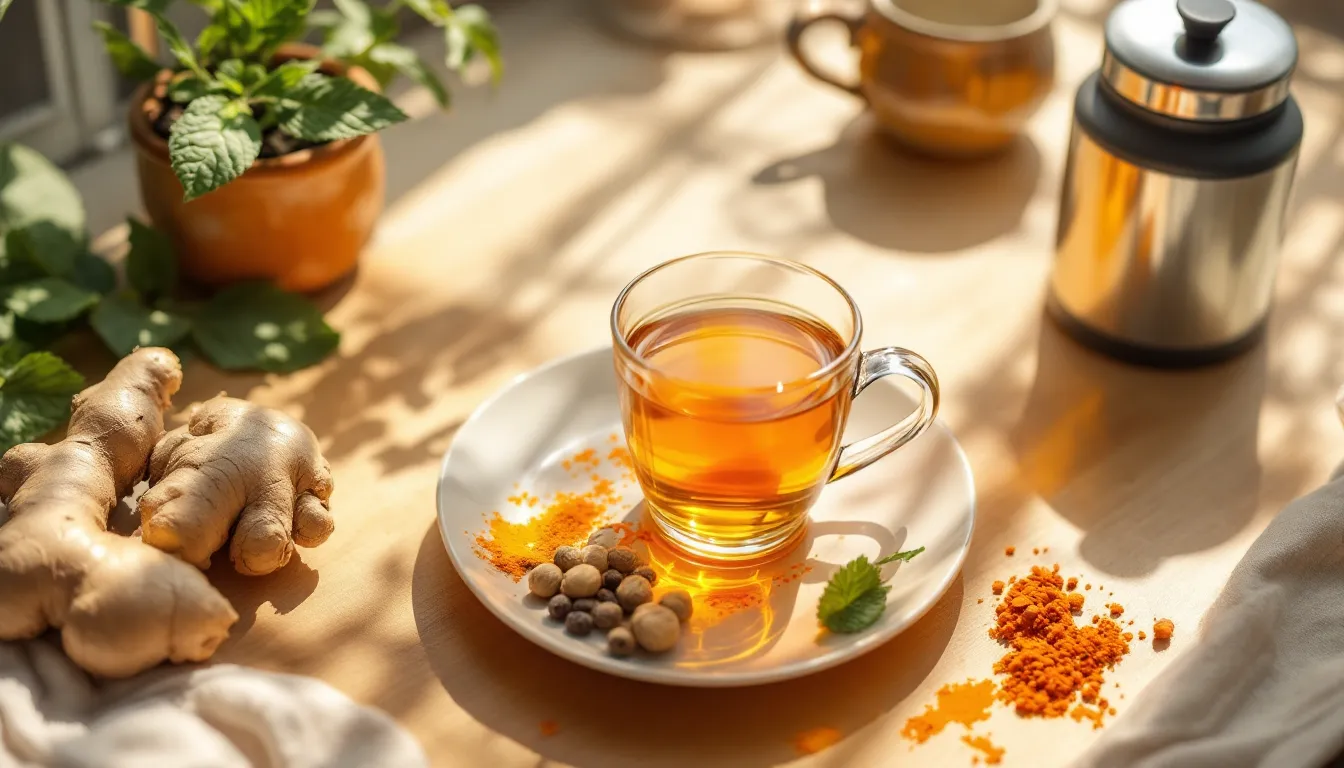
Turmeric and Ginger for Inflammation and Digestion
I pair these two together because they complement each other so well. Ginger is warm, light, and slightly oily, it sparks your agni and gets things moving when digestion feels dull or heavy. Turmeric is warm and dry with a bitter edge, which means it helps clear ama (that sticky, foggy residue that builds up when food isn’t fully digested).
Together, they address what Ayurveda considers the root of most discomfort: weak agni leading to ama buildup, leading to inflammation and tissue-level heaviness.
If Vata is your dominant pattern, you might notice that your digestion is irregular, sometimes fine, sometimes bloated and gassy. Ginger tea with a pinch of turmeric and a small spoon of ghee (adding that oily quality Vata craves) can be grounding. If Pitta is running high, acid reflux, sharp hunger, irritability, go easy. Use smaller amounts and pair with cooling foods. Kapha types with that heavy, slow-to-start digestion often do beautifully with a stronger ginger-turmeric combination.
When these two are working well, you’re not just reducing inflammation on a surface level. You’re supporting tejas, that inner metabolic clarity that helps your body process and transform what you take in.
Try this today: Grate a thumb of fresh ginger into hot water, add ¼ teaspoon turmeric and a crack of black pepper. Sip before your largest meal. Takes about 3 minutes to prepare. Good for most people: if you have acid reflux or a hot, sharp constitution, start with half the ginger and notice how you feel.
Warm Water Routines and Herbal Teas
This one sounds almost too simple, but sipping warm water throughout the morning is one of the most effective Ayurvedic home remedies I’ve personally stuck with.
Cold water is heavy and slow, it dampens your agni the way pouring cold water on a campfire dims the flame. Warm water is light and mobile, which gently stokes digestion and helps loosen ama so your body can clear it naturally. You might notice less bloating, clearer skin, and more steady energy by the second week.
From a dosha perspective, warm water is balancing for Vata (countering cold and dry qualities) and Kapha (countering heavy, sluggish qualities). Pitta types can go with room temperature or slightly warm, not hot, since they already carry internal heat.
Herbal teas fit here too. Cumin-coriander-fennel tea (CCF tea, as it’s often called) is a gentle classic. Cumin is warm and light, coriander is cooling and slightly dry, and fennel is sweet and smooth. Together, they balance each other beautifully and support agni without pushing any single dosha too hard.
Try this today: Boil water and sip it warm (not scalding) first thing in the morning, before food. Keep a thermos and sip through the morning. Takes zero extra time once the water is boiled. Good for almost everyone: Pitta-dominant folks can let it cool to room temperature.
Oil Pulling and Tongue Scraping for Oral Health
I’ll be honest, oil pulling felt strange the first few times. Swishing sesame or coconut oil in your mouth for 10 to 15 minutes isn’t exactly a thrilling morning activity. But Ayurveda sees the mouth as the starting gate of digestion, and what accumulates on your tongue overnight is a visible sign of ama.
That white or yellowish coating on your tongue in the morning? That’s undigested residue that your body is trying to expel. Scraping it off with a tongue scraper (stainless steel or copper) before you eat prevents you from reabsorbing it. Oil pulling goes deeper, the oily, smooth, heavy qualities of the oil draw out toxins from the gum tissue and oral mucosa, counteracting the dry, rough qualities that tend to accumulate, especially for Vata types.
This practice supports prana, your life force, because healthy oral tissue and clear sinuses mean better breathing, and better breathing means a steadier nervous system.
Try this today: Scrape your tongue first thing in the morning (5 to 7 gentle strokes, back to front). If you want to add oil pulling, swish a tablespoon of organic sesame oil for 10 to 15 minutes, then spit it out, don’t swallow. Takes about 12 minutes total. Good for everyone: coconut oil is better if you run hot (Pitta), sesame is ideal for Vata and Kapha.
How to Use Ayurvedic Remedies Safely at Home
Dosage, Sourcing, and Preparation Basics
More isn’t better, this is something I learned the hard way when I enthusiastically doubled a turmeric dose and ended up with a very dry, uncomfortable digestive tract for two days. Turmeric’s dry, light qualities are helpful in moderation, but too much can aggravate Vata and dry out your tissues.
Start small. For most kitchen-shelf remedies, ginger, turmeric, cumin, coriander, fennel, a quarter to half teaspoon is a reasonable starting point. Notice how your body responds over three to five days before adjusting.
Sourcing matters more than people realize. Organic, whole spices retain their qualities (potency, aroma, taste) far better than pre-ground powders that have been sitting on a shelf for months. The subtle quality of a fresh herb is what carries its therapeutic effect. If it smells like nothing, it’s doing close to nothing.
Preparation also shifts a remedy’s qualities. Cooking ginger in ghee makes it heavier and more grounding (better for Vata). Taking raw ginger juice with honey makes it lighter and sharper (better for Kapha). Same ingredient, different preparation, different effect.
Try this today: Check the spices in your cabinet. If they’ve been there over a year, replace them with fresh, organic whole spices. Takes about 10 minutes of cleanup. Good for everyone.
Interactions With Medications and Pre-Existing Conditions
This is where I get cautious, and I think you can too. Turmeric, for example, can interact with blood thinners. Ginger in large amounts can affect blood sugar medications. Licorice root, a common Ayurvedic herb, can raise blood pressure.
If you’re taking any prescription medication, managing a chronic condition like diabetes or hypertension, or if you’re pregnant or nursing, please talk to a qualified practitioner before adding herbal remedies. This isn’t fear-mongering, it’s respect for the fact that these plants are genuinely active. That’s why they work, and it’s also why they deserve the same thoughtfulness you’d give any other intervention.
Ayurveda itself has always emphasized that remedies need to be matched to the person, the imbalance, the strength of digestion, and the season. Self-care has a scope, and knowing the edges of that scope is part of wisdom.
Try this today: If you’re on medication, make a list of the herbs and spices you use regularly and bring it to your next doctor’s appointment. Takes 5 minutes. Especially important for anyone on blood thinners, blood pressure meds, or diabetes medications.
Red Flags: When to Stop a Remedy and See a Doctor
I think one of the most responsible things any Ayurveda educator can do is be clear about when home remedies aren’t enough.
Stop what you’re doing and seek professional help if you notice any of these: a new or worsening rash, persistent digestive distress that doesn’t ease within a few days, unexplained weight loss, significant fatigue that’s getting worse rather than better, any sharp or new pain, or signs of allergic reaction like swelling or difficulty breathing.
From an Ayurvedic perspective, these can signal that ama has moved deeper into the tissues (dhatus) or that a dosha has become severely aggravated, situations that require more than kitchen remedies. When Vata becomes deeply disturbed, you might see anxiety, insomnia, and nerve-related pain that a cup of ginger tea simply can’t touch. A Pitta flare that’s gone too far can manifest as intense inflammation, skin eruptions, or bleeding. Deep Kapha imbalance can show up as chronic congestion, lethargy, or masses.
These are situations where ojas, your deep vitality and immune resilience, is being depleted. Rebuilding ojas requires personalized, often practitioner-guided protocols, not general remedies.
Also pay attention to how long you’ve been trying something. If a simple remedy hasn’t shown any positive shift in two to three weeks, it’s likely not the right match for your constitution or your current imbalance. Continuing to push it can create new problems.
Try this today: Set a simple tracking habit, note what you’re taking and any changes you notice, positive or negative, for two weeks. Takes 2 minutes a day. Good for everyone, and especially important if you’re new to Ayurvedic remedies.
Ayurvedic Practices That Need More Evidence
I want to be straightforward here because I think honesty builds more trust than hype.
Some Ayurvedic practices have solid traditional logic and emerging research behind them, the ones I’ve mentioned above fall into that category. But others are still in early stages when it comes to modern validation, and I think it’s fair to say so.
Panchakarma (the intensive Ayurvedic cleansing protocols), for instance, has a beautiful theoretical framework, it’s designed to draw deeply lodged ama out of the tissues and rebalance the doshas at a fundamental level. But the clinical research is still limited in scope and quality. That doesn’t mean it’s ineffective: it means we don’t yet have the kind of large-scale evidence that lets us make broad claims.
Similarly, some specific herbal formulations, like certain rasayana (rejuvenation) compounds, have promising preliminary data, but the studies are small. And anything involving heavy metal-containing preparations (bhasmas) requires extreme caution and professional guidance. These are not home remedies, full stop.
I think you can hold two truths at once: respect for a tradition’s depth and honesty about what we still need to learn. The practices that need more evidence aren’t necessarily wrong, they just need more investigation and ideally a practitioner’s guidance rather than a DIY approach.
Try this today: Before trying any advanced Ayurvedic protocol, do your research and consult a qualified Ayurvedic practitioner, not just a blog post. Takes a few minutes of discernment. This is especially important for anyone considering cleansing protocols, unfamiliar herbal compounds, or mineral-based preparations.
Building a Balanced Approach Between Ayurveda and Conventional Medicine
This is where I land personally, and it’s where I think most thoughtful people end up: Ayurveda and conventional medicine aren’t enemies. They’re looking at the body through different lenses, and both have genuine strengths.
Conventional medicine excels at acute care, diagnostics, and crisis intervention. Ayurveda excels at understanding the why behind chronic imbalance, personalizing daily habits, and catching things early, before they become diagnosable conditions.
I think of it this way: Ayurveda works at the level of qualities and tendencies. When you notice your skin getting dry and cracked, your sleep becoming light and interrupted, and your mind racing, Ayurveda says, “That’s Vata accumulating. Let’s bring in warm, oily, stable, smooth qualities through food, oil massage, routine, and rest.” You address the pattern before it becomes a pathology.
Conventional medicine picks up where that leaves off, when the pattern has become a condition that needs testing, imaging, or targeted treatment.
The daily and seasonal rhythm piece is where Ayurveda really shines for home use. Dinacharya (your daily routine) gives you structure: waking before sunrise, scraping your tongue, moving your body gently, eating your largest meal at midday when agni is naturally strongest, and winding down with warm, grounding food in the evening. These aren’t arbitrary rules, they’re rhythm-based habits that keep your doshas, agni, and the vitality triad of ojas, tejas, and prana steady over time.
Ritucharya (seasonal adjustment) adds another layer. In late winter and early spring, when the world is cold, heavy, and damp, Kapha tends to accumulate. That’s when lighter, warmer, drier foods and more vigorous movement help prevent that heavy, congested feeling. In summer’s heat, you shift toward cooler, sweeter, more hydrating foods to keep Pitta in check.
Two daily habits that I tie to this broader approach: a consistent morning routine that includes tongue scraping and warm water (grounding for Vata, clarifying for Kapha, and cooling enough for Pitta if you adjust the water temperature), and eating your main meal between 11 a.m. and 1 p.m. when your digestive fire peaks naturally. These two anchors alone can shift how you feel more than any single supplement.
For seasonal adjustment, consider this: if you’ve been using warming ginger tea all winter (a great Kapha-and-Vata-balancing practice), start tapering it as spring turns to summer and the environment adds its own heat. Switch to cooling mint or coriander tea instead. Same principle, balancing qualities with their opposites, just applied to the changing season.
If you’re more Vata: Your home remedy toolkit leans toward warm, oily, grounding, and smooth. Ghee in your food, warm sesame oil massage before your shower, ginger tea with a touch of honey, and a consistent daily rhythm. Avoid cold, raw, dry foods and irregular schedules, these aggravate Vata’s mobile, dry, light, rough qualities quickly. Try this today: warm oil self-massage (abhyanga) for even 5 minutes before your morning shower. Takes 5 to 10 minutes. Best for Vata-dominant types or anyone feeling scattered and dry.
If you’re more Pitta: You want cooling, slightly heavy, smooth, and sweet qualities. Coconut oil instead of sesame, coriander and fennel teas instead of ginger-heavy blends, and meals that aren’t rushed or skipped. Avoid excessive hot spices, fermented foods, and midday sun exposure, these feed Pitta’s already sharp, hot, oily nature. Try this today: swap your afternoon coffee for a cup of cool fennel tea. Takes 3 minutes. Best for Pitta-dominant types or anyone dealing with acidity, skin flares, or irritability.
If you’re more Kapha: Light, warm, dry, and sharp qualities are your friends. Dry ginger powder in warm water, vigorous morning movement, lighter meals, and stimulating spices like black pepper and turmeric. Avoid heavy, oily, cold, sweet foods and daytime sleeping, these deepen Kapha’s already heavy, cool, stable, smooth tendencies. Try this today: start your morning with a brisk 15-minute walk before breakfast. Takes 15 minutes. Best for Kapha-dominant types or anyone feeling heavy, congested, or lethargic.
Try this today (for the integrated approach): Pick one Ayurvedic daily habit and one conventional checkup you’ve been putting off. Do both this week. Takes minimal extra time, just a decision. Good for everyone who wants to take an honest, grounded approach to their health.
Conclusion
Ayurvedic home remedies aren’t about blind faith, and they’re not about rejecting modern medicine. They’re about understanding your body through the lens of qualities, digestion, and rhythm, and making small, intelligent adjustments that compound over time.
What I love about this approach is that it puts you back in relationship with your own body. You start noticing: Am I running hot or cold? Dry or congested? Is my digestion sharp or sluggish? And from there, the remedies aren’t prescriptions, they’re conversations with yourself.
Start with one thing. Maybe it’s the warm water. Maybe it’s the tongue scraping. Maybe it’s just paying attention to how you feel after meals. Give it two weeks and see what shifts.
And if something doesn’t feel right, trust that instinct. Pause, reassess, and reach out to a practitioner if you need to. Wisdom isn’t knowing every remedy, it’s knowing when to use one and when to stop.
I’d love to hear from you. What’s the one Ayurvedic home remedy that’s actually stuck in your life? Or what’s a practice you’ve been curious about but hesitant to try? Drop a comment below or share this with someone who’s been asking these same questions.