






Why Your Kitchen Setup Influences What You Eat
In Ayurveda, every imbalance begins with a cause, what’s called nidana. And when it comes to eating habits, the cause often isn’t emotional or psychological. It’s environmental.
Think about it this way. When your kitchen feels chaotic, counters crowded, tools hard to find, fresh food hidden behind processed snacks, it creates a quality Ayurveda calls rajas, or restless, mobile energy. That mobile, scattered quality aggravates Vata dosha, which governs movement and the nervous system. You feel rushed. You grab whatever’s closest. You eat standing up or skip cooking altogether.
On the other hand, a kitchen that’s stagnant, grimy, unused, full of heavy, outdated gadgets collecting dust, takes on the dull, heavy quality that feeds Kapha imbalance. You lose motivation to cook at all.
Pitta types might keep an overly rigid, Instagram-perfect kitchen that actually creates pressure rather than ease. That sharp, intense quality can turn meal prep into a stressful performance rather than a nourishing rhythm.
The point is this: your kitchen’s energy directly shapes your agni, your digestive and metabolic intelligence. A well-organized, warmly functional space supports steady agni. A disorganized one dampens it before you’ve even turned on the stove.
Do this today: Spend 10 minutes clearing your main countertop of everything that isn’t a tool you use daily. This works for all dosha types, though Vata and Kapha types will likely notice the biggest shift in motivation.
Essential Prep Tools That Encourage Whole-Food Cooking
The reason most of us default to packaged food isn’t laziness. It’s that whole-food cooking requires prep, and prep without decent tools feels like a chore. From an Ayurvedic standpoint, when cooking feels heavy and effortful, it increases the dull, gross qualities that suppress agni and lead to ama, that sticky, undigested residue that shows up as brain fog, a coated tongue, sluggish mornings, and low energy.
When prep is smooth and almost enjoyable, you naturally gravitate toward fresh vegetables, whole grains, and warming spices. Your agni stays bright. Ama doesn’t accumulate. And your ojas, that deep reservoir of vitality and immune resilience, gets fed properly.
Cutting and Slicing Tools
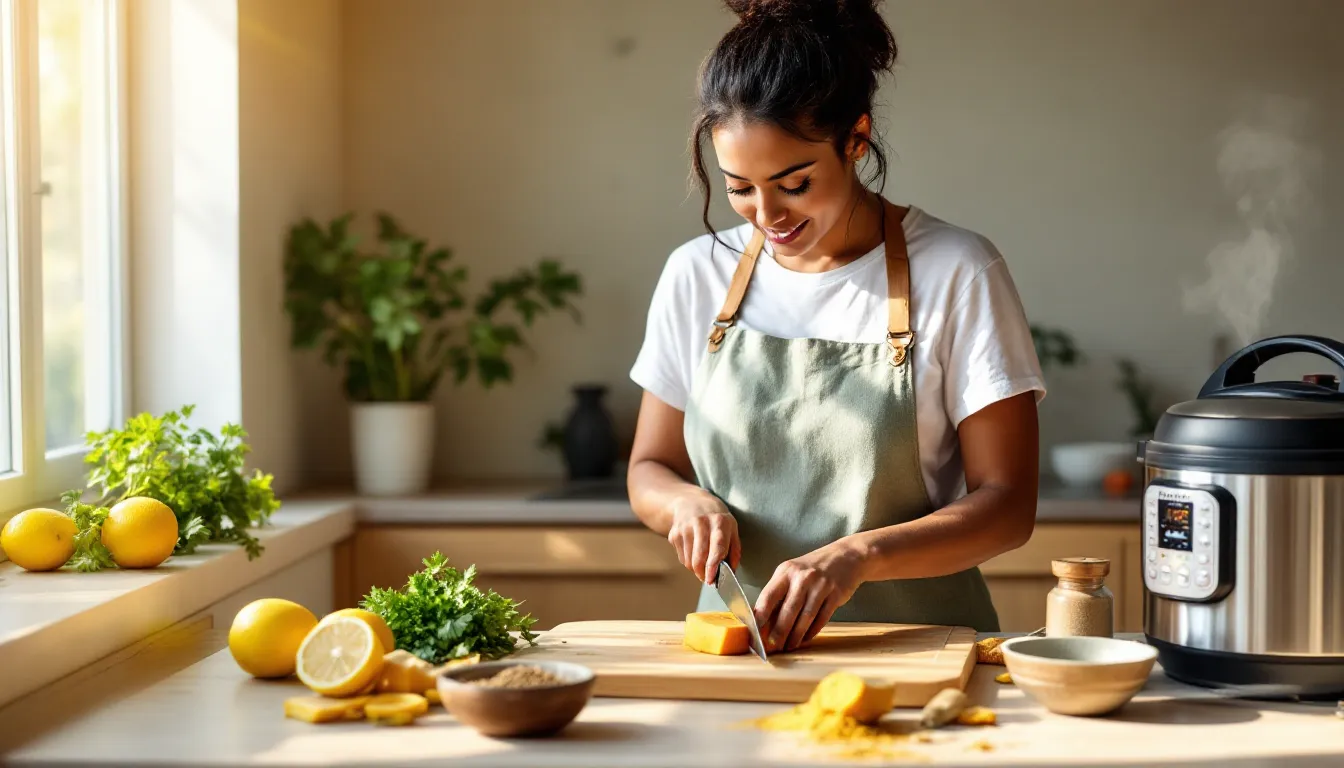
I can’t overstate this: a sharp, comfortable chef’s knife changes everything. When slicing through a butternut squash feels effortless instead of dangerous, you’re far more likely to cook it. A good knife introduces the sharp, light qualities that counteract the heaviness and inertia keeping you from cooking.
A sturdy cutting board, wood or bamboo, something that feels stable and grounded, adds the stable quality that calms Vata’s tendency toward scattered, rushed prep. If your board slides around on the counter, place a damp towel underneath. That tiny fix reduces friction more than you’d expect.
Do this today: If your knife is dull, sharpen it or replace it. Five minutes of smooth chopping versus fifteen minutes of sawing through vegetables makes whole-food cooking realistic. Ideal for everyone, but especially Vata types who lose patience with clunky tools.
Time-Saving Appliances
A pressure cooker or Instant Pot is, from an Ayurvedic lens, one of the most agni-supportive tools you can own. It takes dry, hard-to-digest legumes and grains and transforms them into soft, warm, easily absorbed meals, shifting their qualities from dry and rough to moist, warm, and smooth. This is the principle of opposites at work: you’re using heat and moisture to pre-digest foods so your body doesn’t have to struggle.
A simple spice grinder is another quiet game-changer. Freshly ground cumin, coriander, and fennel carry more tejas, that metabolic spark and clarity, than pre-ground spices sitting in a jar for months. The subtle, warm quality of fresh spices kindles agni in a way stale ones simply can’t.
Do this today: Try cooking one pot of mung dal or kitchari in a pressure cooker this week. About 30 minutes, start to finish. Great for all types, though Kapha types might prefer a bit less oil and more pungent spices in the mix.
Smart Storage Solutions for Fresh Ingredients
Here’s something I’ve noticed in my own kitchen: if I can’t see the fresh food, I don’t eat it. Leftovers hidden in opaque containers get forgotten. Greens shoved into the back of the crisper drawer turn to mush.
Ayurveda would frame this as a Kapha-aggravating pattern, the heavy, dull, stagnant qualities taking over your fridge. Food that sits too long accumulates ama-like qualities even before you eat it. Wilted, mushy, or fermented-past-its-prime food lacks prana, the vital life force that fresh ingredients carry.
Clear glass containers are a simple fix. You see what you have. You use it before it declines. Storing fresh herbs upright in a jar of water on the counter keeps them vibrant and visible, and honestly, it makes your kitchen feel more alive.
Keep your spice jars in a visible, accessible spot near the stove. When turmeric, cumin, ginger, and black pepper are within arm’s reach, you’ll use them. These warming, light, sharp spices are some of the best agni-kindling tools Ayurveda offers.
Do this today: Move your three most-used spices to within arm’s reach of your stove. Takes two minutes. Works for everyone, though Pitta types might favor cooling spices like coriander, fennel, and mint instead of heating ones.
Portion Control and Measurement Tools
Ayurveda has a beautifully intuitive approach to portions. The classic guideline is to fill your stomach one-third with food, one-third with liquid, and leave one-third empty, giving agni the space it needs to work.
But in practice, most of us eat from oversized bowls and plates that make a proper portion look sad by comparison. We fill what’s in front of us. It’s not greed, it’s just how perception works.
Using smaller bowls, especially warm, earthy-toned ones, naturally brings a grounded, stable quality to your meals. You eat a reasonable amount without feeling deprived. Your agni isn’t overwhelmed with a heavy, gross load of food. And because digestion completes properly, less ama forms.
A simple set of measuring cups can also help when you’re learning how much rice, ghee, or oil actually serves you well. Over time, your hands and eyes learn, and you won’t need them.
When agni processes food completely, ojas builds. You feel genuinely satisfied after eating, not stuffed, not still hungry, but nourished. That’s the sweet spot.
Do this today: Try eating your next meal from a bowl that’s slightly smaller than your usual one. Give it a week. About zero extra time, just a different dish. Especially helpful for Kapha types, who tend toward larger portions, but beneficial for everyone.
Cookware That Supports Low-Fat and Nutrient-Rich Meals
The vessel you cook in matters more than you might think. Heavy, well-made pots and pans distribute heat evenly, creating the smooth, stable cooking environment that preserves a food’s nutritional intelligence.
Cast iron, for example, carries warm, heavy, stable qualities. It’s wonderful for slow-cooked stews and dals that need gentle, even heat. This kind of cooking supports agni without the sharp, intense blast of high-heat methods that can destroy the subtle qualities in food.
A good non-stick or ceramic-coated pan lets you cook with minimal oil, which is helpful when you’re managing Kapha imbalance, where the oily, heavy qualities tend to accumulate. Vata types, on the other hand, actually benefit from a bit more healthy fat, so a pan that lets you add ghee generously is a plus.
Stainless steel is clean and neutral, which suits Pitta’s need for cooking that doesn’t add extra heat or sharpness.
And here’s the Ayurvedic timing piece: try to do your heaviest cooking at midday, when agni is naturally strongest, mirroring the sun’s peak. Evening meals cooked in lighter vessels, keeping portions smaller and preparations simpler, support your body’s wind-down rhythm and protect your prana through the night.
Do this today: Identify one piece of cookware that frustrates you, maybe it heats unevenly, or the handle wobbles, and replace or retire it. Five-minute decision, long-term payoff. Relevant for all dosha types.
Small Swaps That Add Up Over Time
Ayurveda isn’t about overhauling your life overnight. That kind of sudden, intense change carries sharp, mobile qualities that destabilize Vata and burn out Pitta. Real transformation is slow, warm, and steady, like ghee melting into rice.
Here are some gentle swaps that align your kitchen with your body’s intelligence.
If you’re more Vata, the airy, mobile, cool type who tends toward irregular eating and anxiety around food, try keeping a thermos of warm water or ginger tea on the counter. Warm, smooth, and stable qualities calm Vata’s cold, dry, mobile nature. Avoid raw, cold meals straight from the fridge. One morning habit: sip warm water before anything else. One seasonal note: in late autumn and winter, when Vata is highest, favor heavier, oily, warm foods and avoid salads as your main meal.
Do this today: Fill a thermos with warm ginger water each morning. Two minutes. Ideal for Vata types, and anyone who tends to feel cold, anxious, or scattered. Not ideal if you’re running hot with Pitta aggravation, try room-temperature water with mint instead.
If you’re more Pitta, the fiery, sharp, intense type who might over-organize the kitchen and get irritable when plans change, try keeping cooling snacks visible: cucumber slices, soaked raisins, fresh coconut. The cool, smooth, slightly heavy qualities offset Pitta’s hot, sharp, oily nature. Avoid cooking in a rushed, overheated kitchen. One evening habit: step away from the stove and eat in a calm, unhurried space.
Do this today: Prep a small container of cucumber slices or sweet fruit and keep it at eye level in the fridge. Five minutes. Perfect for Pitta types, especially in summer when Pitta peaks.
If you’re more Kapha, the earthy, steady type who might avoid cooking because of low energy or heavy feelings, try keeping your kitchen bright and uncluttered. Light, warm, dry qualities counteract Kapha’s cold, heavy, dull nature. Avoid stockpiling comfort foods. One midday habit: add a pinch of black pepper or ginger to your lunch to stoke agni. One seasonal adjustment: in late winter and spring, when Kapha accumulates, favor lighter meals, pungent spices, and reduce dairy and sweets.
Do this today: Add a pinch of freshly ground black pepper to your lunch. Ten seconds. Ideal for Kapha types, or anyone feeling heavy and sluggish after meals. Use sparingly if you’re a Pitta type with active inflammation.
Conclusion
Setting up a healthier kitchen isn’t about buying expensive gadgets or following someone else’s aesthetic. It’s about reducing the friction between you and the food that actually nourishes you, the food that keeps your agni bright, your ojas full, and your prana steady.
Start with one thing. Maybe it’s sharpening your knife. Maybe it’s clearing a counter. Maybe it’s moving your spices closer to the stove. These aren’t dramatic changes, but they carry a quiet, cumulative power.
Your kitchen is the first place your food becomes medicine, or doesn’t. And you get to shape that space.
I’d love to hear what’s working in your kitchen, or what feels like it’s getting in the way. What’s the one tool or shift that’s made the biggest difference for you?