






The Ayurvedic Perspective on Digestion and Timing
In Ayurveda, digestion isn’t just a mechanical process. It’s an intelligent, living force, and it has its own schedule.
The whole framework rests on a beautifully simple idea: your body’s capacity to transform food into nourishment fluctuates throughout the day. Eat in harmony with that rhythm, and food becomes vitality. Eat against it, and even healthy food can become a burden.
Understanding Agni: Your Digestive Fire
Agni is the Ayurvedic term for your digestive and metabolic intelligence. Think of it like a campfire. When the fire is strong and steady, it can break down whatever you put into it cleanly, no smoke, no residue. When the fire is weak or erratic, even small logs smolder and leave behind ash.
That “ash” is what Ayurveda calls ama, undigested residue that accumulates when your agni can’t fully process what you’ve eaten. You know the feeling: a coated tongue in the morning, brain fog after lunch, heaviness that lingers for hours. These are signs that food isn’t being transformed properly.
Ama is heavy, sticky, dull, and cool in quality. It clogs the subtle channels of the body and, over time, dulls your clarity (tejas), dampens your life force (prana), and erodes your deep reserves of vitality (ojas). This is why Ayurveda treats digestion as the foundation of health, not just gut health, but all health.
Here’s what matters for timing: agni follows a natural arc. It’s gentle in the early morning, strongest around midday when the sun is at its peak, and winding down as evening approaches. Eating a heavy meal when your fire is low is like dumping wet wood on dying embers.
Do this today: Before your next meal, pause and ask yourself, “Does my body actually feel ready to eat right now?” Notice if there’s genuine hunger or just habit. Takes about 10 seconds. Good for anyone, regardless of constitution.
How the Doshas Influence Your Ideal Eating Schedule
Your dosha, your dominant constitutional pattern, shapes how your agni behaves, which directly affects your ideal eating rhythm.
Vata types (those who tend toward lightness, dryness, mobility, and a thin build) often have irregular agni. It flares up and dies down unpredictably. One day you’re ravenous: the next, you forget to eat entirely. Vata folks do best with consistent, grounding meal times, eating at roughly the same time each day brings stability to a system that craves it.
Pitta types (who run hot, sharp, and intense) tend to have strong, fiery agni. You know the type, they get genuinely irritable when they miss a meal. Pitta digestion is powerful but can become overly sharp, leading to acid reflux or inflammation. Timely meals, especially not skipping lunch, keep that fire productive rather than destructive.
Kapha types (who lean toward heaviness, coolness, oiliness, and a sturdier frame) tend to have slow, steady agni. Digestion works, but it works at its own pace. Kapha folks often do well with lighter, less frequent meals and benefit from avoiding late-night eating, which compounds that natural heaviness.
Do this today: Reflect on your hunger patterns over the past week. Are they erratic (Vata-like), intense and predictable (Pitta-like), or slow to arrive (Kapha-like)? This gives you a starting point. Takes 2 minutes of honest reflection. Helpful for beginners who aren’t sure of their dosha yet.
The Ayurvedic Daily Eating Rhythm Explained
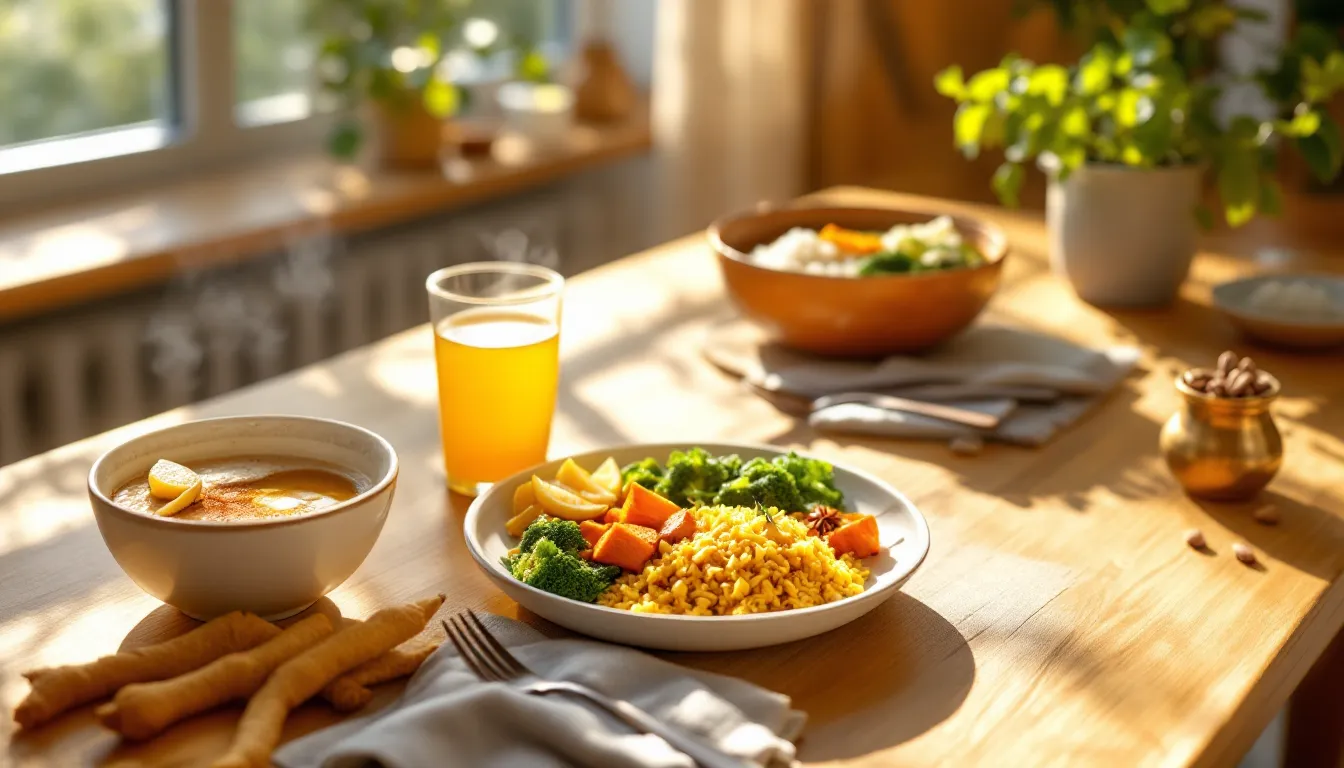
Ayurveda maps the day into cycles governed by the doshas. Each period of the day has a dominant energetic quality, and your eating rhythm works best when it honors these shifts.
Why Breakfast Should Be Light and Early
The early morning hours (roughly 6–10 AM) fall under the Kapha period. The atmosphere is cool, heavy, moist, and stable. Your body is just waking up, and your agni is still kindling, like a fire that’s been banked overnight.
This is why Ayurveda generally favors a lighter breakfast. A heavy, cold smoothie bowl or a big stack of pancakes during Kapha time can make you feel sluggish and dull rather than energized. Instead, something warm, light, and easy to digest works with your body’s natural state.
I’ve found that a small bowl of cooked grains with warming spices, a little cinnamon, some ginger, hits the sweet spot. It’s enough to gently stoke the digestive fire without overwhelming it.
If you’re a Kapha type, you might find you don’t need much breakfast at all. A cup of warm ginger water and a piece of fruit can be plenty. Vata types, on the other hand, benefit from something a bit more substantial and grounding, like a warm porridge with ghee.
Do this today: Try eating breakfast before 8 AM, keeping it warm and light. Notice how your energy feels by mid-morning compared to days when you skip breakfast or eat something heavy. Give it three days to observe a pattern. Great for Kapha and Vata types especially: Pitta types can include a bit more substance if hunger is strong.
Lunch as the Main Meal: Eating at Peak Digestive Strength
Between roughly 10 AM and 2 PM, Pitta governs the day. The sun climbs to its zenith, and your agni mirrors it, this is when your digestive fire burns hottest, sharpest, and most capable.
This is why Ayurveda considers lunch your main meal. Not dinner. Lunch.
I know, this runs counter to how most of us live. We grab something quick at our desks and then sit down to a large dinner at 7 or 8 PM. But when I flipped this pattern, the difference was remarkable. I felt lighter in the evenings, slept more soundly, and had steadier energy throughout the afternoon.
At midday, your body can handle a more complex, nourishing meal, cooked vegetables, grains, protein, healthy fats. The sharp, hot qualities of the Pitta period support the thorough breakdown of food, leaving less ama behind.
The key is to eat mindfully and sit for a few minutes afterward rather than rushing back to work. Even 5 minutes of stillness after eating gives your agni space to do its work.
Do this today: Make lunch your biggest meal for one week. Aim to eat between 11:30 AM and 1 PM. Sit down, eat without screens, and rest for 5 minutes afterward. Suitable for all constitutions, this is one of the most universal pieces of Ayurvedic eating advice.
Dinner Before Sunset: Supporting Rest and Restoration
As the sun descends, so does your digestive capacity. The evening hours transition from Vata time (2–6 PM, characterized by lightness and mobility) into Kapha time again (6–10 PM, when heaviness and stability return).
Ayurveda recommends eating dinner early, ideally before sunset or at least by 7 PM, and keeping it lighter than lunch. A warm soup, some steamed vegetables with rice, or a simple dal can nourish without burdening your system.
Why does this matter so much? Because nighttime is when your body shifts its energy from digestion to repair and restoration. If your system is still processing a heavy dinner at 10 PM, it can’t fully attend to the deeper work of tissue renewal, immune maintenance, and building ojas, that deep vitality reserve that keeps you resilient.
Late, heavy dinners also tend to produce ama. You wake up with that sticky mouth, sluggish feeling, and foggy mind. Over time, this pattern chips away at your prana (that sense of lightness and aliveness) and dims your tejas (your inner clarity and spark).
Do this today: Move dinner 30 minutes earlier than usual and reduce the portion slightly. Notice how you sleep and how you feel upon waking. Try it for five days. Especially helpful for Kapha types who feel heavy in the morning, but beneficial for everyone.
Seasonal and Circadian Eating in Ayurveda
Ayurveda doesn’t just think in terms of clock time, it thinks in terms of seasonal time, too. This is ritucharya, the wisdom of seasonal living.
In cooler, drier months (late fall and winter), Vata increases in the environment. The air is rough, cold, dry, and mobile. Your agni actually tends to be stronger during this time, the body contracts inward, concentrating its digestive fire. This is when you can naturally handle heavier, richer, oilier foods. Warm stews, root vegetables cooked in ghee, and heartier grains feel right because they counterbalance the cold and dry qualities outside.
In the hot months of summer, Pitta rises. Your agni can become overly sharp or scattered. Lighter, cooler foods, fresh fruits, cucumber, coconut water, mint, help keep that internal fire from burning too hot. Eating your main meal slightly earlier and favoring cooling qualities over heating ones supports balance.
In the damp, heavy months of late winter and spring, Kapha accumulates. Digestion can grow sluggish under all that moisture and heaviness. This is the time to favor lighter, drier, and more pungent foods. A little extra ginger, black pepper, or warming spices helps your agni cut through the seasonal fog.
The beautiful thing about this approach is that it mirrors what your body often craves naturally, we just tend to override those cravings with convenience and habit.
Do this today: Look at what season you’re in right now and ask, “Am I eating foods that balance or increase the dominant qualities around me?” Choose one seasonal adjustment, maybe swapping a cold breakfast for a warm one in winter, or choosing lighter evening meals in spring. Takes no extra time, just awareness. Appropriate for all dosha types, with extra attention for whichever dosha matches the current season.
Common Timing Mistakes That Weaken Digestion
A few patterns I see again and again, and have fallen into myself:
Eating before the previous meal is digested. Ayurveda calls this one of the primary causes of ama. When you layer new food on top of half-digested food, you dampen agni and create that heavy, sticky residue. Generally, waiting 3–4 hours between meals gives your system time to complete its work.
Skipping lunch or making it the smallest meal. This goes against the natural peak of agni. When you undereat at midday and overeat at night, you’re asking a dying fire to do the work of a blazing one.
Snacking constantly. I get it, grazing feels intuitive when you’re busy. But from an Ayurvedic perspective, each time you eat, your agni has to restart the digestive process. Constant snacking keeps the fire from ever fully completing a cycle, which leads to incomplete digestion. For Vata types, who need regularity, structured meals with minimal snacking offer much more stability than grazing.
Late-night eating. Anything consumed after about 8 PM has to be processed when your body’s intelligence is winding down toward sleep. The qualities of nighttime, heavy, cool, stable, dull, don’t support active digestion. The result? Ama, disturbed sleep, and a sluggish morning.
Do this today: Pick the one timing mistake you recognize most in your own life. Commit to adjusting it for one week, not perfectly, just more often than not. Notice what shifts. Takes zero extra time: it’s about when, not what. Relevant for all constitutions, though Kapha types will likely notice the biggest difference from eliminating late-night eating, and Vata types from establishing regularity.
Practical Tips for Aligning Your Meals With Ayurvedic Principles
Let’s get specific about food, lifestyle, and environment, what Ayurveda calls ahara (food) and vihara (lifestyle practices).
Start your morning with a glass of warm water. This gently wakes up your digestive tract and helps clear any ama that accumulated overnight. It’s a simple dinacharya (daily routine) practice that takes 30 seconds and sets a surprisingly different tone for the day.
Before lunch, take a short walk, even 5 minutes. Movement activates agni. The mobile, light qualities of gentle activity counterbalance any stagnation from sitting at a desk all morning.
At lunch, include all six tastes when you can: sweet, sour, salty, pungent, bitter, and astringent. This doesn’t mean complicated cooking, a bowl of rice (sweet), with lemon squeezed on top (sour), a pinch of salt, some sautéed greens (bitter/astringent), and a little chili or ginger (pungent) covers it.
After dinner, a gentle 10-minute walk supports digestion without overstimulating your system. Then, as part of your evening wind-down, consider a brief self-massage with warm oil on the soles of your feet. This is grounding, calming, and helps Vata settle before sleep.
Now, here’s the personalized piece, because in Ayurveda, one size never fits all.
If you’re more Vata: Favor warm, oily, grounding foods at every meal. Cooked vegetables over raw. Ghee and sesame oil are your friends. Eat at consistent times, this is honestly the most powerful thing you can do. Avoid skipping meals or eating on the go: the mobile, erratic quality of rushed eating aggravates Vata directly. Try setting three meal alarms on your phone for one week and eating within 15 minutes of each. This is especially for Vata-dominant people who tend to forget meals.
If you’re more Pitta: Favor cooling, slightly sweet or bitter foods, especially in summer. Coconut, cilantro, fennel, and sweet fruits are wonderful. Don’t skip lunch, your strong agni will turn on your stomach lining if it doesn’t have food to work with. Avoid overly spicy or fermented foods at dinner: the sharp, hot qualities can disturb sleep. Try adding a teaspoon of cooling fennel seeds steeped in water after lunch. Takes 2 minutes. Perfect for Pitta types who get acid reflux or feel overheated after eating.
If you’re more Kapha: Favor lighter, drier, and warming foods. Reduce heavy grains, dairy, and sweets, especially in the morning and evening. Your agni benefits from a little challenge, pungent spices like ginger, black pepper, and turmeric help stoke a sluggish fire. Avoid eating out of boredom or emotional comfort: Kapha digestion doesn’t recover quickly from unnecessary meals. Try making dinner your simplest, smallest meal of the day, a bowl of spiced soup is plenty. This one’s a game-changer for Kapha types who wake up feeling heavy.
Do this today: Choose the dosha guidance that resonates most with your patterns and try one recommendation for a week. 5–10 minutes of daily adjustment. Not ideal for anyone currently following a specific therapeutic diet without practitioner guidance.
What Modern Science Says About Meal Timing and Ayurveda
It’s worth noting, briefly, that modern research is catching up to what Ayurveda has been saying for centuries.
Chrononutrition, a relatively new field, studies how the timing of food intake interacts with our circadian rhythms. Researchers have found that our digestive enzyme production, insulin sensitivity, and gut motility all peak around midday and decline in the evening. Sound familiar?
Studies on time-restricted eating have shown that consuming the majority of calories earlier in the day is associated with better metabolic markers, improved sleep quality, and healthier weight management. A 2023 review published in Cell Metabolism confirmed that aligning food intake with circadian biology improves glucose regulation and reduces inflammatory markers.
This isn’t surprising from an Ayurvedic standpoint. The link between the sun’s position and agni’s strength isn’t metaphor, it reflects a genuine biological rhythm that modern science is now measuring with different tools.
But here’s where Ayurveda offers something science alone doesn’t: personalization based on constitution. Chrononutrition tells us that timing matters. Ayurveda tells us how to adjust timing based on who you are, your dosha, your current state of balance, and the season you’re living in.
Do this today: If you’re someone who responds well to data and evidence, explore chrononutrition research alongside your Ayurvedic practice. Let the science strengthen your confidence in what the tradition teaches. Takes as much time as you’d like to give it. Helpful for skeptics and science-minded readers who are new to Ayurveda.
Conclusion
The most liberating thing I’ve learned from Ayurvedic eating basics is this: you don’t need to overhaul your entire diet overnight. You just need to start paying attention to when your body is ready to receive food, and respect that.
Small shifts add up. Eating a bigger lunch and a smaller dinner. Having warm water in the morning. Noticing whether your hunger is real or just a habit. These aren’t dramatic changes, but over weeks and months, they rebuild your agni, reduce ama, and gradually restore that feeling of lightness and clarity that Ayurveda calls the hallmarks of genuine health, strong ojas, bright tejas, and steady prana.
You don’t have to do this perfectly. Ayurveda isn’t about perfection. It’s about awareness, rhythm, and a willingness to listen.
I’d love to hear what resonates with you. Have you noticed a difference when you shifted your meal times? What’s one small change you’re willing to try this week? Drop a comment below or share this with someone who’s been struggling with post-meal sluggishness, it might be exactly what they need to hear.
This is general education, not medical advice. If you’re pregnant, managing a condition, or taking medication, check with a qualified professional.