




What Is Food Combining and Why Does It Matter?
At its core, food combining is the practice of pairing foods that digest well together and separating those that don’t. Ayurveda has taught this for thousands of years under the concept of viruddha ahara, incompatible food combinations. The idea isn’t about restriction. It’s about respecting the way your digestive fire processes different qualities.
Every food carries specific qualities, some are heavy, some light. Some are hot, others cool. Some are oily, others dry. When you combine two foods with wildly different qualities or different digestive timelines, your agni has to split its attention. Think of it like asking someone to write an email and have a phone conversation at the same time. Technically possible, but neither gets done well.
This matters because when digestion is incomplete, it creates what Ayurveda calls ama, a sticky, dull residue that clogs your channels and dampens your vitality. Ama is that coated tongue in the morning, that heaviness that lingers hours after eating, that foggy feeling you can’t quite shake. Food combining is really about preventing ama before it forms.
The Science Behind Digestive Efficiency
From an Ayurvedic standpoint, digestive efficiency depends on the strength and clarity of your agni. Different foods stoke agni differently. Fruit, for instance, is light and moves through quickly. Cheese is heavy and dense, requiring slow, sustained digestive effort. When you eat them together, the fruit gets trapped behind the slow-moving cheese, and instead of being digested, it begins to ferment. That fermentation creates ama, and you feel it as gas, bloating, or sourness.
Each dosha experiences this differently. If you’re more Vata, naturally light, dry, and mobile, your agni tends to be irregular, flickering like a candle in the wind. Bad food combinations hit you as bloating, gas, and anxiety. Pitta types have strong, sharp agni, so they might push through poor combos for a while, but eventually it shows up as acid reflux, loose stools, or skin inflammation. Kapha types, with their cool, heavy, stable nature, tend toward slow digestion already. Incompatible foods make everything heavier, creating that stuck, lethargic feeling and excess mucus.
The takeaway isn’t that you need to become obsessive. It’s that understanding your digestive patterns gives you a real advantage.
Do this today: After your next meal, sit quietly for five minutes and notice how your belly feels, heavy or light, settled or churning. This takes just five minutes and works for anyone regardless of dosha or experience level. If you’re dealing with acute digestive illness, focus on working with a practitioner first.
The Core Rules of Food Combining
Ayurveda’s food combining principles are built on the logic of samanya-vishesha, like increases like, and opposites create balance. When two foods share similar post-digestive effects and compatible qualities, they support agni. When they clash, agni weakens and ama accumulates. Here are the three most practical guidelines I come back to again and again.
Fruits: Why They Should Be Eaten Alone
Fruit is light, subtle, and fast-moving. Most fruits pass through the stomach in 20 to 30 minutes. Compare that with grains or proteins, which can take two to four hours. When fruit sits on top of heavier food, it can’t move at its natural pace. It ferments, creating a sour, hot, slightly sharp environment that disturbs Pitta and creates gas for Vata types.
This is why Ayurveda recommends eating fruit alone, ideally in the morning or as a mid-afternoon snack, at least 30 minutes before or after other food. Melons in particular are best eaten solo because of their extremely watery, cool quality. Mixing melon with anything heavier is one of the fastest routes to ama I’ve seen in practice.
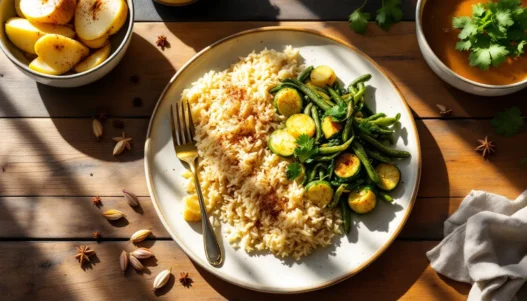
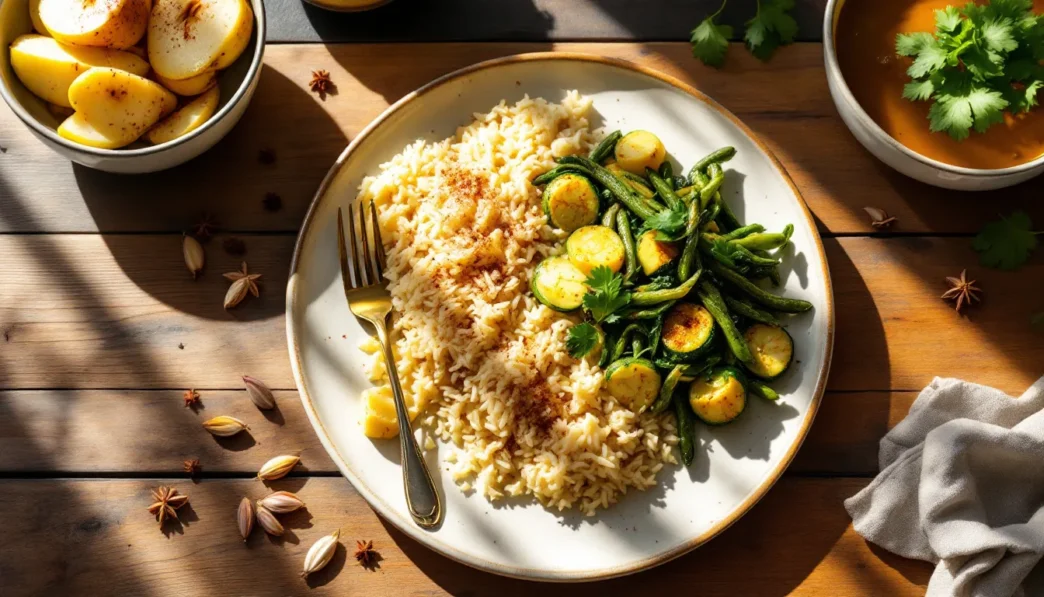
One exception: cooked fruit in small amounts (like stewed apples with cinnamon) combines reasonably well with warm grains because cooking changes its qualities, making it heavier and more stable.
Do this today: Try eating your next serving of fruit on its own, about 30 minutes before breakfast. Notice if your mid-morning energy feels cleaner. This works well for all dosha types. If you have blood sugar concerns that require eating protein with every meal, modify this with guidance from your healthcare provider.
Proteins and Starches: The Golden Rule of Separation
This is the one that surprises people most. That classic combination, rice and beans, bread and meat, pasta and cheese, is considered heavy and conflicting in Ayurveda. Here’s why: proteins (like beans, eggs, or meat) are heavy, warm, and require sharp, intense digestive fire. Starches (like rice, bread, or potatoes) are heavy too, but they need a different kind of digestive environment, more sweet, more alkaline.
When you combine heavy protein with heavy starch, your agni has to work overtime processing two dense substances simultaneously. The result is often a dull, sluggish feeling after meals. The food sits longer, agni weakens, and ama forms.
Now, I want to be honest, this is one of the harder rules to follow perfectly in modern life. I don’t stress about it at every meal. But when I’m feeling heavy or my digestion seems off, separating proteins and starches is the first thing I adjust. The difference in how I feel is noticeable within a day or two.
Do this today: Pick one meal this week where you pair your protein with vegetables instead of a starch. See how your belly responds. This is especially helpful for Kapha types who already tend toward heaviness. Not recommended as a rigid rule for very thin Vata types who need grounding, a lighter grain alongside protein may still be appropriate.
Vegetables: The Universal Pairing Partner
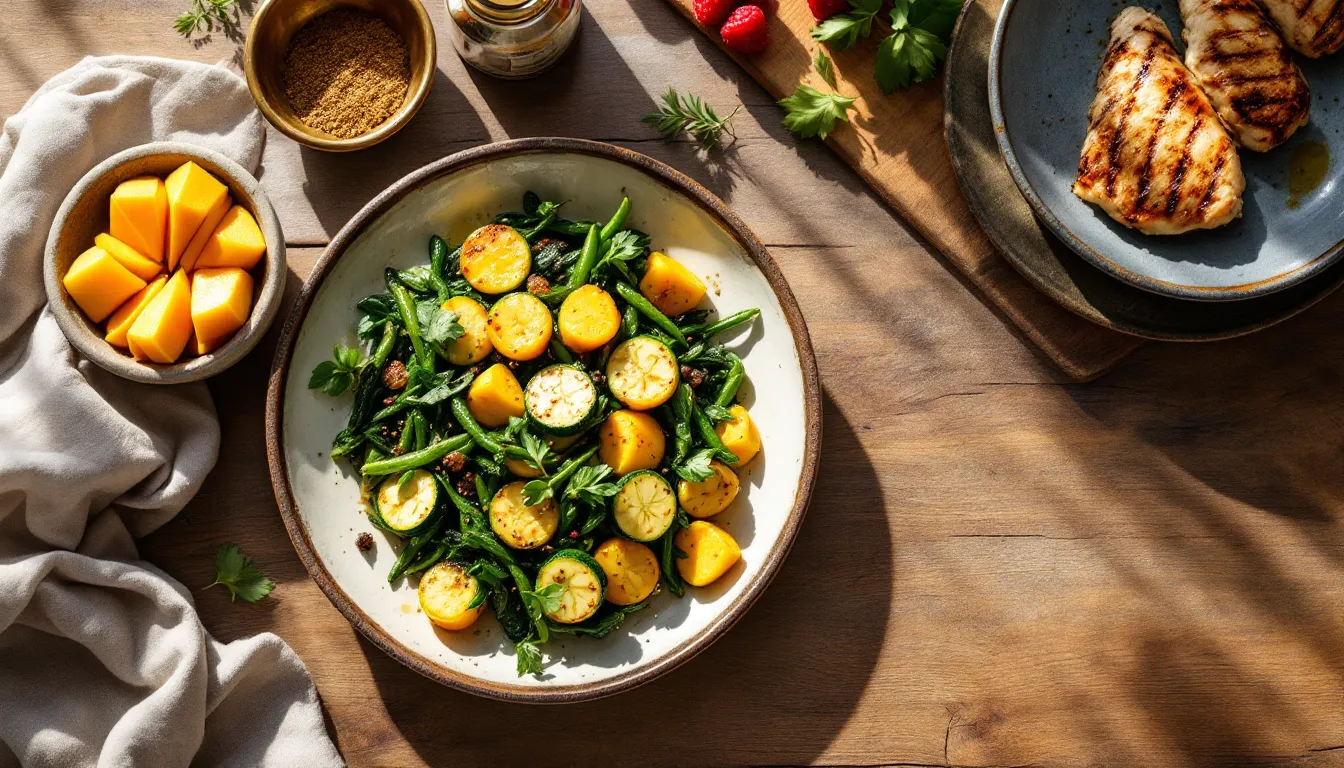
Here’s the good news: most cooked vegetables combine well with nearly everything. They’re the peacemakers of the plate. Non-starchy vegetables like zucchini, leafy greens, green beans, and asparagus carry a balance of light and slightly moist qualities that support agni without overwhelming it.
Vegetables act as a bridge. They add fiber and subtle moisture that helps both proteins and starches move through more smoothly. In Ayurveda, this bridging quality helps prevent the sharp, hot buildup that comes from concentrated protein meals and the heavy, dull stagnation that comes from starch-heavy meals.
Raw vegetables, though, are a different story. They’re rough, dry, cool, and light, which can aggravate Vata and weaken agni during cooler months. Lightly cooking vegetables with a bit of ghee or oil adds the oily, warm quality that makes them easier to digest.
Do this today: Add a generous side of sautéed vegetables to your main meal today. Even a simple pan of zucchini with ghee and cumin takes under ten minutes. This is great for all three doshas. If you have difficulty digesting fibrous vegetables, start with well-cooked, peeled options.
A Simple Food Combining Chart for Everyday Meals
I know charts can feel clinical, but this one is genuinely useful to keep on your fridge until the principles become second nature. Think of it as a quick-reference guide rooted in Ayurvedic quality logic.
| Food Group | Combines Well With | Best Kept Separate From |
|---|---|---|
| Fruits | Eat alone (or with other similar fruits) | Dairy, grains, proteins, vegetables |
| Grains (rice, oats, bread) | Non-starchy vegetables, ghee, mild spices | Heavy proteins (beans, meat, cheese) |
| Proteins (beans, lentils, eggs, meat) | Non-starchy vegetables, warming spices | Starches, milk, fruit |
| Dairy (milk) | Drink warm and alone, or with sweet spices | Fish, fruit, sour foods, beans |
| Vegetables (non-starchy) | Grains, proteins, healthy fats | Fruit, milk |
A few notes from my own experience. Milk is one of the trickiest. Ayurveda considers milk a complete food with sweet, cool, heavy, and oily qualities. It’s best digested warm, on its own, or with sweet spices like cardamom or cinnamon, never with sour fruits, salty foods, or fish. That banana smoothie with yogurt and milk? Ayurvedically, it’s a recipe for ama, even though it looks like a health-food poster.
Ghee, on the other hand, is remarkably compatible. Its subtle, oily quality kindles agni gently and helps carry nutrients into deeper tissues. A small amount with grains or vegetables is almost always a good call.
Do this today: Print or screenshot this chart and refer to it when planning your next two or three meals. Spend a few seconds before eating just checking your plate. This takes almost no extra time and helps anyone who’s new to food combining. If you have specific food allergies or sensitivities, adjust the chart to your needs, the principle of compatible qualities still applies.
What a Typical Day of Food Combining Looks Like
Let me give you a glimpse of what a day might look like when you weave food combining into normal life. This isn’t a prescription, it’s a starting place.
Morning. You wake up, scrape your tongue (a simple dinacharya practice that removes overnight ama), drink a cup of warm water, and have fruit about 30 minutes before anything else. Maybe it’s a ripe pear or some stewed apples with a pinch of cinnamon. The light, warm quality of cooked fruit gently wakes up your agni without drowning it.
Midday. This is when agni is at its peak, the sun is highest, and your digestive fire mirrors that rhythm. This is where you eat your biggest, most complex meal. A plate of rice with sautéed vegetables and ghee, or a protein like lentil soup with a generous side of greens. Pick one anchor, grain or protein, and build around it with vegetables and spices.
Evening. Lighter is better here. Agni is winding down as the day cools. A warm vegetable soup, some kitchari (one of Ayurveda’s most perfectly combined foods, rice and split mung together are considered an exception because of their compatible qualities), or simply sautéed vegetables with a small amount of grain. Avoid heavy proteins, cheese, or raw salads at night.
What connects all of this to your deeper vitality? When agni works efficiently, it doesn’t just digest food, it produces ojas, the subtle essence of deep immunity and contentment. Strong agni also supports tejas, the metabolic spark behind clear thinking and sharp perception. And when prana, your life force, isn’t bogged down processing incompatible food, you feel it as steady energy, calm breathing, and a nervous system that isn’t constantly on edge.
Do this today: Try structuring just your midday meal with these principles for the next three days. Make lunch your biggest meal and keep dinner light. This rhythm suits all doshas and takes no extra prep time. If you work night shifts or have an unusual schedule, adapt the principle, eat your largest meal during your most active hours.
Common Food Combining Mistakes to Avoid
I’ve made most of these myself, so no judgment here.
Mixing fruit into meals. That fruit salad after dinner, banana in your oatmeal, or mango sliced over yogurt, these are some of the most common ama-producing combinations. The light, mobile nature of fruit clashes with the heavier, slower nature of grains and dairy.
Drinking cold milk with salty or sour food. Milk’s sweet, cool, heavy qualities curdle in the presence of sour or salty tastes. Fish with cream sauce, cereal with milk followed by orange juice, these create a contradictory environment that confuses agni.
Eating too many heavy foods together. A plate loaded with cheese, bread, pasta, and meat is an enormous ask for your digestive fire. Everything is dense, heavy, and slow. Even strong Pitta agni can stumble under this kind of load, and for Kapha types, it’s a guaranteed path toward congestion and dullness.
Snacking constantly. This is less about combining and more about timing, but it connects directly. Every time you eat, agni activates to process that food. If you eat again before the previous meal is digested, the new food mixes with partially processed food, and ama forms. Ayurveda suggests leaving three to five hours between meals so agni can complete its work.
Relying on raw food, especially in cold weather. Raw foods carry cold, rough, dry, and light qualities. In winter, a season already dominated by those same qualities, raw food intensifies the imbalance and weakens agni further. Cooking adds warmth, moisture, and stability.
Do this today: Identify one habit from this list that shows up in your routine and gently experiment with changing it for a week. Even one shift, like moving fruit to its own time slot, can create noticeable results. This works for all doshas. If you feel confused about where to start, pick the simplest change and build from there.
How to Transition Without Overthinking It
Here’s where I want to be really straightforward: perfectionism around food combining can create its own kind of stress. And stress, that mobile, dry, sharp Vata quality, disrupts agni just as much as a bad combination does.
So start small. Pick one rule that feels doable. Maybe it’s eating fruit alone. Maybe it’s not having milk with your dinner. Whatever it is, try it for a week and pay attention. Not in a rigid, journaling-every-symptom way. Just notice. Does your belly feel lighter? Do you have more energy in the afternoon? Is that post-lunch brain fog lifting?
Then add another layer. Separate your proteins and starches at one meal. Cook your vegetables instead of eating them raw. Drink warm water with meals instead of iced drinks (cold liquid douses agni like water on a campfire).
The Ayurvedic approach is always about building gradually. Your body, and your agni, respond better to gentle, consistent shifts than to dramatic overhauls. This is especially true for Vata types, who tend toward enthusiasm followed by burnout.
Personalizing Food Combining: If You’re More Vata, Pitta, or Kapha
If you’re more Vata, your digestion is variable, sometimes strong, sometimes weak. You tend toward gas, bloating, and irregular appetite. Focus on warm, oily, grounding combinations. Cooked grains with ghee and gentle spices like ginger and cumin are your friends. Avoid raw foods, dry crackers alone, and too much variety on one plate, Vata’s mobile quality gets overstimulated by too many flavors at once. Try having a simple, warm, well-combined lunch as your anchor meal for the next five days. This is ideal for Vata-dominant types, and those with anxiety around food may want to work with a practitioner for extra support.
If you’re more Pitta, your agni is strong and sharp, so you might get away with poor combos for a while. But the heat accumulates. Watch for acid reflux, skin flare-ups, or irritability after meals, those are signs your sharp agni is creating sharp ama. Favor cool, slightly sweet combinations. Rice with coconut and cilantro. Cucumber alongside grain dishes. Avoid combining too many pungent spices with sour foods (chili and tomato together, for instance, is a Pitta fire-starter). Try replacing one spicy, complex meal this week with something simpler and cooler. This is especially supportive in summer or for anyone noticing signs of excess heat. If you have inflammatory digestive conditions, consult your practitioner before making changes.
If you’re more Kapha, heaviness and slowness define your digestive experience. You thrive on lighter, warmer, drier combinations. Favor steamed vegetables with pungent spices like black pepper, ginger, and turmeric. Avoid heavy dairy, large portions of starch, and cold, dense desserts after meals. Kapha benefits most from spacing meals further apart (four to five hours) and keeping combinations simple. Try having your dinner be just a bowl of warm vegetable soup for the next four evenings. This works well for Kapha-dominant types and anyone feeling sluggish or congested. If you’re underweight or have low energy, a lighter approach may not be right, seek personalized guidance.
Do this today: Read through the three profiles above and identify which one resonates most with your digestion right now. Follow that one set of suggestions for a week. This takes no extra time, just awareness.
What Experts and Critics Say About Food Combining
I’d be doing you a disservice if I didn’t acknowledge the debate. Modern nutritional science generally holds that the human digestive system can handle mixed meals, that enzymes for protein, fat, and carbohydrate digestion all function simultaneously. And from a purely biochemical standpoint, that’s true.
But Ayurveda isn’t working at only the biochemical level. It’s looking at the qualitative experience of digestion, how food feels, how it moves, how it transforms, and what residue it leaves behind. When Ayurveda says milk and fish don’t combine, it’s not claiming your stomach will explode. It’s saying the post-digestive effects of those two foods create conflicting qualities in the tissues over time, potentially showing up as skin issues, subtle inflammation, or low-grade ama that you learn to live with but don’t have to.
Some modern practitioners and integrative nutritionists do acknowledge that simplified meals are easier to digest, that fruit ferments when trapped behind slower foods, and that individual tolerance matters enormously. The gap between Ayurveda and modern nutrition may be narrower than it appears, they’re often describing the same phenomena through different lenses.
Listening to Your Body Over Any Rulebook
This is the part I care about most. No chart, no rule, no ancient text replaces your own direct experience. Ayurveda itself teaches pratyaksha, direct perception, as a valid form of knowledge.
If a combination that’s “wrong” on paper consistently makes you feel great, light, and energized, pay attention to that. And if a combination that looks fine on paper leaves you foggy and bloated every single time, trust that signal.
Your agni is unique. Your constitution is unique. The goal isn’t perfect adherence to a rulebook, it’s developing a relationship with your own digestion so you can make choices that support your vitality.
This is general education, not medical advice. If you’re pregnant, managing a condition, or taking medication, check with a qualified professional.
Do this today: The next time you eat, pause before your first bite and ask yourself, “How does my digestion feel right now, ready and light, or still processing?” Let that one question guide your portion and combination choices. This practice takes seconds, works for everyone, and builds the kind of body awareness that no chart can replace. If you’re recovering from disordered eating patterns, approach food combining gently and with professional support.
Conclusion
Food combining isn’t about adding more rules to an already complicated relationship with eating. It’s about simplifying. It’s about giving your digestive fire the space and clarity to do what it already knows how to do.
When agni burns cleanly, everything downstream improves. Your ojas deepens, you feel more resilient, more content, more steady. Your tejas sharpens, decisions feel clearer, your skin glows, your eyes are brighter. Your prana flows freely, you breathe more easily, sleep more soundly, and wake up actually feeling rested.
I didn’t come to food combining through willpower or discipline. I came to it because I was tired of feeling heavy after meals I thought were healthy. And the shifts, when I finally made them, were surprisingly gentle. A piece of fruit eaten on its own. A simpler plate at dinner. Warm water instead of iced. Small things. But they added up.
Start wherever feels easy. Trust what your belly tells you. And remember, Ayurveda has always been less about perfection and more about paying attention.
I’d love to hear from you. What food combination have you noticed affects your digestion the most? Drop a comment or share this with someone who’s been struggling with post-meal heaviness. Sometimes the simplest shifts make the biggest difference.