






Why Heels Become Dry, Cracked, and Rough
From an Ayurvedic perspective, cracked heels are a classic sign of excess Vata, the energy of air and space that governs movement, dryness, and lightness in the body. When Vata accumulates, its dry, rough, mobile qualities start showing up in the tissues. And the feet, being the farthest point from the heart and digestive center, are often the first place those qualities land.
But it’s not just about Vata. Pitta types can develop cracked heels when excess heat dries out the natural oils in the skin, think of how a hot, sharp wind parches the earth. And Kapha types, while naturally oily, can still develop thick, heavy calluses when sluggish circulation fails to nourish the skin properly. The heel becomes dense and dull rather than supple.
What’s actually happening at a deeper level is a breakdown in how nourishment reaches your outermost tissue layer, what Ayurveda calls rasa dhatu (the plasma and fluid layer that feeds everything else). When your digestive fire, or agni, is uneven, the nutrients from your food don’t get fully processed. Undigested residue, called ama, can clog the subtle channels, and the tissues farthest from your core get shortchanged. Your heels dry out not because you forgot lotion, but because nourishment simply isn’t arriving.
This also impacts your vitality triad. When ama builds up and agni weakens, ojas, that deep reserve of resilience and moisture, starts to diminish. Prana, the life force that keeps circulation and sensation sharp, becomes sluggish in the extremities. And tejas, the metabolic spark that helps your skin regenerate, dims. The result? Heels that feel lifeless and look it too.
Common Causes Beyond Dry Skin
It’s easy to blame dry skin, but the root often goes deeper. Standing for long hours increases the downward, heavy quality of Kapha in the feet while also aggravating Vata’s rough, mobile nature through repetitive impact. Wearing open-backed shoes exposes heels to dry, cool air, qualities that directly increase Vata.
Dehydration is another big one. Not just from not drinking enough water, but from consuming too many dry, light foods (crackers, raw salads, popcorn) without balancing them with warm, oily nourishment. Seasonal shifts matter too, cold, dry, windy weather in fall and winter naturally drives Vata upward, and the heels pay the price.
Then there’s stress. When your nervous system runs hot and fast, your body diverts resources inward, away from skin and extremities. Chronic stress dries you out from the inside.
Do this today: Spend two minutes tonight pressing your thumb into the center of each heel. Notice how it feels, is it dry, rough, warm, cool, thick? That observation alone starts to tell you which dosha pattern is dominant. Takes about 2 minutes. Great for anyone, regardless of constitution.
Exfoliation Techniques That Actually Work
Here’s where most people start, and honestly, it’s not a bad place, as long as you do it gently. In Ayurveda, exfoliation is a way to clear the gross, rough, dull buildup on the skin so that oils and moisture can actually penetrate.
The principle at work is “like increases like, and opposites bring balance.” Rough, dry, accumulated skin is heavy and dull. To move it, you introduce gentle friction, something with a slightly rough quality, but you pair it with warmth and moisture so you’re not just adding more dryness.
A simple approach I love: mix coarse rice flour or ground oats with a little warm sesame oil and a pinch of turmeric. The rice flour provides that mild abrasive quality, the sesame oil is warm and deeply penetrating (it counters Vata’s cold, dry nature beautifully), and turmeric brings a subtle sharpness that supports skin clarity.
Gently massage the paste into damp heels using circular motions for about three to five minutes. The key word is gentle. If you’re scrubbing hard enough to turn your skin pink and irritated, you’ve introduced too much of the sharp, hot quality, which can actually aggravate Pitta and cause inflammation.
For Kapha-type roughness, where the skin feels thick, dense, and almost waxy rather than dry and cracked, you might try a slightly more stimulating scrub. Ground chickpea flour (called besan) mixed with a little lemon juice and honey works well. The chickpea flour is light and dry, which helps cut through that Kapha heaviness, while the lemon adds a mild sharpness to break down dead skin.
Avoid metal foot files on deeply cracked skin. They’re too sharp, too fast, and they can worsen fissures.
Do this today: Try the rice flour and sesame oil scrub on damp feet, 3–5 minutes, two or three times a week. Best for Vata and Pitta types. If you have open cracks or bleeding skin, skip exfoliation and go straight to moisturizing, your skin needs soothing, not friction.
DIY Foot Soaks for Deep Softening
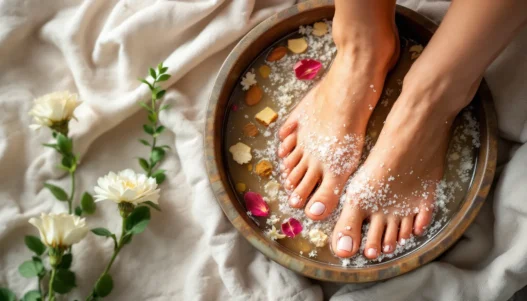
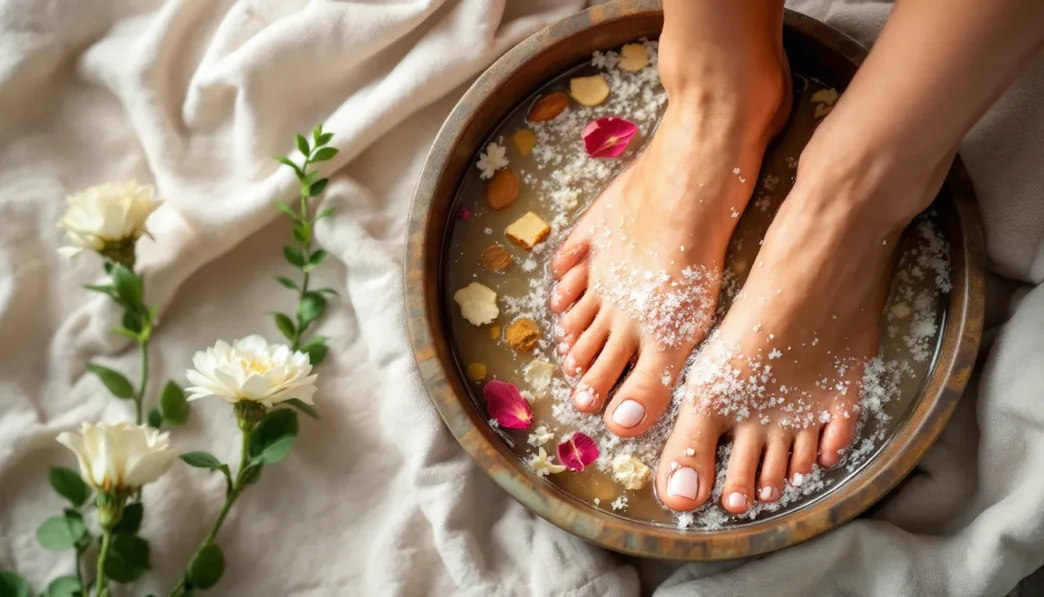
There’s something almost ritualistic about soaking your feet at the end of the day. And from an Ayurvedic standpoint, it makes real sense, you’re introducing warm, moist, heavy qualities directly into tissue that’s become cold, dry, and rough. That’s the principle of opposites at work again.
A warm foot soak also gently encourages circulation in the extremities, which helps prana, that vital life-force energy, flow more freely into the feet. Think of it as reopening channels that have become a bit stagnant.
The best time for a foot soak is early evening, roughly an hour or two before bed. This aligns with the natural Kapha time of evening (around 6–10 PM), when the body is already winding down and receptive to grounding, nurturing practices. Soaking your feet during this window also calms Vata and prepares your nervous system for sleep.
Best Soak Ingredients and How to Use Them
Start with comfortably warm water, not scalding. You want it warm enough to feel soothing, not so hot that it strips natural oils (that would aggravate Pitta’s sharp, hot quality).
Add a tablespoon of rock salt or Himalayan pink salt. Salt is warm, heavy, and slightly oily in quality, and it helps draw out stiffness while softening the skin’s outer layer.
A splash of raw milk or a tablespoon of ghee in the water adds a smooth, cool, nourishing quality that deeply supports the skin. This is especially wonderful for Vata types whose heels crack easily in cold weather.
For Pitta-predominant folks who notice their heels get red, warm, or inflamed along with the dryness, try adding a few drops of coconut oil (which is cool in nature) and some fresh rose petals or a splash of rose water. That cool, smooth combination counterbalances Pitta’s heat.
For Kapha types dealing with thick, stubborn calluses, add a tablespoon of raw apple cider vinegar and a few slices of fresh ginger. The ginger introduces warmth and sharpness that helps break down that dense, heavy buildup, while the vinegar is light and penetrating.
Soak for about 15–20 minutes. Then gently pat dry and immediately apply oil (more on that next).
Do this today: Try a warm salt and ghee foot soak tonight, 15–20 minutes, during early evening. Wonderful for all dosha types, especially Vata. If you have diabetes or nerve damage in your feet, check water temperature carefully and consult your healthcare provider first.
Natural Moisturizers and Overnight Treatments
This is where real, lasting change happens. Exfoliation and soaking prepare the skin, but it’s the oiling and moisturizing that actually rebuilds the tissue’s integrity. In Ayurveda, oil is considered one of the most powerful tools for pacifying Vata, it’s warm, heavy, smooth, and oily, which directly opposes every quality that causes dry, cracked heels.
The practice of applying oil to the feet, a simplified version of what’s called padabhyanga, is actually one of the most valued self-care habits in classical Ayurveda. It’s said to support not just the feet but also vision, the nervous system, and deep sleep. I’ve noticed that when I oil my feet consistently before bed, I genuinely sleep more soundly.
The key is to apply oil to slightly damp skin (right after your soak or a shower) so the moisture gets sealed in. Massage each foot for about five minutes, paying extra attention to the heels and the arcs. Use firm but comfortable pressure. Then put on a pair of soft cotton socks and let the oil work overnight.
Nourishing Oils and Butters for Cracked Heels
For Vata-type dryness, rough, cracking, thin skin that feels papery, sesame oil is your best friend. It’s warm, heavy, and deeply penetrating. You can infuse it with a little ashwagandha powder or a few drops of lavender for extra grounding.
For Pitta-type heels that run warm or look inflamed, reach for coconut oil or ghee. Both are cool, smooth, and deeply soothing. Ghee in particular has a subtle quality that helps it penetrate into deeper tissue layers. A thin layer of pure ghee on cracked heels overnight can work wonders.
For Kapha types, mustard oil or safflower oil works well, they’re lighter and slightly warming, which prevents that heavy, sluggish feeling Kapha skin can develop. You don’t need a thick layer: a moderate amount massaged in with vigorous strokes is ideal.
Shea butter and cocoa butter are heavier options that work beautifully for severely cracked heels, especially in cold, dry seasons. They create a protective, smooth barrier while the skin heals underneath.
Do this today: After tonight’s foot soak, apply warm sesame oil (or the oil that matches your type) to both feet, massage 5 minutes per foot, and wear cotton socks to bed. Everyone can try this. If you have a sensitivity to any oil, patch-test first on a small area.
Daily Habits to Prevent Roughness From Returning
Softening your heels once feels great. Keeping them soft? That’s where daily rhythm, what Ayurveda calls dinacharya, comes in.
The reason rough heels keep coming back for most people is that the underlying dryness pattern hasn’t changed. You’re still eating the same dry, light, irregular diet. Still skipping hydration. Still standing on hard floors in unsupportive shoes. The Vata qualities keep accumulating, and your agni, your digestive and metabolic fire, keeps struggling to send nourishment all the way to the skin.
So let’s build two small habits into your morning and evening.
Morning: Before your shower, take 60 seconds to dry-brush or gently massage your feet with a few drops of oil. This stimulates circulation, encourages lymph flow, and introduces warmth and oiliness right at the start of your day. Even on busy mornings, 60 seconds is doable.
Evening: Make the foot oil and cotton sock ritual a non-negotiable part of your wind-down. It doesn’t need to be elaborate, just a thin layer of oil, a brief massage, socks on. This single habit, done consistently, does more for cracked heels than any weekly treatment.
Hydration matters too, but in Ayurveda, how you hydrate is as important as how much. Warm or room-temperature water sipped throughout the day supports agni and helps the body absorb moisture into tissues. Cold water, chugged quickly, can actually dampen agni and reduce your body’s ability to nourish the skin. Try keeping a thermos of warm water with a slice of ginger nearby.
And please, eat some healthy fats. Ghee, olive oil, avocado, soaked almonds. These provide the raw material your body needs to produce ojas, that deep inner moisture that keeps skin supple from the inside out. A teaspoon of ghee with lunch is one of the simplest ways to support skin health across your whole body.
Do this today: Choose one morning habit (dry brushing or quick oil massage) and one evening habit (foot oiling with socks) and commit to seven days. Takes about 2 minutes morning and 6 minutes evening. Suitable for everyone.
When to See a Professional About Persistent Heel Problems
I want to be straightforward here. Most dry, rough heels respond beautifully to consistent natural care. But some situations call for professional guidance.
If your heel cracks are deep enough to bleed, if you notice signs of infection (redness spreading outward, warmth, swelling, or discharge), or if the dryness persists even though weeks of dedicated care, it’s time to see a healthcare provider. Persistent heel fissures can sometimes indicate underlying conditions like thyroid imbalances, diabetes, or skin conditions that need targeted treatment.
From an Ayurvedic perspective, deeply chronic dryness that won’t budge even though proper oiling, dietary changes, and routine adjustments may point to a deeper dhatu-level imbalance, meaning the dryness has moved beyond the surface skin into deeper tissues. A qualified Ayurvedic practitioner can assess your pulse, your constitution, and your current state of balance to offer personalized herbal support and panchakarma therapies that go beyond what self-care can accomplish.
Also consider professional help if you’re someone who is diabetic or has nerve damage in the feet. Reduced sensation means you might not feel when a crack has become a wound, and infections can develop quickly.
There’s no shame in seeking support. In fact, knowing when to ask for help is itself a form of self-awareness, which Ayurveda deeply values.
Do this today: If your cracks bleed regularly, look inflamed, or haven’t improved after 3–4 weeks of consistent care, schedule a visit with your doctor or a trained Ayurvedic practitioner. This guidance is particularly important for those managing diabetes, circulation issues, or autoimmune conditions.
Conclusion
Your feet do so much for you, often with very little acknowledgment. Rough, cracked heels aren’t a failure of your body, they’re a signal, a quiet request for more warmth, more nourishment, more attention.
What I love about approaching foot care through an Ayurvedic lens is that it takes something we usually think of as purely cosmetic and connects it to the whole picture: how well you’re digesting, how steady your energy is, whether your body’s deepest reserves of vitality, ojas, tejas, prana, are being replenished or depleted.
You don’t need a complicated routine. A warm soak in the evening. Oil on your feet before bed. A little ghee in your food. Paying attention to the seasons and adjusting, lighter oils in spring, richer ones in winter. These small acts, done with consistency and a little bit of care, can transform not just your heels but the way you relate to your own body.
Start tonight. Pick one thing from this article that feels doable and try it for a week. Notice what shifts.
I’d love to hear how it goes for you. What does your foot care routine look like right now? Drop a thought in the comments or share this with someone who’s been struggling with dry, cracked heels, sometimes knowing there’s a gentler way forward makes all the difference.
What’s the one small change you’re most curious to try first?