







Why Your Body Responds to Stress in Minutes — And How to Reverse It Just as Fast
Here’s something I find genuinely reassuring: the same speed at which stress hijacks your body is the same speed at which you can begin to reverse it. Your nervous system doesn’t need hours to shift gears. It can start in a single breath cycle.
In Ayurveda, stress is primarily a Vata disturbance. Vata is the principle of movement and air, and when it gets aggravated, you feel it as racing thoughts, shallow breathing, restlessness, a dry mouth, maybe that cold-hands sensation. The qualities involved are light, dry, mobile, cool, and subtle. Everything speeds up and scatters. Your digestive fire, what Ayurveda calls agni, gets blown around like a candle flame in the wind. When agni is erratic, you don’t metabolize well. Not just food, but experiences, emotions, information. Undigested residue, called ama, starts to accumulate. You might notice it as brain fog, a coated tongue in the morning, heaviness after eating, or that “wired but tired” feeling.
Pitta types experience stress differently, more as heat, irritability, sharp focus turning into sharp frustration. Their agni burns too hot, scorching rather than digesting. And Kapha types may feel stress as withdrawal, heaviness, or emotional numbness, their agni dampened under a wet blanket of inertia.
But here’s the Ayurvedic insight that matters most right now: opposites restore balance. If stress is light, mobile, dry, and sharp, then the remedy is heavy, stable, moist, and soft. That’s not poetry, it’s a practical framework. Every technique I’ll share below works because it introduces the opposing quality to what stress is doing inside you.
When you calm Vata’s erratic movement, agni steadies. When agni steadies, ama clears. And when ama clears, your deeper vitality, what Ayurveda calls ojas (resilience), tejas (clarity), and prana (life energy), can flow again. That’s the chain reaction. And it can begin in under five minutes.
Do this today: Notice which stress qualities show up most for you, racing mind (mobile), tight jaw (sharp), dry mouth (dry), heat in your face (hot). Just noticing is the first step. Takes about 60 seconds. Good for anyone, regardless of body type.
Breathing Techniques That Calm Your Nervous System Almost Instantly

Breath is prana, literally. In Ayurveda, working with the breath isn’t a hack or a trick. It’s the most direct way to influence your life force and settle Vata’s chaotic mobility. When breath becomes long, smooth, and rhythmic, it introduces the stable, heavy, and slow qualities that directly oppose stress.
I think of it this way: your breath is the one autonomic function you can consciously override. That makes it a bridge between the part of your nervous system that panics and the part that can rest.
Physiological Sigh: The Fastest Reset
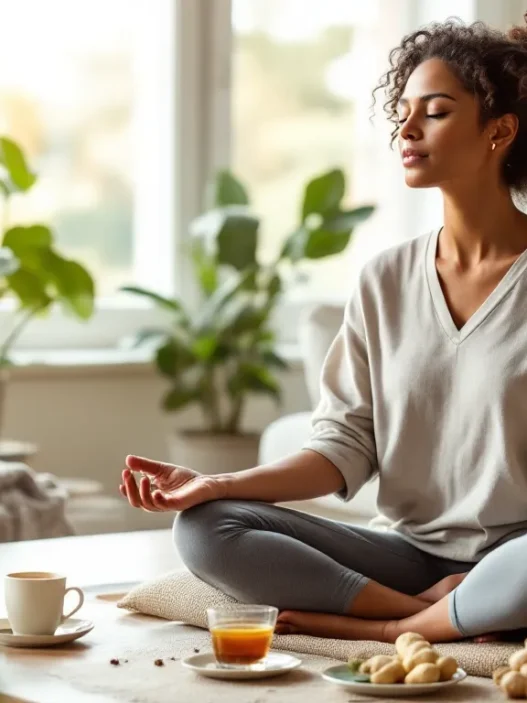
This is the technique I used in the parking lot. Two quick inhales through the nose, the second one stacked on top of the first to fully inflate the lungs, then one slow, extended exhale through the mouth.
From an Ayurvedic view, the double inhale brings prana deep into the chest, expanding the subtle channels. The long exhale is where the magic lives, it’s heavy, slow, downward-moving, which pacifies Vata’s upward-scattering tendency. Ayurveda calls this downward energy “apana vayu,” and when it’s flowing well, you feel grounded and present.
One to three rounds is usually enough. You can feel the shift in your heart rate within 30 seconds, that’s not an exaggeration. It works because the extended exhale activates the calming branch of your nervous system.
Do this today: Try three physiological sighs right now. Takes about 30 seconds. Works for all types, but especially powerful for Vata-dominant folks who feel scattered and ungrounded.
Box Breathing for Focus and Control
Box breathing is beautifully simple: inhale for a count of four, hold for four, exhale for four, hold for four. Repeat.
What I love about this from an Ayurvedic standpoint is the rhythm and stability it creates. Vata is irregular by nature, variable appetite, inconsistent energy, scattered attention. Box breathing imposes a steady, predictable pattern, which is one of the most effective ways to soothe Vata. The holds introduce a moment of stillness, which counters the mobile quality of stress.
For Pitta types who run hot under pressure, box breathing also works well because the even pace cools that sharp, driven intensity. It gives the mind something structured to do, which Pitta appreciates.
Four rounds takes about two minutes. If holding the breath feels uncomfortable (common for Vata types), try shortening the holds to two counts and building up.
Do this today: Set a timer for two minutes and do box breathing. Best done in the late afternoon (Vata time, 2–6 PM) when stress and restlessness tend to peak. Appropriate for everyone. If you have anxiety or panic disorders, skip the breath holds and just focus on extending the exhale.
Teas and Warm Drinks That Trigger a Relaxation Response
There’s a reason you instinctively reach for something warm when you’re stressed. Warmth is one of the direct antidotes to Vata’s cool, dry, mobile nature. A warm drink introduces moist, heavy, smooth, and warm qualities, and when you sip it slowly, you’re also practicing a micro-ritual of presence that steadies your agni.
In Ayurveda, how you consume something matters almost as much as what you consume. Sipping warm liquid slowly, with attention, is itself a form of medicine.
Best Herbal Teas for Rapid Stress Relief
Not all teas work the same way, and the best choice depends on your constitution and which dosha is flaring.
Ashwagandha tea (or warm ashwagandha milk) is one of the most revered Ayurvedic herbs for stress. It’s warm, heavy, oily, and sweet, almost the exact opposite of Vata’s qualities. It nourishes ojas directly, which is why it’s considered a rejuvenative. It’s especially grounding for people who feel depleted, anxious, or “running on empty.”
Brahmi tea supports mental clarity and cools Pitta-type stress, the kind that shows up as frustration, perfectionism, or a brain that won’t stop analyzing. Brahmi is cool and subtle, supporting tejas (metabolic clarity) without overheating.
Tulsi (holy basil) tea is one I personally drink almost daily. It’s a beautiful adaptogen in Ayurvedic terms, it opens the subtle channels, supports healthy prana flow, and has a gentle warming quality that aids digestion without aggravating Pitta too much.
For Kapha-dominant stress, that sluggish, I-can’t-get-off-the-couch heaviness, try ginger tea with a pinch of black pepper. It’s sharp, hot, and light, which penetrates Kapha’s dullness and rekindles agni.
Do this today: Brew one cup of herbal tea suited to your dominant stress pattern. Sip it slowly over 5–10 minutes without your phone. Works for all types when matched appropriately. Avoid highly stimulating teas (strong ginger, black pepper) if you’re already overheated or Pitta-aggravated.
How Warmth and Ritual Amplify the Calming Effect
I want to be honest, the tea itself is only part of why this works. The ritual matters enormously.
When you boil water, select your herb, pour it, hold the warm cup, inhale the steam, and sip deliberately, you are doing something profoundly Ayurvedic. You’re engaging your senses one at a time. Touch (warm cup), smell (herbal steam), taste (the flavor), even sound (the kettle). This sensory engagement pulls scattered prana back into the body. It’s the opposite of doom-scrolling, which sends prana outward through the eyes into a thousand fragmented streams.
Ayurveda calls this kind of mindful engagement a form of pratyahara, withdrawal of the senses from overstimulation. And it’s one of the most effective ways to calm Vata and protect ojas.
The warmth itself supports agni. A stressed digestive fire is often cold and erratic, warm liquids act like a gentle hand cupped around a flickering flame, steadying it.
Do this today: Make your next cup of tea a full sensory experience, no screens, no multitasking, just you and the cup. Even three minutes of this can shift your state. Good for everyone. Especially nourishing if you tend toward Vata-type overstimulation.
Nervous System Hacks You Can Do Anywhere
I use the word “hacks” loosely, these aren’t shortcuts in the dismissive sense. They’re specific actions that communicate safety to your nervous system using physical input. Ayurveda would frame each of these as introducing a quality that opposes the aggravated dosha.
Vagus Nerve Stimulation Techniques
The vagus nerve is the longest cranial nerve in your body, running from brainstem to gut. Stimulating it activates your rest-and-digest response, which, in Ayurvedic terms, means you’re supporting the downward and inward flow of prana and calming Vata’s erratic upward movement.
A few things that work: humming or chanting (the vibration in your throat directly stimulates the vagus nerve, this is part of why mantra repetition has been used for thousands of years), gentle pressure on the outer ear (the vagus nerve has a branch there), and splashing cold water on your face while holding your breath briefly.
Humming is my favorite because it’s so quiet and portable. You can do it in a bathroom stall at work. The vibration is gross, heavy, and stable, perfect Vata antidotes. It also stimulates agni in a subtle way by bringing awareness and warmth to the throat and chest.
Do this today: Try humming on your exhale for one minute, long, low tones. You’ll feel a gentle buzz in your chest and face. Great for all types. Especially helpful for Vata and Kapha. Pitta types might prefer the cooling face splash instead.
Cold Exposure and the Dive Reflex
This one’s interesting. When cold water hits your face, especially the area around your eyes and cheeks, it triggers what’s called the dive reflex. Heart rate drops, breathing slows, blood redirects to your core. It’s an ancient mammalian survival response.
From an Ayurvedic lens, cold is a quality that directly reduces Pitta’s heat and can jolt Kapha out of stagnation. For Pitta-type stress, anger, burning frustration, overheating, a brief cold splash is remarkably effective. It’s cool, sharp, and mobile, which cuts through Pitta’s accumulated heat.
But here’s the nuance: Vata types need to be careful with cold. If you’re already feeling cold, dry, and anxious, splashing cold water on your face might increase those qualities. For Vata, a warm washcloth on the face or a warm oil application to the temples works better, smooth, oily, and warm to counterbalance.
Do this today: Splash cold water on your face and hold your breath for 10–15 seconds. Takes 30 seconds. Best for Pitta-dominant stress. Vata types, try warm water or warm oil on the temples instead. Avoid if you have heart conditions or are very cold-natured.
Grounding and Sensory Reset Methods
Grounding is one of the most Vata-pacifying things you can do. In Ayurveda, Vata’s seat is in the lower body, the colon, pelvis, legs, and feet. When Vata rises upward (as it does during stress), bringing awareness downward is the correction.
Try pressing your feet firmly into the floor and really feeling the contact. Or place both hands flat on a table and notice the texture, temperature, and solidity. This is introducing the heavy, stable, gross, and rough qualities through direct physical sensation.
Another technique I use: I hold something cold and textured, a stone, a set of keys, and describe it silently to myself. “Cool, smooth, heavy, small.” This pulls prana out of the spinning mind and into the body’s direct sensory experience.
Do this today: Stand up, press your feet into the ground, and take five slow breaths while feeling the floor beneath you. One minute. Good for everyone, but especially Vata types who feel ungrounded. No contraindications.
How to Stack These Remedies Into a 5-Minute Routine
Alright, here’s where it all comes together. You don’t need to do everything above. You need a simple, stackable sequence that fits into five minutes and addresses the Ayurvedic chain: settle Vata, steady agni, clear the beginnings of ama, and restore prana flow.
I call this my “parking lot protocol” (because that’s genuinely where I developed it), but you can do it at your desk, in your kitchen, or standing in line at the grocery store. Well, maybe a modified version for the grocery store.
Minute 1: Three physiological sighs. Hands on your belly or thighs. Feel the exhale.
Minutes 2–3: Box breathing, four rounds. If you have a warm drink nearby, hold it between rounds. The warmth in your hands is grounding and introduces that smooth, warm, heavy quality.
Minutes 4–5: Sip your tea slowly. If no tea is available, hum on your exhale for one minute, then press your feet into the floor and take five grounding breaths.
That’s it. Five minutes. You’ve addressed Vata’s mobility (through slow breath), its coolness and dryness (through warmth), its subtlety and scattering (through grounding). You’ve given agni a chance to stabilize and created a small window where prana can settle inward instead of rushing outward.
The best time to do this? Ayurveda’s daily rhythm gives us a clue. Vata time runs from 2–6 PM, that afternoon window where focus dissolves and anxiety can creep in. Building this five-minute routine into your mid-afternoon is like putting a guardrail on the part of the road where people always skid.
Morning Vata time (2–6 AM) is when many of us wake with racing thoughts. If that’s you, try a shortened version, three sighs and a few grounding breaths, before reaching for your phone.
Do this today: Try the full five-minute stack once this afternoon. Adjust the components based on your dosha (see below). Works for all types. If you only have two minutes, do the sighs and grounding breaths, they’re the backbone.
Building a Long-Term Habit From Quick Stress Relief Wins
Quick wins matter, but Ayurveda is a long game. The whole system is built on the understanding that small, consistent actions reshape your body and mind over time. This is the principle behind dinacharya (daily routine) and ritucharya (seasonal routine).
So how do you turn a five-minute stress relief practice into something that actually changes your baseline?
Your Daily Routine Anchors
Pick two daily habits from the practices above and tie them to something you already do. This is the Ayurvedic approach to habit, linking new rhythms to existing ones so they become effortless.
For me, it’s morning grounding breaths while the kettle boils (I’m already standing there, waiting) and afternoon tea ritual around 3 PM, right when Vata time is peaking. Those two anchors have done more for my stress resilience than any supplement or app.
The morning practice supports a stable start, you’re setting the tone for agni and prana before the day’s demands scatter them. The afternoon practice is restorative, you’re catching Vata’s rise before it builds momentum.
Consistency is more important than duration. Five minutes daily will do more than a 30-minute session once a week. Ayurveda has always said this: regularity pacifies Vata. Irregularity aggravates it. The rhythm itself is medicine.
If You’re More Vata
You feel stress as anxiety, scattered thoughts, cold hands, trouble sleeping, maybe a fluttery feeling in your chest. Your agni tends to be variable, sometimes hungry, sometimes not. Ama shows up as gas, bloating, or a spacey feeling.
Your priority is warmth, weight, and stability. Favor ashwagandha tea or warm spiced milk. Do your breathing practices slowly, extend the exhale, and try to breathe through your nose. Use grounding techniques often. Oil your feet with warm sesame oil before bed, this is one of the most powerful Vata-calming practices in all of Ayurveda, and it takes two minutes.
Do this today: Warm sesame oil foot massage before bed, followed by three slow exhales. Takes 3 minutes. Ideal for Vata types. Not recommended if you have open wounds on your feet or are allergic to sesame.
If You’re More Pitta
Your stress looks like irritability, overheating, sharp criticism (of yourself or others), acid reflux, or that “I’m going to explode” feeling. Your agni runs hot, you digest quickly but can burn through your reserves. Ama for you often shows up as acidity, inflammation, or skin flare-ups.
Your priority is cooling, softening, and slowing down. Brahmi or peppermint tea works better than warming herbs. Use the cold water face splash. Box breathing is great for you because the structure appeals to your natural intensity, but the pace forces you to slow down. Avoid competitive approaches to relaxation, yes, that’s a thing for Pitta types.
Try moonlight walks in the evening. Seriously. The cool, soft, lunar quality is one of the best Pitta balancers, and it costs nothing.
Do this today: Cold water face splash plus two minutes of box breathing. Takes 3 minutes. Best for Pitta types. Avoid if you’re already very cold or run Vata-dominant.
If You’re More Kapha
Stress for you often looks like withdrawal, oversleeping, emotional eating, heaviness, or a feeling of being stuck. Your agni tends to be slow and sluggish, ama accumulates as lethargy, congestion, or a thick coating on your tongue.
Your priority is lightness, warmth, and movement. Ginger tea with black pepper is your friend. The physiological sigh is good, but add a brisk walk or some light movement afterward, Kapha needs physical activation to shift. Humming works well for you because the vibration cuts through Kapha’s dull, heavy quality.
Don’t let your stress relief practice become another form of sitting still. For Kapha, the remedy for stagnation is gentle but deliberate action.
Do this today: Ginger tea followed by a 5-minute brisk walk outside. Takes about 10 minutes total. Best for Kapha types. Avoid the strong spices if you’re running Pitta-hot or have acid reflux.
Your Seasonal Adjustment
Ayurveda recognizes that stress isn’t static, it shifts with the seasons because the qualities in your environment change.
In late fall and winter (Vata season, cold, dry, windy), stress tends to feel more anxious and scattered. Emphasize the warming, grounding practices: warm teas, oil massage, heavy blankets, extended exhales. This is the season to double down on routine and regularity.
In summer (Pitta season, hot, sharp, intense), stress shows up as burnout, anger, and overextension. Shift toward cooling teas (brahmi, mint, rose), cold water splashes, and slower-paced breathing. Avoid intense exercise as a stress outlet, it adds heat to heat.
In spring (Kapha season, cool, damp, heavy), stress may manifest as lethargy and resistance to change. Bring in stimulating teas, more vigorous breathing practices, and movement-based stress relief.
Do this today: Identify which seasonal quality is dominant right now and adjust one element of your stress relief routine accordingly. Takes 1 minute of reflection. Relevant for everyone.
The Modern Connection
I want to briefly acknowledge something: modern neuroscience is increasingly confirming what Ayurveda observed through direct experience. The vagus nerve research, the studies on breath-rate and heart rate variability, the data on warm liquids and parasympathetic activation, it all maps remarkably well onto the dosha-quality-agni framework.
But I don’t think Ayurveda needs modern validation to be useful. What I appreciate about the Ayurvedic lens is that it gives you a why that’s rooted in your own sensory experience. You don’t need a study to know that warmth calms you, or that grounding your feet changes your state, or that a sharp gust of cold air on a stressed-out afternoon either wakes you up or makes you feel worse depending on your constitution. Ayurveda trusts your body’s intelligence. And these quick stress relief remedies work precisely because they speak your body’s language.
Do this today: After trying any of the techniques above, pause and notice what changed, in your breath, your temperature, your mental clarity. That noticing builds your own inner Ayurvedic awareness over time. Takes 30 seconds. Good for everyone.
Conclusion
Five minutes isn’t a long time. But it’s enough to shift the direction of your entire afternoon, your evening, your sleep quality, your next conversation. Ayurveda teaches that small, aligned actions, taken at the right time, with the right quality, create ripples far bigger than their size.
You don’t need to overhaul your life to feel less stressed. You need a few breaths that go deep enough. A warm cup held with intention. A moment where your feet feel the ground. That’s where ojas rebuilds, tejas clarifies, and prana settles back into the steady rhythm it was designed for.
I’d love to hear what works for you. Have you tried any of these stress relief remedies? Do you notice a difference based on the time of day or the season? Drop a comment below or share this with someone who could use a calmer afternoon.
And here’s the question I’ll leave you with: what if the opposite of stress isn’t relaxation, but presence?