








Why Oil Massage Works for Both Skin and Stress Relief
In Ayurveda, the skin isn’t just a barrier, it’s a living organ of perception, deeply connected to your nervous system and to the Vata dosha, which governs movement, dryness, and all things subtle and mobile. When Vata rises (from stress, travel, late nights, cold weather, or just living in a fast-paced world), the qualities it brings are dry, rough, light, cool, and mobile. You feel it as anxiety, restlessness, flaky skin, tension in the jaw or shoulders, and that buzzy, ungrounded feeling at the end of a long day.
Oil is Vata’s direct opposite. It’s warm, heavy, smooth, stable, and nourishing. When you apply warm oil to your skin with slow, intentional strokes, you’re not just moisturizing. You’re introducing a set of qualities that directly counterbalance the nervous, scattered energy that builds up over the course of a day. That’s the Ayurvedic principle of “opposites restore balance” at work, and it’s why self-oil massage feels so immediately calming.
This matters for your deeper vitality, too. In Ayurveda, we talk about three subtle essences: ojas (your deep resilience and immunity), tejas (the clarity and metabolic spark behind your glow), and prana (your life force and nervous system steadiness). When Vata is high and unchecked, prana becomes erratic, tejas dims, and ojas slowly depletes. Self-oil massage helps restore all three, gently, nightly, without drama.
The Science Behind Touch and Nervous System Regulation
Here’s something I find fascinating: the skin and the nervous system develop from the same embryonic tissue. They’re literally made of the same stuff. So when you touch your own skin with warmth and care, you’re communicating directly with your nervous system in a language it understands.
Ayurveda recognized this thousands of years ago. The tradition describes skin as one of the primary seats of Vata, and touch as Vata’s sense organ. Slow, warm, oily touch calms the mobile and erratic qualities of disturbed Vata. You can actually feel it: the heart rate drops, the breathing deepens, the mind quiets.
Modern stress physiology supports this too, gentle self-touch activates parasympathetic pathways, which is just a clinical way of saying it shifts you from “go” mode into “rest and repair” mode. But in Ayurveda, the explanation goes deeper. It’s not just about relaxation. It’s about grounding prana, stabilizing the nervous system, and creating the conditions for your body’s innate intelligence to do its healing work overnight.
How Oils Nourish and Repair Skin Overnight
Your skin does most of its repair work while you sleep. In Ayurvedic terms, the night belongs to Kapha time (roughly 6 PM to 10 PM) and then deeper rest through the Pitta window (10 PM to 2 AM), when your body’s internal metabolic fire, your agni, shifts to cellular repair and tissue nourishment.
When you apply oil before bed, you’re giving your skin raw material to work with during this natural repair cycle. The oil penetrates through the subtle channels, softening dry and rough qualities, and supporting the nourishment of rasa dhatu, the first tissue layer in Ayurveda, which governs hydration, satisfaction, and the initial glow of healthy skin.
If your digestive fire has been weak or irregular (maybe you’ve been eating late, skipping meals, or eating under stress), undigested residue, called ama, can accumulate. Ama is sticky, heavy, and dull. It clogs channels and makes the skin look lifeless, congested, or puffy. Oil massage, especially when done with the right oil for your constitution, helps move ama out of the subtle channels while simultaneously feeding the tissues that create genuine radiance.
Do this today: Try warming a small amount of sesame or coconut oil between your palms and massaging it into your face and feet for just two minutes before bed. Notice how you feel in the morning. This is appropriate for most people. If you have active skin infections, inflamed breakouts, or a fever, wait until those calm down before starting.
Choosing the Right Oil for Your Skin Type
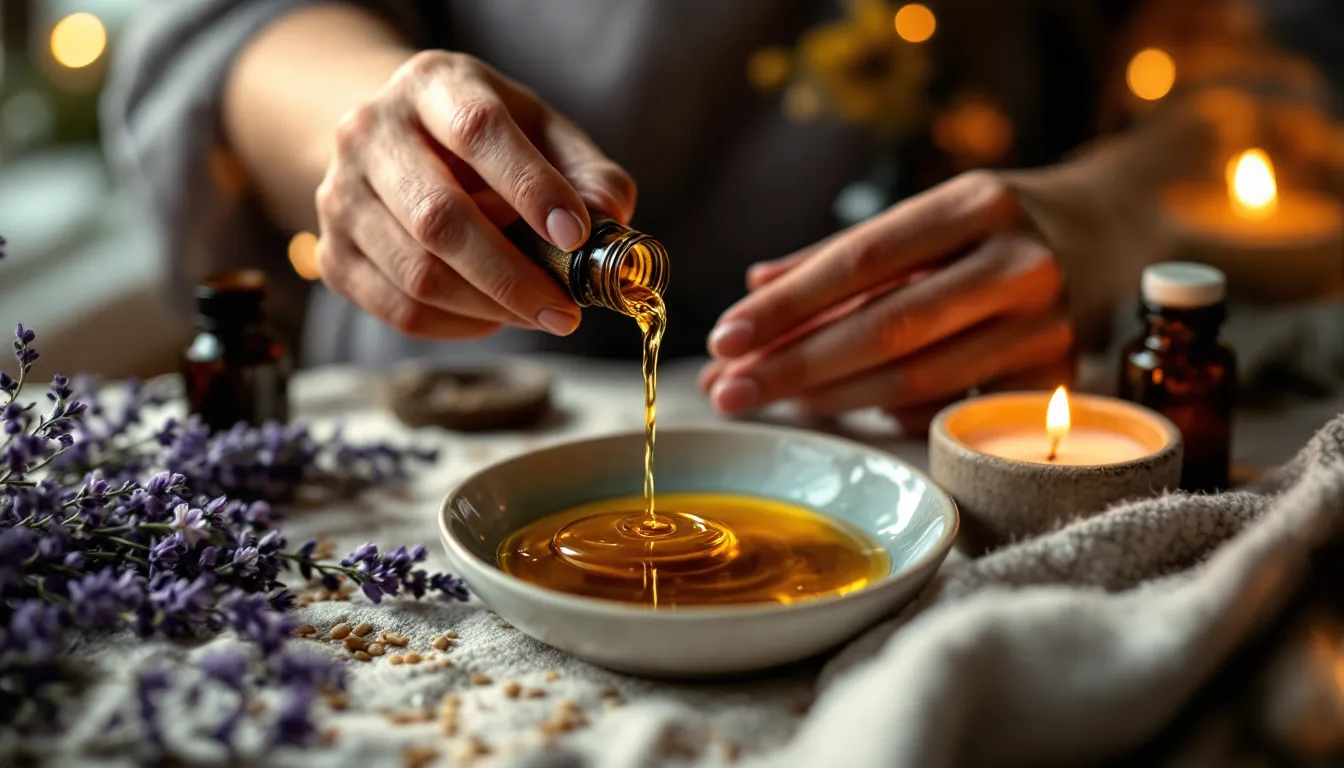
This is where personalization becomes everything. In Ayurveda, there’s no single “best” oil, because your skin reflects your unique doshic balance, and what soothes one person’s skin can aggravate another’s.
The key is matching the oil’s qualities to what your skin and constitution actually need right now. If your skin is dry and rough (Vata pattern), you need something warm, heavy, and deeply nourishing. If your skin runs hot, reactive, or easily irritated (Pitta pattern), you need something cool and soothing. And if your skin tends toward oiliness, congestion, or sluggishness (Kapha pattern), you want something lighter and a bit stimulating.
Best Oils for Dry, Oily, and Sensitive Skin
If your skin is dry, thin, or rough, this is a Vata pattern. Sesame oil is your best friend here. It’s warm, heavy, and deeply penetrating. It calms the dry, light, mobile qualities that make Vata skin feel papery or tight. I like to warm it gently before applying, not hot, just comfortably warm to the touch.
If your skin is sensitive, flushed, or reactive, that’s Pitta talking. Coconut oil or sunflower oil work beautifully because they carry cool, smooth, and soothing qualities. These offset the sharp, hot, and slightly oily nature of aggravated Pitta. If you’re prone to redness or inflammation, coconut oil in particular can feel like a cool balm.
If your skin is oily, thick, or prone to congestion, that’s a Kapha imbalance. You might think oil is the last thing you need, but the right oil actually helps. Try a light, warming oil like safflower or a small amount of mustard oil blended with something gentler. These are light and slightly sharp, which helps move the heavy, dense, sticky qualities that lead to Kapha-type congestion.
And here’s something I want to gently note: many people are a blend of doshas, so trust what you observe in your own skin more than any label. Your skin in winter might be very different from your skin in summer.
Do this today: Identify whether your skin currently feels more dry, hot, or congested. Choose one oil to try for the next five nights. This works for anyone who doesn’t have an allergy to the oil in question, do a small patch test on your inner wrist first if you’re unsure. Takes about one minute to decide and prep.
How to Perform a 5-Minute Self-Oil Massage Before Bed
I want to keep this really simple, because the moment it feels complicated, you won’t do it. And a two-minute massage you actually do is infinitely more valuable than a twenty-minute ritual you skip.
Start by warming about a teaspoon of oil in your palms. Rub your hands together until the oil feels pleasantly warm. Take one slow breath. That breath is part of the practice, it signals to your nervous system that you’re shifting gears.
Step-by-Step Face Massage Technique
Begin at the center of your forehead. Using your fingertips, make small, gentle circles outward toward your temples. There’s no need to press hard, the skin on your face is delicate, and Ayurveda emphasizes that the qualities of touch matter as much as the technique. Keep it smooth, slow, and stable.
Move down to your cheekbones. Use your ring fingers (they naturally apply the lightest pressure) and trace from the sides of your nose outward along the cheekbones toward your ears. This follows the natural flow of lymph and helps reduce puffiness, that subtle, gross heaviness that accumulates around the face when channels are a bit sluggish.
Then massage your jawline. If you carry tension here (and most of us do, it’s a classic Vata holding pattern), spend an extra thirty seconds with slow, firm circles along the jaw muscle. You might feel a surprising release.
Finish with your ears. In Ayurveda, the ears are a seat of Vata, and gently massaging the outer ear and earlobe with oily fingers is one of the quickest ways to calm an overactive mind. I do this every single night. It’s become my favorite part.
Extending the Ritual to Your Neck and Shoulders
If you have a couple of extra minutes, bring the oil down to your neck. Use long, downward strokes from just below your ears to your collarbone. The neck carries a lot of mobile, tense Vata energy, especially if you spend your day looking at screens.
For your shoulders, use your opposite hand and make broad, sweeping strokes from the neck outward to the shoulder joint. Then switch sides. Circular motions over the shoulder joints themselves help nourish the joints, which Ayurveda considers another Vata-vulnerable area.
The whole thing, face, ears, neck, shoulders, takes about five minutes. Maybe less, once it becomes familiar.
Do this today: Set out your oil bottle on your nightstand tonight as a visual reminder. Practice just the face portion (about two to three minutes). This is for anyone who wants to wind down before sleep. If you have active cystic acne or open wounds on the face, focus on the neck and shoulders instead and consult a professional for the face.
When and How Often to Practice for Best Results
Timing matters in Ayurveda, not in a rigid, stressful way, but because your body has natural rhythms and working with them amplifies everything you do.
The ideal window for this self-oil massage is during the Kapha time of evening, roughly between 6 PM and 10 PM. This is when the body’s energy naturally becomes heavier, slower, and more grounded, qualities that support winding down. Massaging with warm oil during this window aligns with the body’s own downward, settling momentum. You’re swimming with the current instead of against it.
Specifically, I find the sweet spot is about 20 to 30 minutes before you plan to fall asleep. This gives the oil time to absorb, lets your nervous system register the calming input, and creates a clear boundary between “day” and “rest.”
As for frequency: daily is beautiful if you can manage it. But even three to four nights a week creates a meaningful shift. Consistency matters more than perfection here. If you do it five minutes a night, four nights a week, that’s over 17 hours of nourishing self-care over a year. The effects on your skin, your sleep quality, and your overall sense of steadiness accumulate quietly and powerfully.
One thing I’d gently discourage: doing this practice if you’ve just eaten a large, heavy meal. Your agni, your digestive fire, is busy processing food, and the body’s attention is directed inward toward the gut. Wait at least an hour after eating. Similarly, if you’re feeling feverish or very congested, it’s better to skip and rest.
Do this today: Pick a consistent time this week, ideally 20 to 30 minutes before sleep, and try three consecutive nights. Note any changes in how easily you fall asleep or how your skin feels in the morning. This practice is for anyone without active fever or acute illness. Time commitment: five minutes per session.
Common Mistakes That Reduce the Benefits
I’ve made most of these myself, so no judgment here.
Using cold oil. This is probably the most common one. Cold oil increases the cool and heavy qualities in a way that can actually aggravate Kapha and fail to calm Vata. Warm oil penetrates better, feels more soothing, and carries its nourishing properties deeper into the skin’s subtle channels. You don’t need a fancy oil warmer, just rub it between your palms for 20 seconds or hold the bottle under warm running water.
Rushing through it. If you’re massaging your face in 30 seconds while mentally running through tomorrow’s to-do list, you’re missing the nervous system piece entirely. The quality of your attention is part of the treatment. Slow, present touch calms prana and grounds Vata. Hurried touch just adds more mobile, erratic energy.
Using the wrong oil for your current state. I mentioned this earlier, but it’s worth repeating. Sesame oil in the peak of summer for someone with Pitta-dominant skin? That can create excess heat, sharp, hot qualities that lead to irritation or breakouts. Pay attention to the season and your skin’s current behavior, not just your general dosha type.
Applying too much oil. More isn’t better. A thin, warm layer is plenty for the face. Excess oil just sits on the surface, potentially clogging channels and creating a kind of heavy, sticky dullness, essentially mimicking ama on the skin’s surface. A teaspoon for the face and another for neck and shoulders is a good guideline.
Skipping it when you “don’t have time.” Even one minute of warm oil on your feet and ears before bed is better than nothing. The perfection trap is real, and it’s very Vata, scattered energy that can’t settle on “good enough.”
Do this today: Warm your oil before applying tonight, and set a gentle intention to stay present during the massage, even for just two minutes. This applies to everyone practicing self-oil massage. Takes zero extra minutes, just a shift in approach.
Building a Sustainable Nighttime Ritual Around Self-Massage
The real power of this practice isn’t in any single night. It’s in what happens when your body starts to expect it, when your nervous system recognizes the scent of warm oil, the feeling of your own hands on your skin, and the slow breath that opens the ritual. Over time, these become signals. Your body learns: this means we’re winding down now.
In Ayurveda, this is part of dinacharya, the ideal daily rhythm that supports your body’s natural intelligence. Two evening habits that pair beautifully with self-oil massage: dimming lights after sunset (reducing the sharp, stimulating quality of bright screens and overhead lighting) and sipping warm water or a calming tea about an hour before bed (which gently stokes agni and supports the body’s nighttime cleansing processes).
These aren’t random wellness tips. They work because they reduce the qualities that keep Vata and Pitta elevated at night, bright, sharp, mobile, hot, and replace them with their opposites: soft, dull, stable, cool.
Now, let me speak to each constitution, because how you build this ritual will look a little different depending on your makeup.
If you’re more Vata, you benefit the most from this practice, and you’re also the most likely to forget it or do it inconsistently. Try anchoring it to something you already do, like brushing your teeth. Use warm sesame oil. Make your strokes slow and grounding, with a little extra attention to your feet, ears, and scalp. Your environment matters too: a warm room, soft lighting, maybe a blanket nearby. The one thing to consider avoiding? Doing this while listening to a stimulating podcast or scrolling your phone. Vata needs quiet input. Try this for five minutes, ideally nightly. Especially supportive for anyone who runs cold, feels anxious at bedtime, or has dry, rough skin.
If you’re more Pitta, your skin probably responds quickly and visibly to this practice, which is motivating. Use coconut oil or sunflower oil at room temperature or slightly cool. Your massage can be a bit lighter and quicker, Pitta constitutions don’t usually need as much heavy, slow input as Vata. Focus on the forehead and temples, where Pitta-type tension accumulates. Your environment benefits from being cool and uncluttered. The one thing to consider avoiding? Very hot oil or overly vigorous rubbing, which adds heat and sharpness. Try this for three to four minutes, four to five nights a week. Particularly helpful for anyone with reactive, flushed, or warm skin.
If you’re more Kapha, you might feel like this practice makes you too oily or heavy. The key is using a light oil (safflower works well) and keeping the massage more stimulating, slightly brisker strokes, a bit more pressure. Focus on areas prone to puffiness: the jawline, under the eyes, the neck. A slightly warm room is fine, but avoid making it overly cozy to the point of sluggishness. The one thing to consider avoiding? Thick, heavy oils like straight sesame in large amounts, especially in spring when Kapha is naturally elevated. Try this for three to five minutes, three to four nights a week. Great for anyone who wakes up puffy or feels heavy-headed in the morning.
For the seasonal adjustment: as we move into colder, drier months (late autumn and winter), everyone benefits from slightly heavier, warmer oils and longer massage sessions. The cold and dry qualities of the season increase Vata across the board, and your skin needs more nourishment to compensate. In warmer, more humid months, lighten the oil, use less of it, and consider shorter sessions. In the damp heaviness of early spring, a lighter oil with a bit of warming quality (like a drop of essential oil of ginger mixed into safflower) can help counter Kapha’s seasonal rise.
Do this today: Choose one small anchor habit (dimming lights, warm water, or brushing your teeth) and attach your oil massage to it tonight. Try this for one week and notice the cumulative effect. This works for everyone, just adjust the oil and intensity for your constitution. Five to seven minutes total, including prep.
Conclusion
There’s something quietly radical about placing your own warm, oiled hands on your face at the end of a long day. It’s not dramatic. It doesn’t require special equipment or a complete lifestyle overhaul. But it communicates something profound to your body: I’m paying attention. I’m taking care of you.
In Ayurveda, this kind of consistent, gentle nourishment is how ojas, that deep well of vitality, immunity, and inner glow, gets rebuilt. Not through extreme protocols or expensive products, but through small, warm, daily acts of care that honor your body’s own intelligence.
I hope you’ll try this tonight. Start with two minutes. See how it feels. And if something shifts, in your skin, in your sleep, in the way your evening feels, let that be your guide.
I’d love to hear from you. What does your current nighttime ritual look like, and what’s one small thing you’d be willing to add? Drop a thought in the comments or share this with someone who could use a calmer, softer evening.
This is general education, not medical advice. If you’re pregnant, managing a condition, or taking medication, check with a qualified professional before starting a new practice.