







Why Healthy Skin Starts From the Inside Out
In Ayurveda, the skin isn’t treated as a separate organ with its own isolated problems. It’s understood as one of the body’s outermost tissue layers, and it’s nourished last. That means the quality of what you eat, how well you digest it, and how efficiently nutrients reach your deeper tissues all determine what your skin looks like on any given Tuesday morning.
Let me break this down simply. Your body has a digestive intelligence called agni. When agni is strong, food gets broken down completely, nutrients are absorbed, and those nutrients travel through successive tissue layers, from blood to muscle to fat and eventually to skin. When agni is weak or erratic, digestion is incomplete, and a sticky metabolic residue called ama starts accumulating. Ama is heavy, dull, and cloudy. And it shows up on your skin as breakouts, puffiness, a grayish tone, or that frustrating lack of luster.
Now here’s where it gets personal. Your unique constitution, your dosha balance, shapes how skin issues show up for you.
If you tend toward Vata qualities (dry, light, mobile, rough), your skin might look flaky, thin, or dehydrated. Fine lines may appear earlier. Cold, windy weather makes it worse.
If Pitta runs strong in you (hot, sharp, oily, light), you’re more prone to redness, sensitivity, rashes, and inflammatory breakouts. Heat and sun aggravate things fast.
And if Kapha dominates (heavy, cool, oily, smooth, stable), your skin may be naturally thick and moist, which sounds great until excess oiliness leads to congestion, cystic acne, or a heavy, puffy look.
The point isn’t to label yourself. It’s to notice your patterns. Because the path to glowing skin isn’t the same for everyone, and Ayurveda has always known that.
Do this today: Spend two minutes noticing your skin’s current state. Is it dry and rough? Hot and reactive? Oily and congested? That observation alone starts pointing you toward the right foods and habits. This works for anyone, at any level.
The Best Foods for Glowing, Radiant Skin
Food is medicine in Ayurveda, but only if you can digest it. So the “best” foods for your skin aren’t just nutrient-dense on paper. They’re foods your body can actually break down, absorb, and transform into tissue nourishment. That’s the agni piece again. A perfectly healthy salad does nothing for your glow if your digestion can’t handle raw, cold, rough food right now.
With that said, let me walk through the categories that matter most.
Antioxidant-Rich Fruits and Vegetables
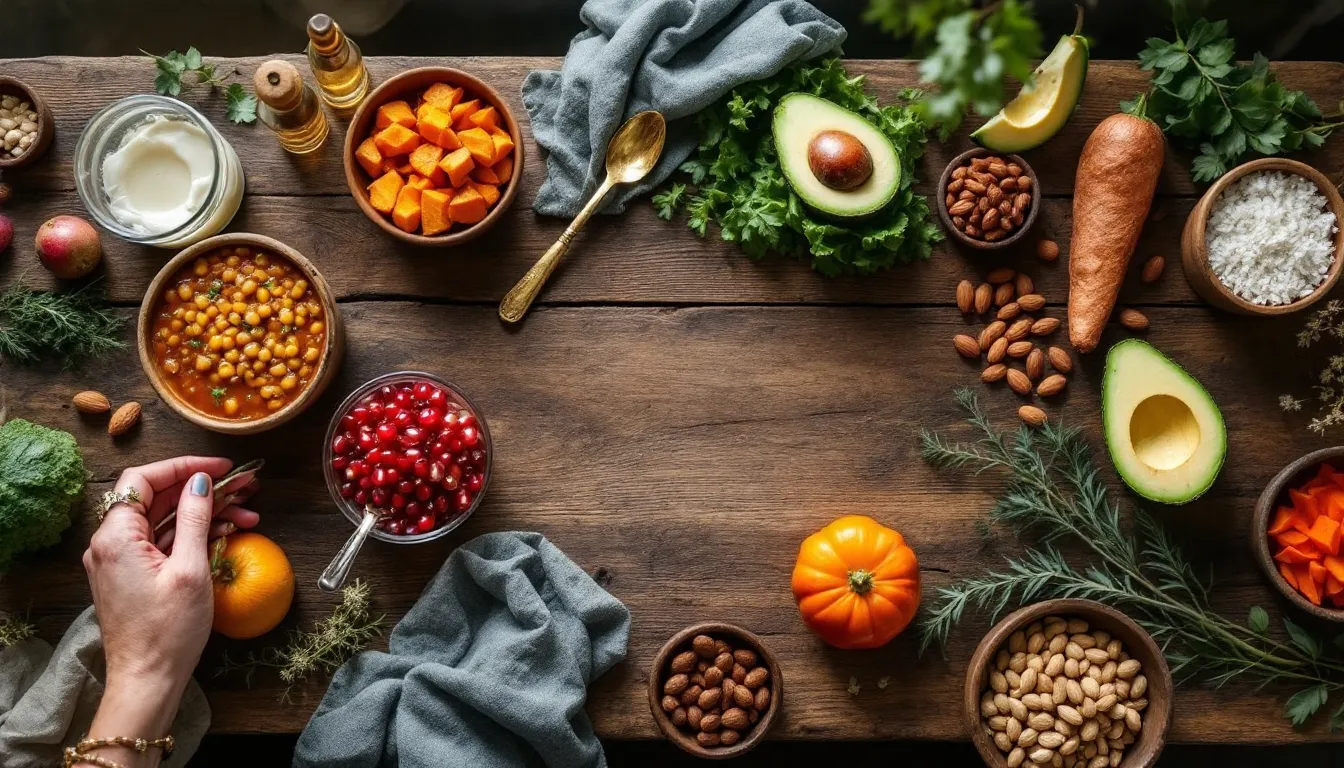
Brightly colored fruits and cooked vegetables are among the most skin-supportive foods in the Ayurvedic kitchen. Think cooked beets, sweet potatoes, carrots, leafy greens sautéed in a little ghee, ripe mangoes, pomegranates, and stewed berries.
From an Ayurvedic perspective, these foods carry qualities that directly counter the dullness of ama. They’re light enough to digest without taxing agni, yet nourishing enough to feed the deeper tissues. Pomegranate, for example, has a mildly astringent and sweet quality that supports blood tissue, and healthy blood tissue is what gives skin its natural color and radiance.
I like to cook my vegetables rather than eat them raw, especially in cooler weather. Cooking adds warmth and softness, which makes nutrients more available. A raw kale salad in January might sound virtuous, but if your digestion is already cool and sluggish, it’s just creating more ama.
Do this today: Add one cooked, colorful vegetable to your lunch, maybe sautéed carrots with cumin and a drizzle of ghee. Takes five minutes. Great for all dosha types, especially Vata.
Healthy Fats That Boost Skin Hydration
If your skin is dry, rough, or aging faster than you’d like, there’s a good chance you need more oily, smooth, and heavy qualities in your diet. Ayurveda uses the principle of opposites: dry skin needs moisture. Rough skin needs smoothness. And these qualities come from healthy fats.
Ghee is the gold standard here. It’s considered one of the most skin-nourishing substances in Ayurveda because it’s easily digested, it carries nutrients into deeper tissues, and it has a cooling quality that calms Pitta-type inflammation. Coconut oil and avocado also bring smooth, oily, cool qualities that help balance dryness and heat.
I personally add a teaspoon of ghee to my rice or drizzle it over cooked vegetables almost daily. My skin noticed the difference within a couple of weeks, less tightness, more suppleness.
One note: if you’re running more Kapha (heavy, oily, congested skin), go easy on the fats. You don’t need as much. A little sesame oil or a modest portion of nuts might be plenty.
Do this today: Try adding half a teaspoon of ghee to one meal. Give it two weeks. Best for Vata and Pitta types. Kapha types can use smaller amounts or choose lighter oils.
Protein Sources That Support Collagen Production
Your skin’s structure depends on healthy tissue formation, and that requires adequate protein, digested well. Ayurveda favors protein sources that are easy on agni: mung beans, red lentils, almonds soaked overnight, and warm milk (if you tolerate dairy).
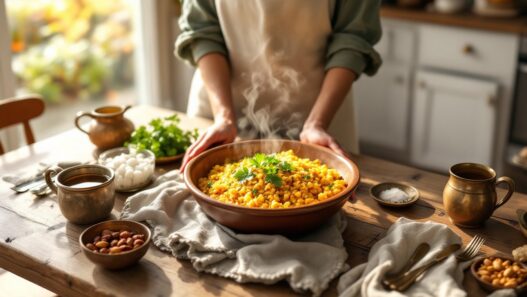
Mung dal is one of my favorites. It’s light, easy to digest, and tri-doshic, meaning it generally works for all constitution types. I make a simple mung dal soup with turmeric, cumin, and fresh ginger a few times a week. It’s satisfying without being heavy, and it gives the body the building blocks it needs without generating ama.
Bone broth, for those who eat meat, is another option, warm, oily, and deeply nourishing to the tissue layers that support skin elasticity.
Do this today: Cook a small pot of mung dal with turmeric and cumin. Eat it as a side with lunch. Takes about 25 minutes. Suitable for all dosha types.
Daily Habits That Transform Your Skin Fast
Food is only half the picture. In Ayurveda, vihara, your lifestyle habits, routines, and environment, matters just as much as what’s on your plate. And honestly? Some of the fastest skin changes I’ve seen come from shifting habits, not just meals.
Hydration, Sleep, and Stress Management
Let’s start with water. Sipping warm water throughout the day is one of the simplest ways to support agni and gently flush ama from your system. Cold water can dampen digestive fire (think of it like pouring cold water on a campfire), so I keep a thermos of warm water with me and sip between meals.
Sleep is where your body does its deepest repair work. In Ayurvedic terms, the hours between 10 PM and 2 AM fall in Pitta time, when your body’s internal metabolic intelligence is working to process, regenerate, and clean house. If you’re awake scrolling during those hours, that regenerative fire gets redirected, and your skin (among other things) pays the price. I try to be in bed by 10, and on nights I manage it, I genuinely wake up looking different.
Stress is the big one. Chronic stress increases Vata, that mobile, dry, erratic quality, which depletes prana (your life force and nervous system vitality) and eventually drains ojas, your deep reserves of immunity, resilience, and that dewy inner glow. When ojas is low, skin looks dull, thin, and tired no matter how good your diet is.
Even five minutes of slow breathing or sitting quietly in the morning can start rebuilding prana and protecting ojas. It’s not dramatic. But it’s real.
Do this today: Set a bedtime alarm for 9:45 PM tonight. That’s it. Just start there. Works for everyone, but especially helpful for Vata and Pitta types who tend to stay up late.
Sun Protection and Gentle Skincare Routines
Ayurveda has always recognized the sun as a source of tejas, that metabolic spark, that inner radiance and clarity. Moderate, gentle sun exposure actually supports skin health. But excess heat and sharp UV exposure aggravate Pitta, leading to inflammation, pigmentation, and premature aging.
I’m a fan of getting 15–20 minutes of morning sun (before 10 AM) and then protecting my skin during peak hours. A mineral sunscreen, a hat, or simply staying in the shade works.
For skincare itself, I keep things simple and aligned with my constitution. A gentle cleanser, maybe a face oil suited to my dosha type (coconut for Pitta, sesame for Vata, a lighter oil like jojoba for Kapha), and that’s about it. Ayurveda isn’t about twelve-step routines. It’s about choosing the right qualities, cool and soothing when there’s heat, warm and nourishing when there’s dryness.
One daily practice I love is abhyanga, warm oil self-massage before a shower. It calms the nervous system, nourishes the skin directly, and helps move stagnant energy. Even doing your arms and legs takes just five minutes and the skin difference is noticeable within days.
Do this today: Try a mini abhyanga, warm a tablespoon of sesame or coconut oil in your palms and massage your arms and legs before your shower. Five minutes. Good for all types: Vata and dry-skinned folks will see the most dramatic change.
What to Avoid if You Want Clearer Skin
Knowing what to add is only useful if you also know what’s getting in the way. In Ayurveda, certain foods and habits are known to disturb agni, increase ama, and aggravate the doshas in ways that show up directly on your skin.
Cold, dry, and rough foods in excess, like crackers, chips, raw salads in cold weather, and iced drinks, increase Vata and dry the skin from the inside. If your skin is already flaky and rough, these make it worse.
Hot, sharp, and oily foods, think deep-fried snacks, excessive chili, alcohol, and fermented or sour foods in large amounts, push Pitta higher and create internal heat. That heat surfaces as redness, acne, and sensitivity.
Heavy, dense, and sweet-oily foods in excess, too much cheese, fried food, processed sugar, heavy desserts, increase Kapha and generate thick, sticky ama. The skin gets congested, puffy, and sluggish-looking.
Beyond food, there are lifestyle habits that create ama too. Eating late at night when agni is naturally low. Eating before your previous meal has been digested. Skipping meals and then overeating. Staying up past midnight regularly. These patterns weaken your metabolic fire over time, and the skin reflects that.
I’ll be honest, I don’t avoid all of these things all of the time. But I notice. And when my skin starts looking off, I can usually trace it back to one of these patterns within a day or two.
Do this today: Pick one ama-producing habit you recognize in yourself, maybe it’s the late-night snacking or the iced coffee at lunch, and experiment with letting it go for a week. See what happens. Takes zero extra time. Relevant for everyone.
How to Build a Simple Skin-Boosting Routine You Can Stick To
One thing I appreciate about Ayurveda’s approach to daily routine, dinacharya, is that it’s not about perfection. It’s about rhythm. Your body thrives on regularity, and your skin reflects that stability.
Here’s how I think about building a skin-supportive routine that actually lasts: pick two or three anchors and build around them. Don’t try to overhaul everything at once.
Two daily habits that have made the biggest difference for me are tongue scraping in the morning and eating my main meal at midday. Tongue scraping takes about 30 seconds and removes the coating of ama that accumulates overnight, it’s a small act, but it gently stimulates digestion and starts the day with a clean slate. And eating your biggest meal between 11 AM and 1 PM aligns with the time when agni is naturally strongest (Pitta time of day). Better digestion means better nutrient absorption, less ama, and clearer skin.
For a seasonal adjustment, which Ayurveda calls ritucharya, I shift my skin routine with the weather. In late winter and early spring, when the atmosphere is still cool and Kapha tends to accumulate, I lighten up my food (less dairy, more warming spices like ginger and black pepper) and do dry brushing before my shower to stimulate circulation. In summer, I switch to cooling foods, coconut oil for abhyanga, and I ease off the spicy stuff.
The principle is straightforward: the environment outside changes, so your inner care adapts with it.
A Sample Day for Your Best Skin
Morning: Wake before or around 6 AM. Scrape your tongue. Drink a cup of warm water with a thin slice of fresh ginger. Do a short oil massage on your body, even three minutes counts, then shower. If you have time, sit quietly for five minutes and breathe.
Midday: Eat your largest, most nourishing meal here. A bowl of rice with cooked vegetables, dal, and a little ghee is a perfect skin-building lunch. Eat slowly and without screens if you can.
Evening: Keep dinner light and early, ideally by 6 or 7 PM. A simple soup or stewed vegetables works well. Avoid heavy, cold, or raw foods at night. Wind down by 9:30 and aim to be asleep by 10.
This isn’t rigid. Some days you’ll be off-schedule, and that’s fine. The point is that over time, rhythm creates stability, and stable agni creates radiant skin.
Do this today: Pick one anchor habit, tongue scraping or midday main meal, and try it for one week. Takes 30 seconds to 5 minutes. Suitable for all dosha types.
If you’re more Vata: Focus on regularity and warmth above all else. Eat warm, cooked, slightly oily foods. Favor ghee, sweet potatoes, soaked almonds, and warm spiced milk in the evening. Your skin craves moisture and stability, so daily oil massage with warm sesame oil is especially powerful for you. Try to eat meals at the same times each day, the predictability itself calms Vata. Avoid skipping meals, excessive travel, and cold, raw foods.
Do this today: Warm a tablespoon of sesame oil and massage your feet before bed. Three minutes. Best for Vata types or anyone feeling dry, anxious, or depleted. Not ideal for Kapha types with already oily, congested skin.
If you’re more Pitta: Your skin’s biggest threat is excess heat and sharpness. Choose cooling, sweet, and slightly bitter foods, think cucumber, coconut, leafy greens, cilantro, and ripe sweet fruits. Use coconut oil for abhyanga and face care. Protect your skin from midday sun. And watch your intake of spicy food, alcohol, coffee, and anything fermented, these feed the fire. Your temptation might be to push through and do more, but your skin actually glows brightest when you slow down a little.
Do this today: Swap one cup of coffee for a cup of cool mint tea or room-temperature water with a few slices of cucumber. Five minutes. Best for Pitta types or anyone with redness, sensitivity, or inflammatory skin. Not ideal in very cold weather when you need internal warmth.
If you’re more Kapha: Your skin tends toward thickness, oiliness, and sometimes a dull or congested look when ama accumulates. You do well with lighter, drier, and warmer foods, think steamed vegetables, light grains like barley or millet, plenty of ginger and black pepper, and less dairy and sugar. For skincare, dry brushing before bathing helps move stagnation, and a light face oil like jojoba keeps things balanced. Try to get active in the morning, even a brisk 20-minute walk, because movement is one of the best things for Kapha-type skin.
Do this today: Try dry brushing your body before your morning shower. Takes about three minutes. Best for Kapha types or anyone dealing with sluggish, puffy, or congested skin. Not ideal for very dry or inflamed skin types.
How Quickly Can You Expect to See Results
I get this question a lot, and I think it deserves an honest answer.
Some changes show up fast. When you start sipping warm water, eating your main meal at midday, and cutting out the most ama-producing habits, you might notice a shift in skin clarity within five to seven days. Less puffiness. A bit more brightness. That’s your agni responding.
Deeper changes, like improved hydration from the tissue level out, reduced sensitivity, or a genuine “glow” that doesn’t wash off, take a bit longer. In Ayurveda, the understanding is that nutrients move through tissue layers sequentially, and skin is one of the last to be nourished. So give it three to six weeks of consistent habits for the more lasting shifts.
The vitality triad plays a role here too. As your ojas rebuilds, you’ll notice a quality of radiance and resilience that goes beyond surface appearance. As tejas, your inner metabolic spark and clarity, strengthens, skin tone evens out and eyes brighten. And as prana becomes steadier through better sleep and less stress, there’s a liveliness to your complexion that you can’t fake with highlighter.
Patience is part of the practice. But unlike quick fixes that fade, these changes tend to stick, because you’re changing the conditions that create healthy skin, not just covering up the symptoms.
Modern science, for what it’s worth, generally confirms the same timeline. Skin cell turnover takes roughly 28 days, so a full cycle of renewal aligns naturally with the Ayurvedic expectation of visible change within a month of consistent, dosha-appropriate care.
Do this today: Commit to three small changes from this article for the next 21 days. Write them down somewhere visible. The simplicity is the point. Relevant for everyone, regardless of dosha type.
Conclusion
Glowing skin isn’t a product you buy. It’s a reflection of how well your body is digesting, absorbing, and transforming what you give it, and how steady and nourished your inner rhythms are.
What I love about the Ayurvedic approach is that it treats you as a whole person, not just a skin type on a product label. When you eat the right foods for your constitution, keep your digestion strong, follow a gentle rhythm, and give your body the qualities it’s asking for, warmth when it’s cold, coolness when it’s hot, moisture when it’s dry, your skin responds. It can’t help but respond.
You don’t have to do all of this at once. Start with one thing. Maybe it’s the ghee at lunch. Maybe it’s the warm water in the morning. Maybe it’s getting to bed by 10 tonight. Small, consistent shifts are what create lasting change.
I’d love to hear what you try first. Drop a comment below or share this with someone who’s been struggling with their skin, sometimes knowing where to start is the hardest part.
What’s one thing you’re going to experiment with this week?