







Why Your Body Needs a Consistent Wind-Down Signal
In Ayurveda, the hours between about 6 p.m. and 10 p.m. belong to Kapha time, a period when the qualities of heaviness, coolness, stability, and slowness naturally rise in the environment and in your body. This is your built-in invitation to rest.
When you ignore that window, staying stimulated, eating late, keeping the lights blazing, you push past Kapha time into Pitta time (10 p.m. onward), where sharpness and heat kick back in. That’s why you sometimes get a strange “second wind” at 11 p.m. You’ve overridden the body’s own cue.
The problem, from an Ayurvedic lens, is that Vata dosha, with its mobile, light, dry, and subtle qualities, tends to accumulate in the evening, especially when your day has been busy, overstimulating, or irregular. Too much Vata in the mind means racing thoughts, restlessness, anxiety. Too much in the body means tension, dryness, that wired-but-tired feeling.
A consistent wind-down routine works because it introduces the opposite qualities: slow instead of mobile, heavy instead of light, warm instead of cool, oily instead of dry. This is the Ayurvedic principle of “like increases like, and opposites bring balance.”
Without that signal, your digestive fire, your agni, also stays activated when it’s meant to be cooling down. And when agni is disturbed at night, it can’t do its quiet repair work, which means unprocessed residue (what Ayurveda calls ama) builds up. You wake feeling foggy, stiff, coated.
The Science Behind Sleep Cues and Circadian Rhythm
Modern chronobiology actually mirrors what Ayurveda mapped thousands of years ago. Your circadian rhythm depends on zeitgebers, time-givers, like light, temperature, and routine behaviors that tell your brain where you are in the 24-hour cycle.
Ayurveda’s daily rhythm, called dinacharya, is built on this same idea. Each segment of the day has a dominant energy, and when you align your habits with that energy, everything flows more easily, digestion, mood, sleep, clarity.
So a night routine isn’t a luxury. It’s a rhythmic anchor. It tells your Vata-dominant nervous system: you’re safe, we’re slowing down, rest is coming.
Do this today: Tonight, set one consistent “wind-down alarm” on your phone for 9 p.m., just the alarm, nothing else yet. Takes 30 seconds. This works for anyone, regardless of dosha or schedule.
Set a Non-Negotiable Screen Shutdown Time
I know. This one’s hard. But hear me out.
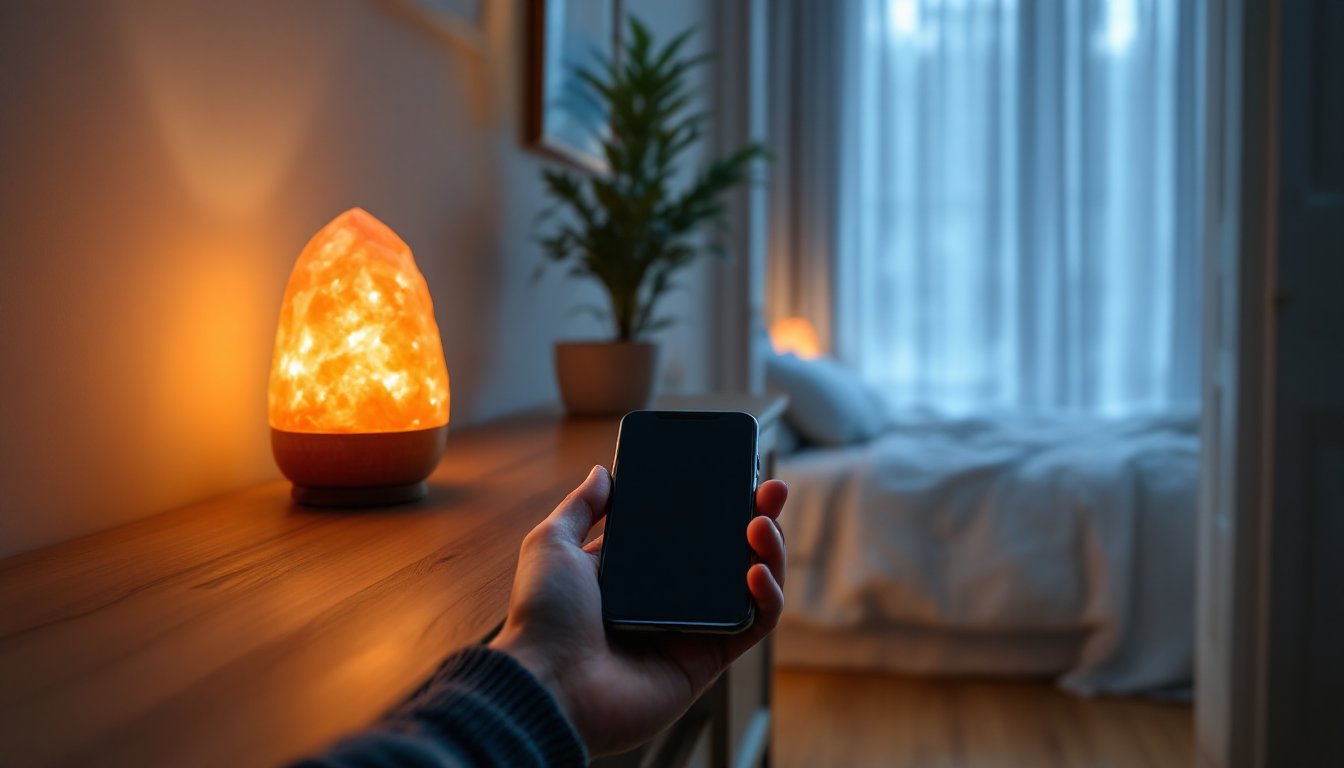
Screens are, in Ayurvedic terms, intensely Vata and Pitta aggravating. They’re sharp, bright, fast-moving, and stimulating, qualities that push your nervous system into alertness exactly when you need the opposite.
The light itself is a problem, yes. But so is the content. Social media, news, even texting, it all keeps the mind in a mobile, scattered, subtly anxious state. That’s Vata accumulation in real time.
When Vata rises late at night, it disturbs prana, the vital energy that governs your nervous system and breath. Disturbed prana means shallow breathing, an unsettled mind, and difficulty surrendering into sleep.
I try to put my phone in another room by 9 p.m. Not because I’m disciplined, but because I noticed how different I feel when I do. The first few nights felt strange, almost boring. Then the boredom softened into something quieter. Stillness, maybe.
If a full shutdown feels extreme, start with just 30 minutes before bed. Switch your phone to grayscale mode so it’s less visually stimulating. That alone reduces the sharp, hot quality of screen light.
Do this today: Choose a screen shutdown time that’s at least 30 minutes before you want to be asleep. Place your phone outside the bedroom. Takes one minute to set up. Great for Vata and Pitta types especially, Kapha types can benefit too but may find it easier naturally.
Dim the Lights to Trigger Melatonin Production

After the screens go off, the next step is softening the light around you. Bright overhead lighting carries hot, sharp, and penetrating qualities, very Pitta. It signals daytime to your brain, keeping your internal fire alert.
In Ayurveda, the transition from day to night is called sandhya kala, the junction time. It’s considered a sensitive, almost sacred window where the body is recalibrating. Honoring that transition with dimmer, warmer light supports the shift from Pitta’s sharpness to Kapha’s soothing heaviness.
I keep a small warm-toned lamp in my bedroom and switch to it after 9 p.m. Candlelight works beautifully too, it’s soft, warm, and stable, which are exactly the qualities that calm Vata’s restlessness and cool Pitta’s intensity.
This simple change supports tejas, the subtle metabolic fire behind clarity and perception. When tejas is balanced, you can let go of the day’s impressions gracefully. When it’s overstimulated by bright light, the mind keeps processing, analyzing, replaying.
You don’t need fancy equipment. A $10 warm-bulb lamp or a couple of beeswax candles will do.
Do this today: Switch to warm, dim lighting at least 30 minutes before bed. If you only have overhead lights, try turning them off and using a single lamp or candle. Takes no extra time, just a flick of a switch. Works for all dosha types, but Pitta types especially notice the difference.
Use a Short Stretching or Breathing Ritual
This is where the magic really lives, in my experience.
A few minutes of gentle stretching or slow breathing does something no supplement or gadget can, it directly soothes Vata in the nervous system. Movement that’s slow, smooth, and grounding reverses the mobile, rough, dry qualities that accumulate from a busy day.
I’m not talking about a full yoga practice. I mean five minutes, maybe less. A seated forward fold. Some gentle neck rolls. A few rounds of left-nostril breathing (called chandra bhedana), which has a cooling, calming quality that invites sleep.
Left-nostril breathing specifically activates your lunar, receptive energy channel. Inhale through the left nostril, exhale through the right. Even three to five rounds can shift your entire state.
From the Ayurvedic perspective, this practice calms prana vayu, the aspect of Vata that governs the mind and senses. When prana vayu settles, your thoughts slow down. Your breathing deepens. Your body gets heavier naturally.
This also gently stokes your agni in a supportive way, not to digest food, but to digest the day’s impressions. Unprocessed mental impressions are a form of ama too, and they’re a major cause of restless sleep.
Do this today: Try 5 minutes of gentle stretching followed by 3 rounds of left-nostril breathing, seated on your bed. That’s it. Best for Vata and Pitta types. Kapha types might prefer a slightly longer, slightly more active stretch, just keep it gentle.
Prepare Your Sleep Environment for Maximum Comfort
Your bedroom is either supporting rest or quietly working against it. Ayurveda pays close attention to the qualities of your environment because they directly influence your doshas.
A cluttered, noisy, bright, or overly warm room increases the mobile, sharp, and hot qualities that keep you awake. A cool, dark, quiet, and tidy space introduces stability, heaviness, and smoothness, the qualities of deep, nourishing sleep.
I’ve found that even small adjustments make a surprising difference. A slightly cooler room temperature. Heavier blankets (that grounding weight calms Vata beautifully). Clean sheets, the smooth quality against your skin signals safety and ease.
Fresh air matters too. If you can, crack a window slightly. Stale air has a dull, heavy quality that sounds like it’d be calming, but it actually creates a sluggish, tamasic atmosphere, which leads to unrefreshing sleep.
Choose a Calming Sensory Anchor
Ayurveda recognizes that each sense is a doorway to your nervous system. A consistent sensory anchor, something you smell, feel, or hear every night, trains your body to associate that sensation with sleep.
For me, it’s a drop of warm sesame oil rubbed into the soles of my feet. This is a classic Ayurvedic practice called pada abhyanga. The feet are rich in nerve endings, and warm oil is heavy, oily, smooth, and grounding, the perfect antidote to Vata’s dry, rough, light qualities. It also nourishes ojas, that deep reserve of vitality, immunity, and contentment.
You might prefer a spritz of lavender on your pillow or a particular sound, a low hum, soft chimes, or simple silence. The key is consistency. Same cue, same time, same response from your body.
Do this today: Choose one sensory anchor and use it tonight. Warm oil on the feet takes about 2 minutes. A pillow spray takes 5 seconds. Suitable for everyone, Vata types benefit most from the oil, Pitta types from cooling scents like sandalwood or rose, Kapha types from lighter aromas like eucalyptus.
Keep a Two-Minute Brain Dump Journal
Here’s something I resisted for a long time because it felt too simple. But writing down what’s circling in your mind before bed is one of the most effective ways to clear mental ama, those sticky, undigested thoughts and worries that loop endlessly.
In Ayurvedic terms, unprocessed thoughts have a dense, cloudy quality. They obscure tejas (your inner clarity) and disturb prana (your mental steadiness). They sit in the mind the way undigested food sits in the gut, heavy, dull, and blocking flow.
You don’t need a beautiful journal or a structured format. Grab any paper. Write whatever’s there, tasks, worries, half-formed ideas, frustrations. Two minutes. Don’t edit, don’t organize, just let it land on the page.
This practice is particularly powerful for Vata types, whose minds tend to be the most mobile and scattered at night. But Pitta types benefit hugely too, their version of nighttime mental ama is often replaying conversations, planning, critiquing.
Think of it as taking out the mental trash before bed. You’re not solving anything. You’re just setting it down so your mind doesn’t have to hold it while you sleep.
Do this today: Keep a notebook and pen on your nightstand. Before you lie down, write freely for 2 minutes. No rules, no structure. Good for all types, especially Vata (scattered thoughts) and Pitta (overactive analysis). Kapha types who feel emotionally heavy at night will find this clarifying too.
Build Your Routine in Layers, Not All at Once
I want to be honest about something. When I first tried to overhaul my night routine, I lasted about three days. I tried to do everything, oil on the feet, journaling, stretching, breathing, candles, herbal tea, and it felt like a second job.
Ayurveda actually warns against this. Sudden, dramatic changes increase Vata. They create instability, not grounding. The whole point of a routine is that it becomes effortless through repetition, not exhausting through ambition.
Start with one step. Maybe it’s the screen shutdown. Maybe it’s the oil on your feet. Do just that one thing for a week until it feels automatic, until it’s not a “practice” anymore but just something you do.
Then add the next layer. Then the next.
This layered approach respects your agni, not just your digestive fire, but your capacity to absorb and integrate change. Just like eating too much food at once overwhelms digestion, adopting too many habits at once overwhelms your ability to make them stick.
The qualities you’re cultivating here are stable, slow, and steady, Kapha’s gifts. Let the routine build like sediment settling in still water. Over weeks, not days.
If you’re more Vata: You’ll be tempted to try everything at once and then forget about it in a week. Pick one step, the foot oil or the breathing, and commit to it gently. Warm, oily, grounding practices are your friends. Avoid cold rooms and late-night snacking. Give yourself 2 weeks per layer.
If you’re more Pitta: You might turn this into a performance metric. Please don’t. Your night routine is not an optimization project. Start with dimming the lights and the brain dump journal, they directly cool your sharp, driven mental fire. Avoid overly hot baths and stimulating reading before bed. One new step every 10 days is plenty.
If you’re more Kapha: You probably already like the idea of a cozy routine, but you might resist getting off the couch to actually do it. Your challenge is initiation, not consistency. Start with the stretching or breathing, a little gentle movement in the evening prevents the heavy, dull quality from becoming stagnation. Avoid heavy, sweet snacks after dinner. Add a new step every week, you integrate change more easily than you think.
Do this today: Choose your single starting step. Write it on a sticky note and put it somewhere you’ll see at 9 p.m. Takes 1 minute. Suitable for everyone, the dosha-specific guidance above helps you pick the right first step.
Conclusion
A night routine, at its heart, is an act of kindness toward your own nervous system. It’s you saying: I’m going to make rest easier for myself tonight.
From an Ayurvedic perspective, sleep isn’t just the absence of waking, it’s an active, nourishing process that rebuilds ojas, clears mental ama, and restores prana. When you support that process with even one or two consistent, grounding habits, the quality of your rest, and your waking life, shifts in ways that genuinely surprise you.
You don’t need to get it perfect. You just need to start.
I’d love to hear which step you’re trying first, drop a comment below or share this with someone who could use a better night’s sleep. And here’s a question to sit with: What would your evenings feel like if your body actually trusted that rest was coming?