Why Heavy Meals Trigger Bloating in the First Place
When I overeat, I picture my digestive fire, what Ayurveda calls agni, like a small campfire. Toss one or two logs on, and it burns bright and clean. Dump an armful of damp logs on top, and the flame sputters. Smoke fills the air. That smoke, in your gut, is ama, sticky, undigested residue that creates heaviness, gas, and that puffed-up feeling.
Heavy meals tend to be cold, oily, dense, and slow-moving in quality. They aggravate Kapha (think heaviness and dullness) and, because they slow things down, they also trap Vata (the mobile, airy force that governs gas and movement). When trapped Vata can’t move downward the way it’s meant to, it pushes outward. Hello, bloated belly.
Pitta types may also feel it as burning or acid backup, since the overloaded fire turns sharp and irritable. Different doshas, same root: agni couldn’t keep up.
Try this today: Notice your belly 30 minutes after your next big meal. If it feels heavy, tight, or sleepy-dull, that’s your cue. Takes 30 seconds. Helpful for anyone curious about their own patterns: skip if you’re already in acute pain and need care.
Sip on Warm Herbal Teas to Soothe Your Stomach

The first thing I reach for after a heavy meal is a small cup of warm tea. Not iced water, not soda, those cool and dampen an already sluggish fire. Warmth is the opposite quality your gut needs right now: light, hot, and slightly sharp to cut through the heaviness.
Ayurveda has been pairing warm sips with meals for centuries, and the logic still holds. Warm liquid helps relax tense abdominal muscles, supports downward-moving Vata, and gently rekindles tejas, that metabolic spark that’s been smothered by your dinner.
Keep the cup small, though. Drowning your agni in a giant mug of liquid is its own problem. A few sips, slowly, over 15 to 20 minutes.
Peppermint, Ginger, and Fennel: The Top Three
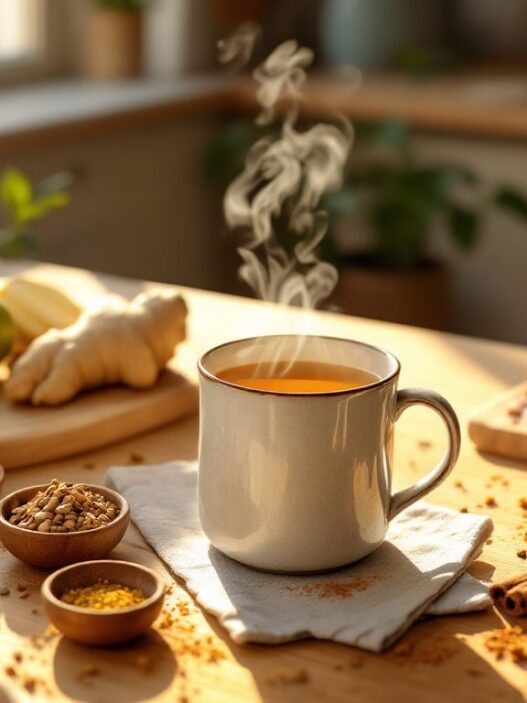
Peppermint cools an overheated Pitta belly and relaxes a clenched gut. Ginger is my go-to when I feel heavy and dull, it’s hot, sharp, and lights the fire back up. Fennel is the gentlest of the three, mildly sweet and cooling, perfect for after spicy or sour meals.
If I had to pick one for everyday use, fennel wins. It’s friendly to all three doshas.
Try this: Steep a teaspoon of fennel seeds in hot water for 5 minutes, sip slowly. Takes 10 minutes total. Great for most people: ginger may be too heating if you’re already flushed or acidic.
Take a Gentle Walk to Get Things Moving

In Ayurveda, there’s a beautiful practice called shatapavali, literally, “a hundred steps after meals.” My grandmother did this without ever calling it Ayurveda. After dinner, she’d loop the garden, hands behind her back, completely unhurried.
A gentle walk introduces mobile, light qualities into a system that’s just become heavy and stable. It nudges Vata to move downward the way it should, prevents food from sitting like a stone, and supports prana, the subtle life force that keeps your nervous system from clamping into “rest and digest gone wrong” mode.
The key word is gentle. This isn’t a workout. A brisk run after a feast pulls blood away from digestion and asks your already-strained agni to compete with your muscles. Bad deal.
I aim for a slow, conversational pace, slow enough that I could hum a song without losing breath.
Try this: Walk for 10 to 15 minutes within an hour of finishing your meal. Indoors is fine. Helpful for almost everyone: skip if you feel dizzy, very full to the point of nausea, or unwell.
Try Targeted Yoga Poses for Quick Relief
When walking isn’t an option, say, it’s pouring rain or I’m at someone’s house, I lie down and do two simple poses. The Sanskrit name pavanamuktasana translates to “wind-releasing pose,” which tells you exactly what it’s for.
Lie on your back, draw your right knee toward your chest, hold for a few breaths, then switch. After that, draw both knees in. The gentle pressure on your abdomen helps trapped Vata move downward and outward, which is its natural direction. Restoring that flow is half the battle.
I also love a soft seated twist. Sit cross-legged, place your right hand on your left knee, and gently rotate your torso to the left. Switch sides. Twists wring out the digestive tract the way you’d wring a damp cloth, slowly, kindly.
Avoid deep backbends or anything that compresses the belly aggressively right after eating. Smooth, not sharp.
Try this: 5 minutes of wind-releasing pose plus gentle twists, about 30 to 60 minutes after eating. Suitable for most beginners: skip if pregnant or recovering from abdominal surgery.
Use Digestive Spices and Bitters Already in Your Kitchen
Your spice rack is basically an Ayurvedic pharmacy. The kitchen staples that make food taste good are often the same ones that help you digest it.
Cumin, coriander, and fennel, the famous CCF trio, are my reliable post-meal helpers. Equal parts of each, steeped in hot water for 5 minutes, makes a tea that feels like a gentle hand on your belly. Cumin is warming and stimulating, coriander is cooling, and fennel is balancing. Together they suit all three doshas.
Ajwain (carom) seeds are even more direct. A pinch chewed with a few grains of rock salt can clear gas within minutes. The taste is sharp and pungent, which is exactly the quality needed to cut through dull, oily heaviness.
Bitter and pungent tastes wake up tejas, kindle agni, and discourage ama from settling in. This is why a small bitter salad or arugula at the start of a meal is genius preventive medicine.
Try this: Chew a quarter teaspoon of fennel seeds slowly after a heavy meal. Takes 2 minutes. Safe for most people: go easy on ajwain if you’re pregnant or run hot.
Stay Hydrated With the Right Fluids
Hydration matters, but how and when you drink matters even more. Chugging a tall glass of cold water during or right after a heavy meal is one of the surest ways to dim your digestive fire. Cold dulls. Heat enlivens.
My rule of thumb: warm or room-temperature water, sipped (not gulped), in small amounts. Hot water alone is surprisingly powerful, it dissolves oily residue, gently moves things along, and supports the smooth, flowing quality your gut needs to process what you’ve eaten.
If you’ve had a salty, rich, or restaurant-style meal, plain hot water is honestly underrated. I keep a thermos on my desk for this reason.
Avoid carbonated drinks for at least an hour or two after eating. The bubbles literally introduce more gas into a system that’s already struggling with too much trapped air.
Try this: Sip half a cup of hot water every 20 minutes for an hour after a heavy meal. Almost everyone benefits: if you have a specific fluid-restriction condition, follow your provider’s guidance.
Apply Gentle Abdominal Massage and Heat
There’s something deeply comforting about a warm hand on a bloated belly. This isn’t just emotional, it’s physiology meeting Ayurveda.
I use a small amount of warm sesame oil (or castor oil if I’m really uncomfortable) and massage my abdomen in slow, clockwise circles. Clockwise follows the natural direction of your colon, which encourages downward, outward movement. The oil itself adds an oily, smoothing quality that calms Vata’s rough, mobile aggravation.
Follow up with a warm compress, a hot water bottle, a microwaved rice sock, or even a folded towel warmed in the dryer. The heat penetrates, relaxes tight muscles, and supports tejas at the gut level.
Kapha-heavy types might skip the oil and go straight for dry heat, since oil can feel too heavy. Pitta types should keep the heat moderate, not scorching.
Try this: 5 minutes of clockwise belly massage plus 10 minutes with a warm compress. Best done about an hour after eating. Skip during pregnancy, if you have abdominal pain of unknown origin, or right after surgery.
Eat Smarter Next Time to Prevent the Discomfort
The best remedy is the one you don’t need. Ayurveda is honestly less about fixing problems and more about not creating them in the first place.
A few habits have saved me countless uncomfortable evenings. Eat your largest meal at midday, when agni is naturally strongest (the sun’s at its peak: so is your fire). Keep dinner lighter and earlier, ideally before 8 p.m., and at least three hours before bed. Late, heavy meals are the single biggest cause of next-morning sluggishness and that puffy face you can’t explain.
Fill your stomach about two-thirds full, not to the brim. Leave space for digestion to actually happen. I think of it like a washing machine, overload it and nothing gets clean.
Slow down. Chew. Put your fork down between bites. Eat without scrolling. These sound boring, but they let your nervous system stay in the parasympathetic mode digestion needs. Prana flows. Tejas stays steady. Ojas, that deep reserve of vitality, gets to build instead of getting spent on damage control.
Try this: For one week, finish dinner by 8 p.m. and eat to about 75% fullness. Helpful for almost everyone: adjust timing if you work night shifts or have specific medical needs.
When Bloating Signals Something More Serious
Most bloating from heavy meals clears up within a few hours and definitely by the next morning. But sometimes your body is asking for more than tea and a walk.
If I notice bloating that lingers for days, comes with sharp pain, unintended weight loss, blood in the stool, persistent changes in bathroom habits, or shows up after every single meal regardless of size, that’s a conversation for a qualified professional. Same goes for bloating paired with vomiting, fever, or trouble swallowing.
Chronic bloating can be a sign of deeper imbalance, long-standing ama, weakened agni, food sensitivities, or conditions that need real diagnostic care. Ayurveda is wonderful, and it’s also wise enough to know its scope.
This article is general education, not medical advice. Please don’t self-diagnose. A short visit with someone who can actually examine you is worth a hundred internet searches.
A Gentle Closing Thought
Your belly is honestly one of the most honest parts of you. It tells you, in real time, whether what you ate, when you ate, and how you ate worked for your unique constitution.
Ayurveda’s gift isn’t a single magic remedy, it’s the lens to listen. The next time bloating shows up, treat it as feedback, not a failure. Try one of the suggestions here. See how your body responds. Adjust.
If You’re More Vata, Pitta, or Kapha
A quick personalization note, because the same remedy doesn’t fit everyone.
If you’re more Vata (slim build, dry skin, anxious tendencies, irregular digestion), your bloating usually comes with gas, gurgling, and cold hands. Lean into warmth, hot water, ginger tea, oily massage, slow gentle walks. Avoid raw salads and cold drinks right after meals. Pace yourself, soften lighting, and don’t eat standing up.
If you’re more Pitta (medium build, warm, intense, sharp digestion), bloating often comes with acid backup, burning, or irritability. Cool things slightly, fennel and coriander tea, room-temperature water, moderate heat on the belly. Avoid extra spicy or fried foods late in the day, and don’t work through meals.
If you’re more Kapha (sturdy build, slow steady digestion, prone to heaviness), bloating feels dense and dull rather than gassy. You’ll do best with pungent spices like ginger, ajwain, and black pepper, longer walks, dry heat, and skipping or shrinking dinner when you’ve had a big lunch. Avoid dairy, fried foods, and naps right after eating.
Try this: Pick the description that fits you most, and try one tip from your section tonight. Takes under 10 minutes.
Daily Routine: Two Habits That Quietly Change Everything
My two non-negotiables: a cup of warm water with a squeeze of lemon first thing in the morning (it wakes agni and gently moves the bowels), and a 10-minute walk after dinner (it prevents bloating before it starts).
Midday, I try to make lunch the real meal of the day. Evening, I aim to be in bed by 10 p.m., late nights aggravate Vata and lead to next-day cravings and overeating, which loops you right back into bloat territory.
Try this: Morning warm lemon water + evening walk, daily for one week. Suitable for most adults: skip lemon if you have acid reflux flare-ups.
Seasonal Adjustment
In summer’s heat, lean cooling, fennel tea, coconut water, cucumber, lighter dinners. In winter’s cold and dry season, lean warming and slightly oily, ginger tea, cooked root vegetables, warm sesame oil belly massage. In damp, rainy weather, favor dry, pungent spices to counter Kapha’s heaviness.
Try this: Match one drink or food choice to the current season this week. Takes no extra time. Helpful for all constitutions.
Modern Life, Ancient Wisdom
Most of what we now call “gut-brain axis” research lines up beautifully with what Ayurveda has said for centuries: stress shuts down digestion, eating on the go creates residue, and your nervous system is in charge of whether food becomes nourishment or burden.
A few slow breaths before your first bite isn’t woo, it’s prana doing its job. Tejas needs a calm container.
Try this: Take three slow breaths before eating, for one week. Takes 15 seconds per meal. For everyone.
Wrapping Up
If you take one thing from this, let it be this: your body isn’t betraying you when it bloats. It’s communicating. The remedies here, warm tea, a gentle walk, kitchen spices, mindful eating, are small, repeatable acts of listening.
Try one tonight. See what shifts. And if you find something that works beautifully for you, I’d love to hear about it in the comments, share this with a friend who might need it too.
What’s the one habit you’re willing to try this week to feel lighter after meals?