
Why Your Feet Ache After a Long Day on Them
When my feet throb at the end of the day, I remind myself that Ayurveda sees the feet as a meeting point of apana vata, the downward-moving life force that governs elimination, circulation, and grounding. Long hours of standing, walking on hard floors, or rushing from task to task disturbs this flow. The result? A buildup of the dry, rough, mobile qualities of vata in the lower body, leaving your feet feeling brittle, twitchy, and worn thin.
If the day was also hot and sweaty, pitta joins the party, bringing heat, swelling, and that burning sensation under the soles. And if you’ve been sedentary in tight shoes, kapha’s heavy, dull quality can settle in, leaving feet puffy and stiff.
When agni, your inner metabolic spark, is strong, the body clears this daily wear easily. When it’s sluggish, residue called ama lingers in the tissues, and your feet feel like they’re carrying yesterday’s fatigue plus today’s.
Common Culprits Behind Foot Fatigue
A few patterns I notice again and again: standing on cold, hard surfaces (pure vata-aggravating territory), shoes with no give, skipping meals so the body runs on stress hormones, and dehydration that dries out the smooth, oily quality your joints rely on. Late nights also play a role, sleep is when ojas, your deep reserve of vitality, gets restored. Skimp on it, and your feet feel it first.
Do this today: Before bed, sit with your feet up against a wall for five minutes. It’s for anyone whose feet swell or throb after long days. Skip it if you have uncontrolled blood pressure or recent leg injury.
Warm Soaks and Contrast Baths to Melt Away Tension
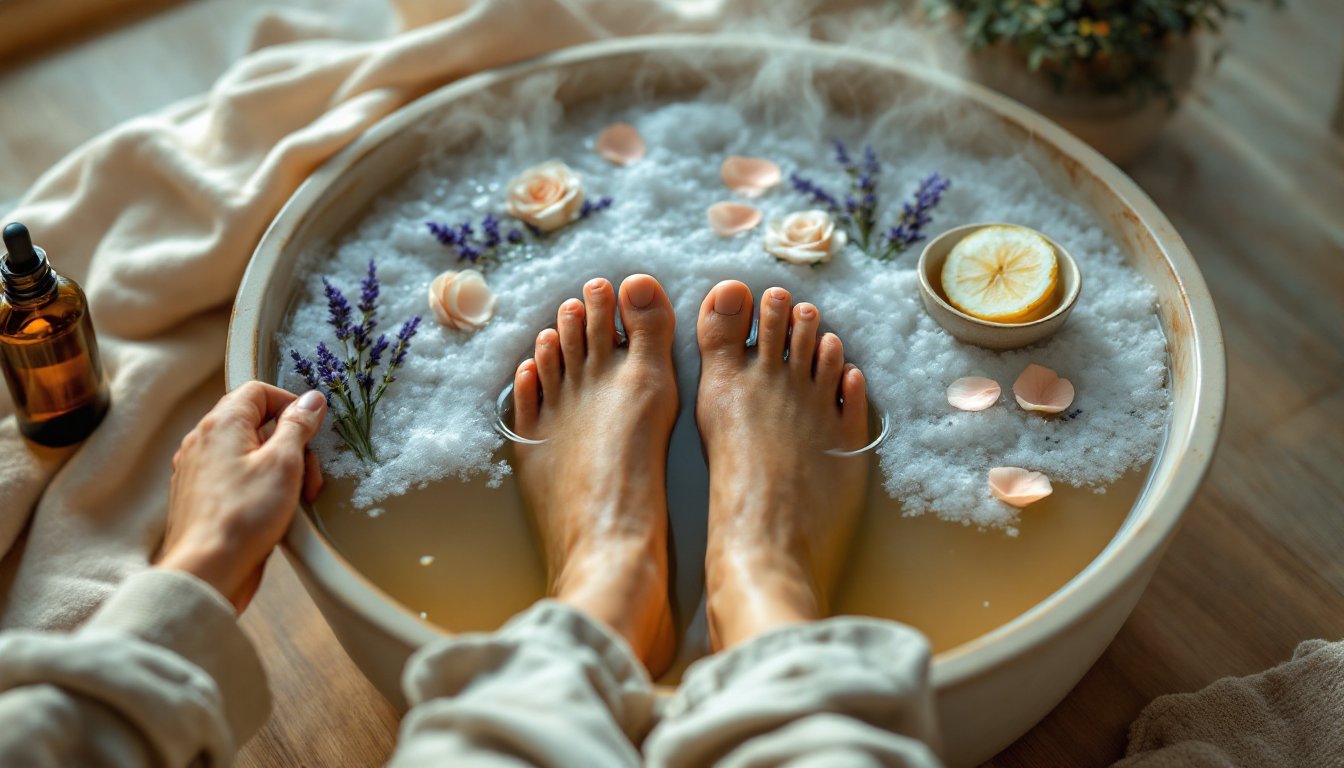
There’s a reason a warm foot soak feels like a hug for your nervous system. Heat is the direct opposite of vata’s cold, mobile nature, it softens what’s tight and steadies what’s jittery. When I dip my feet into warm water at the end of a draining day, I can almost feel prana, the gentle life force in my breath, settle into a slower rhythm.
A contrast bath, alternating warm and cool water, is my go-to when feet feel hot, swollen, and a little inflamed (classic pitta signs). The warm water opens circulation: the cool water tones and calms the heat. Three rounds of about a minute each, ending on cool, works beautifully.
DIY Epsom Salt and Essential Oil Soak Recipes
My favorite vata-soothing blend: a basin of comfortably warm water, a generous handful of Epsom salt, a tablespoon of sesame oil, and three drops of lavender. Sesame is warming, grounding, and deeply nourishing for dry tissues, Ayurveda’s classic ally for tired soles.
For a pitta-cooling version, swap sesame for coconut oil and add a few drops of rose or sandalwood. For kapha-heavy, puffy feet, use a slightly hotter soak with ginger slices and a pinch of mustard powder to wake things up.
Try this: Soak for 15 minutes after dinner, then pat dry and put on cotton socks. Wonderful for general fatigue. Skip if you have diabetes-related neuropathy, open cuts, or sensitivity to heat.
Targeted Self-Massage Techniques for Instant Relief

If I had to pick one practice that’s changed my evenings, it would be padabhyanga, Ayurvedic foot massage with warm oil. It’s an ancient ritual, and it works on so many layers: it lubricates dry tissues, calms an overactive nervous system, and signals to your body that the day is done.
Warm a tablespoon of sesame oil between your palms (use coconut if you run hot). Sit on the edge of the bed and work the oil into each foot for about five minutes. Use your thumbs to press along the arch in slow, firm strokes from heel to toe. Circle the ankle bones. Squeeze each toe gently and pull through the tip.
Pay special attention to the center of the sole, Ayurveda considers this a powerful point connected to the eyes, the head, and the steadiness of prana. When this point is touched with care, the whole body exhales.
The oily, smooth qualities of the massage directly counter the dry, rough qualities that build up during a long day. Over weeks, this is also how you nurture ojas, that quiet reservoir of resilience that keeps you bouncing back.
Try this: Five minutes of padabhyanga before bed, three nights a week. Great for almost everyone. Avoid if you have a fever, active infection, or varicose veins in flare-up.
Stretching and Mobility Moves to Restore Tired Feet
Feet are full of small joints and tiny muscles that crave gentle movement. When they get locked in one position all day, squished in shoes, planted on concrete, the mobile quality of vata gets stuck, and stagnation creeps in. A few minutes of mindful stretching invites flow back.
I like to start by sitting in a chair and rolling each ankle slowly in big circles, ten in each direction. Then I spread my toes wide, hold for a few breaths, and curl them tight. This simple open-close cycle is surprisingly powerful for releasing tension along the arch.
Next, try a gentle calf stretch against a wall, holding for thirty seconds per leg. Tight calves pull on the bottom of the foot and are a hidden cause of arch pain. Finish by rolling each sole over a tennis ball or a chilled water bottle for a minute or two, the cool version is especially soothing for fiery, pitta-style burning.
These small movements rekindle tejas, the metabolic spark in your tissues, helping them clear ama and feel light again.
Try this: Five minutes of foot mobility after work. Wonderful for desk workers and walkers alike. Skip specific moves if they aggravate a known injury, ease is the rule.
Herbal Remedies and Natural Topicals That Soothe Soreness
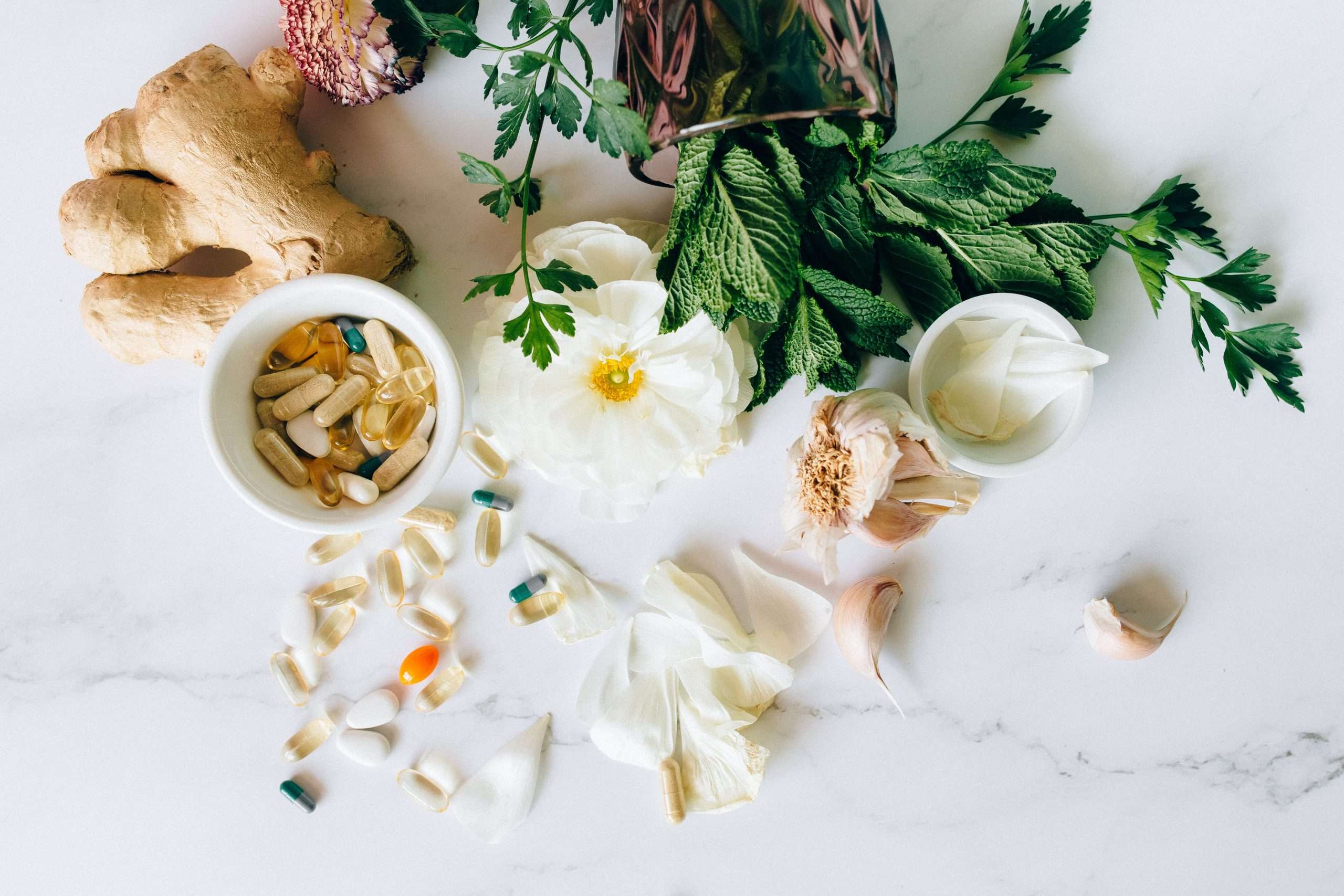
Ayurveda has a beautiful pharmacy for tired feet, and most of it is probably already in your kitchen. My go-to oil is mahanarayan, a classical herbal sesame oil infused with warming, vata-pacifying herbs. Massaged in before bed, it eases that achy, deep-bone tiredness in a way plain oil can’t quite match.
For swelling and heat, a paste of turmeric and a little aloe vera gel is lovely. Turmeric’s slightly hot, sharp quality cuts through stagnation, while aloe’s cool, smooth nature calms inflamed tissue. Dab it on tender spots, wait fifteen minutes, then rinse.
Ginger compresses are another quiet hero. Grate fresh ginger, wrap it in a thin cloth, soak in warm water, and press gently onto stiff, heavy feet. The penetrating heat helps disperse the dull, sluggish quality of kapha that makes feet feel like cement blocks.
If cracks and dryness are an issue, slather on a thick layer of ghee or shea butter at night and wear cotton socks. Within a week, the rough quality softens noticeably.
Try this: Choose one topical that matches your symptoms and use it for seven nights. Great for chronic achiness. Patch test first if your skin is reactive, and avoid open wounds.
Smart Footwear and Daily Habits to Prevent Achy Feet
Honestly, no amount of evening pampering can outrun the wrong shoes. If your footwear is too tight, too flat, or too worn, your feet stay locked in vata-aggravating positions all day. I look for shoes with a roomy toe box, a touch of arch support, and cushioning that has some give without being mushy.
Rotate your shoes through the week so your feet experience different angles and pressures, variety keeps the small muscles awake. And try to walk barefoot on natural surfaces when you safely can: grass, sand, a wooden floor. Direct contact with the earth is one of the oldest grounding practices Ayurveda recommends, and it steadies the mobile, scattered quality of vata in minutes.
A habit I love: when I sit down for tea, I slip off my shoes and gently wiggle my toes for the whole cup. It’s micro-recovery, free of charge.
Also, watch your pace. Rushing everywhere keeps the body in a sharp, hot state that dries out tissues and burns through ojas. Walk at a rhythm where you can still breathe through your nose.
Try this: Audit your most-worn pair of shoes this week. For anyone on their feet often. Not for those needing prescribed orthotics, follow your specialist’s advice.
Nutrition, Hydration, and Recovery for Healthier Feet
Your feet are the last stop on a long circulatory journey, and what you eat shows up there eventually. When agni is bright, nutrients reach the tissues cleanly. When digestion is sluggish, ama settles into joints and small muscles, and you wake up feeling heavy and stiff.
I aim for warm, cooked meals most of the time, soups, stews, kitchari, sautéed greens with ghee. These are easy on agni and keep tissues nourished with a steady, oily, smooth quality. Cold raw foods and iced drinks tend to dull the digestive fire, which leaves the body less able to clear daily wear.
Hydration matters too, but Ayurveda nudges you toward warm or room-temperature water sipped through the day, not gulped in big icy doses. Add a slice of ginger or a pinch of cumin if digestion needs a lift.
Magnesium-rich foods, pumpkin seeds, almonds, leafy greens, dates, quietly support muscles and nerves. And don’t underestimate sleep. Deep rest between ten p.m. and two a.m. is when ojas rebuilds, and ojas is what keeps your tissues plush and resilient.
Try this: Swap one cold meal for a warm one tomorrow. Good for almost everyone. If you have specific dietary needs, adjust with your practitioner.
When Natural Relief Isn’t Enough: Signs to See a Specialist
Ayurveda is generous, but it’s also honest about its scope. If your feet are deeply painful most mornings, swelling without reason, changing color, going numb, or showing sores that won’t heal, please see a qualified professional. Persistent heel pain, sharp shooting sensations, or pain that wakes you at night also deserves expert eyes.
Diabetes, circulation issues, nerve conditions, and structural problems need proper diagnosis. Natural care works beautifully alongside good medical guidance, not as a replacement for it.
A gentle note: this article is general education, not medical advice. If you’re pregnant, managing a condition, or taking medication, please check with a qualified professional before adding new herbs, oils, or routines.
I also want to name the inner signal worth listening to. If you’ve tried gentle remedies consistently for a few weeks and your feet still feel worse, that’s information. It might mean your body needs a different kind of support, and there’s no shame in seeking it.
A Soft Closing Thought
Your feet carry you through every ordinary, extraordinary day. Caring for them isn’t vanity, it’s a small daily act of respect for the body that’s getting you everywhere you need to go. Start with one practice tonight. A warm soak, a few minutes of oil, a slower walk to the kitchen. See how your feet answer back.
Which of these remedies are you most curious to try first, and what does your body usually whisper to you at the end of a long day? I’d love to hear in the comments, and if this was helpful, please share it with someone whose feet could use a little kindness too.