





What Are Microplastics and Why Are They in Beauty Products?
Microplastics are tiny plastic fragments, typically less than 5 millimeters in diameter, that are either manufactured at that size on purpose (called “primary microplastics”) or break down from larger plastic waste over time. In beauty products, we’re mostly dealing with the intentional kind. Companies add them because they’re cheap, stable, and easy to formulate with.
Think about the gritty texture in a physical exfoliating scrub. That satisfying roughness? Often plastic. Or the silky, blurred finish of a primer. Also, frequently, plastic. Manufacturers use these synthetic particles to create specific textures, extend shelf life, and deliver a consistent product feel, all at a fraction of the cost of natural alternatives.
The problem is that these particles are so small they slip through water filtration systems, accumulate in ecosystems, and, as we’re learning more every year, settle into our own tissues. A 2024 study published in the New England Journal of Medicine found microplastic deposits in human arterial plaque, which honestly stopped me in my tracks. We’re not just talking about an environmental issue anymore. It’s personal.
Common Types of Microplastics Found in Cosmetics
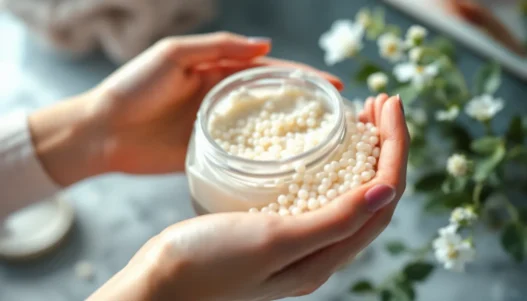
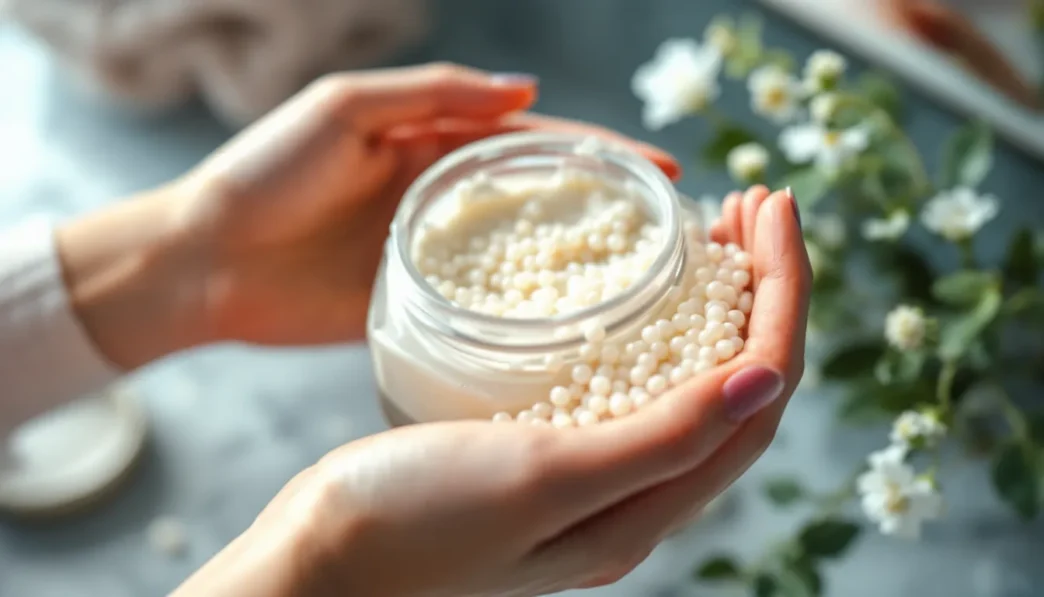
The most frequently used microplastic in cosmetics is polyethylene (PE), those little round beads you’ll find in scrubs and body washes. But that’s only the beginning.
Polypropylene (PP) shows up in lipsticks, foundations, and eye shadows, often as a bulking agent or texture enhancer. Polymethyl methacrylate (PMMA) creates that soft-focus, blurring effect in primers and setting powders. Nylon-12 and nylon-6 are common in pressed powders and mascaras, contributing to that smooth, even application.
Then there are the liquid and semi-liquid polymers, things like dimethicone (a silicone-based polymer), acrylates copolymer, and carbomer, which don’t look like traditional plastic beads but still fall under the broader microplastics umbrella depending on which regulatory definition you follow. The European Chemicals Agency’s 2023 restriction on microplastics, for example, casts a wide net that includes many of these polymers.
I find it helpful to think of microplastics in cosmetics as falling into two camps: the ones you can see (beads, glitter) and the ones you can’t (film-formers, texture agents, binding polymers). Both deserve your attention.
Health and Environmental Risks of Microplastics in Personal Care
How Microplastics Affect Your Body
Let me be honest, the science here is still evolving, and I don’t want to be alarmist. But what we do know is enough to make me cautious.
Microplastics can enter the body through skin absorption (especially with nano-sized particles), ingestion (think lip products and toothpaste), and inhalation (loose powders, aerosol sprays). Once inside, they don’t just pass through. Research from the University of New Mexico published in 2024 demonstrated that microplastic particles can cross cellular membranes and accumulate in organs including the liver, kidneys, and even the brain.
These particles often carry chemical additives with them, plasticizers like phthalates, flame retardants, and endocrine-disrupting compounds such as bisphenol A (BPA). Even when the base plastic is considered “inert,” the chemical hitchhikers aren’t. They can interfere with hormone signaling, contribute to oxidative stress, and potentially trigger inflammatory responses.
A growing body of research links chronic microplastic exposure to disrupted gut health, reproductive concerns, and cardiovascular inflammation. The arterial plaque study I mentioned earlier found that patients with detectable microplastics in their blood vessels had a significantly higher risk of heart attack, stroke, and death over a 34-month follow-up period.
I’m not saying your moisturizer is going to cause a heart attack. But I am saying that cumulative, daily exposure from multiple products adds up in ways we’re only beginning to understand.
The Environmental Toll of Washing Microplastics Down the Drain
Every time you rinse off a scrub or wash your face, those tiny plastic particles flow straight down the drain. And here’s the uncomfortable truth: most wastewater treatment plants aren’t designed to catch them.
Estimates suggest that a single shower using a microbead-containing body wash can release over 100,000 plastic particles into the water system. From there, they enter rivers, lakes, and eventually the ocean, where they’re ingested by marine life, from plankton all the way up the food chain to the fish on your dinner plate.
The United Nations Environment Programme has identified personal care products as a significant source of primary microplastic pollution in marine environments. These particles don’t biodegrade. They persist for hundreds of years, fragmenting into ever-smaller pieces, absorbing toxins from surrounding water, and concentrating those toxins as they move up the food chain.
So the microplastics you wash off your face tonight could, in a roundabout way, end up back on your plate. It’s a cycle that feels almost absurd when you think about it, and one that’s entirely avoidable with better product choices.
How to Identify Microplastics on Ingredient Labels
Reading ingredient labels for microplastics isn’t as intimidating as it sounds, but it does take a bit of practice. The tricky part is that these ingredients don’t announce themselves as “plastic”, they hide behind scientific names that most of us skip right over.
Here are the big ones to watch for: Polyethylene (PE), Polypropylene (PP), Polyethylene terephthalate (PET), Polymethyl methacrylate (PMMA), Nylon-6, Nylon-12, and Polytetrafluoroethylene (PTFE), yes, that’s essentially Teflon in your makeup.
Then there are the less obvious culprits: Acrylates Copolymer, Acrylates/C10-30 Alkyl Acrylate Crosspolymer, Carbomer, and various silicones ending in “-cone” or “-siloxane” (like dimethicone and cyclomethicone). Not all of these are classified as microplastics under every regulatory framework, but many environmental organizations, including the nonprofit Beat the Microbead, flag them as synthetic polymers of concern.
My practical suggestion? Download the Beat the Microbead app (it’s free and available for both iOS and Android). You can scan product barcodes and instantly see whether the product contains recognized microplastics or synthetic polymers. It’s the single easiest tool I’ve found.
Another approach: look for third-party certifications that explicitly exclude microplastics. The COSMOS and NATRUE organic certifications, the Zero Plastic Inside logo from the Plastic Soup Foundation, and EWG Verified status all provide varying degrees of assurance. I’ll dig deeper into certifications in a moment.
One word of caution, “natural” and “clean” on a label mean almost nothing from a regulatory standpoint. I’ve seen products marketed as “natural” that still contain acrylates copolymer. Always flip the bottle over.
Beauty Product Categories Most Likely to Contain Microplastics
Not all beauty products are equally likely to harbor microplastics, so knowing where to focus your attention can save you a lot of label-reading fatigue.
Exfoliating scrubs are the most well-known offenders. Many countries (including the US, UK, and Canada) have banned plastic microbeads in rinse-off cosmetics, but enforcement varies and loopholes exist, especially for leave-on products and non-bead microplastics.
Foundations, primers, and setting powders are the sneaky category. These rely heavily on film-forming polymers like PMMA and acrylates to create that smooth, blurred, long-wear finish. If a foundation claims to be “pore-minimizing” or “24-hour wear,” there’s a decent chance synthetic polymers are doing the heavy lifting.
Sunscreens, particularly spray formulas, often contain acrylates crosspolymer to help the product form an even, water-resistant film on your skin. Liquid sunscreens tend to be better on this front, but it still varies brand to brand.
Lip products deserve special attention because anything you apply to your lips has a strong chance of being ingested. Lipsticks, glosses, and lip balms frequently contain polyethylene, synthetic waxes, and silicone-based polymers.
Shampoos and conditioners can contain dimethicone, amodimethicone, and other silicones that coat the hair shaft for smoothness and shine. While the classification debate around silicones continues, they don’t biodegrade easily and raise legitimate environmental concerns.
Glitter is worth calling out on its own. Traditional cosmetic glitter is made from PET plastic laminated with aluminum. Even products labeled “biodegradable glitter” sometimes use a plant-cellulose core coated in plastic. If you love sparkle (and I get it, I do too), look for mica-based or mineral-based alternatives.
The pattern I’ve noticed is that the more a product promises long wear, smooth texture, or visual blurring, the more likely it is to rely on synthetic polymers to deliver those effects.
Practical Steps to Eliminate Microplastics From Your Routine
Switching to a microplastic-free beauty routine doesn’t need to happen overnight. I’d actually discourage that approach, it can feel expensive and overwhelming. Instead, here’s how I’d think about it.
Start with the products that go down the drain. Your face wash, body wash, shampoo, and conditioner are the highest-impact swaps because those microplastics flow directly into the water system every time you use them. Replace these first.
Next, tackle what touches your lips. Lipstick, lip balm, lip gloss, anything you’re likely to ingest throughout the day. This is where the personal health concern is most direct.
Then move to leave-on products like moisturizers, serums, sunscreens, and makeup. These are a lower priority for environmental impact (they don’t go directly down the drain in the same volume), but they sit on your skin for hours and can contribute to dermal absorption.
For each category, you don’t need to find a perfect replacement immediately. Use what you have, and when it runs out, replace it with a cleaner option. This gradual approach is more sustainable, both financially and emotionally.
Look for products with short, recognizable ingredient lists. In my experience, the fewer ingredients, the less likely you’ll encounter hidden polymers. Solid bar formats (shampoo bars, cleansing bars, solid moisturizers) tend to have simpler formulations and less need for synthetic stabilizers.
Choosing Safer Alternatives and Certifications to Trust
Not all certifications are created equal, and some “clean beauty” labels are more marketing than substance. Here’s what I actually trust.
COSMOS Organic/Natural (administered by Ecocert, Soil Association, and others) explicitly prohibits synthetic polymers, silicones, and microplastics. It’s one of the strictest standards out there.
NATRUE is another rigorous certification that bans petrochemical-derived ingredients, including most microplastic polymers.
The Zero Plastic Inside logo, run by the Plastic Soup Foundation, specifically targets microplastic content. It’s narrower in scope than COSMOS but directly addresses the issue we’re talking about.
EWG Verified (from the Environmental Working Group) evaluates products for a wide range of health concerns, including many synthetic polymers, though its microplastic coverage isn’t as explicit.
Brands like Ethique, Plaine Products, ATTITUDE, Meow Meow Tweet, and Fat and the Moon have built their entire lines around avoiding synthetic polymers and microplastics. They’re worth exploring as starting points.
I’d also recommend checking the Good Face Project database and the Think Dirty app for additional product-level ingredient analysis. Between these tools and the Beat the Microbead scanner, you’ll have a solid system for evaluating anything you’re considering buying.
Current Regulations and the Push for Industry-Wide Change
The regulatory landscape around microplastics in beauty products is moving, but slowly, and unevenly.
The United States banned plastic microbeads in rinse-off cosmetics through the Microbead-Free Waters Act of 2015, which took full effect in 2018. It was a meaningful first step, but the law is narrow: it only covers rinse-off products and only targets solid plastic particles. Liquid polymers, film-formers, and leave-on products aren’t covered.
The European Union has taken a broader approach. In October 2023, the EU adopted a restriction under REACH that covers intentionally added microplastics across a wide range of products, including cosmetics. The regulation includes transition periods, some provisions won’t fully kick in until 2029 or later, but it’s the most comprehensive microplastics regulation globally. It covers not just microbeads but also glitter, film-forming polymers, and certain liquid polymers based on specific criteria.
Canada banned microbeads in toiletries in 2018, similar in scope to the US law. The UK implemented its own microbead ban in 2018 as well, with ongoing discussions about expanding the scope.
In practice, this means that many microplastic-containing products remain perfectly legal in most markets, especially leave-on cosmetics and products containing liquid or semi-solid polymers. Regulation is catching up, but it hasn’t caught up yet.
Consumer pressure, meanwhile, has been a powerful driver. Brands are reformulating proactively, not because they’re legally required to in most cases, but because shoppers are demanding it. The rise of ingredient transparency apps and zero-waste beauty movements has made it harder for companies to quietly include synthetic polymers without facing scrutiny.
Several industry coalitions, including the Personal Care Products Council and the Cosmetics Europe trade association, have issued voluntary commitments to phase out solid microbeads, though critics argue these commitments don’t go far enough and lack enforcement mechanisms.
The direction of travel is clear: microplastics in beauty products are on their way out. But “on their way out” isn’t the same as “gone.” Until regulations catch up comprehensively, the responsibility sits with us as consumers to read labels, choose wisely, and support brands doing the right thing.
Conclusion
When I first started paying attention to microplastics in my beauty products, I felt a mix of frustration and empowerment. Frustration because this stuff had been hiding in plain sight for years. Empowerment because, once I knew what to look for, the changes were surprisingly manageable.
You don’t need to overhaul everything at once. Start with one product category, your face wash, your lip balm, whatever feels most natural. Scan labels, try an app, explore a brand that aligns with your values. Each small swap reduces your personal exposure and sends a market signal that matters.
The beauty industry responds to what we buy. Every microplastic-free product you choose is a quiet vote for cleaner formulations, healthier waterways, and a future where “beauty” doesn’t come at the expense of the planet or your body.
I’d love to hear where you are in this process. Have you already started switching products? Found a favorite clean brand? Or are you just starting to look into it? Drop a comment below or share this with someone who’s been curious about cleaning up their routine, sometimes a little nudge from a friend is all it takes.
This is general education, not medical advice. If you’re pregnant, managing a condition, or taking medication, check with a qualified professional.