







Why Screens Before Bed Mess With Your Sleep Cycle
To understand why evening screen habits matter so much, it helps to look at what’s actually happening inside you, not just in your brain, but in your digestion, your tissues, and your overall vitality.
In Ayurveda, the evening hours (roughly 6 PM to 10 PM) are Kapha time. This is when your body naturally becomes heavier, slower, cooler, and more stable. It’s your built-in wind-down. Your digestive fire, what Ayurveda calls agni, is banking down like embers after a long day of metabolic work. Your nervous system is meant to shift from active, mobile Vata energy into that grounded Kapha stillness.
Screens interrupt this entire sequence. They introduce qualities that are directly opposed to what your body needs: bright, sharp, hot, mobile, and light instead of dim, dull, cool, stable, and heavy. When you flood your senses with these opposing qualities late at night, you essentially re-ignite Vata (the dosha of movement and stimulation) and Pitta (the dosha of heat and intensity) right when they’re supposed to be settling.
The result? Your body can’t transition. Sleep feels elusive, restless, or shallow, and you wake up with that foggy, unprocessed feeling Ayurveda calls ama, the residue of incomplete digestion (whether of food, emotions, or sensory input).
The Role of Blue Light and Melatonin Suppression
Blue light from screens carries sharp, hot, and penetrating qualities. In Ayurvedic terms, it aggravates Pitta through the eyes, one of Pitta’s primary seats in the body. This isn’t just philosophical: modern research confirms that blue-spectrum light suppresses melatonin production, the hormone that signals your body it’s time for sleep.
But Ayurveda adds a deeper layer. That sharp, hot quality doesn’t just delay melatonin. It stimulates tejas, your inner metabolic fire and mental clarity, at a time when tejas is meant to be gentle and diffuse, not blazing. When tejas is overactive at night, you might feel mentally wired but physically exhausted. Your eyes feel dry and strained (more heat, more dryness, classic Pitta-Vata aggravation).
Do this today: Dim your screen brightness to its lowest comfortable setting at least 90 minutes before bed. Takes about 10 seconds. Good for anyone, especially if you tend toward Pitta imbalances like eye irritation or overheating at night.
How Mental Stimulation Keeps Your Brain Wired
It’s not just the light. The content matters too. Social media feeds, news cycles, intense TV dramas, these all carry mobile, sharp, and subtle qualities that push Vata into high gear. Vata governs the nervous system, and when it’s overstimulated, your mind races, jumps between thoughts, and can’t land anywhere long enough to rest.
This is where prana, your life force and the steadiness of your nervous system, gets depleted. Healthy prana at nighttime feels like a calm, even breath and a quiet mind. Overstimulated prana feels like a brain that won’t shut off, restless legs, or waking at 2 AM with a spinning mind.
The Ayurvedic insight here is simple but powerful: your senses are gateways. Whatever you take in through your eyes and ears in the evening gets “digested” by your mind overnight. Feed it chaos, and you’ll process chaos. Feed it calm, and sleep does what it’s designed to do, restore ojas, that deep reservoir of vitality, immunity, and emotional resilience.
Do this today: Switch from stimulating content to something slow and soothing at least one hour before bed, gentle music, a calm podcast, or a familiar, low-stakes show. Takes 2 minutes to set up. Particularly helpful for Vata types or anyone with racing thoughts at night.
How to Set a Healthy Screen Curfew That You’ll Actually Follow
I know, I know, “screen curfew” sounds about as fun as a dental appointment. But hear me out, because this doesn’t have to be rigid or punishing.
In Ayurveda, timing is everything. The principle of dinacharya (daily rhythm) teaches that aligning your habits with nature’s clock makes everything easier. You’re not fighting your biology, you’re working with it. And the sweet spot for starting your screen wind-down falls right around 8:30 to 9 PM for most people, when Kapha’s heavy, stable energy is at its peak and your body is practically begging you to slow down.
The trick I’ve found is to make the curfew gradual, not absolute. Instead of going from full-brightness doom-scrolling to total screen blackout, think of it as a dimmer switch. At 8:30, I shift to less stimulating content and lower my brightness. By 9:15 or so, the phone goes to another room. That’s it.
What makes this stick is understanding why it works on a deeper level. When you honor Kapha time by reducing sharp, mobile, hot inputs, your agni can complete its evening work of processing the day. Your nervous system downshifts naturally. You’re not forcing sleep, you’re removing the obstacles to it.
And here’s something that surprised me: the first few nights feel awkward. You’ll reach for your phone out of pure habit. But by night four or five, your body starts anticipating the slowdown. Kapha energy, once you stop fighting it, feels genuinely pleasant, like sinking into a warm bath.
Do this today: Pick a “dim-down” time that’s about 60 to 90 minutes before your ideal bedtime. Set a gentle alarm or reminder for the first week. Takes 1 minute to set up. Good for all dosha types, but especially grounding for Vata-dominant folks who tend to lose track of time at night.
Built-In Tools and Settings That Reduce Sleep Disruption
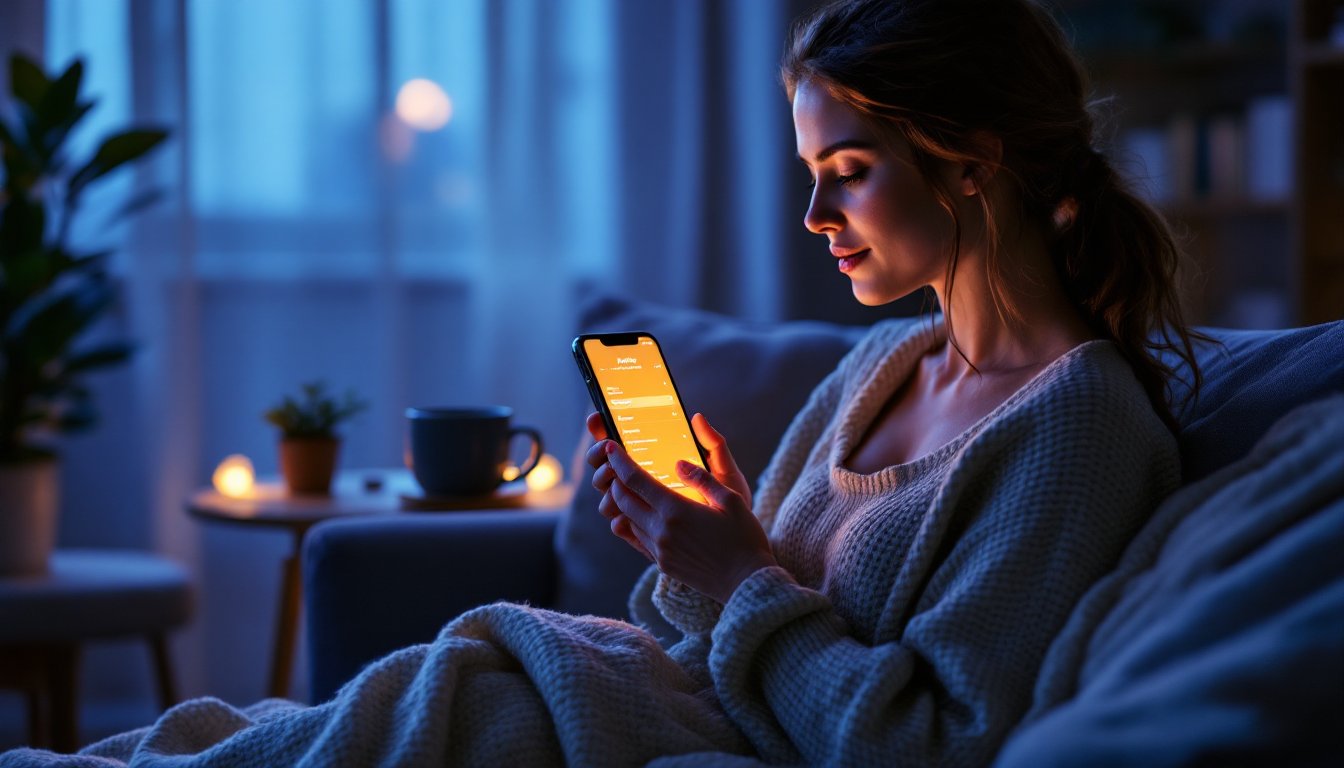
If you’re going to use screens in the evening, and let’s be real, most of us will at least some of the time, you can reduce the damage by shifting the qualities of what your device puts out.
Night Mode, Blue Light Filters, and Dark Mode
Night mode and blue light filters work on one specific Ayurvedic principle: reducing the sharp, hot quality of screen light. By shifting your display toward warmer amber tones, you’re moving from Pitta-aggravating blue toward something cooler and softer on the eyes.
Dark mode helps too, because it reduces the overall brightness and the contrast between your screen and a dim room. Less visual sharpness means less stimulation to Vata and Pitta through the eye gateway.
I personally set my phone’s night shift to activate automatically at 7:30 PM, well before my wind-down begins. It’s a small change, but it starts the sensory transition early.
Do this today: Enable Night Shift (iPhone) or Night Light (Android/Windows) and set it to auto-activate by early evening. Takes about 2 minutes in your settings. Suitable for everyone, no downsides here.
App Timers and Do Not Disturb Schedules
This one targets the mobile, subtle quality of notifications, those little pings and banners that keep Vata’s restlessness alive. Every notification is a micro-jolt to your nervous system, a tiny spike of prana being pulled outward when it’s trying to draw inward for the night.
Most phones now offer Do Not Disturb schedules and app-specific time limits. I use both. My DND kicks in at 9 PM, and I’ve set 15-minute evening limits on social media apps, not because I’m being strict with myself, but because I noticed those apps carry the most mobile, sharp, stimulating qualities. They’re the ones that keep my Vata buzzing.
Do this today: Schedule Do Not Disturb for one hour before bedtime and set a short timer on your most-scrolled app. Takes 3 minutes. Especially helpful for Vata and Pitta types who find themselves pulled into reactive content at night.
Screen-Free Wind-Down Activities Worth Trying Tonight
Once you’ve created even a small window of screen-free time, the question becomes: what do I do with my hands? (And my brain?)
Ayurveda’s answer is beautifully practical. You want activities that carry heavy, slow, warm, smooth, and stable qualities, the Kapha-supporting opposites of what screens provide. Think of it as giving your nervous system the sensory equivalent of a weighted blanket.
A warm cup of spiced milk, for example, is a classic Ayurvedic evening ritual. The milk is heavy and smooth, the warmth is grounding, and spices like nutmeg or cardamom gently support agni without stimulating it. This isn’t just comfort food, it directly nourishes ojas, building that deep well of resilience and calm that makes sleep genuinely restorative.
Gentle self-massage with warm oil (abhyanga) is another one I’ve grown to love. Even just rubbing warm sesame or coconut oil into your feet for five minutes calms Vata dramatically. The oil is heavy, smooth, and warm, a direct antidote to the dry, rough, mobile qualities that screens leave behind.
Journaling works too, especially if you keep it simple. Not productivity planning or goal-setting, that’s sharp and stimulating. More like three things you noticed today, or a few sentences about how you’re feeling. It helps your mind “digest” the day’s impressions before sleep, reducing the chance of unprocessed mental ama building up overnight.
Do this today: Choose one screen-free activity, warm drink, foot oil massage, or simple journaling, and try it for just 10 minutes tonight. Good for all types, though Vata types may especially love the oil massage and Pitta types may gravitate toward the cool simplicity of journaling.
What to Do When You Can’t Avoid Screens at Night
Life happens. Maybe you work late shifts, or you’re a parent whose only quiet time falls after 9 PM, or you’re a student with deadlines. I’m not going to pretend you can always shut everything off by sundown.
When screens at night are unavoidable, the Ayurvedic strategy shifts from elimination to mitigation through opposite qualities. You can’t remove the sharp, hot, mobile input entirely, but you can counterbalance it.
Keep your environment dim and warm-toned around your screen. A small salt lamp or candle nearby softens the overall sensory experience and introduces a grounding, stable quality to the room. Wear blue-light-filtering glasses if you’re on a computer for long stretches, they genuinely reduce the Pitta-aggravating sharpness hitting your eyes.
Take micro-breaks every 20 to 30 minutes. Close your eyes, take three slow breaths, and let your gaze soften. This gives prana a momentary chance to draw inward, even briefly. It’s not perfect, but it interrupts the relentless outward pull.
And after you finish your screen time, give yourself even a short buffer, 10 to 15 minutes, of something grounding before getting into bed. A few minutes of slow breathing, a warm drink, or simply sitting quietly. This small bridge helps your agni begin processing the sensory input rather than carrying it raw into sleep, where it becomes ama.
Do this today: If screens tonight are non-negotiable, add one counterbalance, dim ambient lighting, blue-light glasses, or a 10-minute decompression buffer afterward. Takes minimal setup. This approach works for all constitutions and is especially important for those already noticing signs of ama like morning fogginess, a coated tongue, or feeling heavy and unrefreshed at dawn.
Building a Sustainable Evening Routine for Better Sleep
The real magic isn’t in any single tip, it’s in the rhythm. Ayurveda calls this dinacharya, and it simply means your daily habits become so consistent that your body starts anticipating what comes next. Your nervous system relaxes not because you forced it, but because the pattern is familiar. Stable. Predictable. Those are Kapha’s favorite qualities.
Here are two daily routine anchors I recommend building your evening around.
First, a consistent “dim-down” transition at the same time each evening. This becomes your body’s signal that the active, outward part of the day is ending. Over time, your agni, your hormones, and your doshas all begin to shift in unison with this cue. It’s like training a muscle, except you’re training a rhythm.
Second, an evening sensory reset. This could be your foot massage, your warm drink, or even just washing your face and hands with warm water. The point is to consciously close the “sensory gates” that have been open and taking in stimulation all day. When Vata’s mobile energy has a clear endpoint, prana can consolidate inward, and ojas gets replenished during deep sleep.
For your seasonal adjustment, consider this: in late autumn and winter, when Vata energy in the environment is naturally high (cold, dry, mobile, rough), you’ll want to start your wind-down a bit earlier and lean harder into warming, oily, heavy practices, more oil massage, warmer drinks, heavier blankets. In summer’s Pitta season, the focus shifts toward cooling, a room-temperature drink with mint or coriander, lighter covers, and making sure your bedroom isn’t too hot. The qualities in your environment change with the seasons, and your evening routine can gracefully shift to match.
If You’re More Vata
Vata types (or anyone going through a Vata-aggravated phase) tend to have the hardest time putting screens down. Your mind is mobile, curious, and easily pulled into “one more thing.” You’re also the most likely to feel wired-but-tired at bedtime.
Focus on warm, heavy, oily, and stable qualities in your evening. Warm sesame oil on your feet, a heavier blanket, a cup of warm spiced milk. Keep your bedroom slightly warmer than you think you need. And give yourself the longest screen buffer you can, Vata needs more transition time than the other doshas.
Do this today: Warm oil on the soles of your feet, 5 minutes before bed. Especially for you if you notice restlessness, light sleep, or waking between 2 and 4 AM. Not ideal if you dislike oily textures, try warm socks instead.
If You’re More Pitta
Pitta types get hooked on screens for a different reason: purpose. You’re finishing one last email, researching one last topic, solving one last problem. The sharpness and heat of the screen actually match your internal qualities, which is exactly why it’s so overstimulating for you.
Your evening needs cooling, soft, and slow qualities. A cool (not cold) room, light cotton bedding, and screen content that doesn’t provoke or challenge. Moonlight, if you can get it, is considered deeply Pitta-soothing in Ayurveda. Even a few minutes on a balcony or by an open window in the evening air helps dissipate accumulated heat.
Do this today: Step outside or open a window for 5 minutes after your last screen use. Let the cooler evening air calm your eyes and your mind. Best for Pitta types or anyone dealing with eye strain, irritability, or overheating at night. Skip this if it’s very cold or damp outside, that’s more of a Vata/Kapha remedy.
If You’re More Kapha
Kapha types might actually find screens keep them up in a useful way, without them, you might crash on the couch at 7:30 PM and then wake up groggy at midnight. The challenge for Kapha isn’t overstimulation so much as sluggishness and heaviness that passes for sleep but isn’t truly restorative.
Your evening wind-down benefits from light, warm, and slightly stimulating qualities, but gently. A short walk after dinner, some light stretching, or a warm (not heavy) herbal tea with ginger and tulsi can keep your agni engaged enough to process the day without tipping into dullness.
Do this today: A 10-minute gentle walk after dinner, finishing at least an hour before bed. Good for Kapha types or anyone who feels sluggish and heavy in the evening. Not ideal if you’re already feeling depleted or under-rested, in that case, rest is what you need.
Modern Relevance
It’s worth noting that modern sleep research increasingly confirms what Ayurveda has taught for centuries: consistent evening routines, reduced light exposure, lower stimulation, and sensory downshifts all improve sleep quality measurably. The Ayurvedic framework simply gives you a personalized way to understand why certain strategies work for you and not for your partner or roommate. It’s not one-size-fits-all, and that’s precisely the point.
Do this today: Notice which dosha description resonated most and try the corresponding tip tonight. Takes no extra time, just awareness. For anyone curious about why generic sleep advice hasn’t worked for them.
Sleep, in Ayurveda, isn’t just rest. It’s one of the three pillars of life, alongside food and balanced intimacy. When your evening screen habits support rather than sabotage this pillar, the effects ripple outward: clearer thinking, steadier emotions, stronger immunity, and a quiet kind of energy that lasts all day. That’s ojas at work.
You don’t have to overhaul your entire evening tonight. Pick one thing. Try it for a few days. Notice what shifts.
And I’d love to hear from you, what’s your biggest screen habit struggle in the evening? Drop it in the comments or share this with someone who could use a better night’s sleep. What would it feel like to wake up genuinely refreshed tomorrow?