






Why Breathing Techniques Matter for Everyday Well-Being
Here’s something I find fascinating: you take somewhere around 20,000 breaths a day, and the quality of those breaths shapes everything from your energy levels to your emotional steadiness. In Ayurveda, breath is the primary vehicle of prana, the life force that animates every cell. When your breathing is erratic, shallow, or rushed, prana becomes scattered. And scattered prana leads to an anxious mind, weak digestion, and a body that feels perpetually on edge.
From the Ayurvedic perspective, poor breathing habits are a cause, a nidana, that can disturb all three doshas. Vata, which is light, dry, mobile, and cool by nature, gets aggravated first. You feel it as restlessness, cold hands, racing thoughts, or that untethered “I can’t settle down” feeling. But Pitta and Kapha aren’t immune either. Pitta types might notice irritability and sharp tension in the chest. Kapha types often experience heaviness, dullness, and a foggy mind when their breath stays shallow and stagnant.
When prana is disrupted, it also affects tejas, your inner metabolic clarity, and ojas, that deep reservoir of resilience and immunity. Think of it this way: prana is the wind, tejas is the flame, and ojas is the fuel. If the wind is chaotic, the flame flickers and the fuel burns unevenly. Conscious breathing practices bring all three back into harmony.
The Science Behind Controlled Breathing
Modern research has caught up with what Ayurveda has observed for thousands of years. Controlled breathing activates the parasympathetic nervous system, the “rest and digest” branch, which lowers cortisol, slows heart rate, and improves heart rate variability. A 2023 study from Stanford found that structured breathing exercises outperformed meditation for reducing anxiety in daily life.
In Ayurvedic terms, this maps beautifully onto the concept of calming Vata’s mobile, subtle, and erratic qualities. When you slow the breath, you introduce stability and heaviness as counterbalancing qualities. When you deepen the breath, you bring smoothness and warmth into tissues that have become rough and cool from stress.
The overlap isn’t accidental. Both systems are describing the same truth from different angles.
Signs Your Breathing Patterns May Be Working Against You
You might not realize your breathing is off until you pay attention. Some signs I encourage people to watch for: frequent sighing, yawning throughout the day even when you’ve slept enough, tightness across the upper chest, or a feeling that you can never quite get a full breath.
From an Ayurvedic standpoint, these are signs that ama, unprocessed residue, may be accumulating not just in your gut but in the subtle channels that carry prana. When those channels get sluggish or blocked, your breath becomes shallow almost as a reflex. You might also notice a coated tongue in the morning, low appetite, or a persistent feeling of heaviness after meals. These are all pieces of the same puzzle.
Do this today: Sit quietly for two minutes and simply observe your natural breath without changing it. Notice where it moves and where it doesn’t. This takes no special setup and works for anyone, though if you have a respiratory condition, go gently and consult your practitioner first.
How to Prepare for a Breathing Practice

You don’t need a meditation cushion or a perfectly quiet room. But a little preparation goes a long way.
First, timing matters in Ayurveda. The most potent window for breathing practices is during the early morning, roughly between 6 and 10 a.m., when Kapha’s stable, grounding energy supports you in sitting still and focusing. That said, any time you can carve out five minutes is better than waiting for the perfect moment.
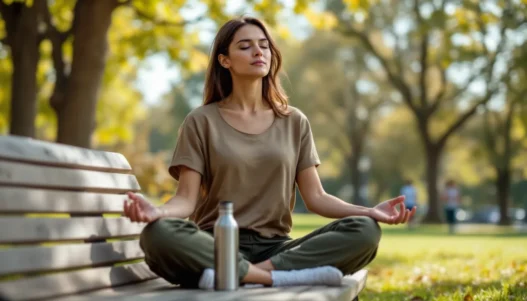
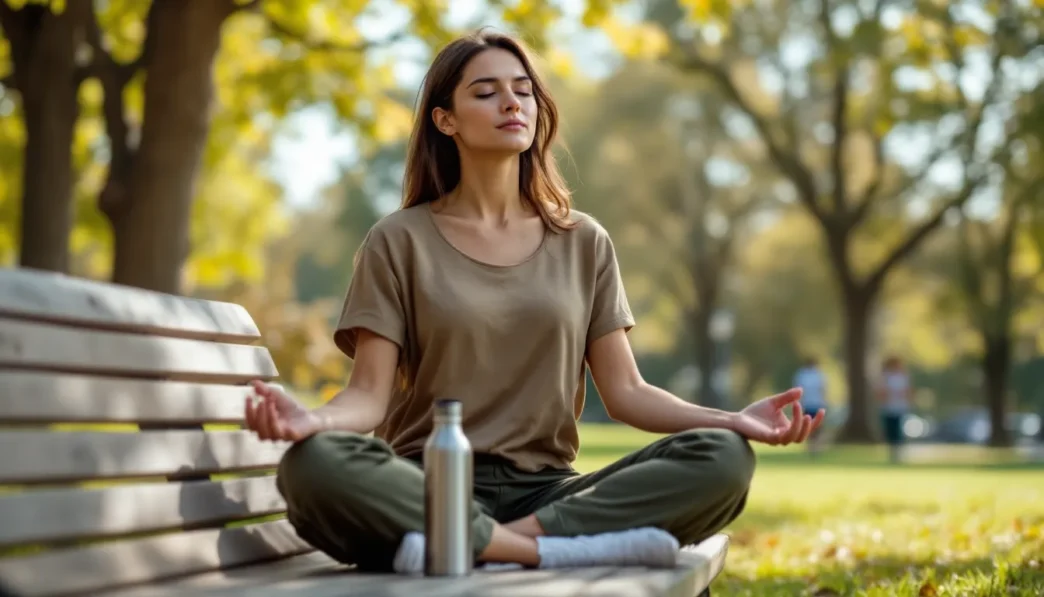
Find a comfortable seat where your spine can be upright without strain. This could be a chair, a park bench, even the front seat of your parked car. The key quality here is stability, you want your body settled so your breath can move freely.
Blow your nose if it’s stuffy. Take a sip of warm water if your mouth and throat feel dry. These small gestures clear the physical channels and invite a smoother, more oily quality into the tissues, counteracting the rough, dry qualities that often accumulate from stress, screen time, and dry indoor air.
Avoid practicing immediately after a heavy meal. When your digestive fire, agni, is busy processing food, redirecting your focus to the breath can create a kind of metabolic confusion. Your body is trying to do two things at once, and neither gets done well. Wait at least an hour after eating, or practice first thing in the morning on an empty stomach.
One more thing: set aside any goal of “doing it right.” Breathing practices aren’t about performance. They’re about re-establishing a relationship with something your body already knows how to do.
Do this today: Before your next breathing practice, spend 30 seconds preparing, sit tall, clear your nose, take a sip of warm water. This small ritual takes under a minute and is appropriate for everyone. If you’re pregnant or managing high blood pressure, keep your breath gentle and avoid any forceful retention.
Technique 1: Box Breathing for Calm Focus
Box breathing is one of the simplest breathing practices for daily balance, and it’s a personal favorite when I need to shift from scattered to centered in a hurry.
The technique involves four equal phases: inhale, hold, exhale, hold, each for the same count. That symmetry is what makes it so effective from an Ayurvedic perspective. The equal rhythm introduces stability and evenness to counteract the mobile, irregular qualities of aggravated Vata. It’s like putting a frame around chaos.
The holds, both after the inhale and after the exhale, are particularly interesting. The hold after inhaling allows prana to settle into the tissues instead of just rushing through. The hold after exhaling creates a moment of stillness that calms the nervous system at a deep level. Together, they support agni by giving the subtle body a chance to process and distribute energy, rather than scattering it.
When agni in the mind, sometimes called buddhi agni, the intelligence behind clear thinking, is steady, you make better decisions. You respond instead of reacting. That’s the tejas connection: the metabolic spark of discernment gets brighter when prana is regulated.
How to Practice Box Breathing Step by Step
Sit comfortably with your spine upright. Close your eyes or soften your gaze downward.
Inhale through your nose for a count of four. Let the breath feel smooth and even, not forced or sharp.
Hold your breath gently for a count of four. Keep your shoulders relaxed.
Exhale through your nose for a count of four. Let the breath leave slowly, like you’re fogging a cool window.
Hold at the bottom of the exhale for a count of four. Rest in that quiet space.
Repeat for four to eight rounds. The whole practice takes about three to five minutes.
Best Times to Use Box Breathing
Box breathing works beautifully during the Vata time of day, roughly 2 to 6 p.m., when the mind tends to scatter and energy dips. It’s also a wonderful reset before a meeting, a difficult conversation, or any transition between activities.
I’ve found it particularly helpful during late afternoon when that restless, ungrounded feeling creeps in. That’s Vata rising, and box breathing’s steady, structured rhythm is exactly the opposite quality Vata needs.
Do this today: Try four rounds of box breathing (inhale 4, hold 4, exhale 4, hold 4) the next time you feel mentally scattered. It takes about three minutes. This works well for all constitutions, but Vata types will likely feel the most immediate relief. If breath holds feel uncomfortable or create anxiety, skip the holds and just breathe in equal counts, inhale four, exhale four.
Technique 2: 4-7-8 Breathing for Deep Relaxation
If box breathing is about finding center, the 4-7-8 technique is about letting go. The extended exhale is the key here, and it’s profoundly calming.
In Ayurveda, a long exhale has a cooling, heavy, and slow quality. It naturally pacifies Pitta’s heat and sharpness while also grounding Vata’s tendency to fly off. The ratio, inhale for 4, hold for 7, exhale for 8, tips the balance firmly toward relaxation. You’re essentially telling your body, “It’s safe to rest.”
This is where ama enters the picture in a subtle but meaningful way. When stress keeps the body in a state of constant alertness, digestion, both physical and mental, gets compromised. Food sits heavier. Emotions don’t get processed. Sleep becomes light and broken. That’s ama building up in the subtle channels. The 4-7-8 breath helps clear those channels by slowing everything down enough for your body’s natural intelligence to catch up.
The extended hold and long exhale also deeply nourish ojas, that deep vitality that makes you feel resilient and whole. Think of ojas as your inner reserves. Stress burns through ojas quickly. This technique helps replenish it.
How to Practice the 4-7-8 Method
Sit or lie down comfortably. Place the tip of your tongue lightly behind your upper front teeth, this is a traditional position that connects certain energy pathways, and it also just helps you relax your jaw.
Inhale quietly through your nose for a count of four.
Hold your breath for a count of seven. Stay relaxed, no clenching.
Exhale completely through your mouth for a count of eight. Let the exhale be audible and soft, like a long sigh.
That’s one cycle. Start with three to four cycles. The whole practice takes about two minutes.
When the 4-7-8 Technique Works Best
This technique shines during the evening transition, after dinner and before bed, when you’re moving from the activity of the day into the receptive, quieter Kapha time of night. It’s also excellent for those 3 a.m. wake-ups (a classic Vata disturbance) when your mind starts spinning and you can’t fall back asleep.
I personally use this one when I notice the sharp, hot quality of Pitta building, that “wired but tired” feeling that comes from pushing too hard for too long. The cooling, smooth quality of the long exhale is the perfect antidote.
Do this today: Practice three rounds of 4-7-8 breathing tonight before bed. It takes under two minutes. This technique is especially helpful for Pitta and Vata types, though Kapha types can benefit too. Avoid this practice if you feel dizzy during the holds, simply shorten the hold count to what feels comfortable.
Technique 3: Diaphragmatic Breathing for Sustained Energy
This third technique isn’t flashy, but don’t underestimate it. Diaphragmatic breathing, sometimes called belly breathing, is the foundation that makes everything else work.
Most of us breathe into our upper chest, especially under stress. That chest-dominant pattern is light, mobile, and shallow, all qualities that increase Vata. Diaphragmatic breathing reverses this by engaging the large, dome-shaped muscle below your lungs. The result is a breath that’s deep, heavy, smooth, and warm, qualities that pacify Vata and nourish Kapha’s grounding energy.
Here’s the agni connection: your diaphragm sits right above your stomach and digestive organs. When it moves fully with each breath, it gently massages the organs below. This supports digestive fire directly, improving nutrient absorption, reducing bloating, and helping the body process food more efficiently. Less ama, more nourishment reaching the tissues.
Diaphragmatic breathing also has a unique relationship with prana. While the other two techniques are more targeted, used at specific moments, this one can become your default breathing pattern throughout the day. It keeps prana flowing steadily through all channels, supporting not just calm but sustained, clean energy.
How to Practice Diaphragmatic Breathing
Place one hand on your chest and one on your belly. Breathe in slowly through your nose and notice which hand rises first. The goal is for your belly hand to rise while your chest hand stays relatively still.
Inhale for a count of four, directing the breath downward. Your belly expands outward, not because you’re pushing it out, but because the diaphragm is descending and making space.
Exhale for a count of six, letting your belly gently fall back toward your spine. There’s a natural, oily smoothness to this breath when it’s done well.
Continue for five to ten minutes. There’s no need to hold the breath here.
Integrating Diaphragmatic Breathing Into Your Routine
What I love about this technique is that it doesn’t need a dedicated “practice time.” You can shift to diaphragmatic breathing while walking, cooking, sitting in traffic, or standing in line. It becomes less of a technique and more of a way of being.
That said, dedicating five minutes in the morning, ideally during the Kapha time between 6 and 10 a.m., helps train the pattern so your body defaults to it throughout the day. Pair it with your morning warm water and you’ve got a simple daily ritual that supports both agni and prana before the day even gets going.
Do this today: Spend five minutes practicing diaphragmatic breathing with your hands on your chest and belly. Try it first thing in the morning. This technique is wonderful for all constitutions, and it’s the gentlest of the three, making it the best starting point if you’re new to breathwork or if you’re pregnant. If you have a hernia or recent abdominal surgery, go very gently or consult your practitioner.
Building a Consistent Daily Breathing Practice
Knowing three techniques is great. Practicing them consistently is where the real shift happens.
In Ayurveda, dinacharya, your daily rhythm, is considered one of the most powerful tools for maintaining balance. It’s not about rigid discipline. It’s about creating grooves that your body and mind can settle into, the way water naturally follows a riverbed.
Here are two daily habits I recommend anchoring your breathing practices to.
Morning anchor: Within the first 30 minutes of waking, before you check your phone, sit for five minutes of diaphragmatic breathing. This sets the tone for prana’s flow throughout the entire day. It’s like cleaning a window first thing, everything you see through it afterward is clearer.
Afternoon anchor: Between 2 and 4 p.m., when Vata energy naturally rises and focus tends to scatter, take three minutes for box breathing. This is your midday reset. It supports tejas, that spark of mental clarity, right when it’s most likely to dim.
For evenings, the 4-7-8 breath before bed is a beautiful way to transition into sleep. But I wouldn’t call it mandatory, use it when you need it.
Now, here’s the seasonal piece. As seasons shift, your breathing practice can shift too. This is ritucharya, seasonal adjustment. During cold, dry, windy months (late autumn and winter), Vata is naturally high in the environment. This is the time to emphasize the slower, warmer practices, longer exhales, diaphragmatic breathing, and keeping your practice in a warm room. During the hot months of summer, when Pitta rises, the cooling 4-7-8 breath becomes especially valuable. You might practice it twice a day instead of once. And during the damp, heavy days of late winter and spring, when Kapha can make you feel sluggish, a slightly quicker-paced box breathing pattern can introduce the lightness and sharpness needed to cut through that fog.
If You’re More Vata
Vata types tend to love the idea of a breathing practice but struggle with consistency. Your mind jumps ahead, your body fidgets, and five minutes can feel like twenty.
Your best friend is diaphragmatic breathing, slow, deep, grounding, warm. Practice in a cozy spot, perhaps wrapped in a blanket. Avoid any aggressive or fast-paced breathwork, which will only amplify Vata’s mobile quality. Warm sesame oil on your feet before practice can help settle the whole nervous system.
Do this today: Commit to just three minutes of diaphragmatic breathing every morning this week. That’s it. Three minutes in a warm, quiet space. This is ideal for Vata-dominant individuals or anyone feeling ungrounded. Not recommended as your only practice if you tend toward heaviness or sluggishness, you’ll want to add some Kapha-balancing movement too.
If You’re More Pitta
Pitta types often approach breathwork the same way they approach everything, with intensity and a drive to “optimize.” Try softening that impulse.
The 4-7-8 technique is your go-to. That long, cooling exhale counteracts the hot, sharp, intense qualities that build up in your system. Practice in a cool or neutral-temperature space. Avoid competitive thoughts like counting how many rounds you can do or trying to extend the counts aggressively.
Do this today: Practice four rounds of 4-7-8 breathing after your midday meal, sitting somewhere cool and pleasant. About two minutes. This works especially well for Pitta types and anyone experiencing irritability, acid reflux, or that “overheated” feeling. If you tend toward cold, heavy, or sluggish feelings, this technique may not be your primary choice.
If You’re More Kapha
Kapha types might find breathing practices make them sleepy, especially the slower ones. That’s okay, but it’s also a signal that you might benefit from a slightly more invigorating approach.
Box breathing at a moderate pace works well for Kapha because it has structure and rhythm without being overly sedating. Practice sitting upright rather than lying down, and try it during the morning Kapha hours (6–10 a.m.) to counteract any sluggishness. A brisk walk before your breathing practice can also help clear the heavy, dull quality that sometimes blocks prana’s flow.
Do this today: Try five rounds of box breathing after a 10-minute morning walk. This combination takes about 15 minutes total. Ideal for Kapha-dominant types or anyone waking up feeling foggy and slow. If you’re already feeling anxious or depleted, skip the walk and go straight to a gentler diaphragmatic practice instead.
Seasonal note: During the damp days of spring, Kapha types may want to add an extra round of box breathing and practice near an open window where the air is fresh and moving, bringing in those light, dry qualities to counterbalance the season’s heaviness.
Do this today: Choose one daily anchor, morning or afternoon, and commit to it for seven days. It takes three to five minutes. This approach works for everyone, regardless of constitution. If you have severe anxiety or a trauma history involving breath restriction, start with just one minute and build gradually, ideally with a practitioner’s guidance.
Conclusion
Breathing is the one thing you’re already doing every moment of every day. You don’t need to add something new to your life, you just need to bring a little more awareness to what’s already happening.
These three breathing practices for daily balance, box breathing, 4-7-8 breathing, and diaphragmatic breathing, are simple, portable, and surprisingly powerful. They work not because they’re trendy, but because they address something fundamental: the flow of prana through your body and the quality of your inner fire.
Start with whichever technique feels most natural to you. Give it a week. Notice what shifts, in your sleep, your digestion, your mood, the way you handle a stressful moment. Let your body teach you what it needs.
And remember, this is general education, not medical advice. If you’re pregnant, managing a health condition, or taking medication, check with a qualified professional before starting any new practice.
I’d love to hear how these techniques land for you. Which one are you drawn to first? Drop a comment below or share this with someone who could use a little more calm in their day.
What would change in your life if you breathed just a little more consciously?