







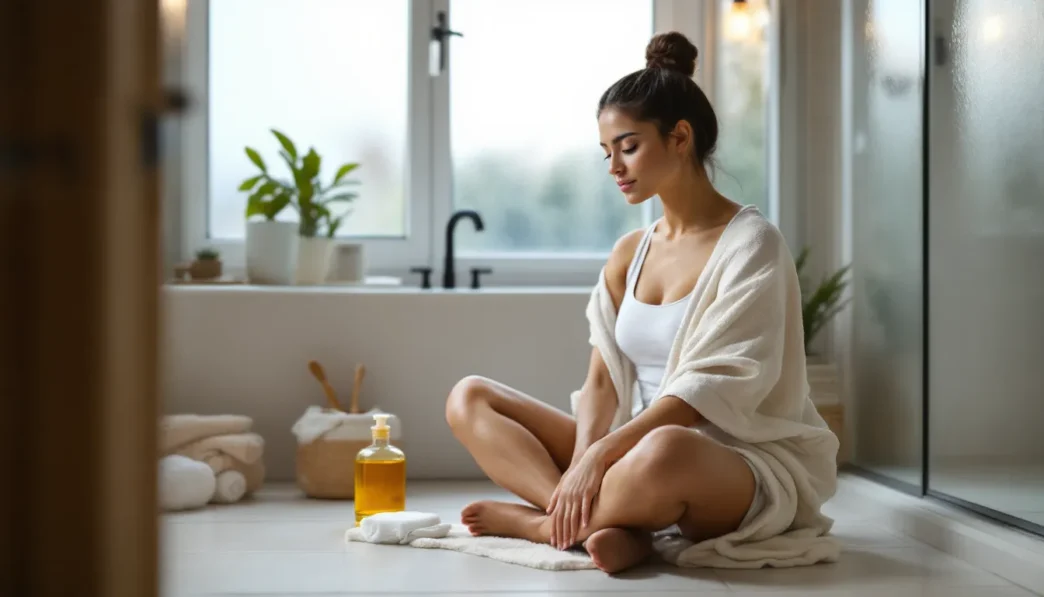
What Is Abhyanga and Why Does It Matter?
Roots in Ayurvedic Tradition
Abhyanga literally translates to “oil application” or “anointing the body with oil.” In Ayurveda’s classical texts, it’s listed as a core part of dinacharya, the ideal daily routine, right alongside tongue scraping and warm water in the morning. It’s not a luxury or a spa treatment. It’s considered a foundational act of self-care, as routine as brushing your teeth.
The reason Ayurveda places so much emphasis on this practice comes down to how oil interacts with your body’s deeper layers. Your skin is the body’s largest organ, and in Ayurvedic thinking, it’s closely tied to the nervous system and to Vata dosha, the force of movement, air, and change. When Vata gets aggravated (from stress, cold weather, irregular routines, too much screen time), you feel it in your skin first: dryness, roughness, cracking. But you also feel it internally as anxiety, scattered thinking, and light or broken sleep.
Warm oil is heavy, smooth, stable, and oily, the exact opposite qualities. Applying it to the skin pacifies that excess lightness and dryness. It’s a beautiful example of Ayurveda’s core principle: like increases like, and opposites bring balance.
Key Benefits of Regular Self-Oil Massage
Regular abhyanga does more than moisturize. From an Ayurvedic perspective, the warmth and weight of the oil strengthen your ojas, that deep reserve of vitality, immunity, and contentment that keeps you resilient when life gets hectic. The gentle friction of the massage stokes your tejas, the subtle metabolic spark that supports clarity and healthy transformation at a cellular level. And the rhythmic, intentional touch calms prana, your life force, helping steady the nervous system.
In more everyday terms? People who practice abhyanga regularly tend to notice softer skin, calmer nerves, better sleep, improved circulation, and a kind of quiet inner stability that’s hard to describe but easy to feel.
The practice also supports agni, your digestive and metabolic intelligence. When your body feels settled and nourished externally, internal processes, including digestion, tend to function more smoothly. And when agni is strong, less ama (that sticky, undigested residue from incomplete metabolism) accumulates. Ama shows up as brain fog, sluggish digestion, a coated tongue, or that heavy feeling you can’t shake even after a full night’s sleep.
Do this today: Set aside 15 minutes tomorrow morning to try a simple self-oil massage before your shower. This works for all body types, though if you have an active skin infection or acute fever, hold off and consult a professional first.
How to Choose the Right Oil for Your Body Type
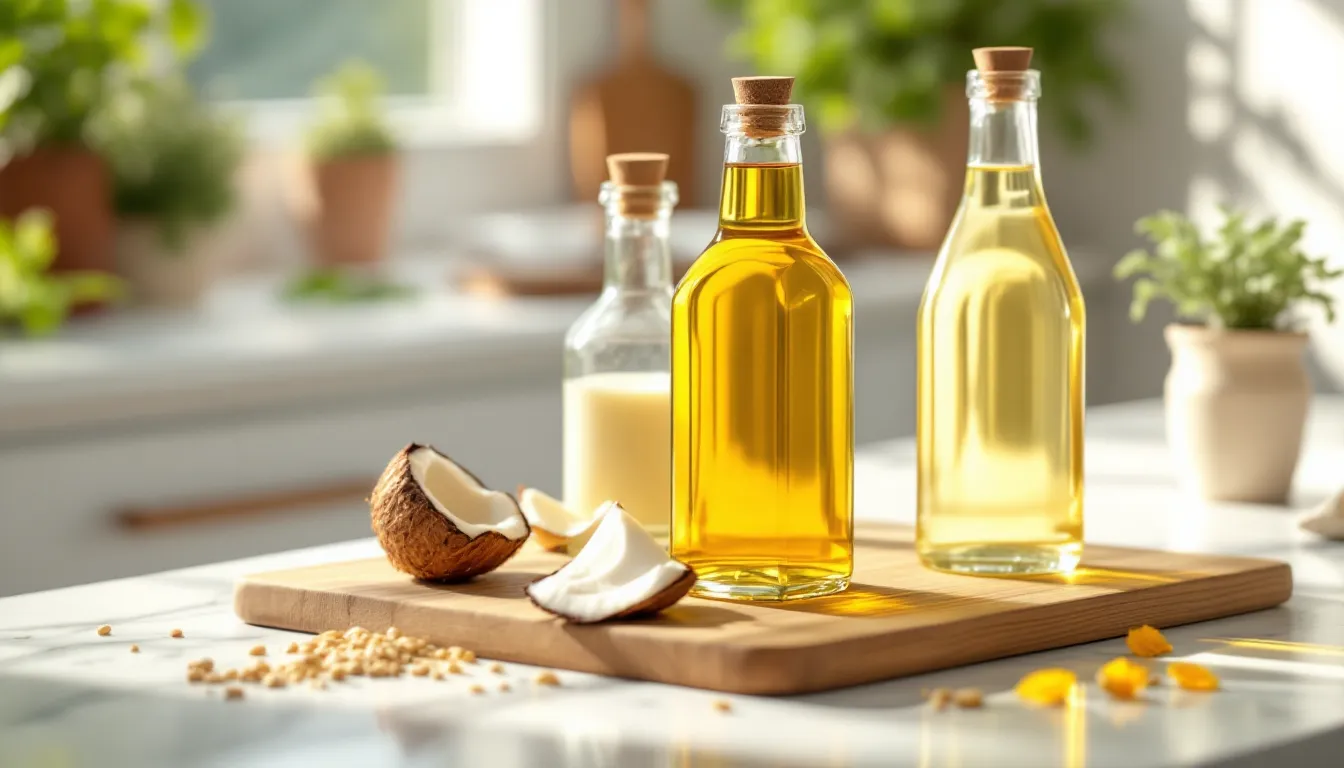
Choosing your oil isn’t just about what smells nice. In Ayurveda, every oil carries specific qualities, warm or cool, heavy or light, penetrating or gentle, and those qualities interact with your constitution differently.
This is where personalization comes in, and it’s non-negotiable in Ayurveda. What nourishes one person can aggravate another.
Oils for Vata, Pitta, and Kapha Doshas
If you tend toward Vata, meaning you run cold, your skin is often dry, you’re naturally thin-framed, and your mind tends to race, you’ll want an oil that’s warm, heavy, and deeply grounding. Sesame oil is the classic choice here. It’s warming, penetrating, and deeply nourishing. It counters the dry, light, mobile, rough qualities that define Vata imbalance.
If Pitta runs strong in your system, you tend toward heat, sharp focus that tips into irritability, reddish or sensitive skin, and strong digestion that sometimes burns too hot, a cooling, soothing oil works best. Coconut oil or sunflower oil brings those cool, smooth qualities that settle Pitta’s sharp, hot, oily nature. In cooler months, you can blend coconut with a small amount of sesame so it doesn’t feel too cold.
If Kapha is dominant, meaning your build is naturally sturdy, your skin tends toward oiliness, you gain weight easily, and lethargy or congestion are recurring patterns, go lighter. Safflower oil or mustard oil works well because they’re lighter, slightly warming, and stimulating. Kapha already has plenty of the heavy, oily, cool qualities, so you want an oil that won’t add more of the same.
A good all-purpose option if you’re unsure of your constitution? Plain organic sesame oil (not toasted). It’s balancing for most people, especially during cooler or drier seasons.
Do this today: Pick one oil that matches your general tendencies, cold and dry, hot and sharp, or heavy and slow. Start there. You can refine over time. Takes about 2 minutes of honest self-reflection. If you’re pregnant or managing a skin condition, check with a qualified Ayurvedic practitioner before choosing your oil.
Preparing Your Space and Supplies
I’ll be honest, the biggest barrier to abhyanga isn’t the technique. It’s the mess. Oil gets everywhere if you’re not a little intentional about your setup.
Here’s what I do. I keep an old towel designated as my “oil towel.” I lay it on the bathroom floor, and that’s my workspace. I warm my oil by placing the bottle in a mug of hot water for about five minutes. You want the oil comfortably warm, not hot, not lukewarm. Think the temperature of warm soup broth. That warmth carries the oil’s qualities deeper into the tissues and makes the experience genuinely pleasant.
You’ll also want a small cup or bowl to pour the oil into, so you’re not fumbling with a slippery bottle mid-massage. Keep your shower ready to go, because you’ll rinse off the excess oil afterward.
The environment matters more than you’d think. A cold, drafty bathroom works against you, cold air aggravates Vata, and you’re doing this practice to calm Vata. Close the door. If it’s chilly, run the shower for a minute first to steam up the room. Soft light is better than harsh overhead lighting. If you enjoy it, play something quiet in the background, but silence works beautifully too.
This isn’t about creating a spa. It’s about making the space warm, stable, and unhurried, qualities that directly support what the oil is doing.
Do this today: Gather your supplies tonight, one old towel, one small bowl, your chosen oil. Prep takes less than 5 minutes. Good for everyone: no contraindications to setting up.
Step-by-Step Abhyanga Technique for Beginners
Start with about a quarter cup of warm oil. You can always add more. The goal is a thin, thorough coat over the whole body, not drenching yourself.
Head, Face, and Neck
I like to begin at the crown of the head. Pour a small amount of oil onto your fingertips and work it into your scalp using slow, circular motions. The head is a major seat of Vata and prana, when you massage the scalp, you’re directly calming the nervous system and settling that mobile, restless quality.
Move to your face with very gentle pressure. Small circles on the temples, across the forehead, along the jawline. Many of us hold tension here without realizing it. The jaw especially tends to grip, that’s Vata-driven tension, and the warm, smooth oil helps release it.
For the neck, use long downward strokes on the front and back. The neck connects your head to your heart, and keeping this area warm and relaxed supports the flow of prana through the body.
Arms, Torso, and Legs
Here’s the basic Ayurvedic pattern: long strokes on the long bones, circles on the joints. So on your arms, stroke up and down the forearm and upper arm, then make gentle circles around the elbow, wrist, and shoulder.
For the torso, move in broad clockwise circles over the abdomen. This follows the direction of your digestive tract and actually supports agni, it’s a gentle way to encourage healthy digestion and help prevent ama from building up. On the chest, use open-palm strokes outward from the center. The chest is where Kapha resides, and this outward movement helps keep things from feeling stagnant or heavy there.
Legs follow the same principle as arms. Long strokes on the shins and thighs, circles on the knees and ankles. Knees can be especially dry and rough, those are Vata-predominant areas, so give them a little extra love.
Feet and Final Strokes
I always save the feet for last, and I spend the most time here. In Ayurveda, the soles of the feet are connected to nearly every organ and system. Massaging the feet before bed is one of the single most grounding things you can do, it draws mobile, upward-moving Vata energy downward, which is why it helps so much with sleep.
Use your thumbs to press firmly into the soles, working from heel to toes. Massage each toe individually. Circle the ankles. If you do nothing else, do the feet.
Once you’ve covered the whole body, let the oil sit for at least 10 to 15 minutes before showering. This “soak time” allows the oil’s qualities, warm, heavy, smooth, oily, to penetrate through the skin into the deeper tissue layers. Then shower with warm (not scorching) water. Use soap only where needed: you don’t have to strip all the oil off. A light residue is actually the point.
Do this today: Try the full sequence once, budgeting about 15–20 minutes including soak time. This is appropriate for all body types. If you have severely congested skin or active inflammation, skip the head oiling and start with the body only, or consult a practitioner.
How Often to Practice and Best Times of Day
Ayurveda’s classical recommendation is daily, ideally in the morning before your bath. Morning is Vata time, roughly 2 a.m. to 6 a.m. transitions into Kapha time from 6 a.m. to 10 a.m. Doing abhyanga early in the morning catches that Vata-to-Kapha transition, grounding the residual lightness and movement of the early hours while giving your body a warm, nourishing start before the heavier energy of the Kapha period settles in.
That said, I know daily isn’t realistic for everyone. Even three times a week creates noticeable shifts. And if mornings are chaotic, an evening self-massage (especially of the feet and scalp) is a wonderful alternative, it draws energy downward, calms the mind, and supports deeper sleep.
There’s an important timing principle here related to agni: don’t do a full abhyanga right after a heavy meal. Your body’s metabolic energy is focused on digestion at that point. Give yourself at least an hour after eating. An empty or lightly-fed stomach is ideal.
As for duration, a thorough full-body massage takes about 15 minutes once you get comfortable with the sequence. A quick version, feet, scalp, and joints only, takes 5 minutes and still delivers genuine benefit.
Do this today: Pick your time slot, morning or evening, and try it three times this week. This guidance works for all constitutions. If you’re dealing with extreme fatigue or a heavy, sluggish feeling, start with the shorter version and build up.
Common Mistakes to Avoid During Self-Oil Massage
The most common mistake I see is using cold oil. Cold oil carries the same qualities that aggravate Vata, cold, constricting, a bit shocking to the skin. It turns what could be a deeply soothing practice into something your body subtly resists. Always warm your oil. It doesn’t take long, and the difference is night and day.
Another mistake: rushing through it. I get it, mornings are tight. But abhyanga done in a hurry, with a stressed mind, is a contradictory experience. You’re trying to bring stable, calm, grounding qualities into your body while your mind is already three tasks ahead. Even a slower five-minute version beats a frantic fifteen-minute one.
Using the wrong oil for your constitution is surprisingly common too. If you’re a Pitta type applying warming sesame oil in the middle of summer, you may end up feeling more irritable and overheated, not less. The qualities of the oil are either supporting balance or pushing you further from it, there’s no neutral.
Finally, don’t skip the soak time. If you oil up and jump straight into the shower, the oil hasn’t had a chance to penetrate. Those heavy, smooth, nourishing qualities need a few minutes to move past the surface of the skin into the deeper tissues, where they support ojas and calm the nervous system at a more subtle level.
Do this today: On your next abhyanga, set a timer for 10 minutes of soak time and notice if the experience feels different. This applies to all types. If you have extremely oily skin or active Kapha congestion, you can reduce soak time to 5 minutes.
Tips for Building a Sustainable Abhyanga Routine
Here’s what I’ve learned after years of practicing and occasionally falling off the wagon: the routine that sticks is the one that’s easy to start.
Keep your oil in the bathroom, not tucked away in a cabinet. Visual cues matter. When you see the bottle every morning, it’s a gentle reminder. I also keep my designated towel folded right next to it, removing even one small barrier makes a difference.
Connect abhyanga to something you already do. I pair it with my morning shower. The oil warming in its hot water mug is now as automatic as turning on the coffee. In Ayurveda, these anchored habits are part of dinacharya, the daily rhythm that keeps your body and mind synchronized. Two daily habits that pair beautifully with abhyanga are tongue scraping first thing in the morning (which clears overnight ama from your mouth and gives you a real-time snapshot of your digestive health) and sipping warm water throughout the day (which keeps your internal channels open and prevents the dry, rough accumulation that Vata loves to create).
For your seasonal adjustment: in cold, dry, windy months, late autumn and winter especially, increase the frequency and amount of oil. These are peak Vata seasons, and the dry, cold, mobile qualities in the environment are pulling moisture and stability out of your body. Use a heavier hand with warm sesame oil, and let it soak longer. In summer’s heat, you might scale back to lighter oils, smaller amounts, or focus primarily on the head and feet to stay cool without overheating.
If you’re more Vata: prioritize daily abhyanga, especially during fall and early winter. Use generous amounts of warm sesame oil. Focus extra time on your joints, lower back, and feet. Keep the room warm. Avoid rushing, Vata needs slowness. The one thing to steer clear of: skipping meals and then doing abhyanga on an empty, anxious stomach. Eat something light first.
Do this today: Try pairing abhyanga with your existing morning shower routine for one week, 15 minutes total. For all types, though Vata constitutions will feel the deepest immediate benefit.
If you’re more Pitta: three to four times per week is plenty. Use coconut oil or sunflower oil, especially in warm weather. Don’t massage too aggressively, Pitta’s sharp, intense quality can turn self-care into a competitive sport. Keep your touch moderate. Focus on the scalp, feet, and abdomen. Avoid doing abhyanga in a hot, steamy room: a comfortable temperature is fine. The thing to avoid: using excessively warming oil or practicing right after intense exercise when your body is already hot.
Do this today: Try a coconut oil foot and scalp massage tonight before bed, 10 minutes. Ideal for Pitta types, especially in warm seasons. If you have very dry or cracking skin, consider adding a small amount of sesame oil to the blend.
If you’re more Kapha: two to three times per week, using lighter oil like safflower or a very small amount of mustard oil. Your massage can be more vigorous, Kapha benefits from stimulation and movement. Focus on areas that tend toward stagnation: the chest, upper back, and thighs. Keep the oil quantity modest: Kapha already has plenty of the heavy, oily qualities. A brisk dry-brush before oiling can be a great complement. The thing to avoid: heavy amounts of oil left sitting for long soak times, which can increase sluggishness.
Do this today: Try a brisk, lighter-oil massage focusing on chest and thighs, about 10 minutes, with a 5-minute soak. Best for Kapha types. If you’re feeling especially congested or lethargic, a dry garshana (silk glove massage) before oiling can help stimulate circulation.
One more thought on sustainability: be patient with yourself. I’ve had stretches where I practiced daily for a month, then missed a week. That’s fine. The body remembers the nourishment. When you come back, it welcomes you.
Ayurveda connects to modern life in a way that’s quietly profound here. We live in a Vata-aggravating world, fast, dry, overstimulated, always moving. Self-oil massage is one of the simplest, most direct antidotes. You don’t need a special room or expensive tools. You need warm oil, your own two hands, and fifteen minutes of attention.
Do this today: Pick one friction point that’s kept you from starting (time, mess, confusion about oil) and solve it tonight. Takes 5 minutes. For everyone.
Conclusion
Abhyanga isn’t complicated. It’s warm oil, applied with care, given time to soak in. But beneath that simplicity is something Ayurveda has understood for a very long time: that touch, warmth, and consistency are some of the most powerful medicines we have access to.
When you practice self-oil massage, you’re not just moisturizing your skin. You’re calming your nervous system. You’re strengthening your deep reserves of vitality. You’re telling your body, in the most direct language it understands, that it’s safe, cared for, and worthy of attention.
Start small. Start imperfectly. Just start.
I’d love to hear how it goes for you. Have you tried abhyanga before, or is this your first time? What felt different? Drop a comment or share this with someone who could use a little more grounding in their life.
This is general education, not medical advice. If you’re pregnant, managing a condition, or taking medication, check with a qualified professional before starting a new practice.