







What Triggers Occasional Nausea and Motion Discomfort
Before I talk about remedies, I want to slow down and look at what’s actually going on. In my experience, nausea has many faces. Sometimes it’s the heavy, dull queasiness after a rich meal. Sometimes it’s the sharp, hot churning before an important meeting. And sometimes it’s that mobile, spinny feeling on a winding road.
From an Ayurvedic view, nausea is usually a sign that Agni, your inner digestive spark, is struggling, and that Vata (the mobile, subtle force that governs movement) or Pitta (the hot, sharp force that governs transformation) has gone off-rhythm. When this happens, partially processed residue called ama can build up, and the body wants it out. Hence the upward push we know as nausea.
Common Everyday Causes to Recognize
Most of the everyday triggers I see come down to a few patterns. Eating too fast, eating too late, or mixing too many heavy and oily foods overwhelms your digestive fire. Stress, anxious thoughts, and skipped meals stir up Vata. Strong smells, alcohol, and overly spicy food can spike Pitta and create that sharp, hot queasiness.
Dehydration is another quiet culprit. So is screen time during travel, which jangles the nervous system and disturbs Prana, your steady life force.
Why Motion Sickness Happens in the Body
Motion sickness is, in essence, a Vata storm. Your eyes say one thing, your inner ear says another, and your body can’t reconcile the mismatch. That conflicting input scrambles Prana in the head and chest, which then disturbs Agni in the belly.
The qualities at play are unmistakable: mobile, subtle, rough, and a touch cold. The fix, naturally, leans toward the opposites: stable, grounding, warm, and smooth.
Try this today: Pause and notice your pattern. Is your nausea heavy and dull (Kapha), sharp and hot (Pitta), or fluttery and anxious (Vata)? Takes about a minute. Helpful for anyone curious: not a substitute for medical care if symptoms are persistent.
Time-Tested Ginger Remedies That Actually Work

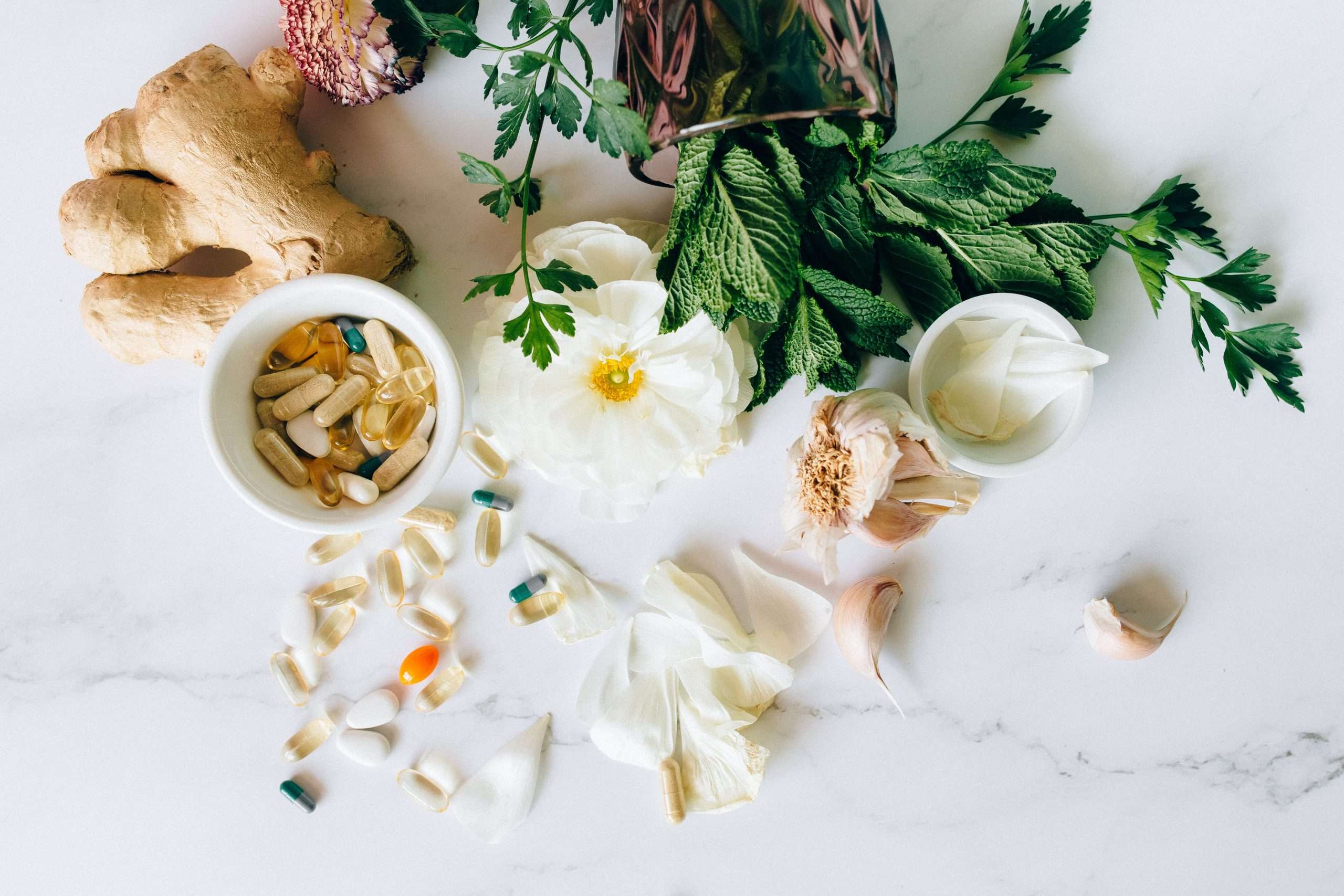
Ginger, or adraka, is the remedy I trust most for an unsettled stomach. Ayurveda has called it vishwabhesaj, “the universal medicine,” for centuries, and it’s not poetic exaggeration. Ginger gently rekindles Agni, breaks down ama, and calms that upward Vata movement that drives nausea.
Its qualities are warm, light, and slightly sharp, which is precisely why it cuts through the heavy, dull feeling of overeating and also steadies the cold, mobile churn of motion sickness. It’s a small piece of root doing surprisingly grown-up work.
My favorite preparation is the simplest. I peel a thin slice of fresh ginger, add a pinch of rock salt, and chew slowly about fifteen minutes before a meal or a long drive. If chewing raw ginger feels too intense, a warm ginger tea works beautifully: a few thin slices simmered in water for five minutes, sipped slowly.
For travel, I keep ginger candies or crystallized ginger in my bag. They’re not as potent as fresh, but they’re convenient and surprisingly effective during a bumpy ride.
A gentle caution: if you’re prone to acid reflux, heartburn, or a very Pitta-hot constitution, go lighter on ginger or pair it with a little honey and lemon to soften its heat.
Try this: Brew a small cup of fresh ginger tea, sip warm over 10 minutes. Good for most adults with sluggish digestion or motion queasiness. Not ideal if you have ulcers or strong acid reflux.
Soothing Peppermint and Aromatherapy Options
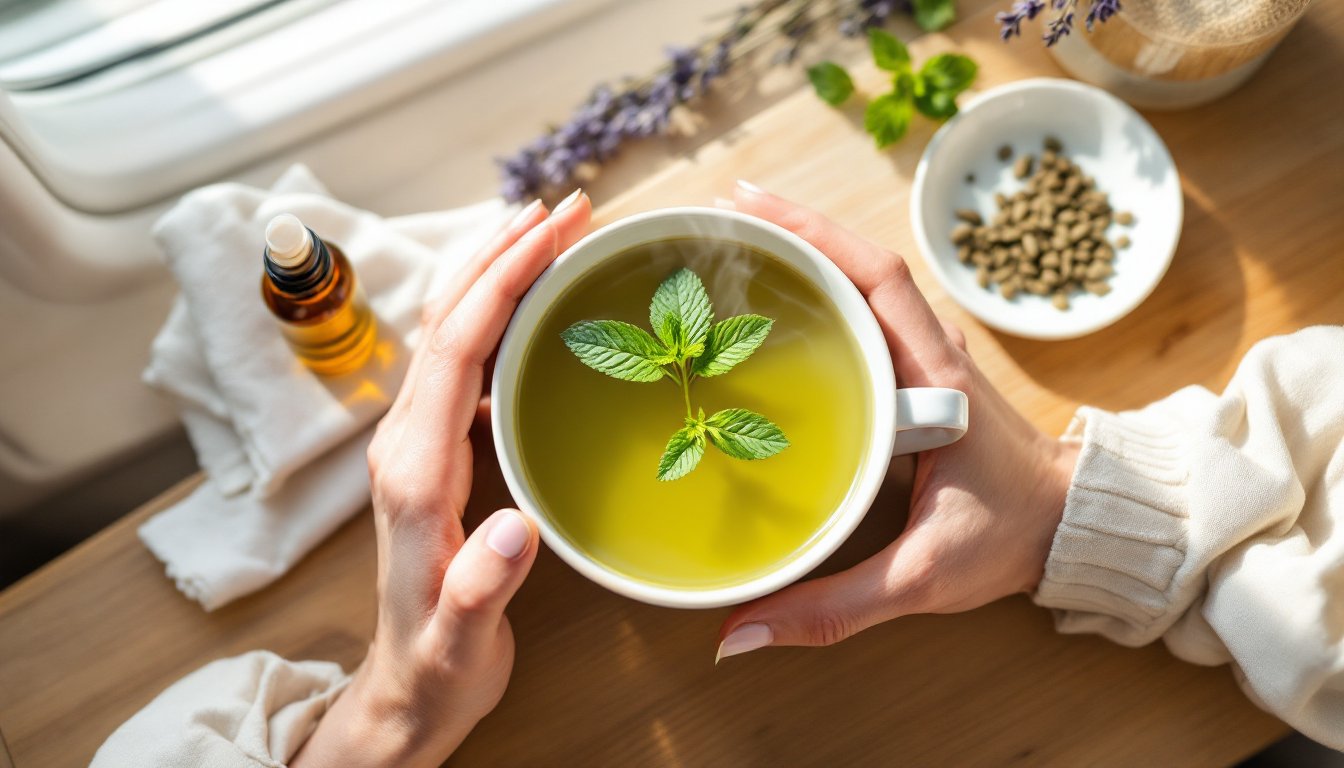
Where ginger warms, peppermint cools and clears. I reach for it when nausea has that sharp, hot, Pitta-flavored edge, or when the air feels stuffy and my head feels foggy on a long flight.
Peppermint’s qualities are cool, light, and subtle. The aromatic compounds travel quickly through Prana’s pathways, which is why even a quick sniff can shift things. You’re not just smelling something pleasant: you’re inviting steadier breath and calmer nerves.
My easy go-to is a small bottle of peppermint essential oil. One drop on a tissue, held a hand’s width from the nose, and I take three slow breaths. For something gentler, a cup of fresh mint tea works wonders, especially after a heavy lunch.
Other aromatics worth knowing: fennel after meals (sweet, cooling, gentle on Agni), cardamom for that subtle floral lift that quiets a queasy stomach, and a touch of lavender if anxiety is feeding the nausea.
I avoid pairing strong peppermint with very young children or if you have severe reflux, where it can sometimes loosen the valve at the top of the stomach.
Try this: Three slow breaths over a cup of warm peppermint tea. About 2 minutes. Wonderful for hot, sharp nausea or stuffy travel air. Skip if you’re sensitive to mint or have severe reflux.
Hydration, Electrolytes, and the Right Foods to Settle Your Stomach
When you’re queasy, your instinct might be to skip food and water entirely. I get it, but mild dehydration almost always makes nausea worse. The trick is how you rehydrate, not whether you do.
Cold drinks tend to shock an already shaky Agni. Instead, sip warm or room-temperature water in small, frequent amounts. A pinch of rock salt and a squeeze of lime turns plain water into a simple electrolyte drink that’s gentle on the gut and supportive of Tejas, your metabolic clarity.
For food, think light, warm, smooth, and easy. Plain rice porridge with a little ghee. Soft, well-cooked moong dal. A small bowl of stewed apple with cardamom. These are the textures Ayurveda calls laghu (light) and snigdha (lightly oily), which rebuild Agni without overwhelming it.
What to leave alone for now: deep-fried foods, raw salads, cold yogurt, heavy cheese, and anything overly sweet. They’re heavy, dull, and they sit on a tender digestive system like a stone.
Coconut water is a quiet hero in hot weather: it’s cooling, hydrating, and supports Pitta-type nausea beautifully.
Try this: Sip warm water with a pinch of salt and lime, half a cup over 15 minutes. Helpful for most queasy spells. Use caution with added salt if you have blood pressure concerns.
Acupressure Techniques for Fast Relief
Acupressure isn’t classical Ayurveda, but it works on a similar idea: certain points on the body can redirect Prana and calm an agitated nervous system. I’ve used these on long flights, on rocking boats, and once memorably during a friend’s morning sickness flare.
The most reliable point sits on the inner wrist, about three finger-widths down from the base of your palm, right between the two tendons. It’s called P6, or Neiguan in Chinese medicine. Pressing it firmly for one to two minutes on each wrist often takes the edge off within a few minutes.
Another point I like is just below the breastbone, in the soft hollow at the top of the stomach. Gentle, circular pressure here, paired with slow exhales, soothes that upward Vata push.
For travel, acupressure wristbands (the elastic kind with a small plastic button) are inexpensive and surprisingly effective. I’ve handed them to nervous flyers and watched their shoulders drop within minutes.
The stable, steady pressure is itself the medicine. Mobile, anxious nausea responds well to anything grounding and consistent.
Try this: Press P6 on each wrist for 90 seconds, breathing slowly. Great for travel queasiness and mild anxious nausea. Not a fix for severe or ongoing symptoms.
Breathing Exercises and Calming Practices to Ease Queasiness
Here’s something I wish I’d learned earlier: nausea and breath are deeply linked. When you’re queasy, your breath tends to become shallow, fast, and high in the chest. That pattern feeds the very Vata disturbance that’s making you feel sick.
The simplest practice I share is a long-exhale breath. Inhale through the nose for a count of four, then exhale slowly through the nose for a count of six or eight. Five rounds is often enough to shift the spiral. The longer exhale signals safety to your nervous system, settles Prana, and lets Agni regroup.
For hot, Pitta-style nausea, sheetali breath is wonderful. Curl your tongue into a tube (or just purse your lips), inhale cool air through it, and exhale through the nose. It’s like internal air conditioning.
I also love placing one hand on the lower belly and one on the chest, eyes softly closed, just feeling the rise and fall. It sounds almost too simple, but it brings the smooth, stable qualities that frayed nerves are missing.
Try this: Five rounds of 4-in, 6-out breathing. Takes 90 seconds. Suitable for almost everyone: pause if you feel lightheaded.
Smart Travel Strategies to Prevent Motion Discomfort
Prevention is so much kinder than treatment. If you know a journey tends to unsettle you, a little planning goes a long way.
I eat a light, warm meal about an hour before travel. Never heavy, never on a completely empty stomach. Plain rice, a little dal, maybe a piece of toast with ghee. That gentle base keeps Agni steady and Vata grounded.
Where you sit matters more than people realize. In a car, the front seat is your friend. On a bus, sit near the front and look at the horizon, not your phone. In a plane, choose seats over the wing. On a boat, stay mid-ship and keep your eyes on the steady distance, not the moving water.
Fresh air is gold. A cracked window, a fan vent aimed at your face, or simply stepping outside at a rest stop can reset your nervous system within minutes.
And this is a hard one for many of us: no reading, no scrolling, no detailed screen work while moving. The mismatch between your eyes and inner ear is exactly what tips Vata into chaos.
Try this: Eat a light warm meal an hour before travel and choose a forward-facing window seat. Helpful for most travelers prone to motion queasiness.
When Simple Remedies Aren’t Enough: Signs to See a Doctor
Most occasional nausea passes within hours and responds well to the gentle care we’ve covered. But there are times when I’d urge you to set the home remedies aside and get proper medical attention.
If nausea lasts more than 24 to 48 hours, comes with a high fever, severe headache, stiff neck, chest pain, blood in vomit, severe abdominal pain, or signs of dehydration like dizziness and very dark urine, please see a clinician. The same goes for nausea after a head injury or alongside confusion.
For anyone pregnant, nursing, managing a chronic condition, or taking regular medications, even mild remedies deserve a quick check-in with your provider. Ginger and peppermint are gentle, but they’re not zero-impact.
This article is general education, not medical advice. Trust your body. If something feels meaningfully off, get checked.
Try this: Keep a small note on your phone of when nausea started, what you ate, and any other symptoms. Useful for any clinician visit. For everyone: especially helpful for recurring patterns.
If You’re More Vata, Pitta, or Kapha
The same wave of nausea lands differently depending on your constitution. A little personalization changes everything.
If You’re More Vata
Your nausea tends to be fluttery, anxious, and tied to skipped meals, overstimulation, or travel. Warmth and rhythm are your medicine. Sip warm ginger tea, eat soft cooked foods on a regular schedule, and slow your pace. Avoid cold, dry, raw foods and long stretches without eating.
Try this: Warm ginger-lemon water, sipped slowly mid-morning. 5 minutes. For Vata-prone folks: skip if you have reflux.
If You’re More Pitta
Your nausea has a sharp, hot, sometimes acidic edge. It often follows spicy meals, skipped meals in heat, or anger. Lean into cooling, smooth foods like coconut water, stewed sweet fruit, and fennel tea. Avoid chili, alcohol, vinegar, and midday sun on an empty stomach.
Try this: A cup of cool (not cold) fennel-mint tea after lunch. 5 minutes. For Pitta-leaning types: ease off mint if you have reflux.
If You’re More Kapha
Your nausea is heavy, dull, and often follows rich or oily meals, daytime naps, or sluggish mornings. You need light, warm, slightly spicy support. Ginger, black pepper, honey in warm (not hot) water, and a brisk walk help mobilize stuck Kapha. Avoid dairy-heavy meals, fried food, and lying down right after eating.
Try this: Warm water with grated ginger and a few drops of honey, sipped before breakfast. 5 minutes. For Kapha-prone folks: honey shouldn’t be heated above warm.
Your Ideal Daily Routine for a Steady Stomach
Dinacharya, the Ayurvedic daily routine, isn’t about rigid rules. It’s about giving your body predictable rhythm so Agni knows when to show up. Two habits I’d suggest weaving in:
First, drink a small cup of warm water on waking. It nudges Agni, hydrates gently, and helps clear any overnight ama. Add a thin slice of ginger if mornings feel sluggish.
Second, make lunch your largest meal, eaten between roughly noon and 1:30 pm when your digestive spark is naturally strongest. A lighter, earlier dinner (ideally by 7:30 pm) gives your system time to settle before sleep, which protects Ojas, your deep reserve of resilience.
A short, gentle walk after meals, even ten minutes, is a quiet game-changer. It’s stable, grounding, and keeps things moving in the right direction.
Try this: Warm water on waking + lunch as your main meal. About 15 minutes total adjustment per day. Good for most adults: adapt timing to your schedule.
Seasonal Adjustments Through the Year
Seasons shift the qualities around us, and your remedies can shift too. In summer’s hot, sharp heat, Pitta-style nausea is more common. Lean cooler: coconut water, mint, fennel, sweet juicy fruit, and shade during peak afternoon hours.
In autumn and early winter, dry, mobile, rough Vata winds dominate, and motion sickness tends to flare. Warm, smooth, lightly oily foods are your allies, along with ginger tea and steady sleep times.
In the damp heaviness of late winter and spring, Kapha can pool and create that dull, sluggish nausea. Lighter meals, more spice, and morning movement help dissolve the stagnation.
Try this: Pick one seasonal swap this week (cooler drinks in heat, warmer in cold, lighter in damp). Takes minutes to plan. Suitable for almost everyone.
Modern Relevance: Why This Still Matters
We live with constant inputs: screens, schedules, news, notifications. All of it is mobile, subtle, and slightly rough on the nervous system, which is exactly the Vata-Prana territory where nausea brews.
What Ayurveda offers isn’t anti-modern: it’s a steadying counterweight. Warm food, consistent meal times, a few slow breaths before travel, a piece of ginger in your pocket. These are small, doable anchors in a world that rarely stops moving.
Try this: Choose one anchor (warm breakfast, screen-free travel, or P6 pressure) and repeat for a week. About 5 minutes a day. For anyone living a busy, modern life.
A Gentle Closing Thought
Occasional nausea is your body asking for a little tenderness. The remedies I’ve shared are quiet, time-tested, and rooted in something deeper than quick fixes: the understanding that you’re a rhythm, not a machine.
Start small. A warm cup of ginger tea. Three slow breaths. A lunch eaten without your phone. Let the easier days build into steadier weeks.
If this helped you, I’d love to hear which remedy you tried first, or which one surprised you. Share it in the comments, pass this along to someone who travels often, and tell me: what does your body usually whisper to you before the nausea actually arrives?