




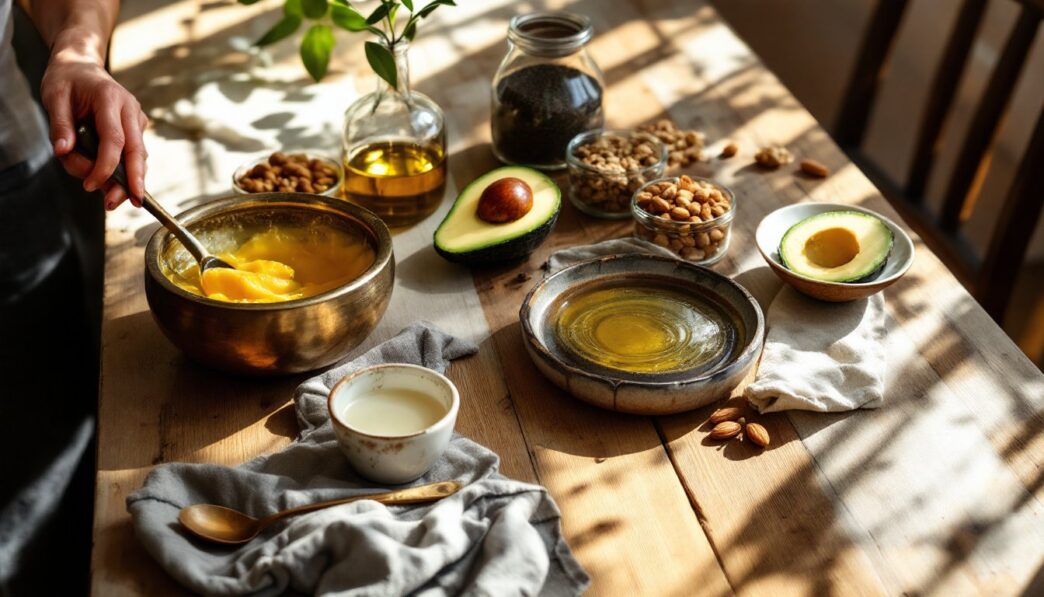
Why Your Body Needs Dietary Fat to Thrive
Here’s something I wish someone had told me sooner: fat isn’t just fuel. In Ayurveda, fat (called sneha, which also means “love”) is one of the primary ways your body builds ojas, that deep, quiet vitality that keeps your immune system steady, your skin glowing, and your mind calm.
When you cut fat too aggressively, you increase the dry, light, rough, and mobile qualities in your system. If you know anything about the doshas, those are all Vata qualities. And excess Vata shows up as anxiety, restless sleep, cracking joints, constipation, and that scattered feeling where you can’t quite land anywhere.
But fat does more than balance Vata. It supports your agni, your digestive and metabolic intelligence, by giving it something substantial to work with. Think of agni like a campfire. You need good-quality logs (healthy fats) for a steady, sustained burn. Toss in only kindling (refined carbs, stimulants) and the fire flares and dies. Give it nothing, and it smolders.
When agni processes good fat well, it nourishes all seven tissue layers in your body, right down to your reproductive and nervous tissue. That’s where ojas lives. That’s where tejas, your inner clarity and metabolic spark, gets refined. And that’s what keeps prana, your life force, flowing smoothly through every channel.
Fat also helps your body absorb fat-soluble vitamins like A, D, E, and K. Without adequate dietary fat, you can eat all the vegetables you want and still miss out on their full benefit.
Do this today: At your next meal, add a thumb-sized portion of a whole-food fat, a quarter avocado, a drizzle of olive oil, a spoonful of ghee. Takes 30 seconds. This is for anyone who’s been skimping on fat and feeling depleted. If you have a known gallbladder condition, go slowly and consult your practitioner first.
Understanding the Different Types of Dietary Fat

Not all fats behave the same way in your body, or in your digestion. From an Ayurvedic perspective, different fats carry different gunas (qualities), and those qualities determine how the fat interacts with your doshas, your agni, and your tissues. Let me break this down simply.
Monounsaturated Fats: The Heart-Healthy Staple
Monounsaturated fats, found in olive oil, avocados, and almonds, carry smooth, oily, and mildly warm qualities. They’re gentle on digestion and tend to support all three doshas reasonably well.
These fats are especially wonderful for Vata types because they counteract dryness and roughness without being too heavy. For Pitta, the cooling nature of something like avocado helps soothe internal heat. Kapha types can enjoy them in moderation, a little goes a long way since these fats are still oily and can increase heaviness if overused.
Research consistently links monounsaturated fats to heart health, lower inflammation, and better blood sugar regulation. In Ayurvedic terms, they support a steady, well-fed agni and help build ojas without clogging your channels.
Do this today: Swap one processed cooking oil for extra virgin olive oil or try half an avocado with lunch. Takes no extra time. Good for all dosha types. Kapha-dominant folks, keep portions modest.
Polyunsaturated Fats: Omega-3s and Omega-6s Decoded
This is where things get interesting. Omega-3 fatty acids, found in fatty fish like salmon and sardines, flaxseeds, chia seeds, and walnuts, carry cool, light, and subtle qualities. They’re anti-inflammatory powerhouses, and in Ayurvedic terms, they help pacify Pitta’s sharp, hot tendencies beautifully.
Omega-6 fatty acids, found in sunflower oil, soybean oil, and many processed foods, are warm and slightly sharp. Your body needs some, but the modern diet tends to be flooded with omega-6s and starved of omega-3s. That imbalance fans internal heat, promotes ama (metabolic residue), and can aggravate Pitta.
The goal isn’t to avoid omega-6s entirely, it’s to restore balance. More omega-3s, fewer processed omega-6 sources.
Do this today: Add ground flaxseeds to your morning meal or enjoy wild-caught fish twice this week. Takes about 5 minutes of prep. Especially beneficial for Pitta types or anyone dealing with inflammation. If you’re on blood-thinning medication, talk to your doctor before significantly increasing omega-3 intake.
Saturated Fat: What the Latest Research Actually Says
Saturated fat has been demonized for decades, but the picture is more nuanced than “it’s all bad.” Recent research, including large meta-analyses, suggests that moderate saturated fat from whole-food sources like ghee, coconut, and pastured eggs doesn’t carry the cardiac risk we once assumed, especially when consumed as part of a balanced, unprocessed diet.
Ayurveda has always held ghee in the highest regard. Ghee is warm, oily, smooth, and subtle. It kindles agni without aggravating Pitta (a rare and valuable quality). It penetrates deep into tissues, carrying nutrients and herbs with it. It’s considered one of the finest ojas-building foods.
That said, saturated fat is heavy and dense. Kapha types or anyone with sluggish digestion can find that too much creates heaviness, dampness, and ama. Context matters. Quality matters. Quantity matters.
Do this today: Try cooking with a teaspoon of ghee instead of a processed vegetable oil. Takes no extra effort. Wonderful for Vata and Pitta. Kapha types, use sparingly, perhaps a half teaspoon, and favor lighter fats.
Trans Fats: The One Fat You Should Always Avoid
Artificial trans fats, found in partially hydrogenated oils, many fried fast foods, and some packaged baked goods, are the one category I’d encourage everyone to minimize completely. These industrially processed fats carry qualities that are simultaneously heavy, dull, sticky, and sharp in their damaging effects. They confuse agni, clog channels, and generate significant ama.
From a vitality perspective, trans fats deplete ojas and dull tejas. They’re linked to heart disease, chronic inflammation, and metabolic dysfunction. There’s no amount that benefits your body.
Many countries have moved toward banning artificial trans fats in recent years, but they still show up in some processed foods. Read labels. Look for “partially hydrogenated” in the ingredients.
Do this today: Check the ingredient list on two or three packaged foods in your kitchen. If you spot partially hydrogenated oils, consider replacing those products. Takes about 5 minutes. This applies to everyone, regardless of dosha type.
The Best Whole-Food Sources of Healthy Fats
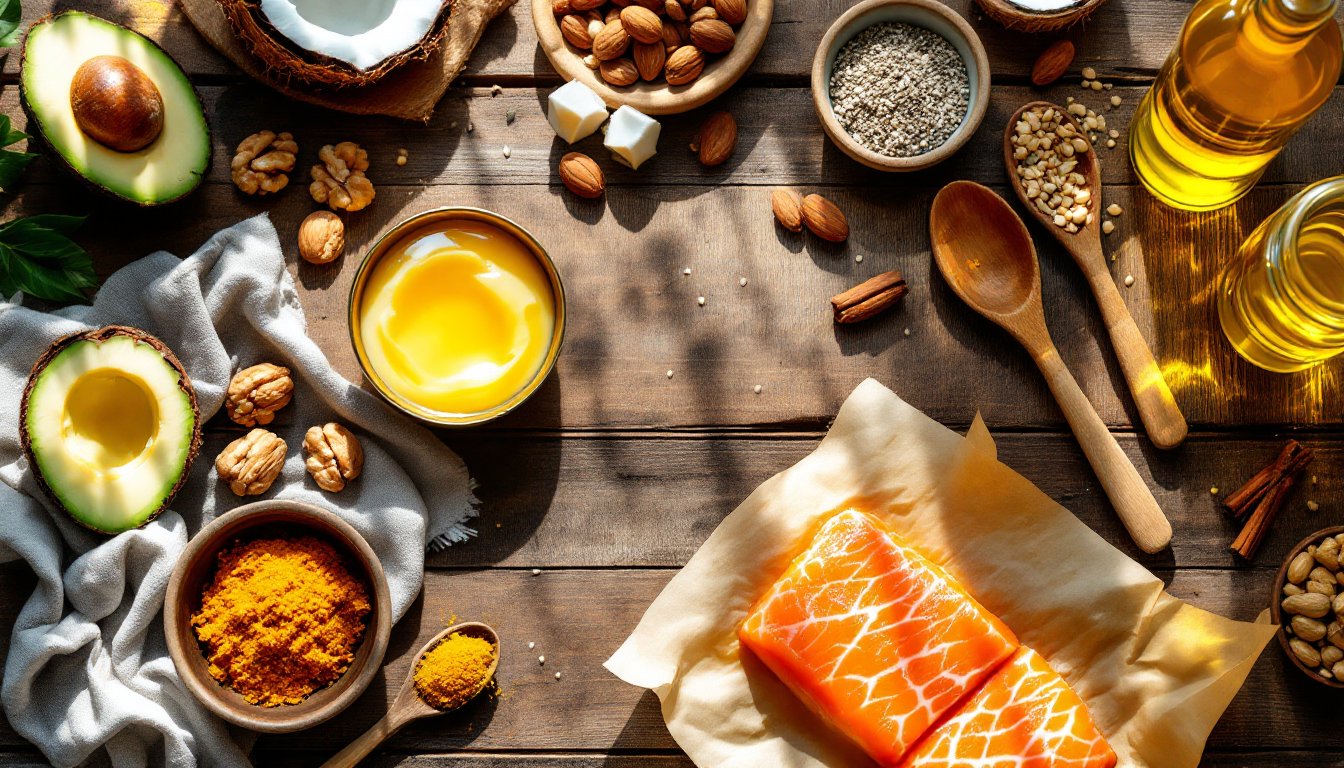
Ayurveda prizes whole, minimally processed foods because they retain their prana, their life force. A fresh walnut has more vitality than a highly refined walnut oil that’s been sitting on a shelf for months. A ripe avocado offers more balanced nourishment than an avocado-flavored snack bar.
Here are some of my favorite whole-food fat sources, and how they relate to the doshas and qualities:
Ghee is warm, smooth, oily, and subtle. It kindles agni, nourishes all tissues, and is revered for building ojas. Works for most people, especially Vata and Pitta.
Avocado is cool, heavy, oily, and smooth. Wonderful for dry Vata constitutions and for cooling Pitta’s internal heat. Kapha types can enjoy small amounts.
Coconut (flesh, milk, or unrefined oil) is cool, heavy, oily, and sweet. Excellent for Pitta, decent for Vata, but can increase Kapha’s heaviness if overdone.
Sesame seeds and sesame oil are warm, heavy, and deeply oily. A classic Vata remedy, both internally and as a self-massage oil (abhyanga). Pitta types might find them too heating in summer.
Almonds (soaked and peeled) are warm, oily, and heavy. They’re considered a wonderful ojas-builder. Soaking removes the rough skin and makes them easier on digestion.
Flaxseeds and chia seeds are cool, light, and oily. Great for Pitta, helpful for Vata when combined with warmer spices. Kapha benefits from their lighter quality.
Wild-caught fatty fish like salmon and sardines provide omega-3s with cool, oily, and slightly heavy qualities.
Do this today: Pick two or three whole-food fat sources from above and make sure they’re in your kitchen this week. Takes one grocery trip. Choose based on your dominant dosha if you know it, or just start with ghee and avocado, which work well across the board. If you have specific food allergies or sensitivities, adjust accordingly.
How Much Healthy Fat Should You Eat Each Day?
This is where Ayurveda offers something that generic nutrition advice often misses: personalization. There’s no single “right” amount of fat for every person. Your ideal intake depends on your constitution, your current state of balance, the season, and the strength of your agni.
As a rough starting point, most people thrive with healthy fats making up about 25–35% of their daily calories. But Ayurveda refines this further.
If you’re more Vata, your body tends toward dryness and depletion. You generally need more fat, generous ghee, sesame oil, avocado, soaked almonds. Fat grounds you, calms your nervous system, and builds the ojas you burn through quickly. Try incorporating a good fat source at every meal, with warm preparations that your agni can handle. Favor the oily, warm, and heavy qualities to counter your natural lightness and mobility. Avoid dry, raw, or cold fat sources (like cold pressed oils straight from the fridge), they can increase Vata rather than soothe it.
If you’re more Pitta, your agni runs hot and sharp. You digest fat well, but too much heating fat (like sesame oil or large amounts of ghee in summer) can tip you into excess heat. Favor cooling fats, coconut, avocado, sunflower seeds. Moderate portions with a focus on the cool, smooth, and slightly heavy qualities. Avoid excessive spicy or fried foods alongside your fats, the combination creates too much heat and can generate sharp, acidic ama.
If you’re more Kapha, your digestion tends toward slow and heavy. You need less total fat, but you still need some. Focus on lighter fats in smaller quantities, a drizzle of olive oil, a few walnuts, a modest portion of ghee with warming spices like black pepper or ginger to keep agni active. Favor the light and warm qualities. Avoid large portions of heavy, cold fats like cheese or excessive coconut, they can create sluggishness and ama accumulation.
Do this today: Tune into how you feel 30–60 minutes after a meal containing fat. Energized and clear? You’re probably in the right range. Heavy, sluggish, or foggy? You may need less fat or more digestive support. Takes just a moment of awareness. This practice is for everyone.
Simple Ways to Add More Healthy Fats to Your Diet
Knowledge is one thing. Actually doing something with it is another. So here’s how I weave healthy fats into my own daily rhythm, drawing from Ayurvedic dinacharya (daily routine) and ritucharya (seasonal wisdom).
Morning: I start most days with warm water, then a breakfast that includes some fat. In cooler months, that might be oatmeal cooked with ghee, cinnamon, and soaked almonds, warm, oily, grounding. In warmer months, I’ll shift to something lighter, maybe chia pudding made with coconut milk. The morning is when Kapha energy dominates (roughly 6–10 a.m.), so keeping things warm and digestible prevents that heavy, sluggish start.
Midday: This is when your agni is strongest, Pitta time, roughly 10 a.m. to 2 p.m. Your biggest meal belongs here, and it’s the best time to enjoy more substantial fats. A grain bowl with avocado, tahini dressing, and roasted vegetables. Fish with olive oil and seasonal greens. Your body is primed to digest and transform heavier foods during this window.
Evening: Keep fats lighter at dinner. A small amount of ghee in a simple soup or kitchari works beautifully. Eating heavy fats late, think a big cheese plate at 9 p.m., overwhelms your dimming agni and creates ama overnight.
Seasonal shift: As fall and winter arrive (Vata season, dry, cold, windy), increase your fat intake noticeably. More ghee, more sesame, more warm oily foods. When spring rolls in (Kapha season, cool, damp, heavy), pull back. Lighten up on fats, favor bitter greens and spices, and let your body shed winter’s accumulation naturally.
One daily habit I particularly love: abhyanga, or warm oil self-massage, before a shower. It’s not dietary fat, but it delivers oily, warm, smooth qualities directly through your skin. Even five minutes with warm sesame oil in the fall or coconut oil in summer can settle your nervous system and support prana beautifully.
Do this today: Pick one mealtime and intentionally add a whole-food fat that suits the season and your dosha. Then try a brief self-massage before your next shower, even just your feet and legs. Takes 10–15 minutes total. Good for everyone. If you have skin conditions, patch-test the oil first.
This is general education, not medical advice. If you’re pregnant, managing a condition, or taking medication, check with a qualified professional.
Conclusion
Healthy fats aren’t a trend or a hack. They’re one of the most ancient forms of nourishment your body recognizes, a way to build resilience, calm your nervous system, support your digestion, and sustain the deep vitality that keeps you feeling like yourself.
The beauty of the Ayurvedic approach is that it doesn’t hand you a rigid rule. It invites you to pay attention. To notice which fats make you feel grounded and clear, and which leave you foggy or heavy. Your body already knows. You’re just learning to listen.
Start small. One better fat choice at one meal. One moment of awareness after eating. That’s enough.
I’d love to hear from you, what’s one healthy fat you’re going to try adding to your routine this week? Drop a comment below or share this with someone who’s still stuck in the low-fat mindset. We could all use a little more sneha, a little more love, on our plates.