




Why Food Rituals Matter More Than You Think
In Ayurveda, digestion isn’t just a mechanical process happening in your gut. It’s governed by something called agni, your digestive and metabolic intelligence. Think of agni as a campfire. When it’s steady and bright, food breaks down cleanly, nutrients get absorbed, and you feel light and energized after eating.
But when agni is disturbed, maybe it’s flickering (too variable), raging (too intense), or smoldering (too sluggish), food doesn’t get processed well. The leftovers of incomplete digestion are called ama, a dull, heavy residue that clogs your channels, fogs your thinking, and drags down your energy.
Here’s where food rituals come in. Every small habit around eating either supports or disrupts agni. Eating while rushed and distracted fans the mobile, erratic quality that destabilizes Vata dosha. Eating in a heated argument amplifies Pitta’s sharp, hot intensity. Eating too much while zoned out on the couch feeds Kapha’s heavy, stable tendency toward sluggishness.
Food rituals gently correct these patterns. They bring stability where there’s too much movement, coolness where there’s excess heat, and lightness where there’s stagnation. They protect your ojas (deep vitality and immune resilience), sharpen your tejas (the metabolic spark that keeps your mind clear), and steady your prana (the life force flowing through your nervous system).
So no, these aren’t just “nice to have” habits. They’re the foundation of how well your body turns food into life.
Do this today: Before your next meal, pause for three breaths and notice how your body feels. Takes 30 seconds. Good for everyone, especially if you tend to eat on autopilot.
Start With a Moment of Stillness Before Eating

I know this sounds almost too simple. But sitting down and taking a quiet breath before eating does something real, it shifts your nervous system out of “go” mode and into “receive” mode.
From an Ayurvedic perspective, agni responds to your state of mind. When you’re scattered and rushing (excess Vata, mobile, dry, light qualities), your digestive fire becomes erratic. It can’t settle into the steady rhythm it needs. When you’re irritated or tense (excess Pitta, hot, sharp qualities), agni burns too fiercely, which can mean acid reflux or loose stools. A moment of stillness brings the smooth, stable qualities that help agni find its center.
You don’t need to meditate or say anything formal. Just sit. Feel your feet on the floor. Notice the food in front of you. That small pause signals to your entire system: we’re about to receive nourishment.
This is especially powerful if you tend toward Vata imbalance, if you’re someone who eats at odd hours, forgets meals, or notices bloating and gas. That brief grounding moment counters the mobile, irregular energy that throws Vata-type digestion off track.
Do this today: Sit down, place both feet flat, and take three slow breaths before picking up your fork. About 30 seconds. Ideal for Vata types and anyone who eats in a hurry. If you’re already a calm, slow eater, you might not need this as much, but it won’t hurt.
Engage Your Senses Before the First Bite
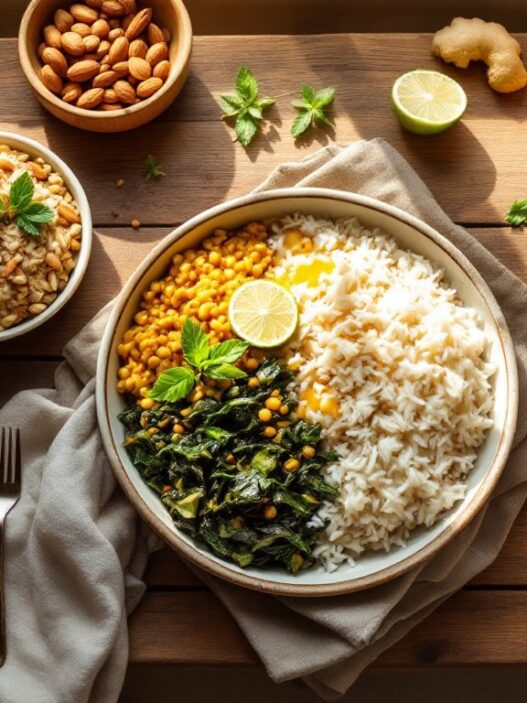
Ayurveda recognizes that digestion begins before food touches your tongue. The sight of a colorful plate, the smell of warm spices, even the sound of something sizzling, all of these activate agni.
This is because your senses carry the subtle quality. They communicate information to your digestive system before the gross, physical act of eating even starts. When you skip this step, when you eat mechanically, barely glancing at your plate, you miss that preparatory spark.
Try this: Before your first bite, look at your food for a moment. Inhale the aroma. Notice the colors and textures. If it’s warm, feel the steam. This tiny ritual strengthens what Ayurveda calls prana, the life-force energy connected to perception and awareness. It also gently stokes agni, preparing your stomach and enzymes for what’s coming.
I started doing this with my morning meal and honestly, it changed my relationship with breakfast. I went from barely noticing what I ate to actually tasting it. And I found I needed less food to feel content, because my body was fully registering the experience.
Do this today: Spend 10–15 seconds just looking at and smelling your food before eating. Good for all dosha types. Especially helpful for Kapha types who eat out of habit rather than genuine hunger, engaging your senses helps you tune into whether you’re actually ready for food.
Chew Slowly and Thoroughly
This is probably the single most impactful food ritual I’ve adopted. And it’s the one I resist the most, if I’m honest, I’m a naturally fast eater.
But chewing is where mechanical digestion meets metabolic intelligence. In Ayurveda, the mouth is the first seat of Kapha dosha, where the heavy, oily, smooth qualities begin breaking food into a form agni can work with. When you rush through chewing, you’re sending rough, dry, insufficiently processed food into a digestive fire that isn’t prepared for it. The result? Ama, that sticky residue of incomplete digestion that shows up as bloating, a coated tongue, sluggishness after meals, or brain fog.
Slowing down your chewing also balances Vata’s mobile, quick quality. It’s grounding. It forces presence.
How Chewing Pace Affects Nutrient Absorption
When food is chewed thoroughly, it mixes with saliva, which contains digestive enzymes that begin the breakdown of starches and fats. From an Ayurvedic view, this is agni working at its very first stage. The more complete this stage, the less burden on the deeper levels of digestion.
Poorly chewed food taxes your main digestive agni (jatharagni) and can weaken it over time. Weak agni means more ama, less nutrient extraction, and diminished ojas, that deep reservoir of vitality, immunity, and calm contentment that Ayurveda prizes above almost everything else.
I aim for chewing each bite until it’s almost liquid. I don’t count chews, that feels mechanical to me, but I notice the texture changing, and I wait until it does before swallowing.
Do this today: At one meal, consciously slow your chewing by about half your normal pace. Takes no extra time overall, you’ll likely eat less. Wonderful for all types. Vata and Kapha types benefit most. If you have very strong Pitta digestion and feel fine eating quickly, you can be gentler with this one, but it still helps.
Set the Table With Intention
This one surprised me. I used to think setting the table was fussy and unnecessary, just put the food down and eat, right?
But there’s something about the act of preparing a space that shifts your internal state. In Ayurveda, your environment carries qualities that directly affect digestion. A cluttered, chaotic eating space amplifies Vata’s mobile, rough energy. A clean, warm, simple table brings stable, smooth qualities that support agni.
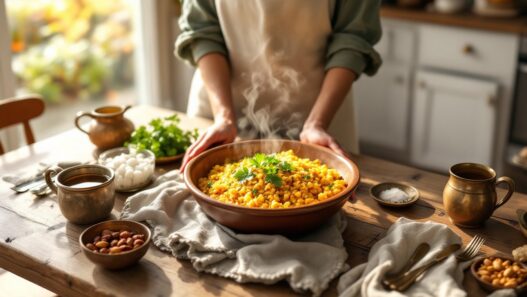
You don’t need fancy dishes or candlelight (though candles are lovely). Even placing a cloth napkin down, using a real plate instead of eating from a container, or clearing the mail off the table creates a different energetic container for your meal.
This ritual also connects to ojas, because ojas is built not just from food itself but from the quality of nourishment as an experience. Eating from a beautiful plate in a calm space sends a message of care to your whole system. That care accumulates.
Do this today: Before dinner tonight, spend 2 minutes clearing your eating space and setting a simple place for yourself. Helpful for everyone. Particularly grounding for Vata types who tend to eat standing, walking, or in the car. Less critical for Kapha types who already enjoy a slow, comfortable eating environment, though even then, a little intentionality goes a long way.
Eat Without Screens or Distractions
I’ll be honest, this is the hardest one for me. Eating without a phone, laptop, or TV feels almost uncomfortable at first, like sitting in silence with a stranger.
But Ayurveda is clear on this: divided attention divides your digestive power. When your mind is absorbed in a screen, prana, your vital energy of awareness, gets pulled toward your eyes and brain, away from your digestive organs. Agni doesn’t get the full signal that food has arrived.
The qualities at play here are subtle versus gross. Screens pull your awareness into the subtle realm of thought, information, and stimulation. Meanwhile, the gross, physical work of digestion gets deprioritized. Over time, this pattern creates ama, not because the food is bad, but because attention wasn’t present for the process.
I’m not suggesting you’ll never eat in front of a show again. But try making even one meal a day screen-free. You’ll likely notice you feel more satisfied, eat a more appropriate amount, and experience less post-meal heaviness.
Do this today: Choose one meal, lunch is often easiest, and put your phone in another room. Eat in relative quiet for 15–20 minutes. Beneficial for all doshas. Vata types especially tend to overeat or undereat when distracted. Pitta types may notice less acid reflux. Kapha types often find they naturally eat less when paying attention.
Build a Rhythm Around Meal Timing
Ayurveda has a concept I find incredibly useful: your body’s inner clock mirrors nature’s rhythms, and your digestive fire follows the sun.
Agni is strongest around midday, roughly 10 a.m. to 2 p.m., when Pitta dosha naturally peaks. This is when your body is best equipped to handle your largest, most complex meal. Eating a heavy dinner at 9 p.m., when Kapha’s cool, heavy qualities dominate, means asking a dimming fire to do its biggest job.
This connects to the Ayurvedic principle of dinacharya, ideal daily rhythm. Eating at consistent times each day trains agni to show up strong and ready. Irregular eating, skipping lunch, grazing all afternoon, late-night snacking, creates the mobile, irregular quality that disturbs Vata and weakens agni over time.
I started eating my main meal between noon and 1 p.m. and keeping dinner lighter and earlier (around 6 or 6:30 p.m.). Within a couple of weeks, I noticed less bloating, better sleep, and a clearer head in the mornings.
From a seasonal perspective (ritucharya), you might naturally want to adjust: in summer’s heat, lighter midday meals may feel better because Pitta is already high. In cool, dry autumn and winter, a warm, moderately heavy lunch supports agni beautifully and counters Vata’s light, cold tendencies.
Do this today: Try eating your largest meal between 11 a.m. and 1 p.m. tomorrow, and make dinner smaller and earlier. Commit for three days and notice what shifts. Helpful for all types. Vata types benefit enormously from regular timing. Pitta types who get “hangry” will appreciate a solid midday meal. Kapha types might try a lighter breakfast and letting true hunger build before lunch.
Add a Post-Meal Ritual to Support Digestion
What you do in the 15–20 minutes after eating makes a real difference. In Ayurveda, this window is when agni is actively working, and you can either support or sabotage it.
One of my favorite post-meal habits: a short, gentle walk. Even five minutes. Walking activates the mobile quality just enough to support digestion without overwhelming it. It’s different from intense exercise, which diverts blood away from the digestive organs and can scatter Vata.
Another option: sipping warm water or a simple cumin-coriander-fennel tea after eating. Warm liquids carry the hot, light qualities that support agni and help prevent ama from forming. Avoid ice-cold drinks right after a meal, the cold, heavy quality dampens the digestive fire like throwing water on a campfire.
You might also try sitting quietly for a few minutes after eating, especially after a larger meal. Lying on your left side for 5–10 minutes is a traditional Ayurvedic suggestion that supports the stomach’s natural position and encourages smooth digestion.
This post-meal window is a meaningful place to build tejas, that inner clarity and metabolic brightness. When digestion completes cleanly, tejas strengthens. When ama accumulates from rushed or disrupted post-meal habits, tejas dims.
Do this today: After lunch, take a 5–10 minute gentle walk or sip warm water. Avoid jumping straight into intense work or exercise. Good for everyone. Kapha types benefit especially from the walk (it counters post-meal heaviness). Vata types might prefer sitting quietly. Pitta types can enjoy the warm tea but might skip very hot days.
How to Make These Rituals Stick Long-Term
Here’s what I’ve learned from trying to adopt all of these at once: don’t. It doesn’t work, and it turns mealtimes into a stressful performance.
Pick one. Maybe it’s the pre-meal pause. Maybe it’s chewing more slowly. Try it for a week. Let it become familiar, almost automatic. Then add another.
Ayurveda respects the slow, stable quality of lasting change. Rushing to overhaul your habits overnight is actually a Vata-aggravating pattern, mobile, irregular, unsustainable. Real transformation comes from small, repeated actions that gradually reshape your relationship with food.
Personalization matters here, too.
If you’re more Vata, you thrive on warmth, routine, and grounding. Start with consistent meal timing and the pre-meal breathing pause. Eat warm, slightly oily foods. Avoid eating while walking or standing. The ritual to skip for now? Don’t worry about the post-meal walk, you might benefit more from sitting still.
If you’re more Pitta, you do well with structure but can become rigid. Start with screen-free eating and engaging your senses. Choose cooling, moderately spiced foods. Avoid eating when angry or frustrated, Pitta agni is already sharp, and emotional heat makes it aggressive. Try the post-meal tea with a cooling emphasis (fennel is your friend).
If you’re more Kapha, you benefit from lightness and stimulation. Start with chewing slowly (it often reveals you need less food than you thought) and the post-meal walk. Favor warm, light, well-spiced foods. Avoid heavy eating in the evening. The ritual that helps you most might be eating without distractions, Kapha types tend to overeat when zoned out.
Do this today: Choose the one ritual that resonates most with your constitution and commit to it for seven days. Takes no extra time. Appropriate for everyone. If you’re unsure of your dosha, start with the pre-meal pause, it’s universally balancing.
This is general education, not medical advice. If you’re pregnant, managing a condition, or taking medication, check with a qualified professional.
These food rituals aren’t about perfection. They’re about presence, showing up to your meals with a little more awareness, a little more care. Over time, that presence builds ojas, strengthens agni, and creates a kind of deep satisfaction that no amount of food can give you when you’re eating on autopilot.
I’d love to hear from you. Which ritual are you going to try first, and what does your current mealtime actually look like? Drop a comment or share this with someone who could use a calmer relationship with food. What would change for you if every meal felt like a small act of self-care?