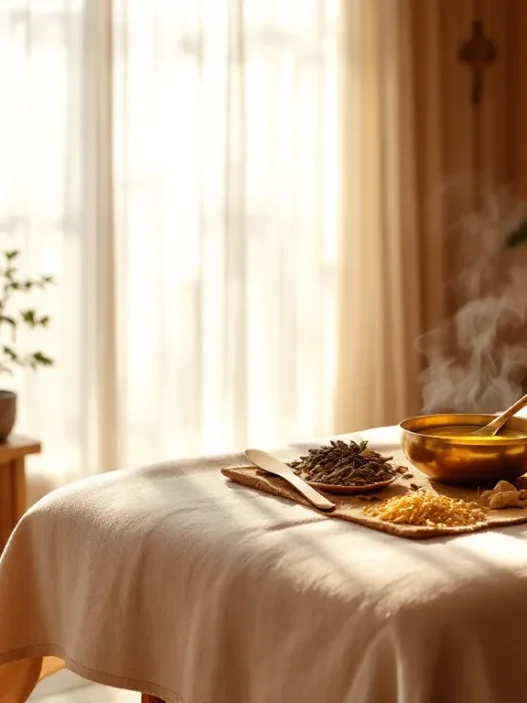






Why Ayurveda Prioritizes Balance Over Perfection
In Ayurveda, imbalance is the root cause of pretty much every problem, physical, mental, emotional. The tradition calls this nidana, the origin of disruption. And the disruption isn’t some catastrophic event. It’s usually something small and repeated: skipping meals, staying up too late scrolling your phone, eating cold dry food when your body is already feeling cold and dry.
These small habits accumulate. They shift the qualities, or gunas, inside you. Maybe things get too hot and sharp (hello, irritability and heartburn). Maybe too heavy and dull (that foggy, sluggish feeling after weeks of comfort eating). Maybe too light and mobile (racing thoughts, restlessness, can’t sit still).
Ayurveda doesn’t panic about any of this. It simply says: notice the quality that’s in excess, and introduce its opposite. Too dry? Add something oily. Too mobile? Bring in stability. This is the “opposites balance” principle, and it’s the beating heart of the whole system.
Perfection would mean never drifting out of balance. But Ayurveda knows that’s not how life works. You will drift. The skill is in recognizing the drift early and making a gentle correction, not in never drifting at all.
When your inner equilibrium holds steady most of the time, your digestive intelligence, called agni, burns clean and bright. That means you’re converting food into nourishment efficiently, without leaving behind a sticky residue Ayurveda calls ama. Ama shows up as brain fog, a coated tongue in the morning, stiff joints, or that heavy “blah” feeling. When agni is strong and ama is low, your deeper vitality thrives: ojas (your resilience and immune reserve), tejas (your clarity and inner spark), and prana (your life energy and nervous system steadiness) all stay robust.
That’s the real promise. Not a perfect body or a perfect day, but a steady, nourished aliveness.
Do this today: Pause once this afternoon and notice one quality that feels excessive in your body or mind, maybe heat, dryness, heaviness, or restlessness. Just notice it. That’s the beginning. Takes about 30 seconds, and it’s for anyone, anywhere.
Understanding Your Unique Constitution

Here’s something I love about Ayurveda: it never assumes we’re all the same. Your friend might thrive on raw salads and early morning runs. You might feel terrible doing the exact same thing. That’s not a flaw, it’s your constitution.
Ayurveda calls your birth constitution prakriti. It’s the unique blend of elements and qualities you were born with. Understanding it changes everything, because it means you stop chasing someone else’s version of health.
The Three Doshas and Their Role in Equilibrium
Three functional energies, Vata, Pitta, and Kapha, govern everything in your body and mind. Everyone has all three, but usually one or two are more prominent.
Vata carries the qualities of air and space: light, dry, mobile, cool, subtle, rough. When Vata is balanced, you’re creative, quick-thinking, and adaptable. When it’s high, you might feel anxious, scattered, or physically dry, think cracking joints, dry skin, restless sleep.
Pitta carries fire and a bit of water: hot, sharp, light, oily, spreading. Balanced Pitta gives you focus, strong digestion, and natural leadership. Excess Pitta can show up as irritability, acid reflux, skin rashes, or that feeling of being perpetually “on.”
Kapha carries water and earth: heavy, cool, stable, smooth, oily, slow, dense. In balance, Kapha is your steadiness, your loyalty, your strong immune system. Too much Kapha and things get sluggish, weight gain, congestion, lethargy, emotional heaviness.
Balance doesn’t mean having equal amounts of all three. It means keeping your particular ratio close to where it naturally wants to be. A Kapha-dominant person trying to eliminate all heaviness from their life is chasing someone else’s equilibrium. Their body needs some of that grounding, stable quality.
Do this today: Reflect on which set of qualities, light and mobile, hot and sharp, or heavy and stable, feels most like your baseline when you’re feeling good. That’s a clue to your dominant dosha. Takes 5 minutes of honest self-reflection. Good for beginners who’ve never thought about constitution before.
What Balance Actually Looks Like in Daily Life
I want to be honest: balance doesn’t look Instagram-worthy. It looks like eating lunch at roughly the same time most days because your agni is strongest around midday. It looks like going to bed before you’re wired because you know that second wind at 11 PM is Pitta kicking in and it’ll wreck your sleep.
Two daily habits, part of what Ayurveda calls dinacharya (ideal daily rhythm), anchor this beautifully.
First, a warm morning routine. Not complicated. Wake up, scrape your tongue (this clears overnight ama, you can actually see it), drink a cup of warm water, and sit quietly for even 5 minutes before the day starts demanding things from you. This settles Vata, gently wakes agni, and gives prana a smooth start.
Second, eating your main meal at midday. This is when digestive fire peaks. A warm, well-spiced, moderately oily meal at lunch gets fully processed. The same heavy meal at 9 PM? It sits. It creates ama. You wake up groggy with that coated tongue.
These aren’t rigid rules, they’re rhythms. You adapt them to your schedule. Some days lunch is at 1:30 instead of noon. That’s fine. The principle is: work with your body’s natural timing, not against it.
Seasonal and Situational Adjustments
Ayurveda also recognizes that balance is a moving target because the world around you keeps changing. This is ritucharya, seasonal wisdom.
In late fall and winter, the environment turns cold, dry, and rough, all Vata-increasing qualities. So you’d naturally favor warm, oily, grounding foods. Soups, stews, cooked grains with ghee, warm spiced milk in the evening. You’d slow your pace a little and go to bed earlier.
In summer, when heat and sharpness rise (Pitta season), you’d lean toward cooling foods, cucumber, coconut, fresh herbs, and avoid overdoing intense exercise in the midday sun.
In spring, when things get heavy, damp, and cool (Kapha season), lighter and drier foods with a bit of pungency help keep things moving.
You’re always adjusting. That’s not failure. That’s the practice.
Do this today: Pick one seasonal adjustment that fits right now, maybe adding a warm breakfast if it’s cold out, or reducing heavy foods if spring is approaching. Try it for a week. Takes no extra time, just a different choice. Good for anyone who eats food (so, everyone).
Common Misconceptions About Ayurvedic Living
I run into a few myths repeatedly, and they trip people up.
“I need to figure out my dosha and then eat only foods for that dosha forever.” Not quite. Your constitution matters, but so does the current season, your current imbalance, your age, and what’s happening in your life right now. A Pitta person in a cold, dry winter might actually need some warming, oily Vata-balancing practices. Context always matters.
“Ayurveda means giving up everything I enjoy.” Ayurveda is genuinely not about restriction. It’s about relationship, your relationship with food, sleep, movement, and the natural world. Sometimes the most Ayurvedic thing you can do is enjoy a meal with people you love, even if the food isn’t “textbook.”
“If I’m not doing it perfectly, I’m not doing it right.” This might be the biggest one. The whole point of this article is that balance is a direction, not a destination. You’re always course-correcting. A day where you eat too late and sleep poorly isn’t a failure, it’s information. Tomorrow you adjust.
When you release the grip of perfection, something interesting happens to your agni: it actually gets stronger. Stress and rigidity create their own kind of ama, a subtle, mental variety that clouds tejas and destabilizes prana. Easing up helps everything flow better.
Do this today: Notice one place where you’re being rigid about your health habits. Try softening around it, not abandoning it, just holding it more loosely. Takes a moment of honesty. Especially good for anyone who tends toward all-or-nothing thinking.
Practical Ways to Start Cultivating Balance Today
Let me make this personal, because that’s where Ayurveda really shines.
If you’re more Vata, meaning you tend toward anxiety, irregular digestion, dry skin, and a busy mind, your balance point involves warmth, moisture, routine, and grounding. Favor cooked, oily, warm foods. Eat at regular times (this alone can be transformative for Vata). Try a gentle self-massage with warm sesame oil before your shower. Keep your evenings calm, no stimulating conversations or bright screens right before bed. One thing to ease off on: excessive travel or constant novelty. Vata loves variety, but too much scatters your prana.
Do this today: Have a warm, slightly oily dinner tonight at a consistent time. Sit down. Eat slowly. 20 minutes, max. Best for anyone who’s been feeling scattered, dry, or cold.
If you’re more Pitta, meaning you run warm, have strong opinions, sharp digestion, and a tendency toward frustration, your balance point involves cooling, softening, and spaciousness. Favor cooling foods like rice, sweet fruits, leafy greens, and coconut. Build in leisure time that has no goal (this is hard for Pitta, I know). Spend time near water or in nature. One thing to ease off on: over-scheduling and competitive intensity. That sharp, driven quality is a gift, but unchecked it burns through ojas fast.
Do this today: Take 15 minutes this evening to do something with absolutely no productive purpose. A walk with no destination. Staring at clouds. Best for anyone running hot, mentally or physically.
If you’re more Kapha, meaning you tend toward heaviness, slow mornings, congestion, and emotional attachment, your balance point involves lightness, warmth, movement, and stimulation. Favor lighter, drier, well-spiced foods. Get moving in the morning, even just a brisk walk, Kapha stagnates without movement. Try dry brushing before your shower to stimulate circulation. One thing to ease off on: daytime napping and excessive sweet or heavy foods. Kapha’s natural stability is a superpower, but it tips into inertia without a little fire.
Do this today: Set your alarm 20 minutes earlier tomorrow and take a short, vigorous walk before breakfast. Best for anyone who’s been feeling sluggish, heavy, or stuck.
All three paths lead to the same place: stronger agni, less ama, more ojas and prana. The route just looks different depending on who you are.
Conclusion
Balance in Ayurveda isn’t a fixed state you achieve and then protect. It’s more like a conversation, an ongoing, honest dialogue between you and your body, you and the seasons, you and the life you’re actually living (not the one you think you’re supposed to live).
The beauty of this approach is that it meets you where you are. You don’t need a complete lifestyle overhaul. You need one small, warm, grounding thing today. And then another one tomorrow. Over time, those small corrections build something real: steady energy, clear thinking, deep resilience, ojas, tejas, and prana doing what they do best.
I find that genuinely comforting. And I hope you do too.
If any of this resonated, I’d love to hear from you, drop a comment or share this with someone who might need to hear that they don’t have to be perfect to be well. What’s one small adjustment you’re going to try this week?