




What Ayurveda Means by a “Simple” Meal
When Ayurveda talks about simple meals, it doesn’t mean bland or boring. It means a meal where every ingredient can be recognized and processed by your digestive intelligence without conflict.
Think of it this way. Your digestive fire, called agni, works a bit like a focused craftsperson. Hand that craftsperson three or four materials and they’ll produce something beautiful. Dump fifteen different materials on the table at once, and the work gets sloppy. Things get left half-finished.
A simple meal in the Ayurvedic sense has a few well-chosen ingredients that share compatible qualities. Maybe a grain, a vegetable, a spice blend, and a healthy fat like ghee. The flavors are clear. The textures don’t clash. The qualities, warm or cool, light or heavy, oily or dry, work together instead of pulling your digestion in opposite directions.
This is different from the modern idea that more variety on a single plate equals better nutrition. Ayurveda actually suggests that variety is wonderful, spread across different meals and different days. But within a single sitting, coherence matters more than complexity.
Do this today: At your next meal, try limiting your plate to four or five main ingredients (not counting spices). Notice how your stomach feels an hour later. Takes about five minutes of planning. This works well for anyone, but especially if you tend toward bloating or post-meal fatigue.
How Food Combinations Affect Digestion in Ayurveda
The Role of Agni in Processing What You Eat
Agni is your metabolic intelligence. It’s not just stomach acid, it’s the entire spectrum of digestive and transformative capacity, from your gut all the way down to the cellular level. When agni is bright and steady, food gets broken down completely, nutrients get absorbed, and waste moves out cleanly.
But here’s what happens when you mix too many competing foods: agni gets confused. Each food carries its own set of qualities, some are heavy, some light, some oily, some dry, some sharp, some dull. When you eat, say, raw fruit alongside cooked grains alongside dairy alongside fried foods, your agni has to switch gears constantly. It’s like asking someone to read four books simultaneously.
The result? Incomplete digestion. And in Ayurveda, anything that’s left undigested becomes ama, a sticky, heavy residue that clogs your channels, dulls your thinking, and drains your energy over time. You might recognize ama as that coated feeling on your tongue in the morning, persistent sluggishness, or a sense of heaviness that lingers no matter how “healthy” you’re eating.
When agni processes a simpler meal, the metabolic spark, what Ayurveda calls tejas, stays clear and bright. Your prana, your life force and nervous system vitality, doesn’t get bogged down by digestive overwhelm. And your ojas, that deep reservoir of immunity and resilience, actually gets nourished instead of depleted.
Do this today: Before your next meal, pause and ask yourself: “Can my digestion handle all of this at once?” Just that one-second check-in can shift your choices. Takes no extra time at all. Particularly helpful if you notice a white coating on your tongue or feel heavy after meals.
Common Incompatible Food Combinations to Avoid
Ayurveda has a detailed system around food incompatibility called viruddha ahara. The core idea is that certain foods, when eaten together, create opposing actions inside the body, one food might be heating while another is cooling, or one is light and quick to digest while the other is heavy and slow.
A classic example: fruit with meals. Fresh fruit is light, sharp, and quick-moving. It digests fast. Grains and proteins are heavier and slower. When you mix them, the fruit essentially ferments while waiting for the heavier food to process. That fermentation is a direct pathway to ama.
Another one: milk with sour or salty foods. Milk is sweet, cool, and smooth. Sour foods are heating and sharp. When combined, they can curdle in the stomach, not in a yogurt-making way, but in a way that creates heaviness and congestion, especially for Kapha types who already tend toward density and slow digestion.
Fish with dairy is another traditional caution. Both are heavy and rich, but they have opposing thermal qualities and post-digestive effects that can aggravate Pitta’s heat and create skin issues over time.
Now, I want to be honest, I don’t follow every single food combining rule perfectly. Life happens. But even adopting two or three of these principles consistently has made a noticeable difference in how I feel.
Do this today: Try eating fruit on its own, about 30 minutes before a meal or as a standalone snack. Takes zero extra effort. This is great for anyone prone to gas or bloating, though those with very strong Pitta-type digestion may tolerate mixing a bit more.
Why Fewer Ingredients Lead to Better Nutrient Absorption
Here’s the part that really changed my perspective. I used to think that cramming more nutrients into a single meal was the smartest strategy. More spinach, more seeds, more superfoods, all at once.
But Ayurveda sees it differently, and the logic is elegant. It comes down to the principle of “like increases like, and opposites bring balance.” When you eat a meal with compatible qualities, say, warm, slightly oily, and grounding, your agni can fully engage with those qualities. It produces the right enzymes, the right heat, the right rhythm.
When the meal is simple and coherent, digestion moves through its stages cleanly. The subtle essence of food, what eventually becomes ojas, actually reaches the deeper tissues. Your cells get fed. Your immunity strengthens. That warm, stable glow of health comes from complete nourishment, not from sheer volume of ingredients.
Conversely, a complicated meal with clashing qualities, something simultaneously raw and cooked, cold and hot, dry and oily, forces your body to compromise. It processes some things well and leaves other things half-transformed. You eat a lot, but absorb less. The mobile, rough quality of excess Vata gets stirred up, and the heavy, dull quality of ama builds.
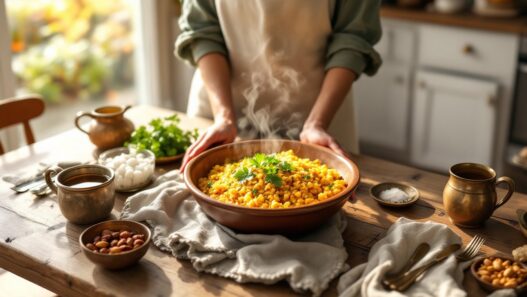
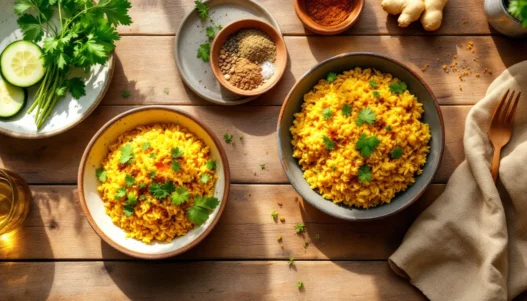
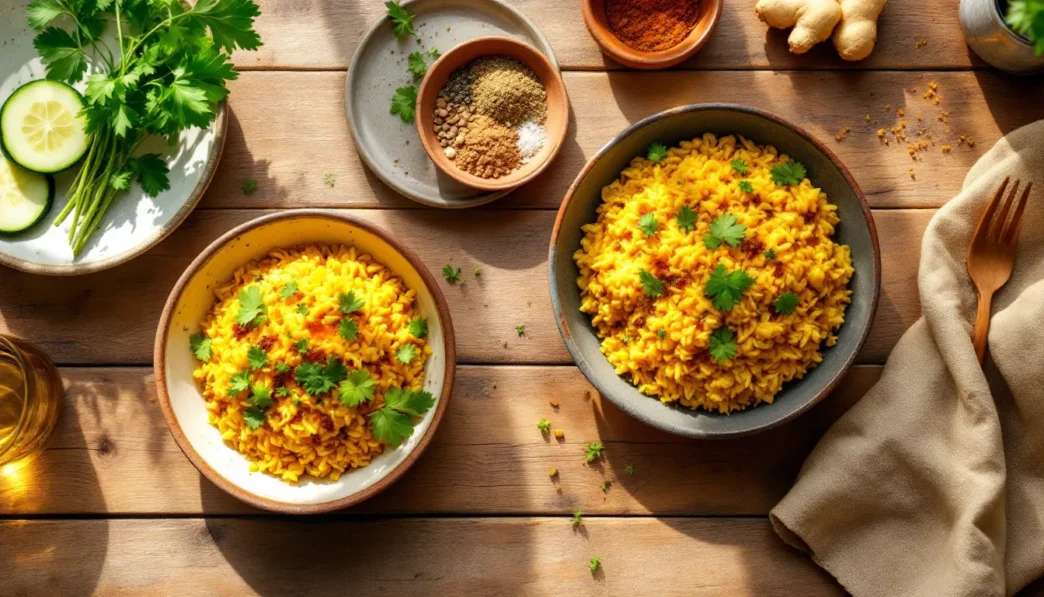
I’ve noticed this in my own life. On days when I eat a simple khichdi with one or two vegetables and good spices, my energy is steady and my mind is clear well into the afternoon. On days when I pile my plate with seven different things, even “healthy” things, I often feel scattered and tired by 2 PM.
Do this today: Choose one meal this week to make intentionally simple, a single grain, one or two vegetables, a well-chosen fat, and spices that support your digestion (cumin, coriander, and fennel are a lovely trio). Takes about 20 minutes to cook. Great for everyone, but especially nourishing if you’re recovering from illness or feel run-down.
Practical Ways to Simplify Your Meals the Ayurvedic Way
Let me share what’s actually worked for me, because the philosophy is only useful if it translates into your Tuesday night dinner.
Cook warm, eat warm. Cold and raw foods require more digestive effort. A warm, lightly spiced meal is easier for agni to handle, it’s like giving your digestion a running start. This doesn’t mean you can never have a salad, but making cooked food the foundation of your meals is a subtle game-changer.
Use spices as digestive allies. A pinch of cumin in your rice, a bit of fresh ginger before a meal, some fennel seeds after, these aren’t decorative. They kindle agni, prevent ama, and help your body extract more from less. Spices are the bridge between simplicity and satisfaction.
Eat your largest meal at midday. This is a core Ayurvedic timing principle. Your agni mirrors the sun, it peaks around noon. A simpler, lighter dinner means your body can focus on repair and rest at night instead of struggling to digest a heavy meal. Even shifting your main meal earlier by an hour or two can make a difference.
Leave space in your stomach. Ayurveda traditionally recommends filling your stomach one-third with food, one-third with liquid, and leaving one-third empty. That space allows agni to do its work. A simple meal naturally helps with this, you’re less likely to overeat when the food is satisfying and well-prepared rather than overwhelming and chaotic.
If You’re More Vata
Vata types, or anyone going through a Vata-aggravated phase (feeling anxious, scattered, dry, cold, restless), benefit most from meals that are warm, oily, grounding, and smooth. Think soupy stews, well-cooked grains with ghee, root vegetables. Avoid too many raw, cold, or dry foods in a single sitting. Your agni tends to be variable, so simpler meals are genuinely medicinal for you.
Do this today: Try a small bowl of warm, spiced oatmeal with ghee and a pinch of cinnamon for breakfast. Takes 10 minutes. Ideal for Vata-dominant individuals or anyone feeling ungrounded. Not the best fit if you’re experiencing Kapha congestion.
If You’re More Pitta
Pitta types tend to have strong, sharp agni, which is a gift, but it can also make you overconfident about food combining. You might tolerate incompatible combos better in the short run, but over time, the heat and sharpness can build, showing up as acid reflux, skin irritation, or impatience. Keep meals simple, favor cooling and slightly sweet foods, rice, coconut, zucchini, cilantro, and go easy on the fermented, sour, and overly spicy.
Do this today: Swap one heavy or spicy dinner this week for basmati rice with sautéed greens, a squeeze of lime, and coconut oil. Takes 15 minutes. Perfect for Pitta types or anyone experiencing heat-related digestive issues. Those who feel cold and sluggish may want something warmer.
If You’re More Kapha
Kapha digestion is naturally slower, heavier, and more stable. This means complicated, heavy meals create ama faster in your system. You thrive on meals that are light, warm, slightly dry, and well-spiced. Think lighter grains like millet or barley, plenty of cooked greens, pungent and bitter spices like black pepper, turmeric, and mustard seed. Fewer ingredients per meal is especially powerful for you.
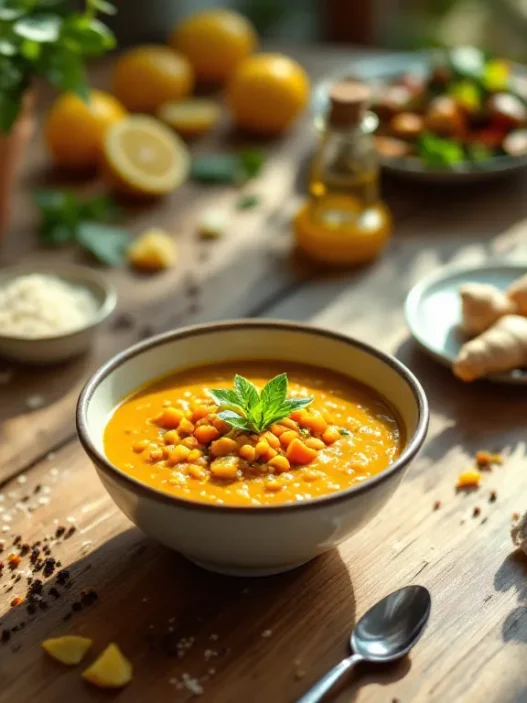
Do this today: Try a lunch of mung dal soup with lots of ginger and black pepper, paired with a small portion of steamed greens. Takes about 25 minutes. Wonderful for Kapha types or springtime eating. Not ideal for someone who’s already feeling very light, dry, or depleted.
Two daily routine habits to anchor this: First, try sipping warm water throughout the day, it gently stokes agni without overwhelming it. Second, take a short 10-minute walk after your meals. Movement after eating supports the downward flow of digestion and prevents that stuck, heavy feeling.
A seasonal note: In late winter and early spring, when Kapha naturally accumulates, favor even simpler, lighter meals with more pungent spices. In the heat of summer, simplicity still applies, but lean toward cooler, sweeter, and more hydrating ingredients. The principle stays the same, simplicity, but the qualities you choose shift with the season.
Do this today: Pick one of the two daily habits above and commit to it for three days. Notice any changes. Takes less than 15 minutes total across the day. Suitable for all types.
Modern Science Meets Ancient Wisdom on Meal Simplicity
It’s worth noting that modern digestive science is circling back to some of these ideas, even if the language is different. Research on the gut microbiome suggests that overly complex meals can increase fermentation and gas production, which maps remarkably well onto Ayurveda’s concept of ama from incompatible combinations.
There’s also growing interest in “food sequencing”, eating certain foods before others to optimize blood sugar response. Ayurveda has been doing a version of this for centuries, recommending that you eat heavier items first (when agni is strongest at the start of a meal) and lighter items afterward.
And the link between digestive health and mental clarity? Ayurveda has always connected the gut to the mind through the concept of agni feeding tejas and prana. Modern research on the gut-brain axis is essentially exploring the same territory.
None of this means Ayurveda needs modern validation to be valuable. But if you’re someone who appreciates seeing the bridge between traditional wisdom and current understanding, it’s there, and it’s growing.
Do this today: If you’re curious, try tracking how you feel mentally and emotionally on days when you eat simply versus days when your meals are complex. A quick note in your phone after lunch is enough. Takes 30 seconds. This reflection practice suits anyone interested in building self-awareness around food.
Conclusion
Simplifying your meals isn’t about eating less or enjoying food less. It’s about creating the conditions for your body to actually do what it’s brilliantly designed to do, digest completely, absorb deeply, and build the kind of vitality that shows up as steady energy, clear thinking, and genuine resilience.
I’ve found that the simpler my plate, the richer my experience of eating becomes. There’s a quiet satisfaction in tasting each ingredient clearly, in finishing a meal and feeling nourished instead of stuffed, in noticing that my energy holds steady through the afternoon.
You don’t have to overhaul everything at once. Try one simpler meal this week. Pay attention. Let your own body be the teacher.
I’d love to hear from you, what’s one meal you already eat that feels simple and satisfying? Drop it in the comments or share this with someone who might appreciate a gentler approach to food.