





How Your Gut Microbiome Directly Influences Your Skin
In Ayurveda, the gut isn’t just where food goes, it’s the seat of agni, your digestive and metabolic intelligence. When agni is strong and steady, food is broken down completely, nutrients reach every tissue layer (called dhatus), and your skin glows with what Ayurveda calls ojas, deep vitality and resilience.
When agni falters, though, the whole system shifts. Partially digested material becomes ama, a sticky, heavy, dull residue that clogs the subtle channels of the body. And the skin, being one of the outermost tissues, becomes a dumping ground.
Modern science frames this through the lens of microbiome diversity and gut-barrier integrity. Ayurveda got there by a different path, observing that the qualities of what we eat and how we live directly shape the qualities of our tissues. Both perspectives point in the same direction.
The Role of Inflammation in Skin Conditions
From an Ayurvedic standpoint, most inflammatory skin conditions involve excess Pitta dosha, the principle of heat, sharpness, and transformation. When Pitta rises in the gut (maybe from too many hot, sharp, or oily foods, or from emotional intensity like frustration), that heat doesn’t just stay in the stomach. It moves.
Pitta-driven inflammation tends to show up as redness, burning sensations, acne with a hot or pus-filled quality, or rosacea that flares with spicy food and stress. The gunas at work here are hot, sharp, oily, and mobile, qualities that spread quickly through the blood and lymph and announce themselves on the skin.
But inflammation isn’t only a Pitta story. When Kapha gets involved, you might see slower, more congested presentations, thick, oozing eczema patches, cystic bumps that linger for weeks. That’s the heavy, dull, sticky quality of accumulated Kapha mixing with ama.
And Vata? Vata-type skin issues look dry, rough, cracked. Think flaking patches, skin that feels tight and papery, or irritation that worsens with cold wind and irregular meals. The dry, light, rough, mobile qualities of Vata pull moisture right out of the skin.
Gut Permeability and Its Link to Acne, Eczema, and Rosacea
You’ve probably heard the phrase “leaky gut.” In Ayurveda, we’d describe this as weakened agni combined with the accumulation of ama in the gut lining, which disrupts the body’s ability to selectively absorb nutrients while keeping waste products contained.
When the gut wall becomes too permeable, incompletely digested molecules slip into circulation. The immune system reacts, and that reaction often manifests on the skin, the body’s largest organ and one of its primary channels of elimination.
For acne, the chain often looks like this: heavy, hard-to-digest foods → sluggish agni → ama production → excess Pitta heats the blood → breakouts with heat and congestion. For eczema, there’s usually a Vata-Kapha dynamic, dryness plus stagnation. For rosacea, it’s almost always a Pitta-blood (rakta dhatu) issue, aggravated by hot, sharp foods and emotional heat.
Try this today: Before your next meal, pause for three slow breaths and notice whether you’re actually hungry. Eating without real hunger is one of the fastest ways to weaken agni. Takes about 30 seconds. This is helpful for all body types, though if you tend toward Kapha patterns, it’s especially worthwhile.
Not for you if you’re managing an eating disorder or have been advised to eat on a schedule by your healthcare provider.
Foods That Support a Healthy Gut and Clearer Skin
Ayurveda doesn’t think about food in terms of isolated nutrients. It thinks in terms of qualities, is this food heavy or light? Warming or cooling? Oily or dry? These qualities directly interact with your dosha balance and your agni.
That said, the foods I’m going to share overlap beautifully with what modern nutrition research supports for gut and skin health. The difference is that Ayurveda also asks how and when you eat, not just what.
Probiotic-Rich Foods for Microbial Balance
Fermented foods have been part of Ayurvedic food culture for centuries, think fresh buttermilk (takra), naturally fermented rice preparations, and certain pickled vegetables. These foods introduce beneficial bacteria that support the gut lining and keep agni humming.
Fresh, homemade buttermilk diluted with water and seasoned with a pinch of cumin and rock salt is one of Ayurveda’s go-to digestive tonics. It’s light, slightly sour, and kindles agni without aggravating Pitta the way heavily fermented foods can.
A word of caution, though: not all fermented foods work for everyone. Kombucha, hard cheeses, and very sour ferments can increase Pitta’s heat and sharpness. If your skin tends toward redness and burning, go easy on the intensely sour stuff and favor milder options like fresh yogurt (consumed at lunch, not dinner) or a gentle miso.
Prebiotic Fiber Sources That Feed Beneficial Bacteria
Your gut bacteria need fuel, and they get it from the fibrous portions of whole foods, cooked vegetables, legumes, whole grains, and certain fruits. In Ayurvedic terms, these foods have a heavy, smooth, stable quality that nourishes the deeper tissues and supports the formation of ojas.
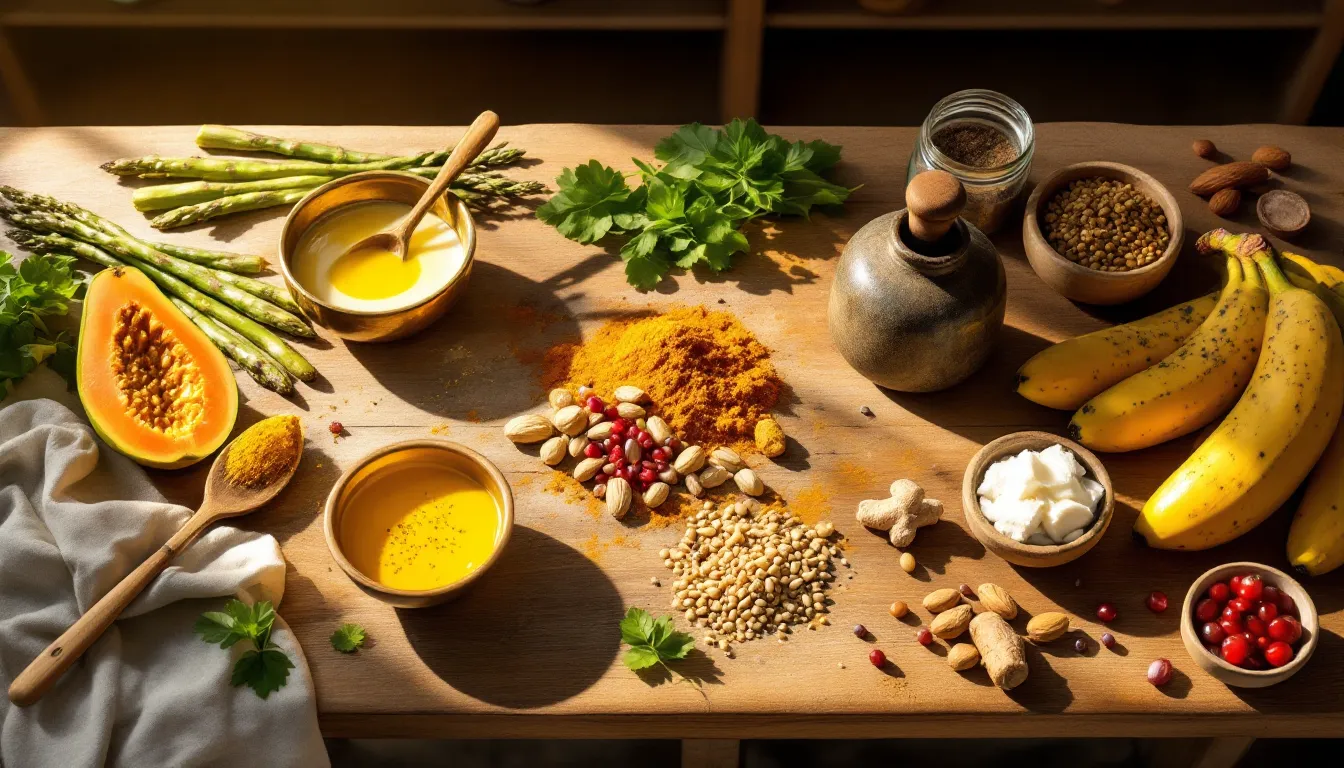
Cooked asparagus, tender leafy greens, well-prepared mung beans, and ripe bananas all serve as gentle prebiotic sources. I lean toward cooked preparations over raw, especially if your digestion runs cool or variable, cooking adds the warm, soft, light qualities that make food easier for agni to process.
Raw salads in large quantities might sound healthy, but for many people (especially Vata types), they’re cold, rough, and dry, qualities that can actually dampen agni and increase ama production. A warm soup with fiber-rich vegetables will do more for your gut–skin connection than a massive cold salad ever will.
Anti-Inflammatory Fats, Vitamins, and Minerals
Ghee deserves its own moment here. In Ayurveda, ghee is considered one of the finest substances for calming Pitta, nourishing ojas, and supporting the integrity of the gut lining. It’s smooth, cool in potency, and oily, the exact opposite of the sharp, hot, dry qualities that drive most inflammatory skin conditions.
A teaspoon of ghee with your lunch can do wonders over time. It lubricates the intestinal walls, supports the absorption of fat-soluble vitamins, and carries the medicinal qualities of spices deeper into the tissues.
Beyond ghee, consider coconut oil (cooling and smooth), soaked almonds (nourishing and heavy in a good way), and turmeric, nature’s own anti-inflammatory, with its warm, dry, light qualities that help cut through ama. Pair turmeric with a pinch of black pepper and a touch of fat for better absorption.
Fresh, seasonal fruits rich in natural antioxidants, pomegranate, amla (Indian gooseberry), and ripe papaya, also support tejas, the subtle metabolic spark that helps your body discriminate between what to keep and what to eliminate.
Try this today: Add half a teaspoon of ghee to your lunch and sprinkle a pinch of turmeric into your cooking. Takes no extra time. Appropriate for most people, though if you have a diagnosed gallbladder issue, check with your practitioner first.
Foods and Dietary Habits That Trigger Flare-Ups
This is where I find many people get tripped up, not because they don’t know what to eat, but because certain habits quietly sabotage even the best food choices.
Let me walk through the common culprits.
Eating late at night is a big one. After about 10 p.m., the body’s energy shifts toward internal cleansing and repair (this aligns with the Pitta time of night in Ayurvedic clock). Eating during this window diverts agni away from its repair work, creating ama that accumulates overnight. You wake up with a coated tongue, sluggish digestion, and, over time, duller, more congested skin.
Excessively spicy, sour, and salty foods aggravate Pitta and heat the blood. If you’re prone to acne or rosacea, frequent hot sauce, vinegar-heavy dressings, alcohol, and very salty processed snacks can push Pitta higher. These foods carry hot, sharp, oily qualities that intensify the inflammatory cascade in the skin.
Cold, heavy, and overly sweet foods, ice cream, heavy fried items, excess dairy, tend to increase Kapha and slow agni. The result is more ama, more congestion, and skin that looks puffy, dull, or prone to cystic-type breakouts.
Irregular eating patterns disturb Vata. Skipping meals, eating at wildly different times each day, or grazing all day without a clear rhythm throws off the body’s metabolic timing. Vata governs movement and rhythm, and when it’s unstable, so is your agni. The skin reflects this as dryness, flakiness, and uneven texture.
And here’s one people rarely talk about: eating while stressed, distracted, or emotionally charged. Ayurveda considers the state of mind during a meal just as important as the food itself. Eating in a rush activates the mobile, erratic quality of Vata, scattering your digestive focus. Your gut literally can’t do its job well when your nervous system is in overdrive.
Try this today: Pick one trigger from above that resonates with you and gently reduce it for the next two weeks. Just one. That’s all. Takes zero extra time, it’s more about what you stop doing. Helpful for all types.
Not for you if making dietary changes feels triggering, in that case, start with the lifestyle habits in the sections below.
Building a Gut-Friendly Meal Plan for Skin Health
I don’t love rigid meal plans because Ayurveda is inherently personalized. But I can share a general daily eating pattern that supports strong agni, reduces ama, and creates the conditions for clearer skin. Think of this as a template you adjust based on your constitution.
The overarching principle: eat warm, freshly prepared, moderately seasoned food at consistent times, with your largest meal at midday when agni is naturally strongest.
Sample Daily Eating Pattern
Morning (7–8 a.m.): A light, warm breakfast. Stewed fruit with a sprinkle of cinnamon, or a small bowl of cooked oats with ghee and cardamom. The goal is to gently wake agni without overwhelming it. If you’re not hungry, warm water with a squeeze of lime is enough.
Midday (12–1 p.m.): Your main meal. This is when your digestive fire is at its peak, aligned with the sun’s position, a cornerstone of Ayurvedic timing. Include a well-cooked grain (like basmati rice or quinoa), a legume (mung dal is the gold standard for easy digestion), plenty of cooked seasonal vegetables, a healthy fat like ghee, and digestive spices, cumin, coriander, fennel, turmeric.
Afternoon (3–4 p.m.): If you need a snack, keep it light. A few soaked almonds, a small piece of fruit, or a cup of warm spiced milk. Avoid heavy or cold snacks that dampen the afternoon’s agni.
Evening (6–7 p.m.): A lighter version of lunch. Soup, kitchari (the classic Ayurvedic one-pot meal of rice and mung dal), or a simple grain-and-vegetable bowl. Eating lighter at night gives your body space to cleanse and restore overnight, directly supporting ojas and the skin’s nightly repair cycle.
Between meals, sip warm water or herbal teas, cumin-coriander-fennel tea (known as CCF tea in Ayurvedic circles) is a gentle detoxifier that supports agni and helps clear ama from the digestive tract.
Try this today: Commit to making lunch your biggest meal for one week. Keep dinner lighter and earlier. Takes no extra prep, just a shift in proportion. Suitable for all dosha types.
Not ideal if your work schedule makes midday eating impossible, in that case, make whatever meal you can sit down for your main nourishing meal.
Lifestyle Factors That Strengthen the Gut–Skin Axis
Food is half the equation. The other half, in Ayurvedic terms, is vihara, your lifestyle, daily habits, and how you move through your day.
Two daily routine practices (dinacharya) that I find especially powerful for the gut–skin connection:
Abhyanga (warm oil self-massage). Applying warm oil to your body before a shower calms the nervous system, nourishes the skin directly, and pacifies Vata’s dry, rough qualities. For skin prone to inflammation, coconut oil is cooling and smooth. For dry, Vata-type skin, sesame oil is warming and deeply moisturizing. Even five minutes of oil massage in the morning can shift the quality of your skin over weeks. It supports prana, life force and nervous system steadiness, which in turn supports digestion. When your nervous system is calm, your gut works better.
Tongue scraping upon waking. That white or yellowish coating on your tongue first thing in the morning? That’s ama made visible. Gently scraping it off with a stainless steel or copper tongue scraper is a simple Ayurvedic practice that stimulates agni, improves taste perception (which helps you make better food choices instinctively), and removes accumulated toxins before you swallow them back down. Takes 30 seconds.
Beyond these two, moving your body gently each day, walking, yoga, or any moderate activity, supports the mobile quality needed to keep circulation flowing and prevent stagnation. Stagnation is where ama loves to settle.
And then there’s sleep. Getting to bed before 10 p.m. aligns with Ayurvedic rhythm. The Kapha energy of evening (6–10 p.m.) is naturally heavy and stable, making it easier to fall asleep. Miss that window and you enter Pitta time (10 p.m.–2 a.m.), when the body’s internal fire activates for cleansing and repair. If you’re awake during Pitta time, that fire gets redirected toward activity and late-night snacking, robbing your skin of its repair window and creating more ama.
Seasonal adjustment: As we move through different seasons, the approach shifts. In late winter and early spring, when Kapha tends to accumulate (heavy, cool, damp qualities in the environment), favor lighter, warmer, more pungent foods and increase physical activity to prevent the stagnation that leads to sluggish skin and breakouts. In hot summer months, cool your diet down, more sweet fruits, coconut, cilantro, and cooling spices like fennel, to keep Pitta from overheating the blood and triggering inflammation.
Try this today: Start with tongue scraping tomorrow morning. It takes 30 seconds, costs almost nothing, and gives you immediate visual feedback on your ama levels. Suitable for everyone.
Not suitable only if you have mouth sores or active oral infections, wait until those heal.
How Long It Takes to See Skin Improvements From Dietary Changes
I’ll be honest with you, this isn’t an overnight thing. And I think that’s actually reassuring, because it means you’re addressing the root, not just suppressing a symptom.
Ayurveda describes seven layers of tissue (dhatus), and nutrition flows through them sequentially: from plasma to blood to muscle to fat to bone to nerve to reproductive tissue. Skin is connected primarily to the plasma (rasa) and blood (rakta) layers, the first two in the chain. This means dietary changes tend to show up in the skin faster than they would in, say, bone or nerve tissue.
Most people begin to notice subtle shifts within two to three weeks, things like less morning puffiness, a clearer tongue coating, more stable energy after meals. These are signs that agni is strengthening and ama is decreasing.
Visible skin improvements, fewer breakouts, less redness, improved texture, a certain glow, typically become noticeable around four to six weeks with consistent changes. For deeper or more chronic conditions like long-standing eczema, it can take two to three months of steady effort.
The key word is consistent. Ayurveda values regularity over intensity. Doing small things every day, eating warm food, taking ghee, scraping your tongue, sleeping on time, builds ojas gradually. And ojas is what gives your skin that unmistakable quality of health: smoothness, subtle luminosity, resilience.
Here’s what I find encouraging about this timeline: you’re not white-knuckling through a restrictive protocol. You’re building a rhythm that feeds your vitality at every level. Tejas (your inner clarity and metabolic spark) sharpens, prana (your life force) steadies, and your skin reflects all of it.
Try this today: Write down how your skin looks and feels right now, texture, breakouts, redness, dryness. Revisit this note in four weeks. Takes 2 minutes. Helpful for everyone: it keeps you grounded in real change rather than daily mirror anxiety.
Not for you if tracking your skin closely creates obsessive patterns, in that case, just trust the process and check in monthly.
If you’re more Vata: Your skin tends toward dryness, roughness, and uneven texture. Focus on warm, oily, grounding foods, ghee, cooked root vegetables, warm milk with nutmeg, well-spiced soups. Keep meals regular and avoid skipping them. A warm sesame oil massage before your shower is deeply stabilizing. Avoid raw foods, cold drinks, and erratic schedules. Try this today: Have a warm, oily breakfast tomorrow instead of skipping it. Takes 10 minutes. Ideal for you if you tend toward anxiety, coldness, or variable digestion.
If you’re more Pitta: Your skin runs hot, prone to redness, acne, sensitivity, and inflammation. Favor cooling, slightly sweet, and bitter foods, cucumber, coconut, cilantro, leafy greens, sweet fruits, and cooling spices like fennel and coriander. Use coconut oil for self-massage. Eat lunch as your biggest meal and avoid skipping it, since Pitta’s strong agni can turn on itself when unfed. Avoid excess spice, alcohol, sour ferments, and midday sun exposure. Try this today: Replace one spicy condiment with a cooling herb like fresh cilantro or mint this week. Takes 1 minute. Perfect for you if you run hot or notice skin worsening with heat and stress.
If you’re more Kapha: Your skin tends toward oiliness, congestion, and slow-healing blemishes. Favor light, warm, pungent, and slightly dry foods, steamed vegetables, light grains like barley or millet, warming spices like ginger, black pepper, and mustard seed. Eat your lightest meal in the evening and avoid heavy dairy, fried foods, and sweets. A dry brush massage (garshana) before showering stimulates circulation and clears Kapha’s heavy, dull stagnation from the skin. Try this today: Swap a heavy dinner for a bowl of clear vegetable soup. Takes the same amount of time to prepare. Right for you if you feel sluggish, heavy, or notice persistent congestion in your skin.
Conclusion
Your skin isn’t separate from your gut, your emotions, or the rhythm of your day. Ayurveda has always understood this, that what you eat, how you digest it, and whether it becomes nourishment or waste shapes every tissue in your body, right down to the glow (or lack of it) on your face.
You don’t need a complete overhaul. You need a few steady, dosha-appropriate shifts, a warmer breakfast, ghee at lunch, tongue scraping in the morning, dinner a little earlier, and the patience to let your body’s intelligence do what it knows how to do.
Ojas builds slowly. Ama clears gradually. And your skin, being one of the first tissues to reflect inner change, will show you the results sooner than you might expect.
I’d love to hear what resonates with you. Have you noticed your skin responding to changes in your diet or routine? What’s one small shift you’re willing to try this week? Drop a comment below or share this with someone who’s been struggling with their skin, sometimes knowing there’s a deeper reason behind flare-ups is the most comforting thing of all.