








Why Grabbing Your Phone First Thing Hijacks Your Day
Here’s what I’ve come to understand through an Ayurvedic lens: the moment you wake up, your prana, your life force and nervous system steadiness, is soft and impressionable. Your senses are just opening. Your digestion hasn’t lit yet. Your mind is in a quiet, almost dreamy place.
Then the phone arrives. Bright, sharp, mobile, loud. It floods your subtle morning awareness with gross, fast, overstimulating input. In Ayurvedic language, this aggravates Vata (mobile, dry, light qualities) and provokes Pitta (sharp, hot). Kapha types feel the sluggish pull of endless scrolling and sink deeper into heaviness.
The cause, or nidana, is simple: we override our body’s natural waking rhythm with a device built to keep us hooked.
The Cortisol and Dopamine Trap of Morning Scrolling
When you scroll first thing, your body releases a stress response before you’ve even sat up. Your tejas, the metabolic spark behind clarity and focus, gets scattered into a hundred tiny tabs. Each notification is a sharp little hit, training your mind to crave more.
Over time, your agni (digestive intelligence) weakens too, because a frazzled nervous system can’t digest food, or experiences, very well.
How Information Overload Shrinks Your Attention Span
Think of attention like a flame. A steady, warm flame digests information. A flickering one just smokes. Morning scrolling pours rough, mobile input onto a flame that hasn’t even steadied yet, leaving you scattered by mid-morning.
Do this today: keep your phone face-down and out of arm’s reach for the first 30 minutes after waking. Time: 30 minutes. Good for: most people. Skip if: you’re an on-call professional who genuinely needs alerts.
Set Up the Night Before for a Phone-Free Wake-Up
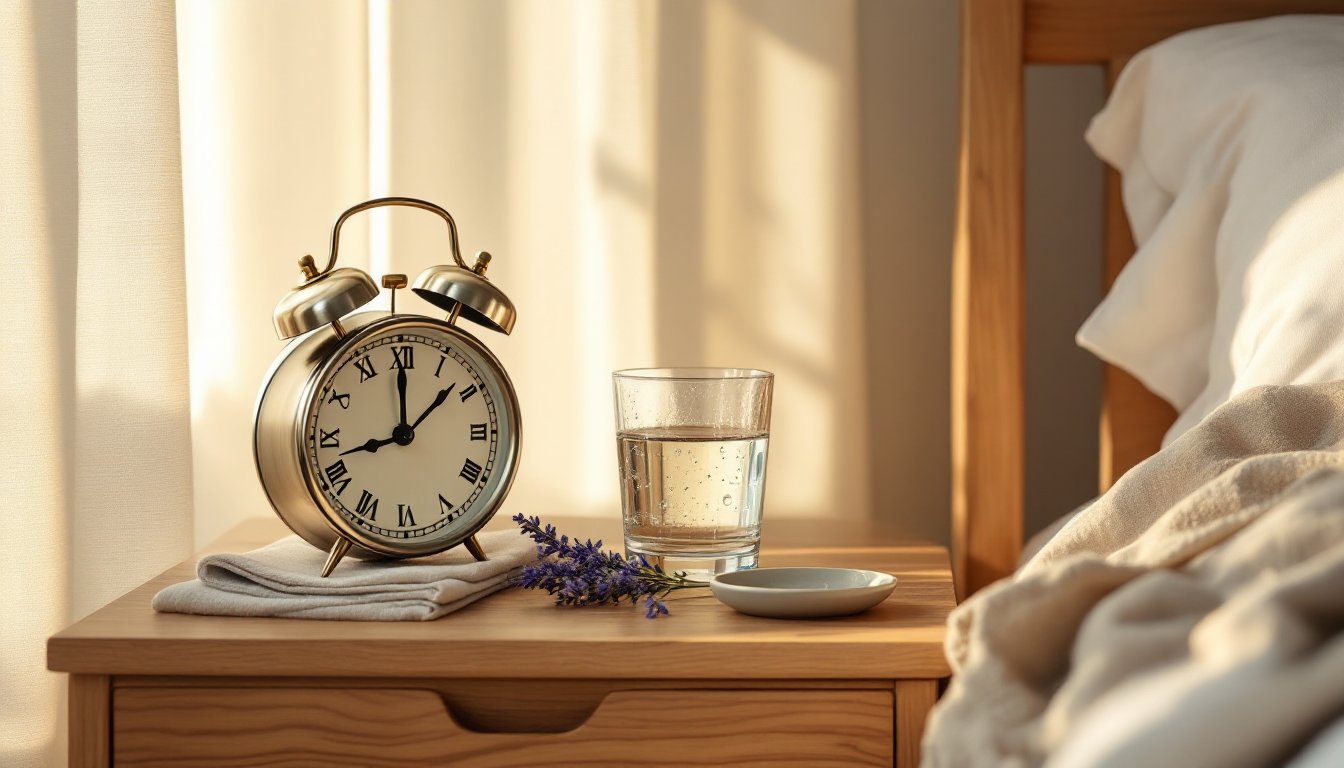
Honestly, willpower at 6 a.m. is a myth. The trick is making the phone-free morning easier than the phone-filled one. Ayurveda calls this vihara, your lifestyle architecture, and it matters as much as what you eat.
When your environment supports you, you don’t have to fight yourself. You just follow the path of least resistance, which is now the calmer one.
Use an Analog Alarm Clock and Charge Your Phone in Another Room
I bought a small analog clock for about ten dollars, and it changed my mornings more than any app ever did. Its tick is soft, stable, and grounding, the opposite of a phone’s sharp, mobile pull. My phone now charges in the kitchen, not on my nightstand.
This one shift protects your ojas, your deep reserve of resilience and calm, while you sleep. Notifications, even silent ones, subtly disturb the subtle field around you and fragment your rest.
Try this: before bed, plug the phone in another room, set the analog alarm, and place a glass of water on your nightstand instead. The water is your first morning companion now, cool, smooth, and quietly hydrating.
Do this tonight: move the charger out of the bedroom. Time: 2 minutes. Good for: anyone whose phone shares their pillow. Skip if: you’re a caregiver who needs nighttime calls.
Design a Calming First-Hour Environment
Your first hour is your most absorbent hour. Whatever qualities you feed your senses, your mind and tissues take in deeply. This is where ama, the sticky residue of undigested input, often begins, not just from food, but from impressions.
So I started thinking of my bedroom and kitchen as a kind of sensory menu. Soft morning light instead of overhead glare. A warm, oily aroma like sesame or a little ghee in a pan, instead of the dry, sharp ping of a screen. Maybe a window cracked open for fresh prana to move through.
Sound matters too. I keep mornings quiet, or play something slow and stable, not news, not anything with that mobile, jumpy quality that mimics scrolling. Even the texture of what you touch counts: a smooth ceramic mug, a soft robe, warm floors under bare feet.
This isn’t aesthetic fluff. It’s how you tell your nervous system, you’re safe, take your time, the day can wait a little.
Try this: pick one sense and upgrade its morning input, lighting, scent, sound, or texture. Time: 5 minutes to set up. Good for: everyone. Skip if: nothing, honestly. This is gentle for all doshas.
A Simple 30-Minute Morning Routine That Replaces the Scroll
I want to be real with you: I don’t have a two-hour sunrise ritual. I have a job, a life, and mornings that sometimes start later than I planned. What I do have is a 30-minute sequence that fits almost any day, and it’s rooted in dinacharya, the Ayurvedic ideal daily routine.
The principle is simple. Wake the body before you wake the world. Light your agni gently before you light up a screen. Move from heavy and dull (sleep) to light and clear (alertness) without skipping straight to sharp and overstimulated.
Hydrate, Stretch, and Get Natural Light Within 10 Minutes
First, warm water. Not iced, not coffee yet, just warm water, sometimes with a squeeze of lemon. This nudges your digestion awake and helps move out any ama from the night’s metabolic cleanup.
Then a slow stretch, two or three minutes is enough. Cat-cow, a forward fold, gentle twists. Vata loves the rhythm, Kapha loves the movement, Pitta loves the simplicity.
Finally, step outside or to a window for natural light. Even on a cloudy day, morning light is the cleanest signal to your circadian rhythm, anchoring your sleep tonight and your tejas today.
Do this tomorrow: water, stretch, light, in that order. Time: 10 minutes. Good for: every body type. Skip if: you have a movement restriction, in which case just water and light still work beautifully.
Mindful Practices That Anchor Your Mind Before the World Rushes In
Once your body is awake, your mind needs its own gentle on-ramp. Phones offer a fake version of this, that scroll feels like “easing in,” but it’s really just numbing. True anchoring builds prana and steadies your nervous system for the hours ahead.
In Ayurveda, the goal isn’t an empty mind. It’s a settled one. Something stable, smooth, and slightly cool, the opposite of the hot, mobile chatter that the phone trains us into.
Journaling, Breathwork, or a Short Walk Outside
Pick one. Just one. I rotate depending on how I feel.
On scattered Vata mornings, I journal three lines, longhand, slow. It’s grounding, warm, and oily in feel, even though it’s just pen on paper. On heated Pitta mornings, I do a few rounds of slow nasal breathing, longer exhales than inhales, cooling and smoothing the edge off the day. On heavy Kapha mornings, I walk outside for ten minutes, brisk enough to wake the light quality in my body.
This is where ojas quietly builds. Not in big retreats, but in these small, consistent acts of choosing your inner world over someone else’s feed.
Try this: choose one anchor practice and do it for seven mornings. Time: 5 to 15 minutes. Good for: anyone feeling reactive or foggy. Skip if: you’re acutely unwell, rest is the practice then.
If You’re More Vata, Pitta, or Kapha
This is where it gets personal, and personalization is non-negotiable in Ayurveda. The same morning can either soothe you or scrape against you depending on your nature.
If you’re more Vata
You wake up quickly, sometimes anxious, sometimes already thinking about ten things. Cold hands, dry mouth, a buzzy mind. Phones make this worse because they add more mobile, dry, scattered input to an already mobile system.
Favor warm: warm water, warm oil on your feet, a warm shawl. Move slowly. Keep the room quiet. Eat something grounding within an hour, like cooked oats with ghee and dates. The one thing to avoid: rushing. Even five extra minutes of stillness changes your whole day.
Action: warm oil massage on feet and hands. Time: 3 minutes. Good for: anxious, dry, restless mornings. Skip if: you have a skin condition flaring.
If you’re more Pitta
You likely wake alert, maybe a bit hot, sometimes irritated before your feet hit the floor. Your tejas is strong, which is a gift, but it can also burn through your patience by 9 a.m. if you feed it sharp input.
Favor cool and smooth. Cool (not cold) water, soft light, no news, no email. A short walk in fresh air works wonders. Eat a slightly cooling breakfast, like soaked fruit or a mild porridge. The one thing to avoid: arguments or hot takes before noon, including the ones on your phone.
Action: ten slow nasal breaths by an open window. Time: 2 minutes. Good for: hot, driven, reactive mornings. Skip if: you have nasal congestion.
If you’re more Kapha
Mornings can feel heavy, dull, and slow. The bed feels like a magnet. The phone is especially sticky for Kapha, because scrolling matches the heavy, stable quality you’re trying to come out of.
Favor light, warm, and mobile. Get up a bit earlier, ideally before 7 a.m. Dry brush, move briskly, drink warm water with ginger or lemon. Skip a heavy breakfast or have something light and warm. The one thing to avoid: lingering in bed with your phone, even for five minutes. It deepens the heaviness.
Action: five minutes of brisk movement before sitting down. Time: 5 minutes. Good for: sluggish, foggy mornings. Skip if: you’re recovering from illness.
Ideal Daily Routine: Two Habits That Change Everything
Dinacharya isn’t a checklist: it’s a rhythm. Two habits, repeated kindly, will do more than ten you can’t sustain.
First, wake within the same 30-minute window each day, ideally before sunrise lifts fully. This stabilizes your prana and your sleep on the other end of the day.
Second, eat your largest meal at midday, when agni is strongest, like the sun overhead. A phone-free breakfast supports this by keeping your morning nervous system calm, which helps midday digestion run cleanly without producing ama.
Evening matters too: dim the lights, eat lightly, and (yes) park the phone outside the bedroom again. The loop closes.
Do this: pick consistent wake and lunch times for one week. Time: 0 extra minutes, just rearranged. Good for: almost everyone. Skip if: you do shift work, then aim for rhythm within your schedule.
Seasonal Adjustment: Tuning Your Morning to the Weather
Ritucharya, seasonal living, reminds us that one routine doesn’t fit all year. The qualities outside shape the qualities inside.
In cold, dry seasons (late fall, winter), Vata rises. Linger in warmth a bit longer, use more oil on your skin, drink warmer water, and let mornings be slower and quieter. Heavier, oilier breakfasts are welcome.
In hot, sharp seasons (summer), Pitta rises. Wake earlier while the air is still cool, favor cooling foods like soaked dates or coconut water, and keep the morning especially screen-free, since heat plus sharp digital input is a fast track to irritation.
In damp, heavy seasons (spring, monsoon), Kapha rises. Get moving sooner, favor warm, light, slightly spicy foods, and resist the urge to scroll in bed, because the heavy, dull quality outside is already encouraging it.
Try this: change one morning element with the season, your drink, your movement, or your wake time. Time: a few minutes to adjust. Good for: anyone who feels off when seasons change. Skip if: you have a medical reason to avoid temperature shifts.
Modern Relevance: Why Your Nervous System Will Thank You
Modern science talks about cortisol, dopamine, and circadian rhythm. Ayurveda has been talking about prana, tejas, and dinacharya for thousands of years. They meet beautifully here.
A phone-free first hour lowers stress reactivity, steadies your attention, and protects the quiet, smooth quality your nervous system needs to actually feel rested. It’s not anti-technology. It’s pro-you-first.
Action: treat your first hour as off-limits for screens for two weeks and notice what shifts. Time: 60 minutes daily. Good for: anyone feeling burnt out. Skip if: your work genuinely requires immediate morning access.
A Gentler Morning Is Closer Than You Think
You don’t need a perfect routine. You just need a kinder one. The best way to start your morning without reaching for your phone isn’t about discipline: it’s about designing a first hour that feels so warm, steady, and you-shaped that the phone simply loses its grip.
Start with one shift tonight. Move the charger. Set the analog clock. Place a glass of water by your bed. See how tomorrow feels.
I’d love to hear from you in the comments, and if this resonated, share it with someone whose mornings could use a little softness. What’s the one part of your morning you’d most like to protect from your phone?