







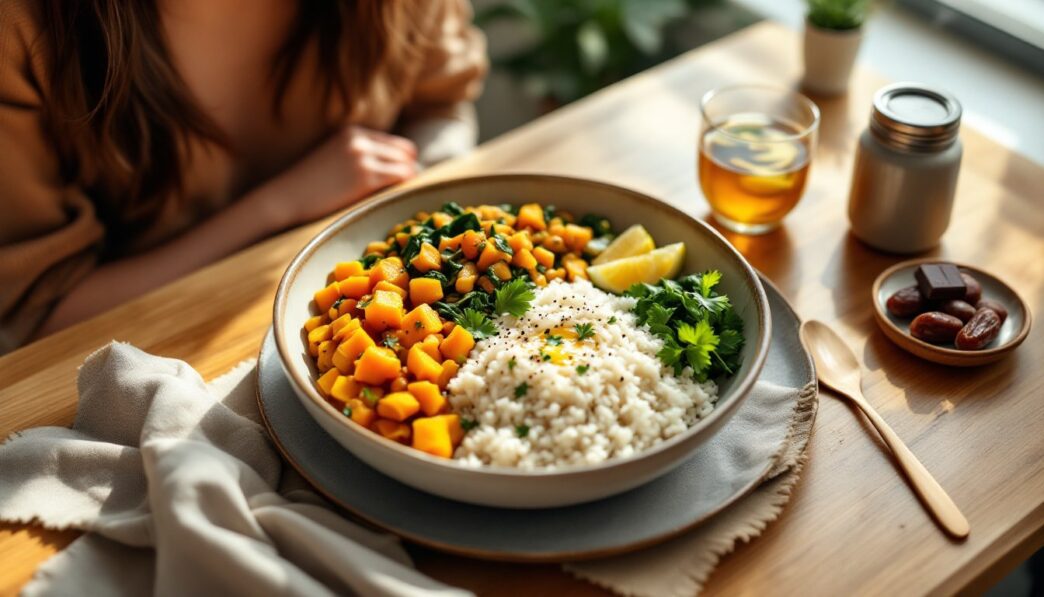
Why Midday Is a Make-or-Break Window for Your Body
Ayurveda has a beautifully simple observation about the day: from roughly 10 AM to 2 PM, Pitta governs. This is the window where your inner spark, what’s called agni, the metabolic intelligence behind digestion and clarity, burns brightest. The sun is high, your tissues are warm, and your body is primed to break things down efficiently.
When I ignore this window (skipping lunch, grazing on something cold and heavy, or eating while doom-scrolling), I create what Ayurveda calls ama, that sticky, dull residue of food the body couldn’t fully process. Ama is the quiet culprit behind brain fog, the 3 PM crash, and that bloated, tired feeling that has nothing to do with how hard you worked.
Honor this window and you protect more than digestion. You protect tejas (mental sharpness), prana (steady energy), and the slow build of ojas (deep resilience) over time.
Try this today: Eat your largest meal between noon and 1:30 PM, sitting down, for about 20 minutes. Great for almost everyone. Skip if you’re fasting under medical guidance.
Build a Balanced Lunch That Fuels, Not Drains
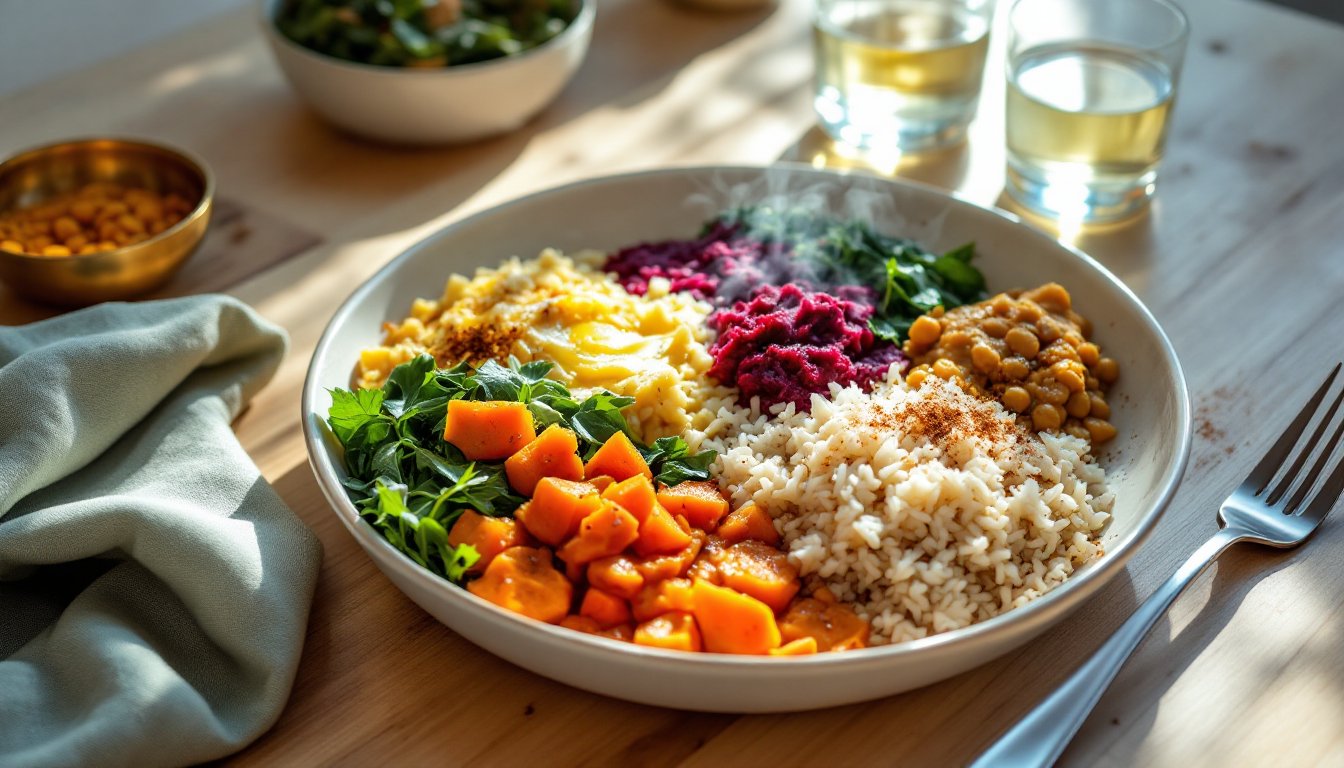
If midday is the hinge, lunch is the bolt holding it together. A lunch that’s too heavy turns your afternoon dull and sluggish: too light and dry, and by 4 PM you’re rummaging for cookies. The aim is a meal that feels grounding but not cement-like, warm, a little oily, and varied in taste.
The Plate Formula: Protein, Fiber, and Smart Carbs
I like to think of my lunch plate in three soft zones. About half is cooked vegetables, think sautéed greens, roasted squash, a warm carrot-and-beet mash. A quarter is something protein-forward and easy to digest, like mung dal, lentils, paneer, fish, or chicken. The last quarter is a smart, slow carb: basmati rice, quinoa, millet, or a small piece of flatbread.
A drizzle of ghee or olive oil adds the smooth, slightly oily quality that calms Vata. A few spices, cumin, coriander, fennel, ginger, turmeric, wake up agni without overheating Pitta. The result is a meal that’s warm and light rather than cold and heavy, satisfying without sedating.
Try this: Build one warm, cooked lunch plate using this formula at least 4 days this week. Takes 20–25 minutes to prep. Suits most constitutions: reduce ghee if cholesterol is a concern.
Foods to Limit if You Want to Avoid the 2 PM Crash
Certain foods sabotage the midday window even when they look healthy. Big raw salads, for example, are cold and rough, they dampen agni right when it’s strongest. Iced drinks do the same thing, cooling the fire mid-meal.
Ultra-processed foods, leftovers more than a day old, and heavy cheese-and-bread combos are dense and dull. They sit in the gut, feed ama, and rob you of the afternoon. I’m not anti-bread or anti-salad, I just save them for evenings, or pair them with warming spices and soup.
Try this: Swap one cold lunch this week for a warm one. 5 minutes of planning. Especially helpful for Vata and Kapha types: Pitta can still enjoy occasional cool foods in hot weather.
Eat Mindfully to Improve Digestion and Satiety
Here’s something I had to learn the slow way: how I eat matters as much as what I eat. Eating while typing, driving, or arguing with a podcast scatters prana, that subtle life-force that should be steady and present during a meal. Scattered prana means scattered digestion.
When you sit down, take three slow breaths, and actually look at your food, agni gets the memo. Saliva flows, enzymes ready themselves, and the nervous system shifts from sharp, mobile alertness into a calmer, more receptive mode. You’ll naturally chew more, and you’ll notice the moment of satiety, that subtle signal we usually steamroll past.
I try to eat without screens for at least the first ten minutes. It’s not a rule, it’s a kindness. The fullness signal arrives, and I stop before I feel heavy.
Try this: Sit, breathe three times, and eat the first five bites in silence. Takes zero extra time. Wonderful for everyone, especially anxious eaters and Vata types.
Hydrate Strategically Through the Afternoon
Hydration is rarely about chugging a liter at once. In fact, that often drowns agni and leaves you feeling waterlogged. Ayurveda prefers small, warm, frequent sips, water that’s been boiled and cooled slightly, or a light herbal tea with fennel, coriander, or ginger.
I keep a small thermos near my desk between 1 and 4 PM. Warm water has a subtle, light quality that helps move things along without dousing the fire. Cool water is fine if it’s truly hot outside and you’re Pitta-leaning, match the season and your constitution.
A cue I trust more than ounces: your lips and the inside of your cheeks should feel comfortably moist, not parched or sticky. If your urine is the color of pale straw by mid-afternoon, you’re doing well.
Try this: Sip warm or room-temperature water every 30–45 minutes between lunch and 4 PM. Two minutes total. Good for all types: reduce intake right around meals.
Take a Post-Lunch Walk to Boost Energy and Blood Sugar
There’s a charming Ayurvedic instruction called shatapavali, “a hundred steps after eating.” Just a hundred. Not a workout, not a power march. A slow, easygoing stroll that nudges digestion without pulling blood away from the gut.
A gentle walk uses the mobile quality of Vata in a helpful way. It keeps food moving, softens any tendency toward heaviness, and steadies blood sugar so you don’t spike and crash. I find that ten unhurried minutes outside after lunch does more for my afternoon than a second cup of coffee ever did.
Sunlight on your face during this walk is a bonus. It anchors your circadian rhythm, supporting smoother sleep that night and stronger agni tomorrow.
Try this: Walk slowly for 10 minutes within 20 minutes of finishing lunch. Skip if you have a medical reason to rest after meals: otherwise, this suits everyone.
Use Light, Breath, and Posture to Reset Your Focus
Around 2:30 PM, the body’s natural rhythm dips. Instead of fighting it with sugar or caffeine, I work with it. Three things help me reset without crashing later: natural light, slow breath, and an upright spine.
Stepping outside, even for two minutes, exposes your eyes to bright light that tells your nervous system it’s still daytime. Pair that with a few rounds of slow nasal breathing (in for four, out for six) and you settle prana, that subtle steadying current behind clear thinking.
Posture seals the deal. A slumped spine compresses the belly and dulls agni: an easy, tall sit opens the diaphragm. Roll your shoulders back, lengthen through the crown, and feel the difference in two breaths.
Try this: A 3-minute light-breath-posture reset at 2:30 PM. Free, anywhere. Especially good for Vata and Pitta types running hot or scattered.
Manage Caffeine and Sugar Without Sabotaging Your Sleep
I’m not going to ask you to give up coffee. I won’t. But caffeine after 2 PM has a sharp, mobile, slightly hot quality that lingers in the system for hours, and it eats into the slow, stable accumulation of ojas that happens during deep sleep.
If you need a midafternoon lift, I love a small cup of spiced tea: cardamom, cinnamon, a thin slice of ginger, maybe a few fennel seeds. It’s warm and aromatic without being aggressive. For sweetness, a square of dark chocolate or a couple of soaked dates satisfy the craving with substance behind them, rather than a hollow spike.
Notice the pattern: when you anchor lunch well and walk afterward, the 3 PM sugar pull quiets down on its own. Cravings are often agni’s way of asking for support, not punishment.
Try this: Cap caffeine by 2 PM and pre-stock one warm, lightly sweet alternative. Five minutes of prep. Helpful for everyone, especially light sleepers and Pitta types.
Build a Midday Routine That Sticks
A routine isn’t a cage, in Ayurveda it’s called dinacharya, the daily rhythm that lets your body stop guessing. When meals, light, movement, and rest arrive at predictable times, agni gets steady, prana settles, and ojas quietly builds.
If you’re more Vata
Your qualities run cool, dry, light, and mobile. You’re the one who forgets to eat, then crashes. Anchor lunch at the same time daily, ideally noon to 12:30 PM. Choose warm, slightly oily, well-spiced food: kitchari, soups, stewed grains. Keep your environment quiet and your post-lunch walk gentle and short. Avoid raw salads and iced drinks at midday.
Try this: Set a noon lunch alarm for one week. Two seconds to set. Skip if shift work makes it impossible.
If you’re more Pitta
You run hot, sharp, and intense, and you probably push through lunch to finish “one more thing.” Don’t. Your strong agni demands real food at real times. Favor cooling, sweet, and slightly bitter tastes: cucumbers, cilantro, leafy greens, basmati rice, coconut. Step away from your screen entirely. Avoid spicy, fried, and overly sour foods if you’re already running hot.
Try this: A 20-minute screen-free lunch, daily. Twenty minutes well spent. Skip if work emergencies genuinely require otherwise, but rarely.
If you’re more Kapha
Your qualities are heavy, stable, smooth, and a touch oily. Big lunches knock you out. Keep the portion moderate, lean into warming, light, and slightly pungent foods: lentil soups, lightly steamed greens, ginger tea, barley. Walk longer after lunch, 15 to 20 minutes briskly. Avoid dairy-heavy meals, fried foods, and naps before 4 PM.
Try this: A 15-minute brisk post-lunch walk, four days a week. Adds 15 minutes. Skip if joint pain flares: substitute gentle stretching.
Your daily rhythm anchors
Two dinacharya habits worth protecting: a consistent lunch time within the Pitta peak (noon to 2 PM), and a midafternoon light-and-breath reset around 2:30 PM. These two alone can rebuild your afternoon.
Seasonal adjustment (ritucharya)
In summer, lean cooler, coconut water, mint, sweet fruits, shorter walks in the shade, and a slower pace. In winter, lean warmer and a little heavier, soups, stews, ghee, ginger tea, and a brisker walk to keep the heavy, cold qualities from settling in. In damp, rainy seasons, favor light and dry: spiced lentil broths, less raw food, and movement to counter Kapha stagnation.
Try this: Swap one ingredient in your lunch each season, mint in summer, ginger in winter, black pepper in monsoon. Thirty seconds. Suits all types.
A gentle close
If you take one thing from all this, let it be this: your afternoon doesn’t have to be something you survive. A warm, well-timed lunch, a slow walk, a few honest breaths, these small acts are how Ayurveda quietly rebuilds your energy from the inside out.
Which of these habits feels most doable for you this week? I’d love to hear what you try, what surprises you, and what your body tells you in return. Share your experience in the comments, and pass this along to anyone you know who’s tired of the 3 PM crash. What’s one midday habit you’re ready to gift yourself?