
What Counts as Occasional Digestive Discomfort
When I talk about occasional digestive discomfort, I mean the kind that shows up after a heavier meal, a stressful week, or a change in routine, not the daily, persistent kind that needs a professional eye. In Ayurveda, this is usually a temporary dip in agni, your digestive spark, often paired with a little ama, the sticky residue left behind when food isn’t fully broken down.
Think of agni like a candle flame. When it’s bright and steady, food gets transformed into nourishment, clarity, and energy, what Ayurveda calls ojas, tejas, and prana. When it sputters, you feel it almost immediately.
Common Symptoms to Recognize
For me, the early signs are pretty consistent: a heavy, dull feeling after eating, mild bloating, a coated tongue in the morning, sluggishness, or the sense that yesterday’s dinner is still hanging around. Sometimes there’s gas, a sour taste, or that uncomfortable mix of hungry-but-not-hungry.
Different constitutions feel it differently. Vata-leaning folks often notice gas, gurgling, and that dry, mobile, unsettled feeling. Pitta types tend to run hot, acidity, a sharp burning sensation, irritability paired with hunger. Kapha types feel heavy, slow, oily, and a bit foggy after meals.
Everyday Triggers Behind a Troubled Gut
The culprits are usually ordinary. Eating in a rush. Cold drinks with hot meals. Snacking when the last meal hasn’t finished digesting. Late dinners. Too many raw, cold, or rough foods when your system is craving something warm and smooth.
Stress is a quiet one too. When your nervous system is jumpy, prana scatters, and digestion takes a back seat.
Try this: Before your next meal, pause for three slow breaths. It takes 20 seconds and gently signals your body that it’s safe to digest. Great for almost everyone: skip if you’re mid-medical-flare and being guided otherwise.
Soothing Herbal Teas That Calm the Stomach

Warm liquids are one of the simplest, most underrated remedies I know. They’re light, mobile, and gently sharp in a way that helps rekindle a dim agni without overwhelming it. A mug of the right tea can shift my whole afternoon.
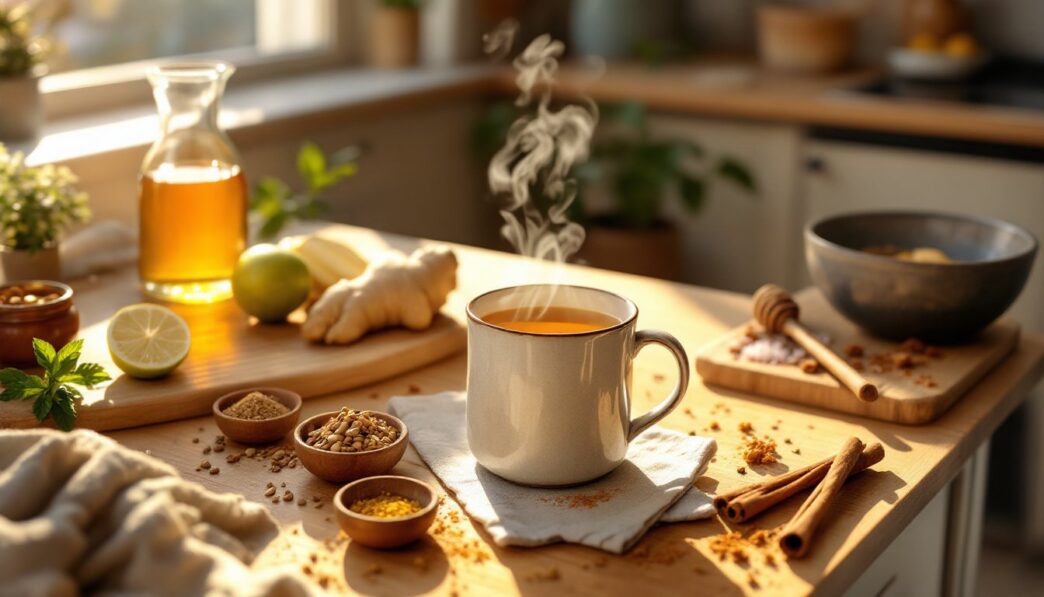
My go-to is CCF tea, equal parts cumin, coriander, and fennel seeds, simmered in water for five minutes. Cumin is warming and helps move stagnant food along. Coriander cools slightly, which is lovely if there’s any heat or acidity. Fennel softens cramping and freshens the breath.
For a cold, gassy belly that feels rough and unsettled, I’ll lean on fresh ginger tea with a squeeze of lemon. Ginger is warm, light, and a little sharp, beautifully suited to Vata and Kapha imbalances. If I’m running hot or feeling that pitta edge, I switch to fennel and mint instead, which is cooler and smoother.
Sip slowly, ideally about 20 minutes before or after a meal rather than chugging during. Cold water with food douses the very fire you’re trying to keep alive.
Try this: Brew a small thermos of CCF tea in the morning and sip it warm between meals. Takes 7 minutes. Good for most adults: if you’re pregnant or on medication, check with a qualified professional first.
Kitchen Staples That Ease Bloating and Gas
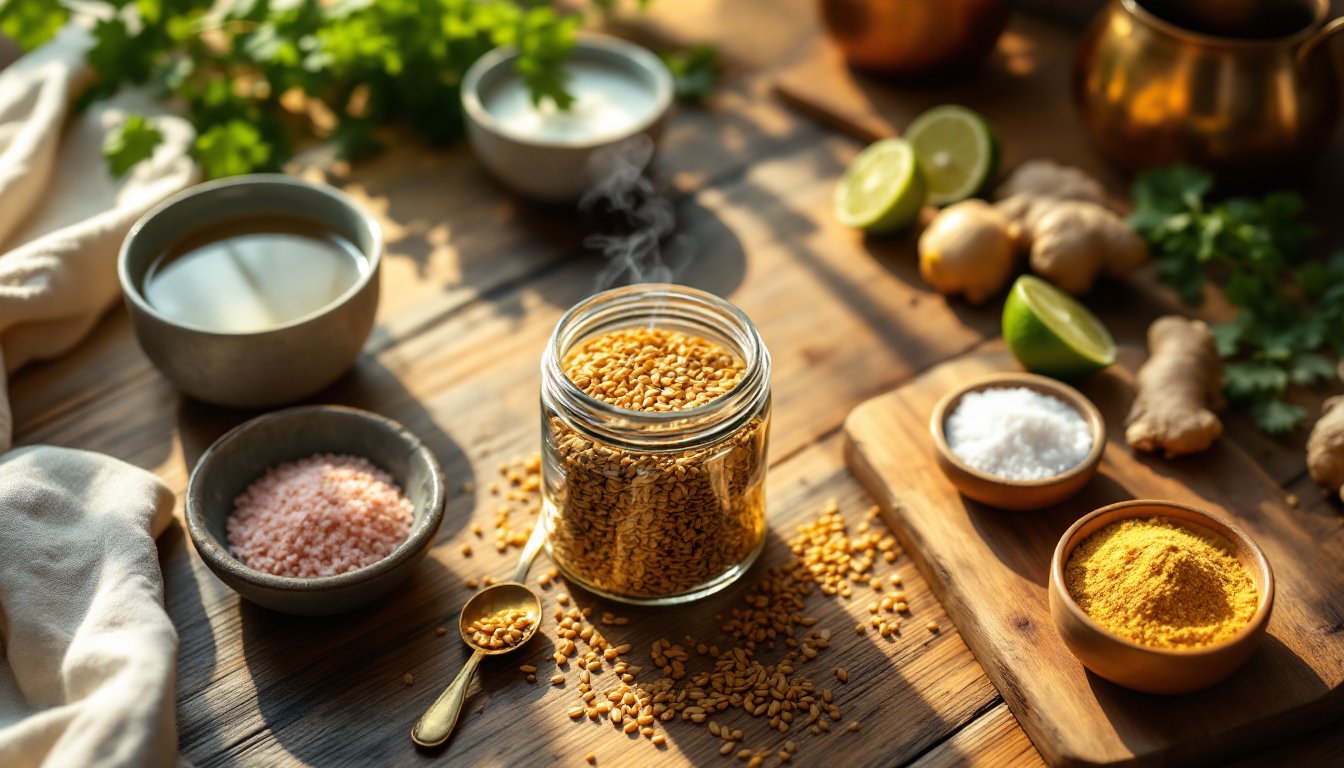
Your spice drawer is honestly a small pharmacy. Ayurveda has leaned on these for centuries because they kindle agni and help break down the heaviness that creates ama.
When I feel that tight, gassy fullness, I’ll chew a half-teaspoon of roasted fennel seeds after eating. They’re subtle but effective, especially for Vata-type bloating. Ajwain (carom) seeds are stronger, about a quarter teaspoon with a pinch of rock salt and warm water cuts through gas quickly. It’s sharp and a little intense, so use it sparingly.
Fresh ginger with a few drops of lime and a pinch of salt before meals is a classic appetizer. It wakes up sluggish, dull digestion and is wonderful when you know you’re about to eat something rich.
Hing (asafoetida), sautéed for a few seconds in a little ghee at the start of cooking beans or lentils, dramatically reduces the gas they cause. Ghee itself is interesting, oily and smooth, yet it actually supports agni in small amounts rather than dampening it.
Try this: Keep a small jar of roasted fennel near your dining table and take a pinch after meals. Takes 30 seconds. Helpful for most: skip ajwain in larger amounts during pregnancy.
Hydration and Electrolyte Balance for Digestive Relief
Hydration is one of those areas where more isn’t always better. I used to gulp ice water all day and wonder why my digestion felt so flat. Cold, heavy water actively cools agni, especially around meals.
What works better for me is sipping warm or room-temperature water throughout the day, in small amounts. Ayurveda traditionally suggests boiling water for several minutes and sipping it warm, it becomes lighter and more penetrating, helping clear subtle ama from the tissues.
For light electrolyte support after a sweaty day or a slightly off stomach, I’ll mix warm water with a squeeze of lime, a tiny pinch of rock salt, and a teaspoon of raw honey (added only once the water is no longer hot). It’s gentle, hydrating, and supports both prana and tejas without the harshness of commercial sports drinks.
If you’re feeling overheated and acidic, switch the honey for a teaspoon of soaked raisins or a splash of coconut water, which are cooler and smoother in quality.
Try this: Keep a flask of warm water at your desk and aim for small sips every 20–30 minutes. Takes no extra time once set up. Suitable for most adults: adjust if you have a condition that limits fluids.
Gentle Foods to Eat When Your Stomach Feels Off
When digestion is wobbly, the kindest thing I can do is eat simply. Ayurveda’s classic reset meal is kitchari, a soft, one-pot dish of split mung beans, white basmati rice, ghee, and warming spices like cumin, ginger, and turmeric. It’s light, smooth, easy to digest, and gives your agni a break without starving it.
Warm vegetable soups, stewed apples with a pinch of cinnamon, soft rice porridge, and well-cooked seasonal vegetables all fall in the same friendly category. The pattern I look for is warm, moist, mildly spiced, and freshly cooked, qualities that are the opposite of what usually creates trouble (cold, dry, heavy, stale).
I try to avoid raw salads, leftovers more than a day old, iced drinks, heavy cheeses, and deep-fried foods until I feel steady again. Not forever, just while the inner fire is recovering.
And here’s a small but powerful one: leave about a quarter of your stomach empty. Overfilling is one of the fastest ways to smother agni.
Try this: Make a simple kitchari for dinner tonight. Takes about 35 minutes. Wonderful for almost everyone: if you have specific food sensitivities, adapt the grains and legumes.
Lifestyle Habits That Support Smoother Digestion
Food matters, but how you eat and live around your meals matters just as much. I’ve seen the same plate land beautifully on a calm day and sit like a brick on a chaotic one.
Mindful Eating and Portion Awareness
When I sit down to eat without my phone, chew properly, and actually taste my food, my digestion is noticeably smoother. The mouth is where digestion begins, saliva carries the first wave of digestive intelligence, and chewing breaks food into something agni can actually handle.
Portion awareness is gentle, not strict. A loose guideline I use: half the stomach for food, a quarter for liquid, a quarter for space. That bit of empty room is where digestion actually happens.
Try eating your largest meal at midday, when the sun is high and your internal digestive fire tends to be strongest. A lighter dinner before sunset, or at least three hours before sleep, lets your system rest instead of working overnight.
Try this: For one meal today, eat without screens and chew each bite a few extra times. Takes 15 minutes. Suitable for everyone.
Movement, Sleep, and Stress Management
A short walk after meals, even ten unhurried minutes, helps food move and reduces that stuck, heavy feeling. Nothing intense: this isn’t a workout. It’s a stroll that gently keeps things mobile rather than stagnant.
Sleep is the quiet hero. Going to bed by around 10 p.m. lets your body do its overnight cleanup, which directly affects how clear and light you feel the next morning. Late nights tend to disturb both agni and prana, leaving you foggy and bloated.
Stress deserves its own mention. When you’re wired, your nervous system pulls energy away from digestion. A few minutes of slow nasal breathing before meals, inhaling for four counts, exhaling for six, steadies prana and tells your body that this is a moment for nourishment, not survival.
Try this: Walk for 10 minutes after dinner and aim for lights out by 10:30 p.m. Helpful for most adults: adjust pace if you have mobility considerations.
If you’re more Vata, Pitta, or Kapha
If you’re more Vata (dry, mobile, easily anxious, prone to gas and irregularity), favor warm, moist, slightly oily foods like soups, stews, and ghee-cooked grains. Keep a steady daily rhythm, meals at similar times each day work wonders. Avoid skipping meals or eating standing up. Pace yourself: rush is your kryptonite. Try this: Add a teaspoon of ghee to your lunch. 1 minute. Skip if you avoid dairy.
If you’re more Pitta (sharp, hot, driven, prone to acidity and irritability), lean on cooling, smooth foods, cucumber, coconut, sweet fruits, basmati rice, fennel, coriander. Eat in a calm environment, not while arguing on email. Avoid very spicy, fried, or fermented foods when you’re flaring. Try this: Sip fennel tea between meals. 5 minutes. Suitable for most.
If you’re more Kapha (heavy, slow, steady, prone to sluggishness and congestion), favor lighter, warmer, well-spiced foods. Smaller portions, no snacking, and a brisk morning walk help shake off the dull, stable quality that builds up. Avoid heavy dairy, fried foods, and napping after meals. Try this: Start the day with warm ginger water. 3 minutes. Skip if you have ulcers or are very heat-sensitive.
A simple ideal daily rhythm
In the morning, scrape your tongue and sip warm water, this clears overnight ama and wakes up agni. Around midday, eat your most substantial meal slowly and without screens. In the evening, keep dinner light and finish at least a couple of hours before bed.
Try this: Add tongue scraping and warm water to your first five minutes of the day. Takes 3 minutes. Good for almost everyone.
Seasonal adjustment
In hot, dry summers, lean cooler and sweeter, coconut water, soaked raisins, cucumber, mint, and ease up on chilies and coffee. In cold, damp winters, go warmer and a touch oilier with ginger, cinnamon, soups, and cooked greens to counter the heavy, cold quality of the season. In windy, dry shoulder seasons (think autumn), favor grounding, moist foods to settle Vata.
Try this: Swap one cold drink today for a warm seasonal tea. 5 minutes. Suitable for most.
A quick bridge to modern life
Modern research keeps circling back to what Ayurveda has said for ages: your gut and nervous system are deeply linked. When stress runs high, digestion dips. When sleep is steady, the gut repairs. None of this contradicts Ayurveda, it just confirms that warmth, rhythm, and calm are not luxuries: they’re the foundation of feeling well.
Try this: Pick one habit from this article and keep it for seven days. 5 minutes a day. Good for everyone.